
Choosing the best brewery systems is one of the most important decisions when starting, expanding, or upgrading a brewery. The right system helps you produce consistent beer, improve production efficiency, reduce labor costs, and prepare for future growth. The wrong system can create production bottlenecks, increase operating costs, and limit your ability to meet market demand.
However, the best brewery systems are not always the largest or most automated. They are the systems that match your production targets, beer styles, available space, budget, and operating team.
This guide explains how to evaluate brewery systems from an engineering and production perspective. It covers key equipment, automation levels, control panels, scalability, and long-term costs. It also explains what to consider when selecting a brewery equipment manufacturer.
What Makes the Best Brewery Systems?
There is no single brewery system that works for every business. A small craft brewery serving a local market has different requirements from a regional brewery supplying supermarkets and distributors.
Before choosing equipment, consider three basic questions:
-
How much beer do you need to produce? Calculate your expected daily, monthly, and annual production.
-
What level of automation do you need? Consider your labor availability, operator experience, and production complexity.
-
How will your brewery grow? Think about future demand, additional fermentation capacity, and possible production upgrades.
A common mistake is to select equipment based only on the initial purchase price. A system that is too small may limit production within a short time. A system that is too large may increase investment and utility costs without providing enough additional value.
SKE recommends starting with a production and bottleneck analysis. Identify whether your main limitation is brewhouse capacity, fermentation space, cooling performance, cleaning time, or packaging speed. This helps you invest in the equipment that will make the biggest difference.
Key Equipment in the Best Brewery Systems
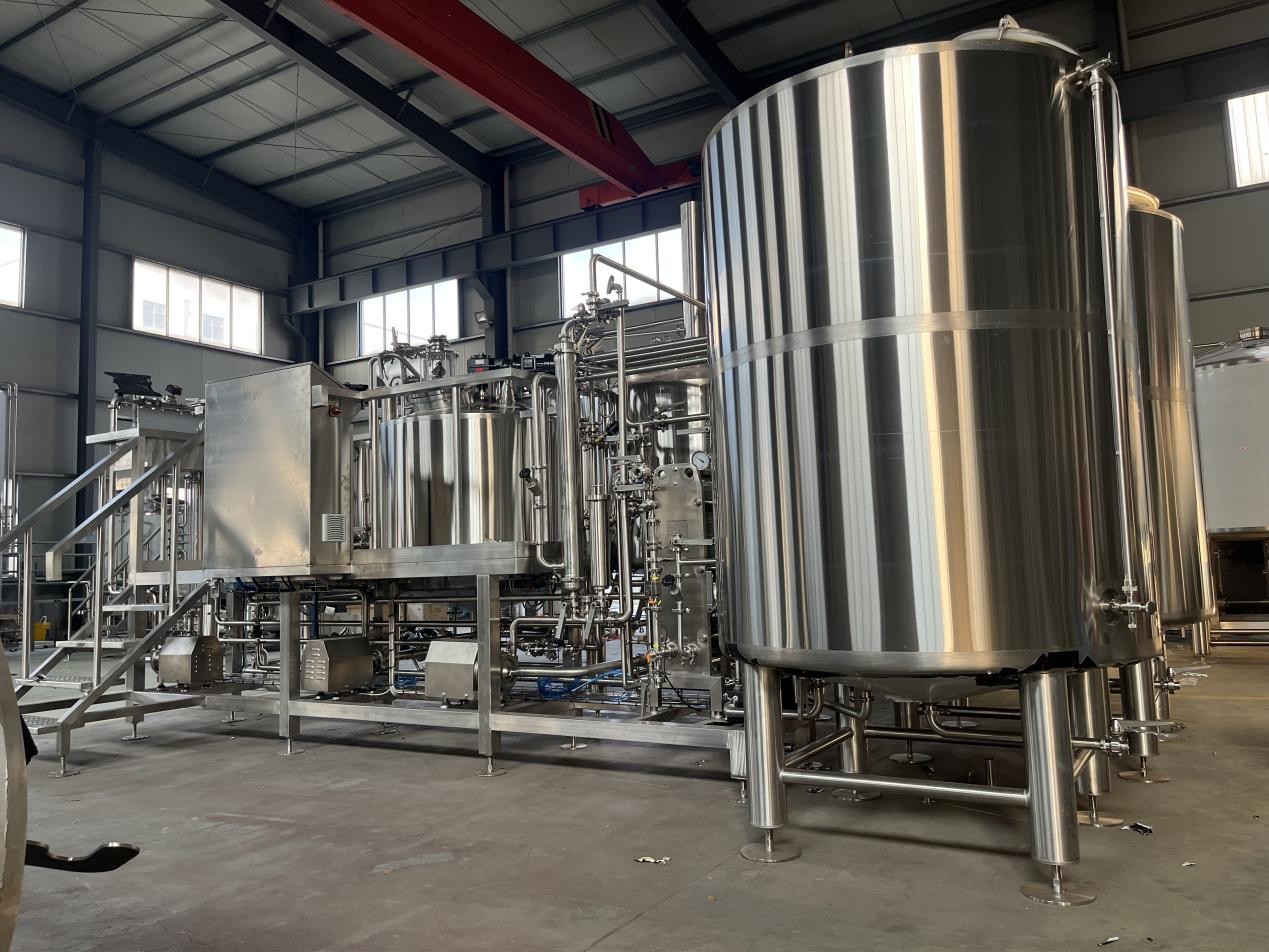
The best brewery systems are designed as connected production lines. Each piece of equipment must work with the others to maintain a stable brewing process.
The main equipment includes:
1. Brewhouse System
The brewhouse handles mashing, lautering, wort boiling, and whirlpool separation. Common configurations include two-vessel, three-vessel, and four-vessel systems.
A two-vessel brewhouse is suitable for many small and medium breweries. Larger operations may choose three- or four-vessel configurations to support higher production frequency and more flexible scheduling.
The correct choice depends on batch size, brewing hours, and the number of batches required each day.
2. Fermentation Tanks
Fermentation tanks are essential for converting wort into beer. Temperature and pressure control are important because they affect yeast activity, flavor development, and beer quality.
Stainless steel conical fermenters are widely used in commercial breweries. Their conical bottoms support yeast collection and removal, while cooling jackets help maintain the required fermentation temperature.
3. Bright Beer Tanks
Bright beer tanks are used for beer maturation, clarification, carbonation, and temporary storage before packaging.
Their capacity should match fermentation output and packaging schedules. Insufficient bright beer storage can slow down the entire production line, even when the brewhouse and fermentation tanks have enough capacity.
4. Cooling and CIP Systems
A glycol cooling system provides temperature control for fermentation and beer storage. Its cooling capacity must match the total heat load of all connected tanks.
A Clean-in-Place (CIP) system cleans tanks and pipelines without requiring complete equipment disassembly. Proper CIP design considers cleaning temperature, chemical concentration, flow rate, and contact time.
These systems are often overlooked during initial planning, but they have a direct effect on production stability and operating efficiency.
How to Choose the Right Capacity for the Best Brewery Systems
Production capacity is one of the most important factors when comparing brewery systems. However, brewhouse batch size alone does not determine the actual output of a brewery.
You also need to consider fermentation time, tank turnover, packaging speed, and working days per year.
The following table provides general equipment selection examples for the best brewery systems:
| Brewery Type | Typical Batch Size | Suggested System |
|---|---|---|
| Pilot Brewery | 50–200 L | Manual or semi-automatic |
| Small Craft Brewery | 300–1,000 L | Semi-automatic system |
| Growing Craft Brewery | 1,000–3,000 L | Modular automated system |
| Regional Brewery | 3,000 L and above | Large-scale automated system |
These ranges are examples, not fixed industry standards. Actual system capacity depends on production frequency, fermentation tank volume, beer styles, and packaging demand.
Automation: When Should You Choose an Automated Brewery System?
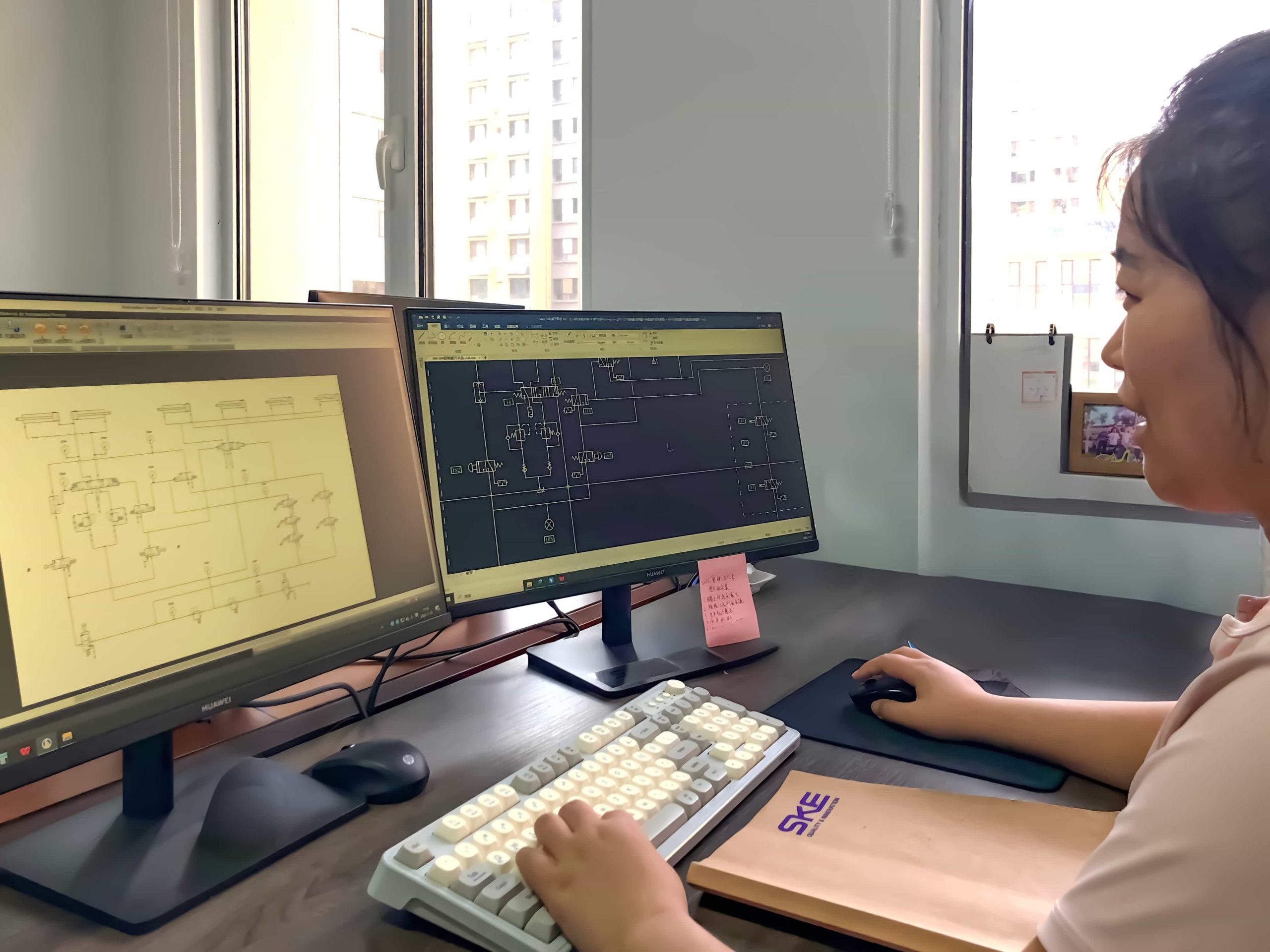
An automated brewery system helps control production steps and reduce unnecessary manual operations. It is particularly useful for breweries that need repeatable recipes, stable production, and better process monitoring.
In the brewhouse, automation can control mash temperature, heating time, pump operation, and valve sequences. During lautering, it can help operators manage wort transfer and maintain a stable process.
During boiling and whirlpool operations, programmed controls help manage process timing and equipment operation. This makes production easier to repeat across different batches.
Fermentation automation is equally important. Temperature sensors monitor tank conditions, while control valves regulate glycol flow through cooling jackets. Depending on the system design, pressure monitoring and alarm functions can also help operators identify abnormal conditions.
An automated brewery system can also support CIP operations. It can control cleaning sequences, pump operation, valve positions, and process parameters. This improves cleaning repeatability and reduces dependence on manual operation.
However, automation should match the brewery’s actual needs. A small brewery may work efficiently with semi-automatic equipment, while a large commercial brewery may benefit from centralized PLC control and recipe management.
The goal is not to automate every operation. It is to improve process consistency, safety, and production efficiency where automation provides real value.
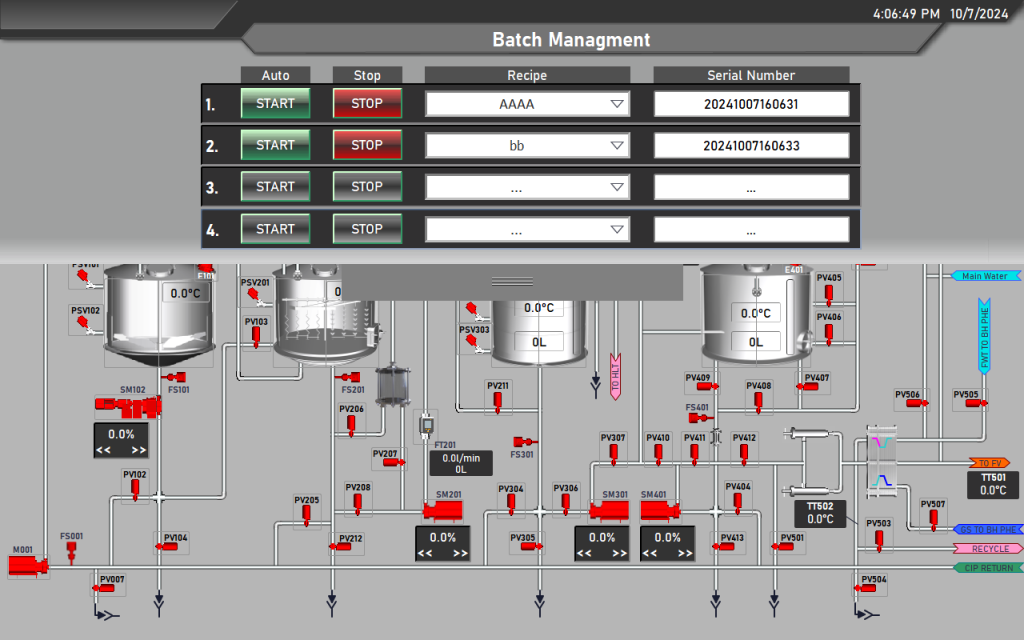
Brewery Control Panel: The Center of Process Management
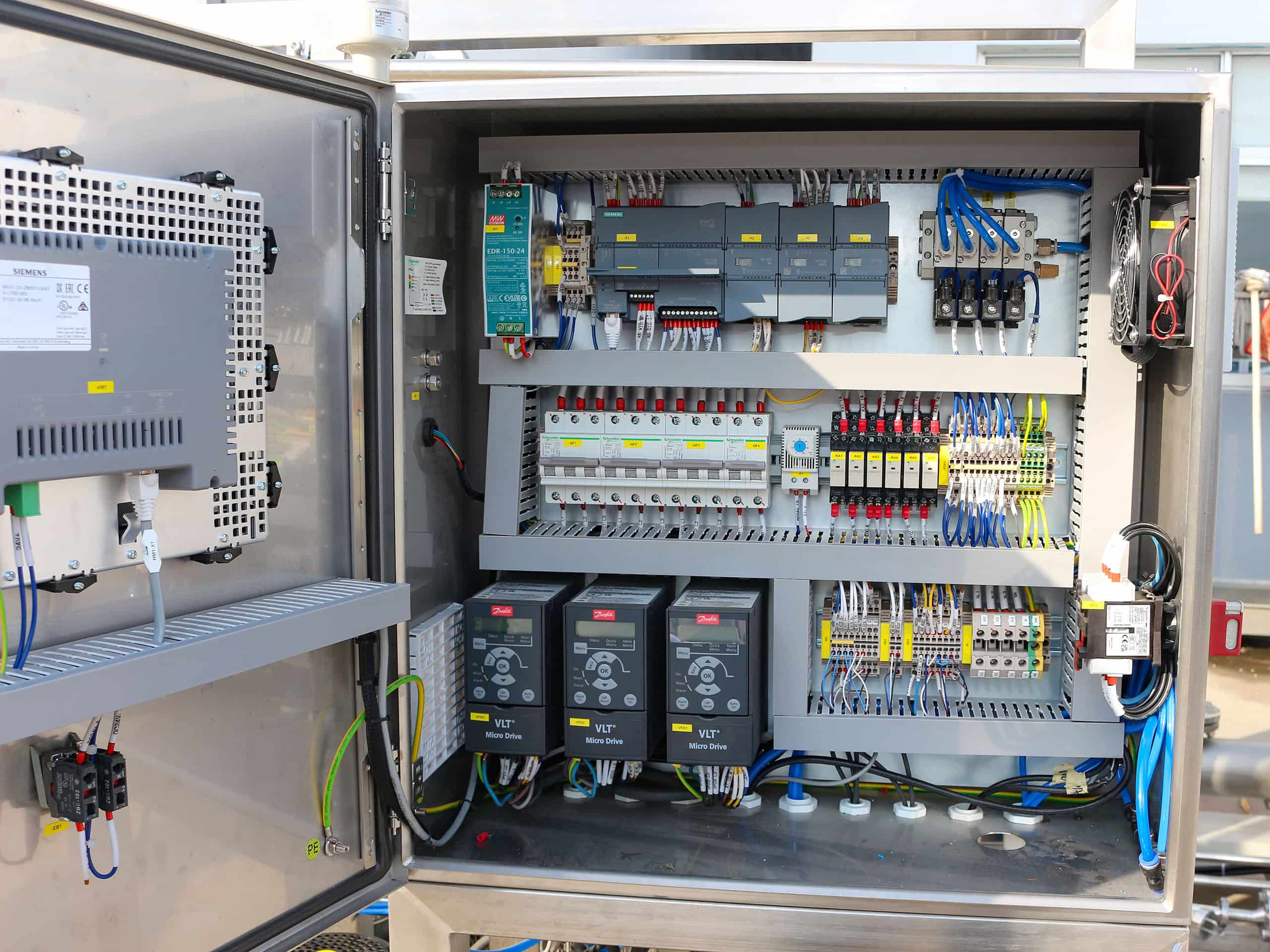
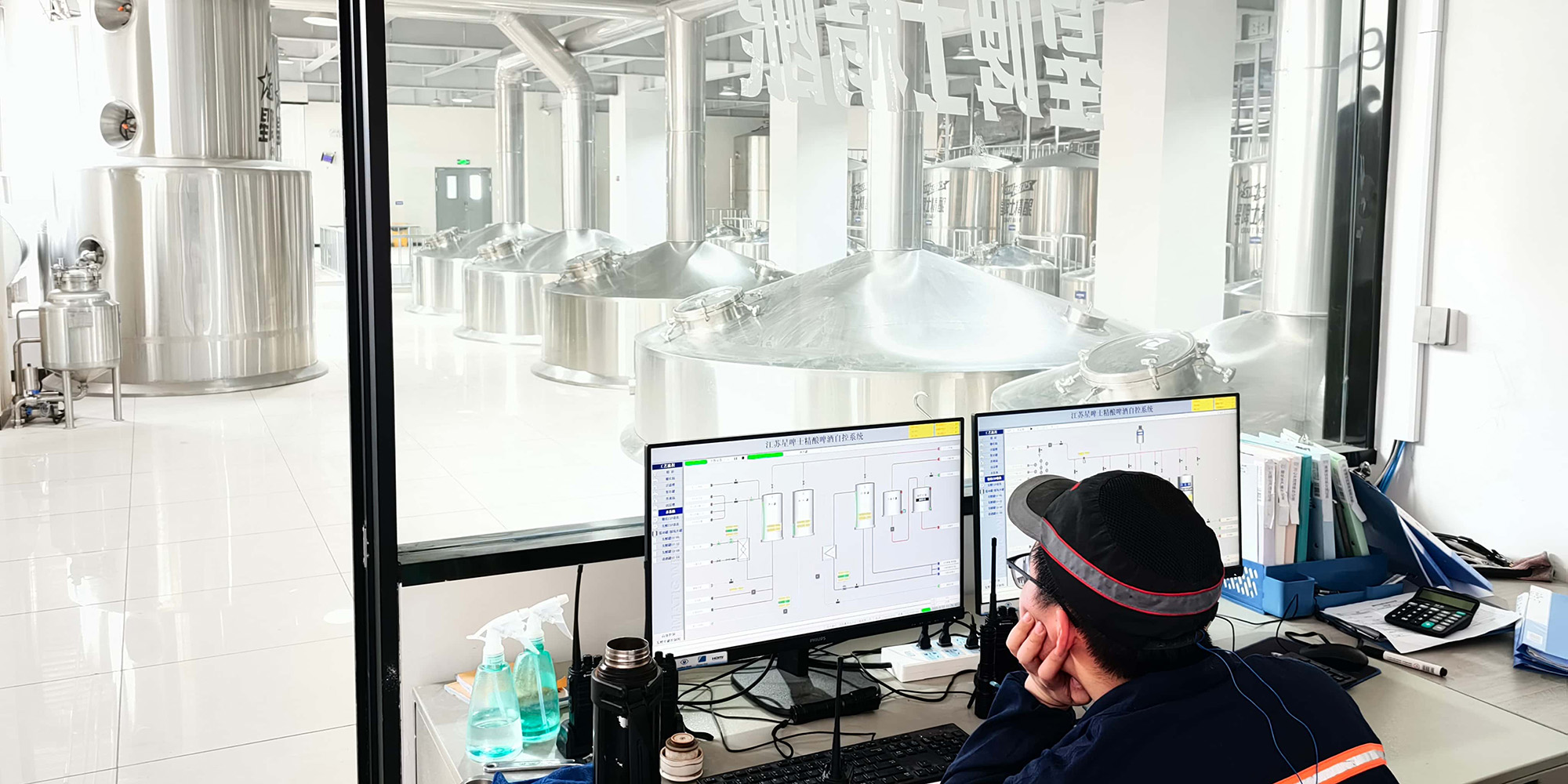
A brewery control panel connects operators with the equipment and production process. It allows brewers to monitor operating conditions, control equipment, and respond to alarms from a central interface.
Modern brewery control panels commonly use PLC controllers and industrial touchscreens.
Important functions include:
-
Temperature monitoring: Display temperatures in mash vessels, wort pipelines, fermentation tanks, and other key process areas.
-
Pump and valve control: Manage liquid transfer and equipment operation according to the process sequence.
-
Recipe management: Store process settings and help operators repeat brewing procedures.
-
Alarm management: Identify abnormal temperatures, pressure conditions, and equipment faults.
-
Data recording: Save important process information for batch comparison and troubleshooting.
A well-designed brewery control panel should be easy to understand and operate. Clear screen layouts, logical menus, and useful alarm messages help reduce operator errors.
For larger breweries, centralized control can improve coordination between the brewhouse, fermentation area, CIP system, and other production sections.
Scalability: Preparing the Best Brewery Systems for Growth
The best brewery systems should support future growth without requiring a complete reconstruction.
Modular design is one practical way to achieve this. A brewery may start with a two-vessel brewhouse and reserve space for additional vessels or tanks. More fermentation tanks can then be added as production demand increases.
However, expansion planning involves more than leaving empty floor space.
You should also consider:
-
Steam capacity: Can the boiler supply enough steam for additional heating equipment?
-
Cooling capacity: Can the glycol system handle more fermentation and storage tanks?
-
Water supply: Is the treatment and supply system large enough for future production?
-
Drainage and piping: Are the pipelines and drainage points designed for additional equipment?
-
Electrical capacity: Can the power distribution system support future pumps, motors, and control equipment?
These details are easier and less expensive to address during the initial engineering stage.
Why Choose SKE for Your Best Brewery Systems?
Selecting the right equipment manufacturer is just as important as selecting the right system configuration.
SKE is a professional brewery equipment manufacturer providing individual brewing equipment and complete brewery solutions. Our work covers equipment design, stainless steel manufacturing, system integration, and project support.
We focus on practical engineering and production requirements rather than offering the same equipment configuration to every customer.
Our services include:
-
Customized brewhouse and fermentation equipment.
-
Complete brewery system planning and layout design.
-
Modular equipment configurations for future expansion.
-
Brewery automation and PLC control panel integration.
-
CIP systems and supporting utility equipment.
-
Equipment installation, commissioning, and technical training.
Whether you are building a new brewery, increasing production capacity, or replacing outdated equipment, SKE can help evaluate your requirements and develop a suitable solution.
Our goal is to provide brewery systems that work reliably in daily production and support long-term business growth.
Frequently Asked Questions
Q1: What equipment is included in the best brewery systems?
The best brewery systems usually include a brewhouse, fermentation tanks, bright beer tanks, cooling equipment, CIP systems, and supporting utility equipment. Packaging equipment can also be integrated according to the brewery’s production requirements.
Q2: What are the best brewery systems for a new craft brewery?
For many new craft breweries, a semi-automatic or modular system is a practical choice. It provides sufficient process control without requiring the investment associated with a large industrial system. The final configuration should depend on production targets and available space.
Q3: Do I need an automated brewery system?
Not necessarily. Manual and semi-automatic systems can work well for smaller operations. An automated brewery system becomes more valuable when production volume increases and consistent process control becomes more important.
Q4: What does a brewery control panel do?
A brewery control panel allows operators to monitor temperatures, control pumps and valves, manage recipes, view alarms, and record process data. It helps make brewing operations more organized and repeatable.
Q5: Can I expand the best brewery systems in the future?
Yes. Modular equipment design and proper utility planning make expansion easier. However, steam, cooling, water, electrical capacity, and piping should be considered during the initial project design.
Q6: Why choose SKE as your brewery equipment manufacturer?
SKE provides customized brewery equipment and complete brewing system solutions. We focus on practical equipment design, manufacturing quality, process integration, and future expansion requirements to help breweries build reliable production facilities.
Final Thoughts
The best brewery systems are not necessarily the most expensive or the most automated. They are the systems that match your production capacity, operating team, beer quality requirements, and future business plans.
A well-designed brewhouse, reliable fermentation equipment, suitable cooling and CIP systems, and an effective brewery control panel all contribute to stable production.
Before making a decision, evaluate the complete brewing process rather than selecting individual machines separately. Consider both current production needs and future expansion possibilities.
SKE works with brewery owners and production teams to develop practical equipment configurations, from individual stainless steel tanks to complete brewery projects.
Planning a new brewery or upgrading your existing equipment? Contact SKE to discuss your production requirements and find the best brewery systems for your business.
Contact Us
If you have any further questions, feel free to reach out!
- Facebook: SKE Equipment Facebook
- Email: info@skeequipment.com
Fill out the contact form below for customized solutions. We fully support all your production equipment demands for breweries and beverage plants.