Introduction
Clean equipment is the foundation of good beer. If tanks are not clean, beer can taste bad or go off quickly. For medium and large breweries, cleaning tanks and pipes is very important. It helps with production speed, food safety, and equipment life.
CIP tank cleaning is now the standard method in modern breweries. CIP means Cleaning in Place. This means tanks, pipes, pumps, and valves are cleaned without taking them apart. Compared with cleaning by hand, a CIP system saves time, costs less, and gives better results.
As a brewery equipment maker, SKE designs good cip tank cleaning equipment for breweries everywhere. Our systems help customers improve hygiene, cut costs, and keep beer quality stable. A good CIP system is a smart investment for any brewery.
What Is CIP Tank Cleaning?
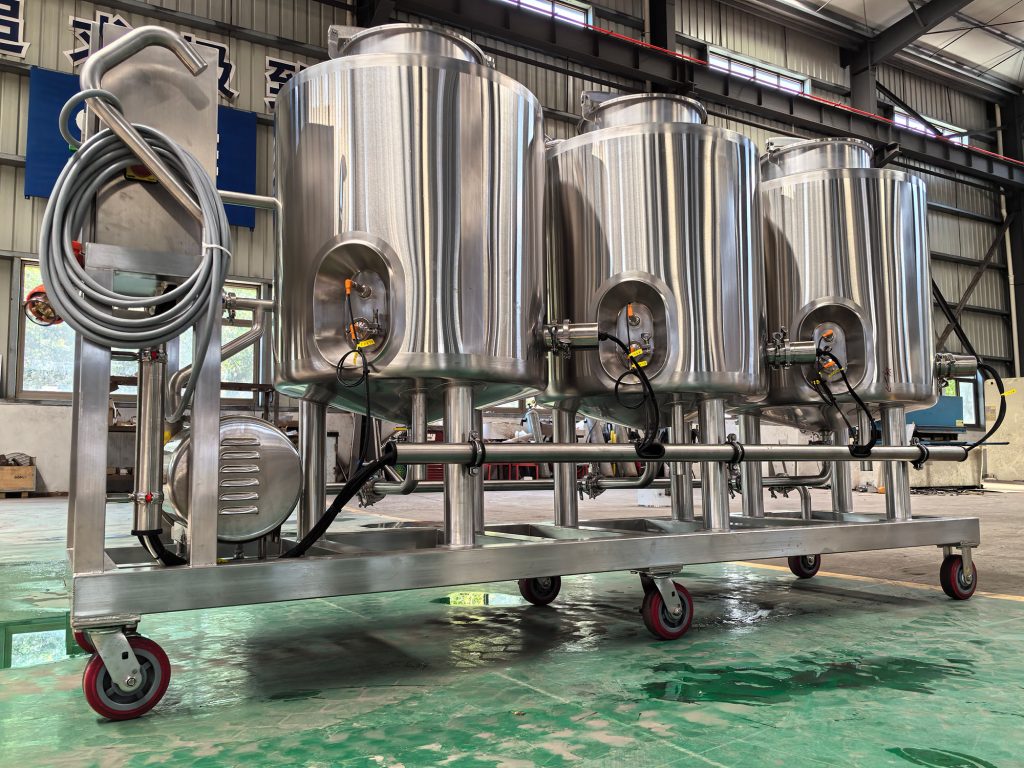
CIP tank cleaning is an automatic way to clean brewery equipment. You do not need to take it apart. Cleaning liquids move through tanks, pipes, valves, and pumps under controlled pressure and temperature. This process removes yeast, sugar, proteins, hop residue, and bacteria left after brewing.
A full CIP system has several cip tanks, pumps, pipes, valves, sensors, and cip nozzles. Each cleaning cycle follows a set program to make sure every surface is cleaned well.
Modern breweries use different liquids for different jobs:
-
Hot water removes loose dirt
-
Alkaline cleaner removes organic things like proteins and sugars
-
Acid solution removes beer stone and mineral deposits
-
Clean water washes away all chemicals at the end
Compared with washing by hand, cip tank cleaning equipment gives many benefits:
-
More consistent cleaning
-
Lower labour costs
-
Better safety for workers
-
Less water and chemical use
-
Shorter downtime
Why Breweries Need an Automatic CIP System
As breweries grow, production gets more complex. A medium brewery may have many fermentation tanks, bright beer tanks, and pipes that need regular cleaning. Cleaning by hand takes a lot of time and may not give the same results every time.
An automatic cip tank cleaning system helps solve these problems. Every cleaning cycle follows the same program, giving the same quality each time. This is very important when breweries make different beer styles. Any yeast or flavour left from the last batch can change the next product.
Food safety is another big reason to use CIP. Poor cleaning lets bacteria and wild yeast grow in tanks. These can spoil beer and hurt a brewery’s name. A good CIP system helps breweries meet food safety rules. Automatic cleaning also cuts downtime. Tanks are ready for the next batch much faster.
Main Parts of CIP Tank Cleaning Equipment
Every cip tank cleaning equipment system has several important parts. Each part helps make cleaning effective and reliable.
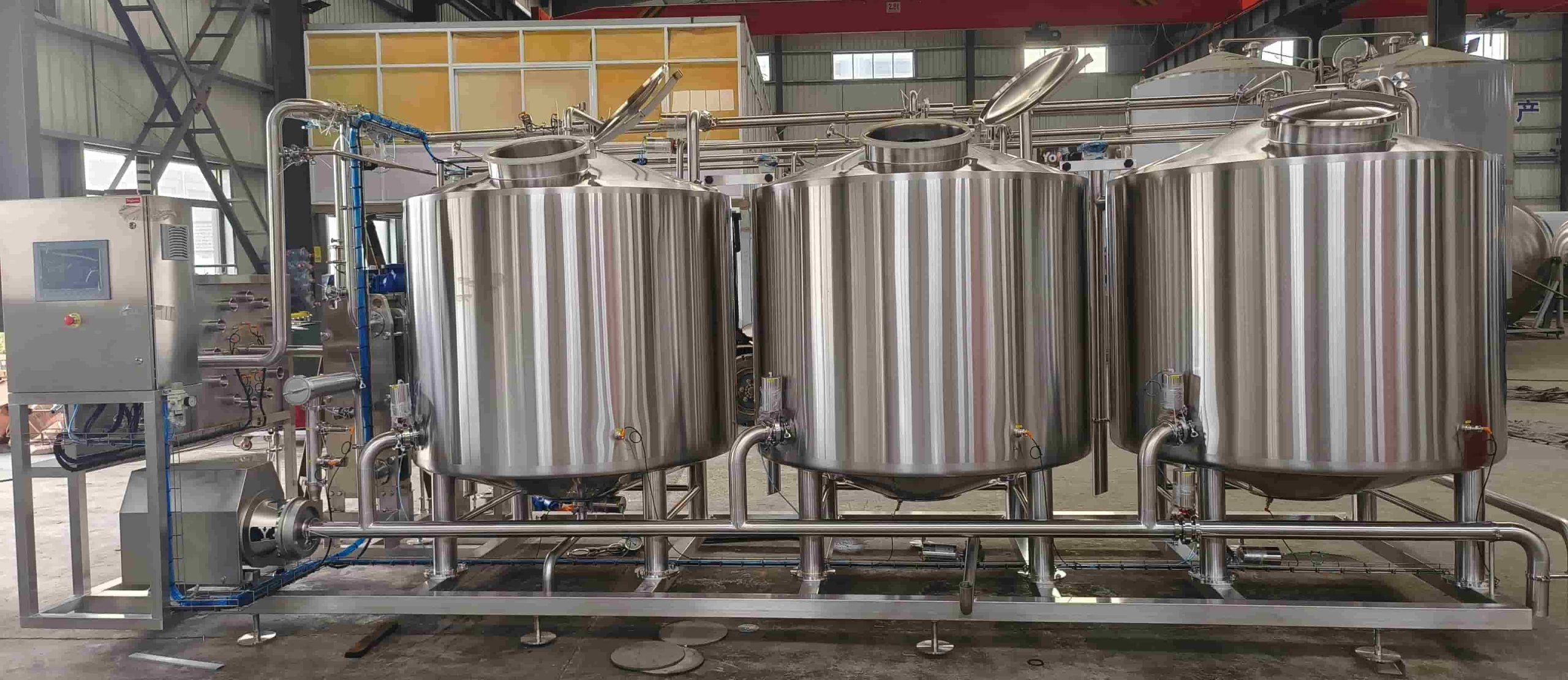
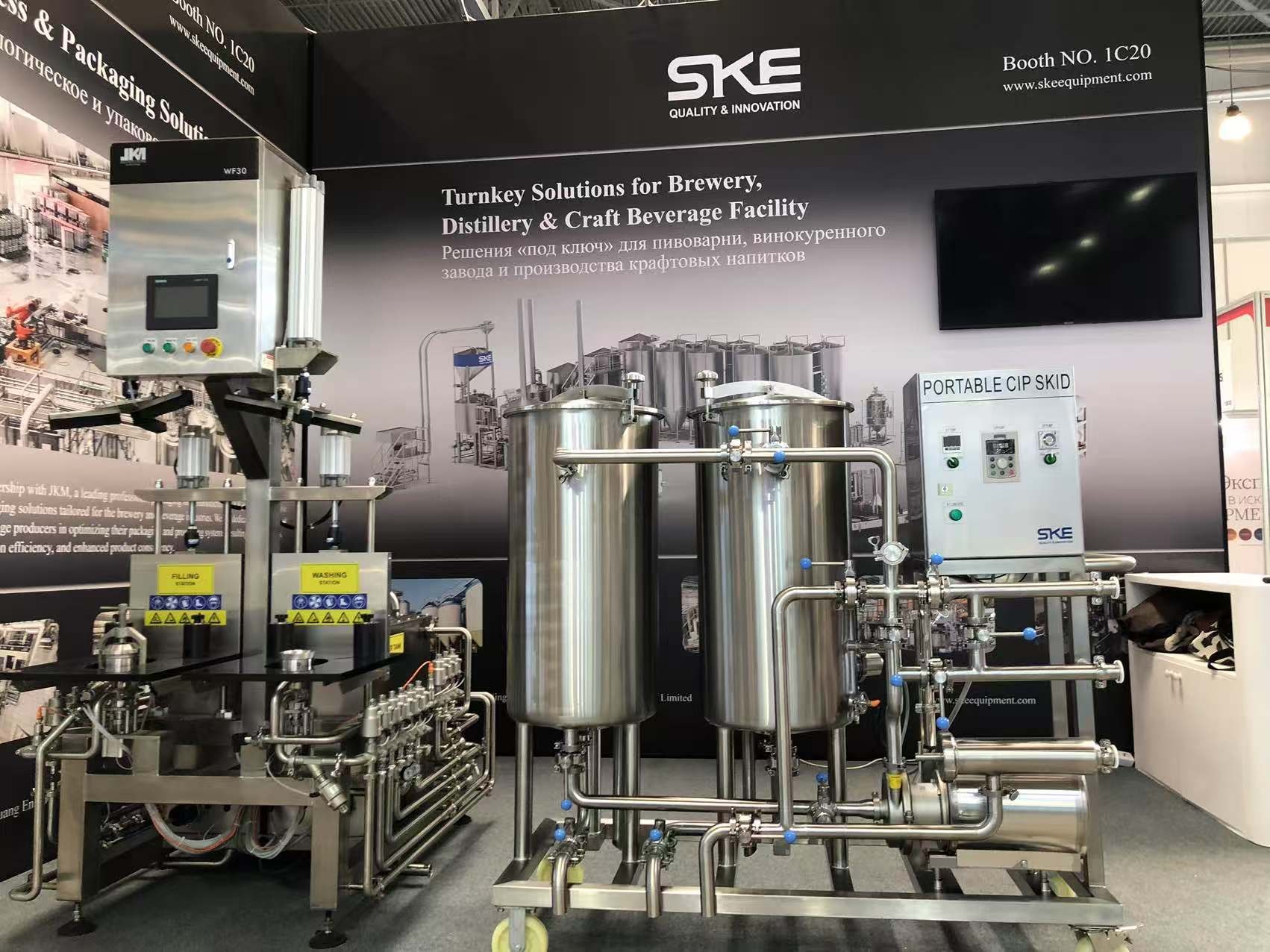
CIP Tanks – These hold the different cleaning liquids. Most systems have a hot water tank, an alkaline cleaner tank, an acid tank, and a rinse water tank. Bigger breweries may also have a recovery tank to recycle water. Good stainless steel cip tanks do not rust and last a long time.
Pumps and Pipes – Pumps move cleaning liquids through the system. The right flow creates turbulence that helps remove dirt. Sanitary pipes connect the CIP station with all the tanks.
CIP Nozzle – A cip nozzle sprays cleaning liquid over the inside of the tank. Small tanks often use fixed spray balls. Large tanks use rotary spray heads. Rotary cip nozzles give stronger cleaning while using less water.
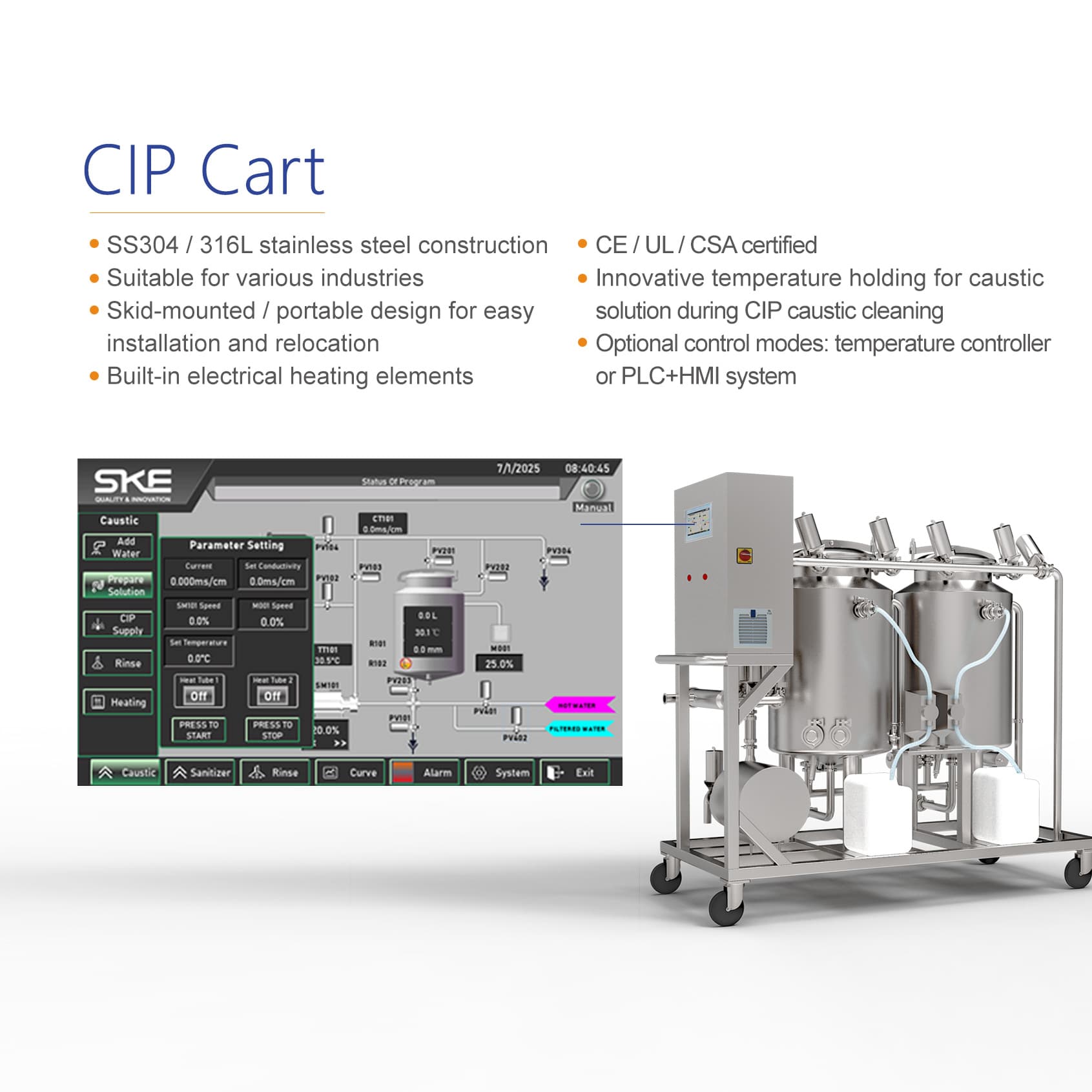
Control System – Modern CIP systems use PLC automatic control. Workers can check temperature, time, and flow on a screen. This makes cleaning more consistent and reduces mistakes.
The TACT Principle of CIP Cleaning
Good cip tank cleaning needs four important things. These are called the TACT Principle.
| Factor | What It Does |
|---|---|
| Time | Liquid must stay long enough to remove dirt |
| Action | Flow and spray pressure create mechanical cleaning |
| Chemical | Correct strength removes proteins, sugar, and minerals |
| Temperature | Hot liquids clean better and dissolve tough residues |
These four factors work together. If one factor is lower, another needs to be higher. For example, if temperature is lower, cleaning time may need to be longer. Modern cip tank cleaning equipment controls all four factors automatically.
How Does a CIP Cleaning Cycle Work?
Most cip tank cleaning systems follow the same basic steps.
Step 1: Pre-rinse – Warm water removes loose yeast, beer, and hop pieces.
Step 2: Alkaline wash – Hot cleaner removes proteins, sugars, and other organic things from tank walls.
Step 3: Intermediate rinse – Clean water washes away the cleaner before acid starts.
Step 4: Acid wash – Acid removes beer stone and mineral deposits. Regular acid cleaning helps equipment last longer.
Step 5: Final rinse – Clean water removes all remaining chemicals. Some breweries also sanitise before filling tanks.
Because every step is automatic, modern cip tank cleaning equipment gives reliable quality and less work for operators.
Brewery Equipment Maintenance Tips
A good cip tank cleaning system works best with regular maintenance. Cleaning keeps equipment sanitary. Maintenance keeps the system reliable.
Workers should check pumps, valves, pipes, and sensors every day. Even a small leak wastes water and energy. Check cleaning chemicals often too. Over time, the strength of solutions changes. Measuring conductivity helps workers know when to change the solution.
The cip nozzle should also be checked often. A blocked or broken nozzle cannot spray correctly. This leaves some areas dirty. Regular cleaning and replacement keep spray coverage good.
Breweries should also calibrate temperature and flow sensors on schedule. Preventive maintenance improves cleaning, lowers repair costs, and keeps production running.
Common CIP Problems and Solutions
Even good cip tank cleaning equipment can have problems. Knowing these issues helps breweries clean better.
| Problem | Possible Cause | Solution |
|---|---|---|
| Poor cleaning | Temperature too low or chemical weak | Check TACT settings and adjust |
| High water use | No water recovery system | Add recovery tanks |
| Dirty spots in tank | Wrong nozzle or poor spray | Use rotary head, check position |
| Beer stone build-up | Acid cleaning not done often | Add acid to maintenance schedule |
| Blocked pipes | Yeast or hop residue inside | Flush pipes after each batch |
By watching system performance and following a maintenance plan, breweries can keep their cip tank cleaning equipment working well.
Why Choose SKE CIP Equipment?
Every brewery has different needs. SKE designs cip tank cleaning equipment for each customer. Whether you run a craft brewery or a large industrial one, our engineers can make a custom solution.
SKE makes cip tanks from food-grade stainless steel. We use sanitary welding and polished inside surfaces. These features make equipment easy to clean, rust-proof, and long-lasting.
Our systems come with manual, semi-automatic, or full PLC control. Workers can easily check cleaning time, temperature, flow, and chemical strength on a screen. SKE also cares about the environment. Our systems support water recycling and efficient chemical use.
With years of experience, SKE helps customers build safe, efficient, and modern breweries worldwide.
Manual Cleaning vs CIP Tank Cleaning
The table below compares cleaning by hand with an automatic cip tank cleaning system.
| Item | Manual Cleaning | CIP Tank Cleaning |
|---|---|---|
| Cleaning Time | Long | Short |
| Labour Cost | High | Low |
| Water Use | High | Lower with recovery |
| Cleaning Quality | Depends on worker | Same every time |
| Worker Safety | Lower | Higher |
| Downtime | Longer | Shorter |
For medium and large breweries, an automatic CIP system is better in efficiency, hygiene, and long-term costs.
Frequently Asked Questions (FAQ)
1. What is CIP tank cleaning?
It is an automatic way to clean brewery equipment without taking it apart. It saves time and cuts labour costs.
2. What are CIP tanks used for?
They hold hot water, cleaner, acid, and rinse water for the cleaning process.
3. Why is a CIP nozzle important?
It sprays cleaning liquid evenly over the tank inside. Good spray means every surface gets clean.
4. How often should breweries do CIP cleaning?
Most breweries clean after each batch or before switching to a different beer.
5. Can a CIP system save water?
Yes. Modern systems can recycle rinse water and help breweries use less water.
6. How long does a CIP cycle take?
A normal cycle takes 60 to 120 minutes, depending on tank size and dirt level.
Conclusion
A good cip tank cleaning system is important for every modern brewery. It protects beer quality, improves safety, cuts labour costs, and makes equipment last longer. As production grows, an automatic CIP system also helps breweries use less water, chemicals, and energy.
At SKE, we provide full cip tank cleaning equipment for medium and large breweries. Our solutions include quality cip tanks, efficient cip nozzles, smart PLC control, and custom design.
If you are building a new brewery or upgrading your cleaning system, SKE can help. Contact our team to learn more about our brewery CIP solutions.
- Facebook: SKE Equipment Facebook
- Email: info@skeequipment.com
Fill out the contact form below for customized solutions. We fully support all your production equipment demands for breweries and beverage plants.