Introduction: Why CIP Tank Washing Matters
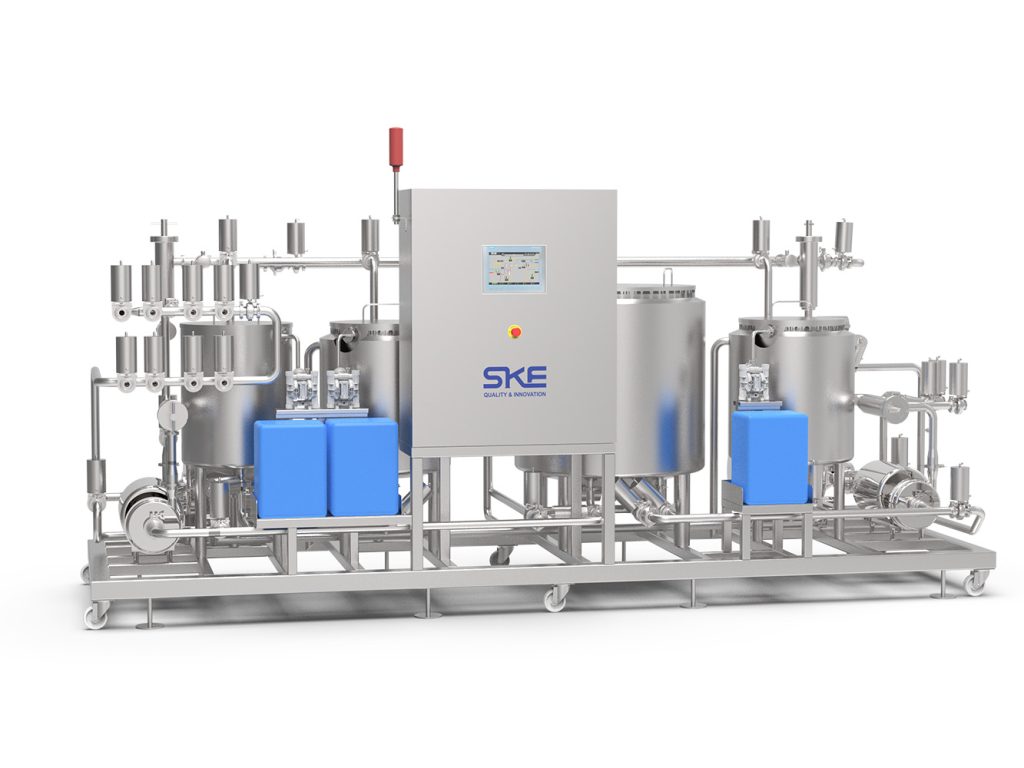
CIP stands for Clean-in-Place. A CIP clean in place system cleans tanks and pipes without disassembly. It pumps cleaning solutions through spray balls inside the tanks. These spray balls direct the solution onto every surface.
For medium to large breweries, a CIP clean in place system is a necessity. Large-scale brewing means many tanks to clean and strict quality standards to meet. A CIP system helps you do this consistently and cost-effectively.
This guide explains the key benefits of CIP tank washing and shows how SKE can help you.
1. What Is a CIP System and How Does It Work?
A CIP system is an automated cleaning process. It cleans tank interiors and pipes without taking anything apart. In a clean in place CIP system, equipment stays in place during cleaning.
The system uses a closed-loop cycle. Cleaning solutions circulate through the equipment and return to the system. Here are the main components:
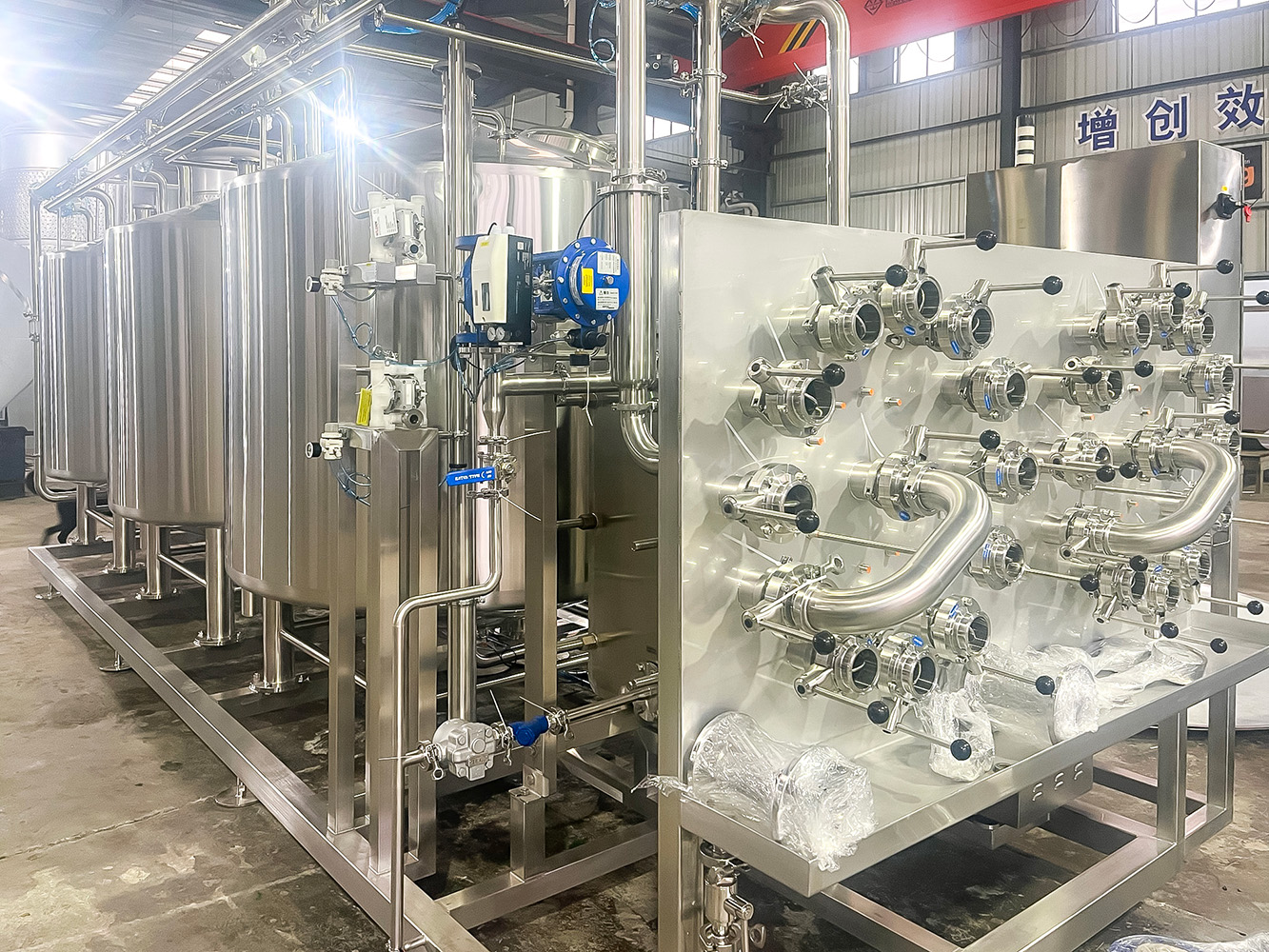
CIP Supply and Return Pumps: These move the cleaning solutions. The supply pump pushes solution to the spray devices. The return pump pulls used solution back.
Spray Balls or Rotary Jets: These are installed inside tanks. They direct cleaning solution onto all internal surfaces. Some are static, while others rotate for stronger cleaning.
Chemical Tanks: These hold caustic solutions, acid solutions, and rinse water. In some systems, these can be reused.
Control Panel: This is the system brain. It controls timing, temperature, and flow. Automation makes the process repeatable and reliable.
A standard CIP cycle follows these steps:
-
Pre-rinse with water to remove loose debris.
-
Caustic wash to remove organic soils like leftover beer and yeast.
-
Intermediate rinse with water.
-
Acid wash to remove mineral deposits like beerstone.
-
Final rinse with water.
-
Sanitization to kill any remaining bacteria.
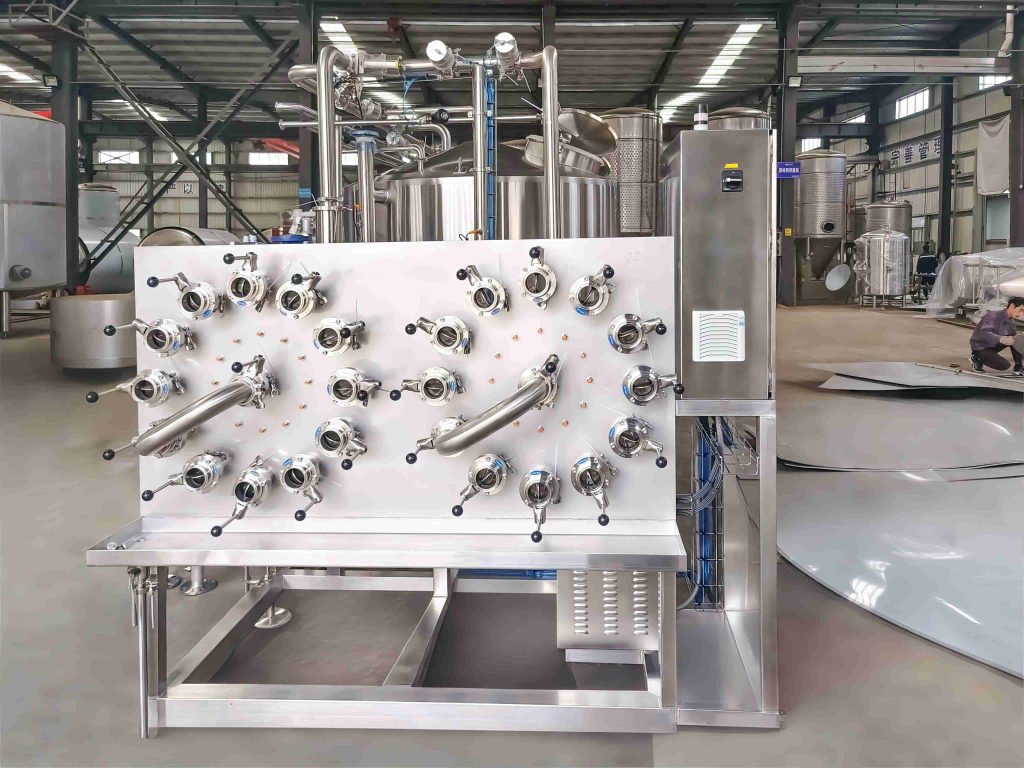
SKE provides high-quality CIP systems for medium to large breweries. We offer compact and modular designs to save space. Our focus is on safety, efficiency, and deep cleaning.

2. The Role of the CIP Spray Ball in Tank Washing
The CIP spray ball is a vital part of any CIP clean in place system. It delivers the cleaning solution to the tank surface. Without a good spray ball, the solution cannot reach all areas.
A spray ball is a hollow sphere with small holes or nozzles. It is installed at the top of the tank. Cleaning solution is pumped through it under pressure and sprays out through the nozzles.
This spray impacts the tank walls and flows down over surfaces. This mechanical action helps remove stubborn soils that chemicals alone cannot dissolve.
For many years, fixed spray balls were standard. They are simple with no moving parts. However, for larger tanks, they may not provide enough cleaning power. The spray can be weak and may not cover everything.
For medium to large breweries, rotary jet heads are often better. These have nozzles that rotate as solution passes through. This rotation covers the entire tank surface effectively.
Rotary jet heads also provide high-impact cleaning. They use mechanical energy to remove soils. Some rotary devices are EHEDG certified for hygienic design.
At SKE, we understand the importance of the spray ball. We design our CIP systems to use the best cleaning devices for your tanks. We can integrate both static and rotary options for thorough cleaning.
3. Key Advantages of CIP Systems for Breweries
Switching to a CIP clean in place system offers many benefits. For medium to large breweries, these advantages are critical for your bottom line and beer quality.
3.1. Better Product Quality and Consistency
The most important job is making high-quality beer. A CIP system helps in two ways.
First, it removes all contamination. Leftover beer, yeast, and hops can spoil the next batch. They can also harbor bacteria. A CIP system uses strong chemicals and hot water to remove everything.
Second, it gives a repeatable process. A CIP system cleans the same way every time. There is no human error. This leads to consistent cleaning and consistent beer quality.
3.2. Major Time and Labor Savings
Manual cleaning is slow and requires many staff. Workers must disassemble equipment, climb into tanks, and scrub by hand. This takes hours.
A CIP system automates everything. Workers do not enter tanks. They just set controls and let the system run. This frees staff for brewing and production.
For example, manual cleaning might take several hours per tank. A good CIP system can clean the same tank in about 40 minutes. This is a huge time saving.
3.3. Lower Water and Chemical Costs
Water and chemicals are major costs in any brewery. CIP systems use these resources efficiently.
Many CIP systems can reuse cleaning solutions. A “recovery type” system captures caustic and acid solutions. These can be used for multiple cycles. This significantly reduces chemical costs.
CIP systems also use less water than manual cleaning. Cycles are carefully timed. Some breweries report water usage reductions of up to 30% after installing modern CIP systems.
4. Cleaning Tanks vs. Cleaning Pipes in a CIP System
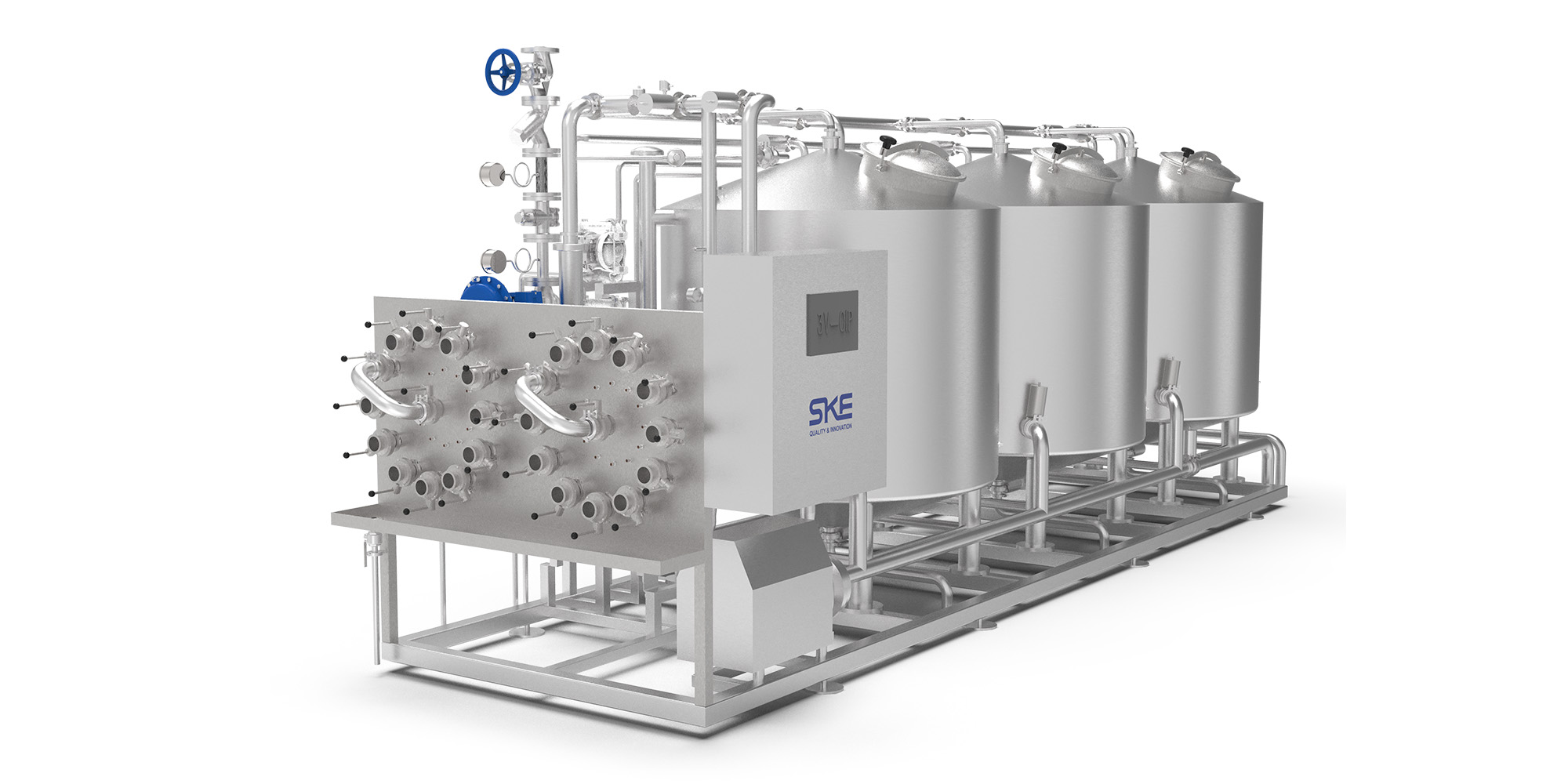
A CIP clean in place system must clean both tanks and pipes. The requirements for each are different.
Cleaning Tanks
When cleaning a tank, the spray ball must reach every surface. The tank should be kept as empty as possible. This allows the spray to impact the walls directly. If the tank floods, mechanical action is reduced, and cleaning becomes more like soaking.
Key factors for tank cleaning are:
-
Supply pressure (set by the spray ball manufacturer)
-
Flow rate (volume of solution supplied)
-
Time (duration for a full wash cycle)
Cleaning Pipes
Cleaning pipes is different. No spray balls are used inside pipes. Instead, the cleaning solution flows directly through. For effective cleaning, the pipe must be full of liquid, and the flow must be “turbulent.”
Turbulent flow creates friction that removes soil from pipe walls. Laminar flow is smoother and does not clean well. Achieving turbulent flow requires a specific flow rate based on pipe diameter.
A good CIP system handles both tank and pipe cleaning. Pumps must provide the right pressure for spray balls and the right flow rate for pipes.
At SKE, we design systems for your specific brewery needs. We consider tank sizes and pipe lengths. This ensures every part of your system is cleaned perfectly.
5. How Automation Improves CIP Performance
Automation is a major advantage of modern CIP clean in place systems. An automated system removes guesswork and ensures perfect cleaning every time.
Automation brings these key benefits:
Repeatable Accuracy: The system follows a preset program. It always uses the same temperature, chemical concentration, and cycle time. This removes human error.
Reduced Labor Costs: Staff do not need to monitor the process constantly. They can start a cycle and focus on other tasks.
Better Data and Control: Modern systems record data from every cycle. This is useful for quality control and regulatory compliance.
Integration with Production: Automated systems can integrate with your brewing schedule. They can start cleaning automatically when a tank becomes empty.
Automation also saves water and chemicals. By optimizing cycle times, the system uses only what is necessary. This is better for the environment and your costs.
SKE is a leader in automation for breweries. Our systems are easy to operate and highly efficient. We design them to be safe and to reduce operating errors.
6. SKE’s CIP Solution for Medium to Large Breweries
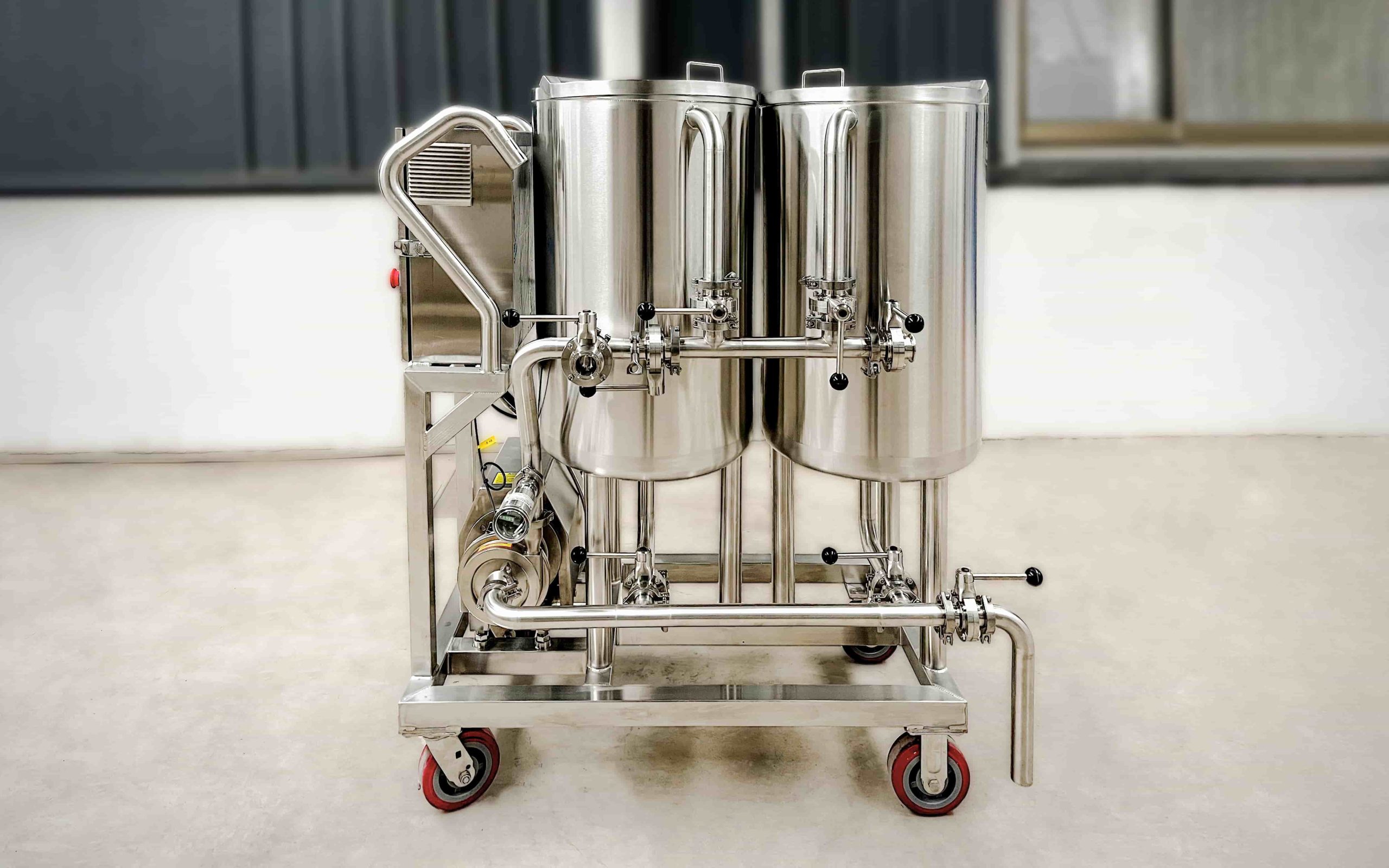
SKE is a world-class brewery equipment manufacturer. We understand the challenges of medium to large scale brewing. Our CIP clean in place systems are designed to meet those challenges.
Our CIP systems include these key features:
-
Easy Operation: Our systems are simple to operate and maintain. The controls are clear and intuitive.
-
Multi-Supply and Return: We design systems that can handle multiple cleaning circuits. This lets you clean several tanks at once, saving time.
-
Deep Cleaning: Our systems remove even the most stubborn soils. This ensures the highest product quality.
-
Space Saving: We offer compact designs that fit your existing layout. Modular options allow future expansion.
-
Energy and Water Saving: SKE systems minimize resource consumption. This lowers operating costs and reduces environmental impact.
7. Summary Comparison: CIP vs. Manual Cleaning
The table below compares CIP tank washing with traditional manual cleaning.
| Feature | Manual Cleaning | CIP Tank Washing |
|---|---|---|
| Process | Manual scrubbing and disassembly | Automated solution circulation |
| Time Required | Several hours per tank | About 40 minutes or less |
| Labor Required | High, workers enter tanks | Low, automated operation |
| Consistency | Varies by worker | Highly consistent |
| Worker Safety | Risk of chemicals and confined spaces | Safe, operators are isolated |
| Water Usage | High | Low to moderate |
| Chemical Usage | High, hard to control | Lower, solutions can be reused |
| Product Quality | Risk of human error | Consistent and thorough |
Frequently Asked Questions (FAQ)
Q1: What is the typical sequence of a CIP cleaning cycle?
A: The typical sequence is pre-rinse with water, caustic wash for organic soils, intermediate rinse, acid wash for mineral deposits, final rinse, and sanitization to kill bacteria.
Q2: How does a spray ball clean the inside of a tank?
A: Cleaning solution is pumped through the spray ball under pressure. It sprays out through small holes, impacting the tank walls and flowing down over all surfaces to remove soils.
Q3: How much time does a CIP system save compared to manual cleaning?
A: Manual cleaning can take several hours per tank. A CIP system can complete a cycle in about 40 minutes. This saves significant time and labor costs.
Q4: How does a CIP system help me save money?
A: CIP systems save money by reducing labor, water, and chemical usage. Many systems can reuse caustic and acid solutions, lowering chemical expenses further.
Q5: Does SKE provide support and spare parts for its CIP systems?
A: Yes. SKE keeps a full inventory of spare parts. Most parts can be shipped within 48 hours. We also offer remote troubleshooting and on-site service.
Conclusion
For medium to large breweries, cleaning is a critical part of brewing. Your beer quality depends on it. CIP tank washing is the best way to ensure your equipment is perfectly clean and safe.
A CIP clean in place system offers major benefits: better quality, time and labor savings, lower water and chemical costs, and improved worker safety.
SKE is your trusted partner for brewing solutions. We design and build CIP systems that are easy to use, efficient, and reliable. We have a global presence and over 300 successful projects.
If you want to improve your brewery’s cleaning process, SKE can help. We will design a system that fits your needs and support you every step of the way. Contact SKE today to learn more and brew better beer.
- Facebook: SKE Equipment Facebook
- Email: info@skeequipment.com
Fill out the contact form below for customized solutions. We fully support all your production equipment demands for breweries and beverage plants.