
Introduction: Why Pasteurization Matters
Pasteurization is an important process in modern food and beverage production. It uses controlled heat to reduce harmful microorganisms and improve product stability.
Milk is one of the most common applications. A dairy pasteurizer heats milk to a controlled temperature for a set time and then cools it quickly. This helps meet food safety rules while protecting product quality.
Pasteurization is also used for fruit juice, beer, and other liquid products. However, each product has different needs. The temperature, holding time, equipment, and process control must match the product.
For large production plants, in line pasteurization is a popular solution. Modern pasteurizers can also recover heat from the hot product. This can reduce the energy needed for heating and cooling.
This article explains how a dairy pasteurizer works and how similar technology is used for juice and beer. It also explains flash pasteurization and the role of heat recovery in cutting factory costs.
Key Takeaways
- HTST pasteurization for Grade A milk requires at least 72°C (161°F) for 15 seconds under the FDA Pasteurized Milk Ordinance; exact rules vary by product and region.
- The same heat-hold-cool principle applies to milk, juice, and beer, but each product needs different equipment because of pulp, acidity, alcohol, and CO₂.
- Regenerative heat exchangers recover heat from the outgoing hot product to preheat incoming cold product, cutting external heating and cooling energy use.
- Not every product needs pasteurization: many craft breweries sell unpasteurized beer when it is distributed locally under controlled conditions.
What Is a Dairy Pasteurizer?
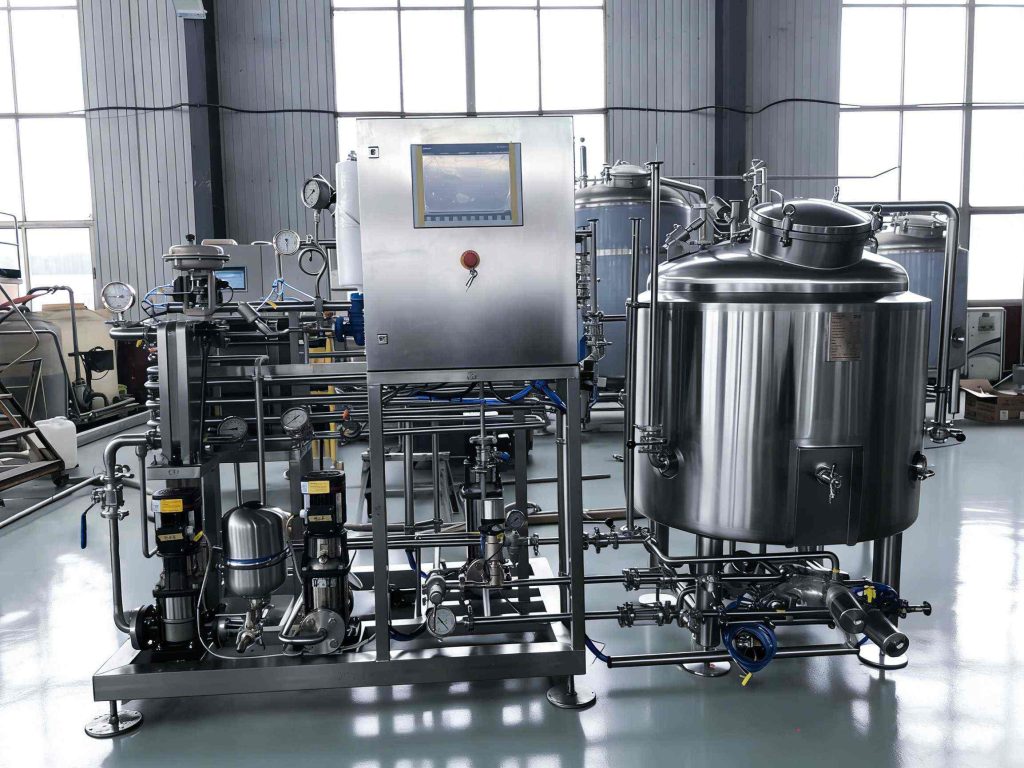
A dairy pasteurizer is a machine used to heat and cool milk under controlled conditions.
The main goal is to reduce harmful microorganisms to the level required by food safety rules while keeping the quality of the milk.
High Temperature Short Time (HTST) pasteurization is widely used for milk. For example, in the United States, a common HTST condition for Grade A milk is at least 72°C (161°F) for 15 seconds, per the FDA Grade “A” Pasteurized Milk Ordinance. Actual requirements depend on local regulations and the type of product.
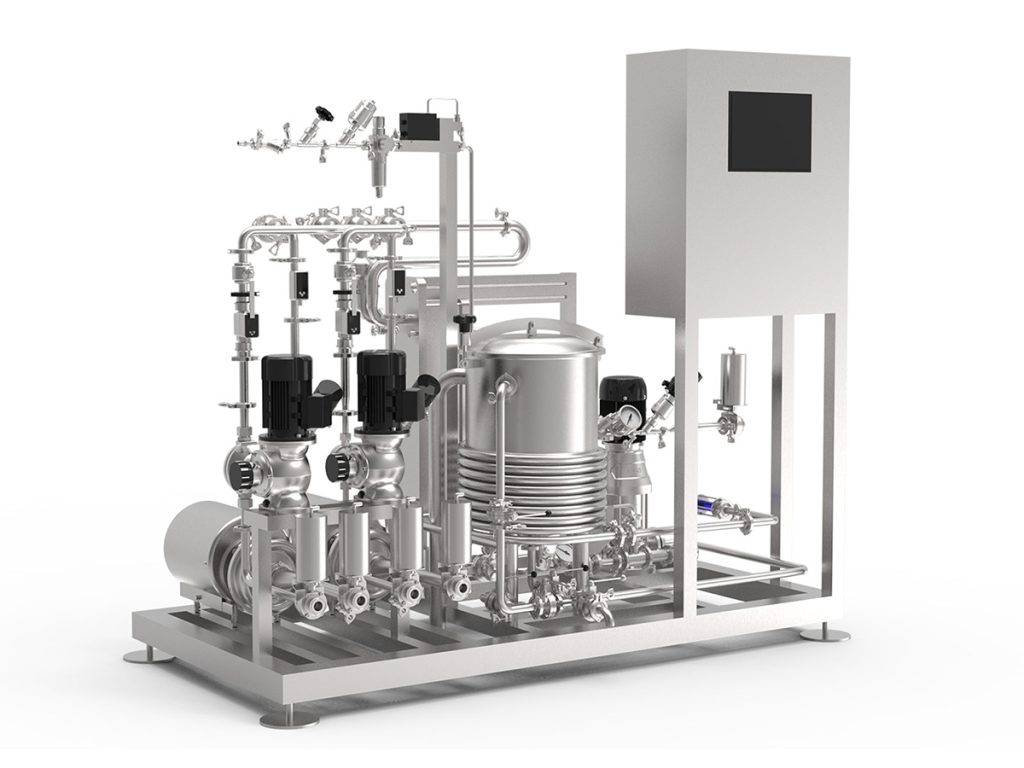
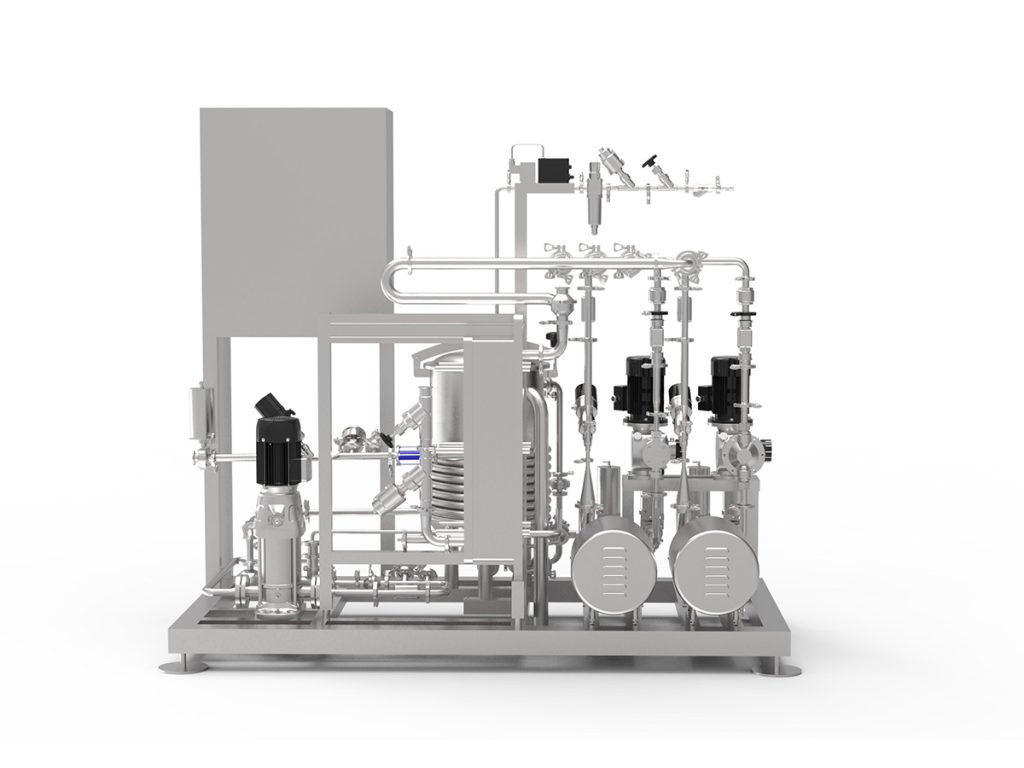
A modern dairy pasteurizer normally includes:
-
Balance tank
-
Product pump
-
Plate heat exchanger
-
Heating section
-
Holding tube
-
Temperature sensors
-
Flow diversion valve
-
Cooling section
-
PLC control system
-
CIP system
These parts work together to provide stable and hygienic processing.
How Does a Dairy Pasteurizer Work?
The basic process flow is:
Preheating → Heating → Holding → Flow Control → Cooling
- Cold milk enters the balance tank and is pumped into the heat exchanger.
- The milk is preheated by hot pasteurized milk on the other side of the heat exchanger (heat recovery).
- It then enters the heating section and reaches the required pasteurization temperature.
- The heated milk passes through a holding tube that provides the exact required holding time.
- After holding, the milk is cooled quickly.
A flow diversion valve acts as a critical safety device. If the milk does not reach the required temperature, the valve automatically diverts the product back for reprocessing.
This automatic control ensures the pasteurization process remains safe and consistent.
Heat Recovery in a Dairy Pasteurizer
Energy consumption is a major cost factor for large food and beverage plants.
Without heat recovery, cold milk requires more steam or hot water for heating, while hot pasteurized milk needs more cooling capacity.
A regenerative heat exchanger solves both problems:
- Hot pasteurized milk transfers heat to cold incoming milk through stainless steel plates.
- Incoming milk is preheated.
- Outgoing milk is partially cooled.
- Less external heating and cooling energy is required.
The actual heat recovery rate depends on heat exchanger design, product flow rate, temperature difference, fouling, and other process conditions. In large dairy plants, effective heat recovery can deliver substantial energy and cost savings.
What Is In-Line Pasteurization?
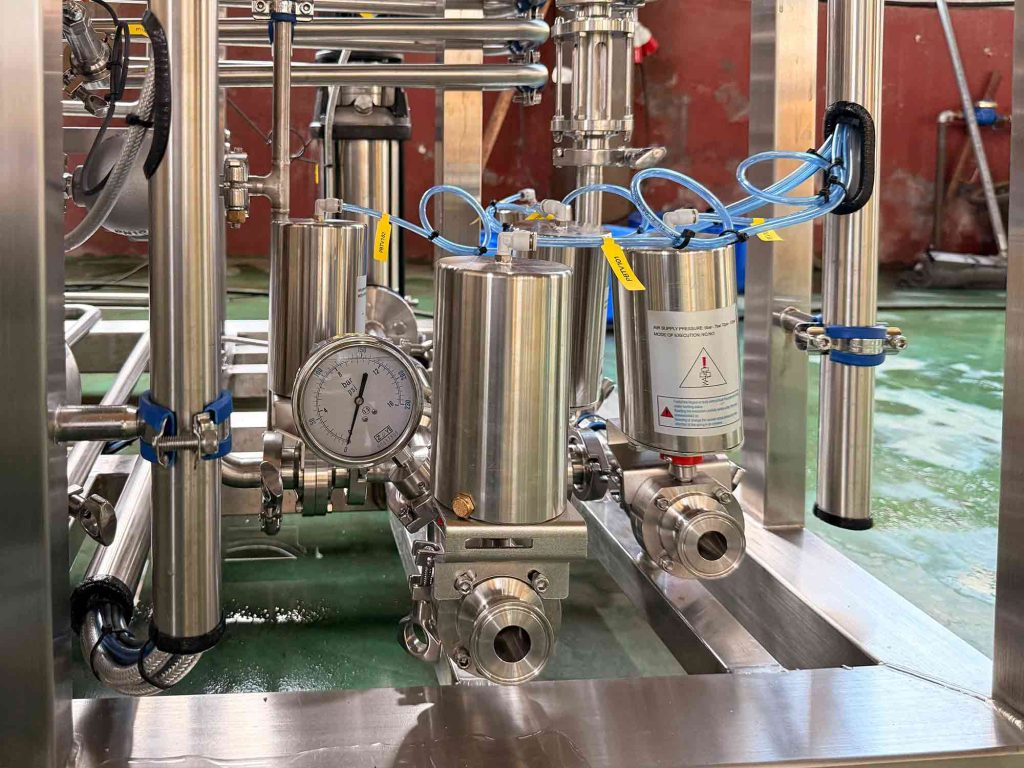
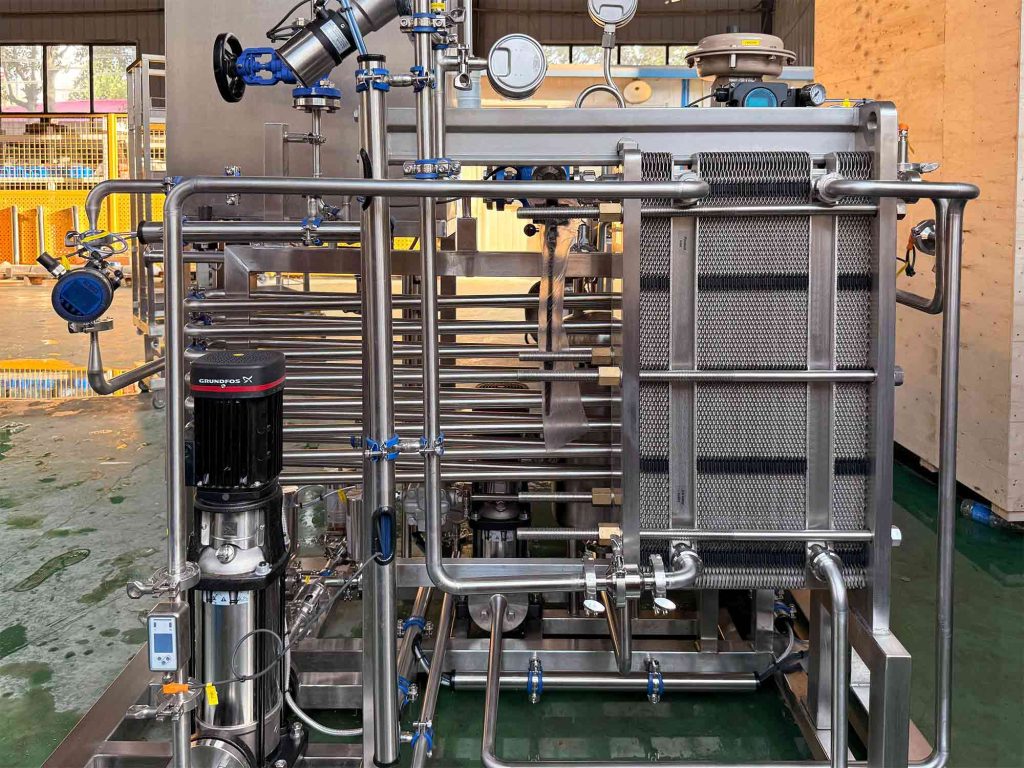
In-line pasteurization is a continuous process. The liquid product flows through the pasteurizer while it is heated, held, and cooled — without stopping for batches.
A typical system includes:
- Product pumps
- Heat exchangers
- Holding tubes
- Temperature sensors
- Control valves
- PLC controls
- Heating and cooling systems
Key Advantages
| Advantage | Benefit |
|---|---|
| Stable process control | Continuous monitoring of temperature, flow, and holding time |
| High production capacity | Ideal for high-flow-rate plants |
| Better heat recovery | Efficient heat transfer between hot and cold streams |
| Easy system integration | Connects smoothly with fillers, tanks, filtration, and CIP systems |
For these reasons, in-line pasteurization is widely used in dairy, juice, beverage, and brewery production.
Juice Pasteurizer: Similar Process, Different Product
A juice pasteurizer uses controlled heat to reduce microorganisms and improve product stability. The basic principle is similar to a dairy pasteurizer, but juice has different characteristics:
- Fruit pulp
- Varying acidity levels
- Different sugar content
- Suspended solids
- Natural enzymes
- Sensitive flavor compounds
These factors influence equipment design. Plate heat exchangers work well for many clear juices, while tubular heat exchangers are often preferred for juices containing pulp or larger particles.
Temperature control is especially important — excessive heat can negatively affect taste, color, aroma, and overall quality. The process must be carefully matched to the specific juice and production line.
Beer Pasteurization: How Is It Different?
Beer is another important product that can be pasteurized.
The main purpose of beer pasteurization is to improve microbiological stability and help keep beer quality stable during storage and distribution.
Beer is different from milk and juice. It contains alcohol, carbon dioxide, hops, proteins, and other compounds.
Because of this, beer pasteurization needs its own process design.
Flash Pasteurization
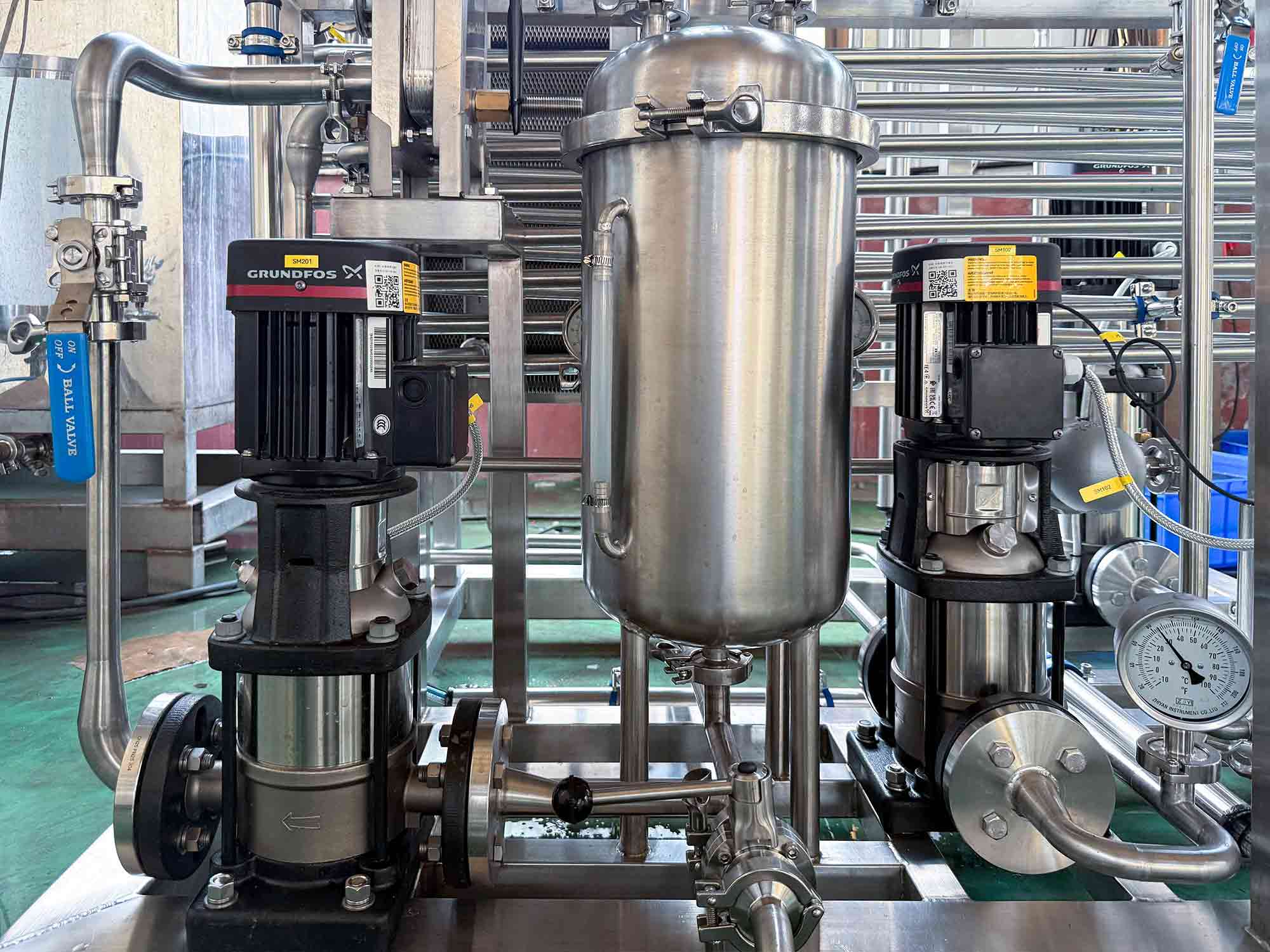
Flash pasteurization treats beer before filling.
Beer flows continuously through a heat exchanger. It is heated, held for the required process time, and then cooled before filling.
Main benefits include:
-
Continuous production
-
Good temperature control
-
Compact equipment
-
Potential for heat recovery
-
Easy connection to the filling line
Flash pasteurization is often a good choice for breweries with continuous production and high beer flow rates.
What Does the Biggest Beer Brand Need from Pasteurization?
The phrase biggest beer brand is often used when people talk about large global beer producers.
Large beer producers need stable product quality during storage and long-distance transportation. Pasteurization can be part of their quality-control process when it fits the product.
However, not every beer needs pasteurization.
Many craft breweries sell unpasteurized beer, especially when the beer is sold locally and stored under controlled conditions.
Other breweries use pasteurization when they need better microbiological stability for wider distribution.
The decision should be based on the beer style, packaging, storage, distribution, and product quality goals—not simply on the size of the brewery.
Dairy Pasteurizer vs. Juice Pasteurizer vs. Beer Pasteurization
The basic idea is similar, but each product needs different equipment and process control.
| Feature | Dairy Pasteurizer | Juice Pasteurizer | Beer Pasteurization |
|---|---|---|---|
| Main goal | Food safety | Product stability | Product stability |
| Common equipment | Plate heat exchanger | Plate or tubular heat exchanger | Flash pasteurizer |
| Product features | Milk fat and protein | Acidity, pulp, solids | Alcohol, CO₂, hops |
| Main concern | Hygiene and fouling | Flavor and color | Flavor and aroma |
| Common process | HTST | Continuous | Flash |
| Heat recovery | Very suitable | Suitable for many systems | Very suitable |
The right pasteurizer should be selected based on the complete production process, not only the heating temperature.
How to Choose the Right Pasteurization Equipment
Choosing the right pasteurization equipment requires more than checking the heating temperature.
1. Production Capacity
The pasteurizer should match the required product flow rate.
A small brewery, dairy plant, and large commercial factory can have very different capacity needs.
2. Heat Recovery
A regenerative heat exchanger can reduce the need for external heating and cooling.
Ask the equipment supplier to provide an energy balance based on your actual process conditions.
3. Temperature and Flow Control
Accurate sensors, control valves, and PLC systems help keep the process stable.
4. CIP System
The equipment should support effective CIP cleaning and easy maintenance.
Good hygienic design is especially important for dairy and beverage production.
5. Product Quality
The process should provide the required microbial control without unnecessary heat exposure.
6. System Integration
The pasteurizer should work with the rest of the production line, including tanks, filling machines, pumps, cooling systems, utilities, and CIP.
Written by Mandy, Marketing Specialist at SKE Equipment with two years of experience covering the company’s brewing and beverage processing equipment. Technical details in this guide were reviewed by SKE’s engineering team before publication.
How SKE Supports Brewery Pasteurization
SKE is a professional beer equipment manufacturer providing brewery equipment and complete brewing solutions.
For breweries that need pasteurization, SKE can design systems based on production capacity, beer flow rate, packaging format, automation needs, and plant layout.
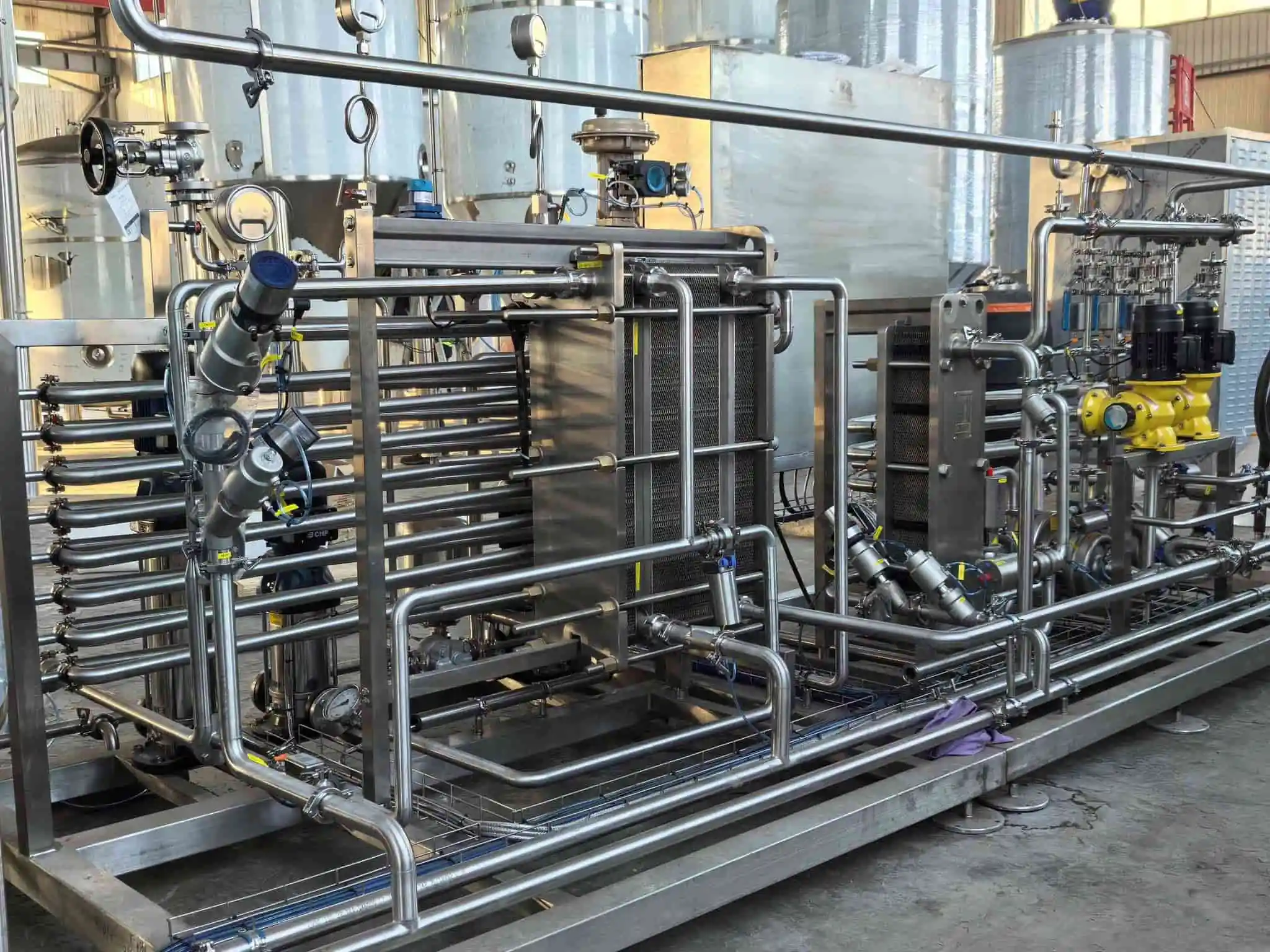
SKE brewery pasteurization solutions can include:
-
Beer flash pasteurizers
-
In-line pasteurization systems
-
Plate heat exchangers
-
PLC control systems
-
Automatic temperature control
-
CIP integration
-
Heat recovery systems
For breweries focused on energy efficiency, regenerative heat exchange can be an important part of the system.
By transferring heat between incoming and outgoing product streams, the system can reduce the external energy needed for heating and cooling.
SKE can support new brewery projects, production expansion, equipment replacement, and process upgrades.
FAQ
1.What is a dairy pasteurizer?
A dairy pasteurizer is a system that heats and cools milk under controlled conditions. It normally includes heat exchangers, a holding tube, temperature controls, a flow diversion valve, and a CIP system.
2.What is in line pasteurization?
In line pasteurization is a continuous process where liquid moves through heating, holding, and cooling sections. It is commonly used for milk, juice, beer, and other liquid products.
3.What is a juice pasteurizer?
A juice pasteurizer is equipment designed to heat and cool juice under controlled conditions. Its design depends on the juice’s acidity, pulp, solids, viscosity, and other properties.
4.Does every beer need pasteurization?
No. Some breweries produce unpasteurized beer. The choice depends on the beer, packaging, storage, distribution, and required product stability.
5.Why is heat recovery important?
Heat recovery transfers heat from a hot product stream to a cold product stream. This can reduce the energy needed for heating and cooling.
6.How does SKE provide pasteurization solutions?
SKE provides brewery pasteurization equipment, including flash pasteurizers, heat exchangers, PLC controls, CIP integration, and heat recovery systems.
Conclusion
A dairy pasteurizer is an important system for safe and controlled milk processing. The same basic heat treatment principle is also used for juice, beer, and other beverages.
A juice pasteurizer must handle the special properties of juice, while beer pasteurization must consider alcohol, CO₂, hops, flavor, and packaging.
For high-volume production, in line pasteurization provides continuous processing and good process control. With regenerative heat exchange, modern pasteurizers can also recover heat and reduce external energy demand.
For breweries, flash pasteurization offers an efficient solution for continuous production. The right choice depends on the product, packaging, production capacity, and distribution needs.
SKE provides professional brewery pasteurization equipment and complete brewery solutions. From flash pasteurization to heat exchangers, automation, CIP, and heat recovery, SKE can design a system around your production needs.
If you have any further questions, feel free to reach out!
- Facebook: SKE Equipment Facebook
- Email: info@skeequipment.com
Fill out the contact form below for customized solutions. We fully support all your production equipment demands for breweries and beverage plants.