
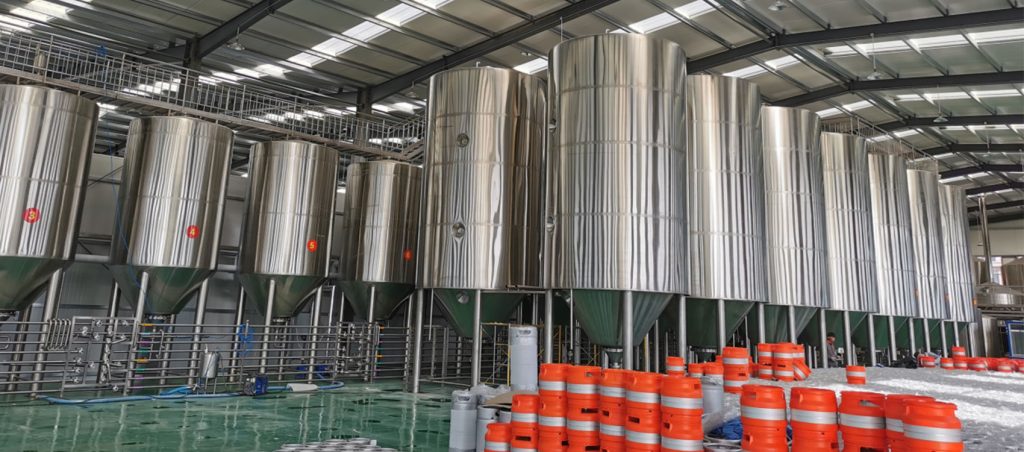
Fermentation equipment is one of the most important investments in a brewery. It affects beer flavor, production time, product consistency, and cleaning costs. For new breweries and expanding plants, choosing the right equipment is essential for long-term growth.
Modern fermentation equipment does more than hold beer. It provides temperature control, manages pressure, protects beer from oxygen, and supports effective cleaning.
This guide explains the main types of fermentation equipment, compares common tank sizes, and covers the key technical points buyers should check. It also explains how SKE supports breweries with stainless steel fermenters and complete brewery solutions.
What Does Fermentation Equipment Do?
Fermentation equipment provides a controlled environment for yeast to turn sugars into alcohol, carbon dioxide, and other compounds that shape beer flavor. Yeast produces heat during this process, so the tank must remove excess heat and maintain a suitable temperature.
Good equipment must manage four main factors: temperature, oxygen, pressure, and hygiene.
- Temperature control helps yeast work at the correct rate. Poor control can change beer flavor and extend fermentation time.
- Oxygen control matters after fermentation begins. Unwanted oxygen causes oxidation and reduces freshness. Proper tank design, sealed connections, and suitable transfer methods help limit oxygen exposure.
- Pressure control allows brewers to manage fermentation pressure and, where the tank is designed for it, support carbonation and CO2 collection. Every pressurized vessel needs a suitable design pressure and correctly selected safety devices.
- Hygiene control protects beer from contamination. Smooth product-contact surfaces, hygienic fittings, clean welds, and effective cleaning procedures reduce the risk of microbial growth.

The Main Types of Fermentation Equipment
Different breweries need different tank designs. The best choice depends on beer style, production volume, floor space, and the required process.
Cylindrical-Conical Fermenters
Cylindrical-conical tanks (CCTs) are widely used in commercial brewing. They have a cylindrical body and a cone-shaped bottom that collects yeast and solids in one place.
Brewers can remove yeast through a bottom outlet without transferring all the beer. This supports efficient tank use and simplifies yeast handling. A well-designed CCT usually includes cooling jackets, suitable sampling and outlet valves, pressure monitoring where required, and a cleaning system compatible with the tank geometry.
Unitanks
A unitank combines fermentation and conditioning in one vessel. Depending on its design and pressure rating, it can also support carbonation.
This reduces the need to transfer beer between tanks. It saves floor space and handling steps, making it useful for breweries with limited space or flexible schedules. However, a unitank may cost more than a basic fermenter. Buyers should confirm that its pressure rating, cooling capacity, and fittings meet every intended process.
Open Fermenters
Open fermenters are used for certain traditional methods and beer styles. Their open design allows easy access during some stages, but it also increases exposure to the environment.
These tanks require suitable room conditions and strict hygiene. They are not the default choice for most modern commercial breweries, especially when closed processing and pressure control are important.
Laboratory and Pilot Fermenters
Small fermenters help breweries test recipes, yeast performance, and fermentation conditions before full production. Pilot systems also check whether a recipe performs as expected at a larger scale.
A successful scale-up requires more than multiplying batch size. Cooling performance, mixing conditions, tank geometry, and fermentation behavior may change as volume increases. Pilot equipment should therefore provide useful process data for later production decisions.
Why Stainless Steel Fermenters Are the Standard Choice
Stainless steel fermenters are widely used because they combine strength, corrosion resistance, cleanability, and long service life.
Beer is mildly acidic, and brewing involves cleaning chemicals and repeated temperature changes. A suitable stainless steel grade helps the tank resist corrosion. The correct material depends on the process, cleaning chemicals, and operating environment.
The inner surface is just as important as the material. Smooth product-contact surfaces, properly finished welds, and hygienic fittings prevent soil buildup and make cleaning more effective. Crevices and damaged surfaces create areas that are difficult to clean.
For commercial use, buyers should check:
-
Material: Confirm the stainless steel grade and its suitability.
-
Surface finish: Review internal finish and weld quality.
-
Pressure rating: Verify design pressure and permitted operating conditions.
-
Cleaning design: Check whether the tank supports the planned CIP process.
-
Cooling performance: Confirm the system can handle the expected heat load.
-
Documentation: Request material information, drawings, and inspection records.
Stainless steel is not automatically hygienic. Good design, proper fabrication, and correct cleaning are all necessary.
Fermentation Equipment by Production Scale
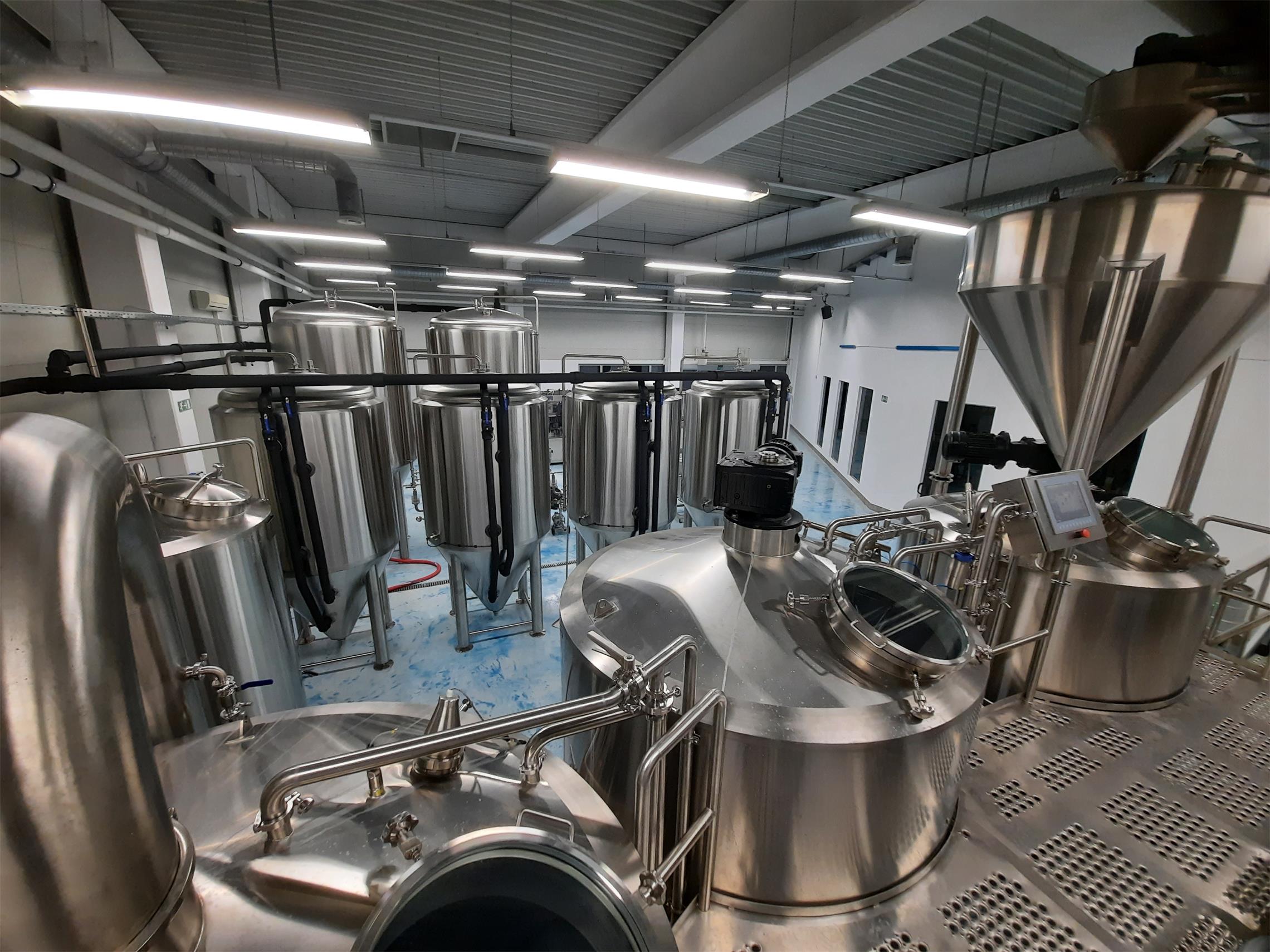
Fermentation equipment is available in many sizes. The table below provides illustrative examples, not fixed industry standards. Actual volume depends on production plan, batch size, fermentation time, and expansion strategy.
| Scale | Illustrative Tank Volume | Main Purpose | Key Requirements |
|---|---|---|---|
| Laboratory | 10–50 L | Recipe and yeast testing | Precise control, easy sampling |
| Pilot | 200–1,000 L | Recipe scale-up trials | Flexible operation, repeatable cleaning |
| Craft production | 1,000–10,000 L | Commercial beer production | Cooling, hygienic design, pressure control where required |
| Large-scale production | 10,000 L and above | High-volume brewing | Engineered cooling, process monitoring, automation as needed |
A brewery may use several tank sizes at once. A pilot tank can support new product development while larger fermenters handle regular orders.
Key Features to Check Before Buying
A good purchasing decision starts with the production process, not simply the tank price.
1. Cooling Capacity and Temperature Control
Fermentation produces heat, and the cooling system must remove it fast enough to maintain target temperature. Cooling jackets are common, but jacket area alone does not determine performance.
Required cooling capacity depends on batch volume, yeast activity, fermentation temperature, heat load, and the temperature and flow rate of the cooling medium. Ask the manufacturer to explain the cooling design and confirm it suits your conditions. For larger installations, also check the central glycol or cooling-water system.
2. Design Pressure and Safety
Not every fermenter is designed for pressurized operation. If you plan to ferment under pressure, carbonate in the tank, or recover CO2, confirm the vessel is designed and approved for those duties.
Check design pressure, allowable operating pressure, safety valve arrangement, pressure gauge, and inspection requirements. These components must work together as a pressure-protection system. Never assume a tank can handle pressure just because it has a sealed lid or gauge.
3. CIP Cleaning and Hygienic Design
Clean-in-place (CIP) systems help breweries clean tanks without manual entry. Spray balls distribute cleaning solution across internal surfaces.
However, a spray ball alone does not guarantee effective cleaning. Performance also depends on flow rate, pressure, spray coverage, cleaning time, chemical concentration, and surface condition. Check whether tank geometry and fittings support the planned cleaning procedure. Drainability is also important, because retained liquid creates hygiene risks.
4. Valves, Fittings, and Sampling Points
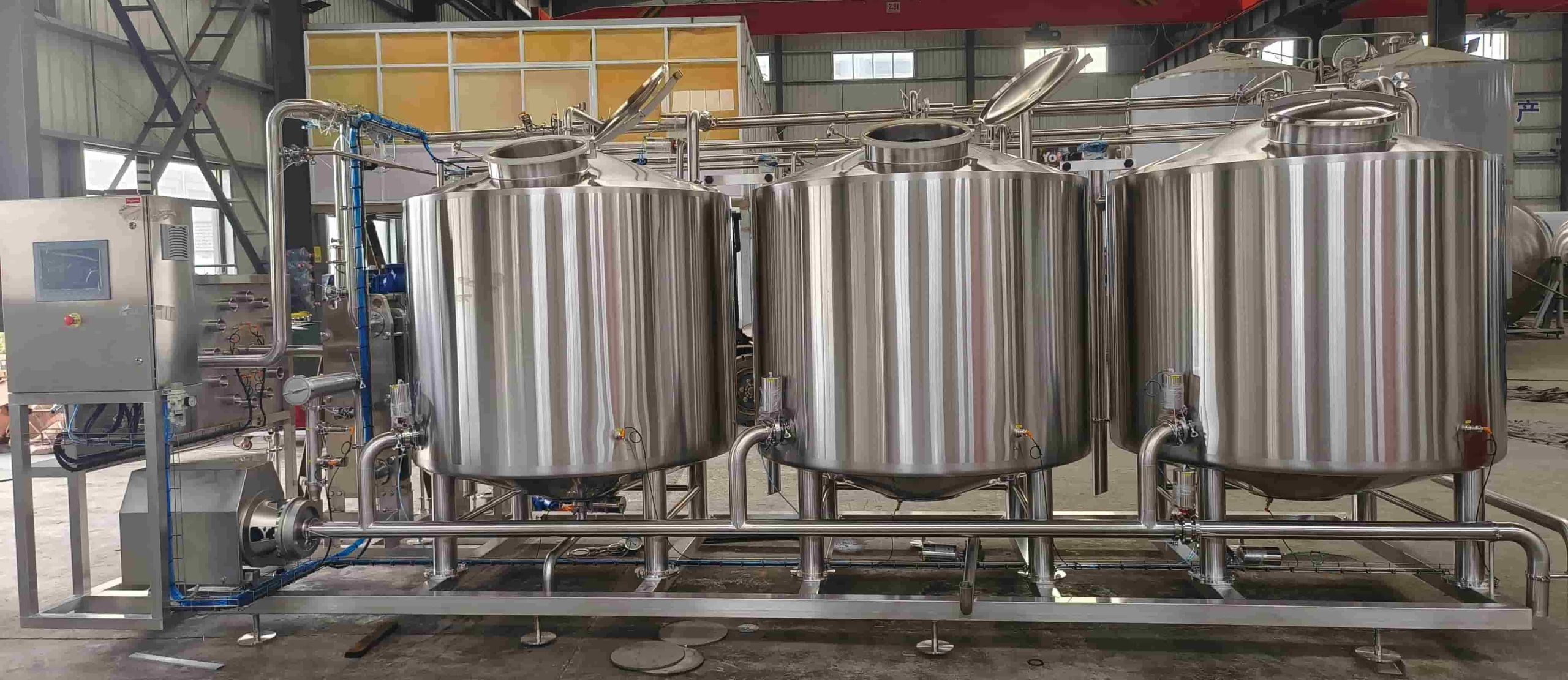
Sample valves, product outlets, pressure instruments, and other connections should be easy to operate, inspect, and clean.
The number and type of fittings should match the actual process. A brewery using dry hopping, yeast harvesting, or closed transfers may need a different configuration from one producing simpler beers. Review the tank drawing before manufacturing starts to avoid costly changes after installation.
5. Automation and Data Monitoring
A basic control system may be enough for small operations. Larger breweries often benefit from PLC-based control, temperature sensors, pressure monitoring, alarms, and data logging.
These features help operators track conditions and respond to problems quickly. They also make production records more consistent and support troubleshooting. Automation should match real needs. Consider which functions need automatic control, which require manual confirmation, and whether the system can connect with existing plant controls.
How SKE Supports Brewery Projects
SKE is a brewery equipment manufacturer providing fermentation equipment and complete brewery system solutions. Our equipment supports different production scales, from pilot brewing to commercial production.
When planning a fermentation system, our team helps buyers review tank volume, cooling arrangements, pressure requirements, fittings, cleaning methods, and control options. These decisions affect tank design, utility requirements, and daily operation, so they should be made together.
For new projects, fermentation equipment must fit brewhouse output, fermentation schedule, floor space, and expected sales. For existing breweries, new tanks should work with current utilities, cleaning procedures, and layout. SKE supports equipment configuration and project planning based on beer styles, production targets, and expansion plans. Installation guidance and after-sales support can be discussed according to project scope.
If you are selecting fermentation equipment for a new brewery or upgrading an existing plant, share your planned batch size, beer styles, target output, and site information with the SKE team. This helps us assess a suitable configuration for your operation.
Frequently Asked Questions
1. What is the difference between a beer fermenter and a unitank?
A beer fermenter is designed primarily for fermentation. A unitank combines fermentation and conditioning in one vessel and may support carbonation if its design permits. Unitanks reduce transfers and save space but may cost more.
2. Why are stainless steel fermenters popular in commercial brewing?
Stainless steel offers good corrosion resistance, mechanical strength, cleanability, and long service life when the correct grade and design are selected. These properties suit repeated brewing and cleaning cycles.
3. How do I choose the right size of fermentation equipment?
Start with planned batch volume, weekly output, fermentation time, and production cycles. Then consider peak demand, conditioning time, and future growth. Pilot tanks help validate recipes before full-scale production.
4. Does commercial fermentation equipment need a cooling jacket?
Most commercial beer fermenters need a suitable cooling system because fermentation generates heat. Cooling jackets are widely used, but required area and capacity depend on tank design and process conditions.
5. Can fermentation equipment be customized?
Yes. Tank volume, cooling arrangements, pressure rating, fittings, and control options can be specified according to project needs. The final design must meet applicable safety, hygiene, and manufacturing requirements.
6. What should I ask a manufacturer before buying?
Ask about material grade, internal surface finish, cooling performance, design pressure, CIP requirements, control options, documentation, installation support, and after-sales service. Confirm that the proposed configuration matches your production plan and available utilities.
Contact Us
If you have any further questions, feel free to reach out!
- Facebook: SKE Equipment Facebook
- Email: info@skeequipment.com
Fill out the contact form below for customized solutions. We fully support all your production equipment demands for breweries and beverage plants.