

Water touches nearly every stage of beer production, from mashing and sparging to cooling wort and cleaning equipment. As a brewery grows, water storage gets more complicated: different volumes, different temperatures, different locations on the floor.
An IBC water tank is one of the simplest ways to solve part of that problem. It’s compact, easy to move, and works well for temporary storage or flexible liquid handling. But it isn’t the right fit for every situation. Medium and large breweries usually need permanent large water storage tanks connected directly to their process systems.
This guide explains what an IBC water tank is, how breweries use them, the tradeoffs between plastic and stainless steel, and when a fixed storage system makes more sense.
Key Takeaways
- An IBC water tank is a mobile, reusable container, most commonly sized around 1,000 liters (275 gallons), built for temporary or flexible storage rather than continuous production.
- Plastic HDPE IBC tanks cost less and resist many chemicals, but they can’t handle hot water or sustained pressure. Stainless steel handles heat, pressure, and sanitary use, at a higher price.
- Fixed large water storage tanks (5,000 to 100,000+ liters) are built for continuous production, full CIP cleaning, and automation, capabilities an IBC tank isn’t designed to match.
- Many breweries run both: a fixed system for the main water supply, plus IBC tanks for overflow, chemical storage, or short-term needs.
What Is an IBC Water Tank?
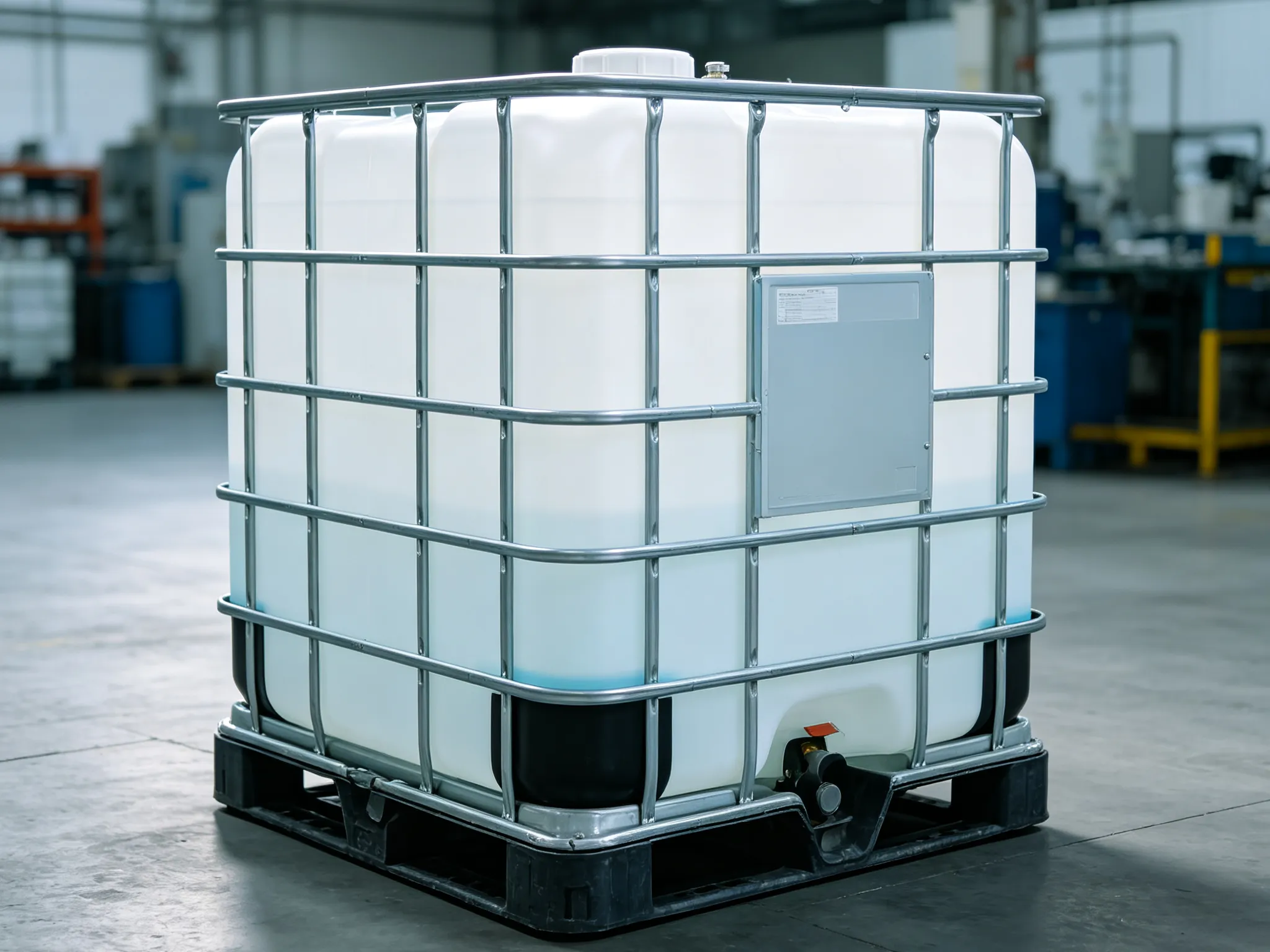
An IBC water tank is a large, reusable container for storing and moving liquids. IBC stands for Intermediate Bulk Container, larger than a drum but smaller than a permanent storage tank.
A typical IBC water tank has four main parts:
- The inner tank holds the liquid. It can be made of plastic or stainless steel.
- The protective frame, a metal cage that shields the inner tank from damage.
- The pallet base, which lets you move the tank with a forklift.
- The outlet valve, which drains the liquid safely.
The most common size is about 1,000 liters, or 275 gallons. It’s easy to move and fits standard pallets without modification.
Why Do Breweries Use IBC Water Tanks?
Breweries reach for IBC tanks mainly for flexibility: extra capacity, mobility, and short-term storage that a fixed system can’t easily provide. Water use in brewing is substantial to begin with. The Brewers Association has cited an industry average of roughly seven barrels of water used per barrel of beer produced, though the most efficient large breweries operate closer to 3:1, while smaller, less efficient operations can run far higher.
Managing that volume is a real operational challenge, and an IBC water tank helps in several specific ways.
1. Flexible Storage
When the main water system runs out of room, an IBC tank adds capacity without a construction project. It’s useful during maintenance work, seasonal production spikes, or pilot runs.
2. Mobile Liquid Handling
Mobility is the biggest advantage here. You can move an IBC tank with a forklift to wherever it’s needed, which cuts down on the permanent piping a fixed system would require at every location.
3. Temporary Storage
IBC tanks work well for short-term needs: pilot production, temporary process changes, or anything that doesn’t justify a permanent installation.
4. Chemical Storage
Many breweries also use IBC tanks to store cleaning chemicals. The tank material has to be compatible with whatever it’s holding, and food-grade certification alone doesn’t guarantee compatibility with every chemical. Always check before filling.
5. Small-Scale Operations
Small breweries and pilot facilities often rely on IBC tanks because they’re cheaper and faster to install than fixed systems. At larger production volumes, though, fixed tanks generally offer better control and automation.
Types of IBC Water Tanks
Brewing operations typically choose between two IBC tank types, plastic and stainless steel, and the right pick depends on what’s going inside.
Plastic HDPE IBC Tanks
Plastic tanks use an inner container made of HDPE, a material that’s strong and resists many chemicals.
Advantages:
- Lower cost
- Lightweight
- Easy to handle
- Good resistance to many chemicals
- Available in food-grade versions
- Works well for cold liquids
Disadvantages:
- Cannot handle very hot liquids
- Not designed for pressure
- Can be damaged by UV light
- Shorter service life
Stainless Steel IBC Tanks
Stainless steel tanks cost more up front but are built for tougher, more demanding environments.
Advantages:
- Very strong and long-lasting
- Resistant to rust and corrosion
- Can handle high temperatures
- Easy to clean
- Can be designed for pressure
- Smooth surface resists bacteria growth
Disadvantages:
- Higher cost
- Heavier
- More expensive to transport


Which One Should You Choose?
It comes down to what the tank will hold. For cold water and chemicals, plastic is affordable and gets the job done. For hot water, beer, or sanitary applications, stainless steel is the better choice. The table below lays out the direct comparison.
| Feature | Plastic HDPE IBC | Stainless Steel IBC |
|---|---|---|
| Initial cost | Lower | Higher |
| Weight | Lighter | Heavier |
| Durability | Moderate | High |
| Temperature limit | Low | High |
| Pressure service | Not suitable | Possible |
| Easy to clean | Moderate | Very easy |
| Best for | Cold water, chemicals | Hot water, beer, sanitary use |
IBC Tanks vs. Large Water Storage Tanks
The real difference is mobility versus integration: an IBC water tank is flexible and mobile, while a large water storage tank is permanent and built into the brewery’s process systems. Here’s a direct comparison.
| Feature | IBC Water Tank | Large Water Storage Tank |
|---|---|---|
| Mobility | High | Low |
| Capacity | Usually ~1,000 liters | 5,000 to 100,000+ liters |
| Installation | Simple | Requires engineering |
| Process connection | Limited | Fully integrated |
| Automation | Limited | High |
| Temperature control | Basic | Engineered with insulation |
| Cleaning | Basic | Full CIP system |
| Best for | Temporary, flexible use | Continuous production |
Many Breweries Use Both
These aren’t mutually exclusive choices. A brewery might run fixed large water storage tanks for its main water system while keeping a few IBC units on hand for temporary or mobile tasks. That combination gives it both stability and flexibility.
Important Considerations for Water Storage
Two factors decide which tank works for a given job: temperature and sanitation. Both push toward stainless steel once beer or hot water is involved.
Temperature Control
Different brewing steps call for water at very different temperatures, and that determines what the tank needs to handle.
Hot Water Storage. Mashing and sparging need hot water, typically in the 65°C to 80°C range. Good insulation matters here: without it, water cools down and the brewery has to reheat it, wasting energy. Plastic IBC tanks aren’t built for this. Heat can warp the plastic, so stainless steel is the safer option for hot water.
Cold Water Storage. After boiling, wort has to cool quickly, and cold water run through a heat exchanger handles that job. Cold storage also needs insulation; if the water warms up, the cooling process loses efficiency.
Sanitation and Cleaning
Cleanliness isn’t optional in brewing. Any contamination can ruin a batch.
Stainless steel is the standard material for sanitary use. Its smooth surface gives bacteria nowhere to hide, unlike scratched or pitted surfaces, and it’s easy to clean. In large-scale beer brewing, stainless steel is the default for anything that touches beer or process water.
Plastic IBC tanks can be cleaned too, but they scratch over time, and bacteria can take hold in those scratches. That’s why plastic isn’t recommended for storing beer or brewing water directly.
CIP systems (Clean-in-Place) spray cleaning solution inside a tank without taking it apart. Stainless steel large water storage tanks are typically designed for CIP, and some stainless steel IBC models support it as well.
What to Look for in a Brewery Equipment Manufacturer
The right supplier should be able to engineer tanks around your specific process, not just sell a standard size off the shelf. A few things are worth checking before you commit to one.
Custom engineering. Every brewery’s layout and production process is different, so tanks should be sized and configured around your actual workflow, not a generic template.
Material quality. Look for top-grade stainless steel that meets recognized international quality standards, especially for anything that touches beer or process water.
Automation and control. Automated control systems reduce manual error and make day-to-day tank operation easier to manage.
Project support. A good partner stays involved from initial design through installation, plus after-sales support once the system is running.
Hygiene-focused design. Smooth surfaces and proper drainage make a real difference in how easy a tank is to keep clean over its service life.
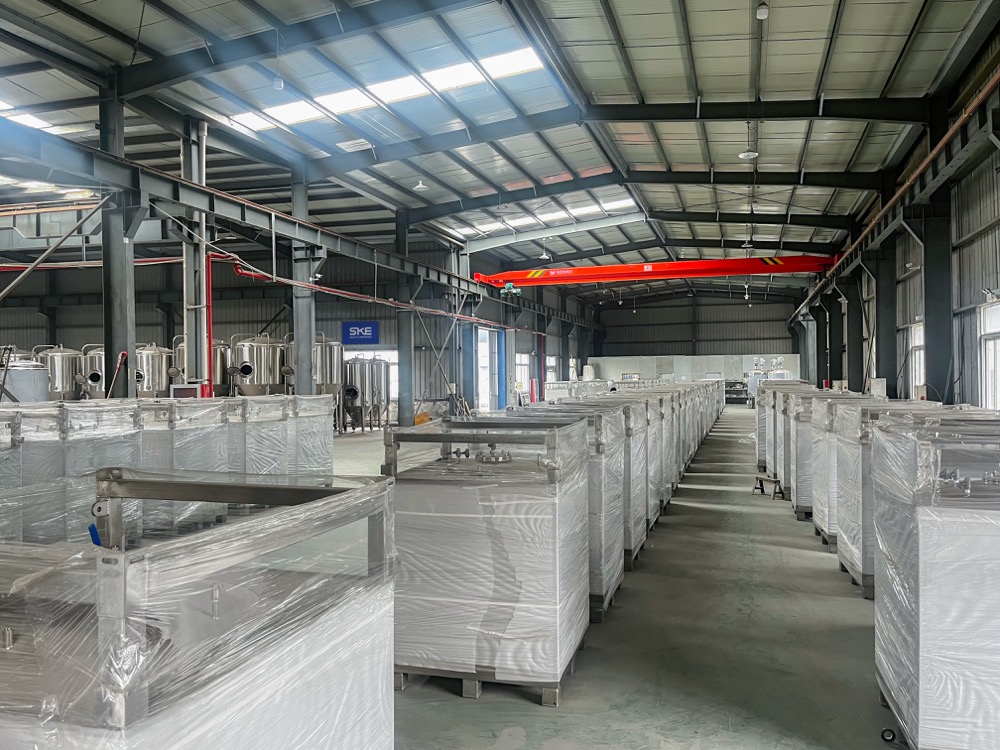
SKE Equipment designs both IBC water tank systems and custom large water storage tanks built around these criteria, for breweries at any scale.
Frequently Asked Questions (FAQ)
1. What is an IBC water tank used for in a brewery?
An IBC water tank is used for temporary water storage, mobile liquid handling, chemical storage, and flexible production needs. It isn’t a permanent solution for large-scale brewing.
2. Can I put hot water in a plastic IBC tank?
No. Plastic IBC tanks aren’t designed for hot water; heat can warp the material. Use stainless steel for hot water storage instead.
3. Is stainless steel better than plastic for brewery tanks?
It depends on the application. Plastic is affordable and works well for cold water and chemicals. For hot water, beer, or sanitary applications, stainless steel performs significantly better and holds up longer.
4. When should I choose a large water storage tank instead of an IBC?
Choose a large water storage tank when you need high capacity, continuous production, precise temperature control, or automation. These systems are typically better suited to medium and large breweries running continuous operations rather than intermittent batches.
5. What is the standard size of an IBC water tank?
The most common size is about 1,000 liters (275 gallons). It’s sized to be easy to move and to fit standard pallets.
6. How do I choose the right water storage solution for my brewery?
Start with your production volume and growth plans, then match temperature requirements and sanitation needs to a material: plastic for cold water and chemicals, stainless steel for hot water, beer, or anything requiring CIP cleaning. Many breweries end up combining a fixed system for continuous production with IBC tanks for overflow or temporary needs.
Conclusion
An IBC water tank is a genuinely useful tool for breweries: flexible, mobile, and quick to deploy for extra storage. Plastic versions are the affordable choice for cold water and chemicals; stainless steel versions handle hot water and sanitary applications that plastic can’t.
For large-scale beer brewing, though, fixed large water storage tanks are essential. They deliver the capacity, temperature control, and automation that continuous production needs, and that no IBC tank is designed to replace.
The right choice ultimately comes down to production volume, budget, and where the brewery is headed. Many breweries find they need both types of tanks working together rather than picking one over the other.
Get in touch today to learn more about IBC water tank solutions and large water storage tanks for large-scale beer brewing.
- Facebook: SKE Equipment Facebook
- Email: info@skeequipment.com
Fill out the contact form below for customized solutions. We fully support all your production equipment demands for breweries and beverage plants.