
Introduction
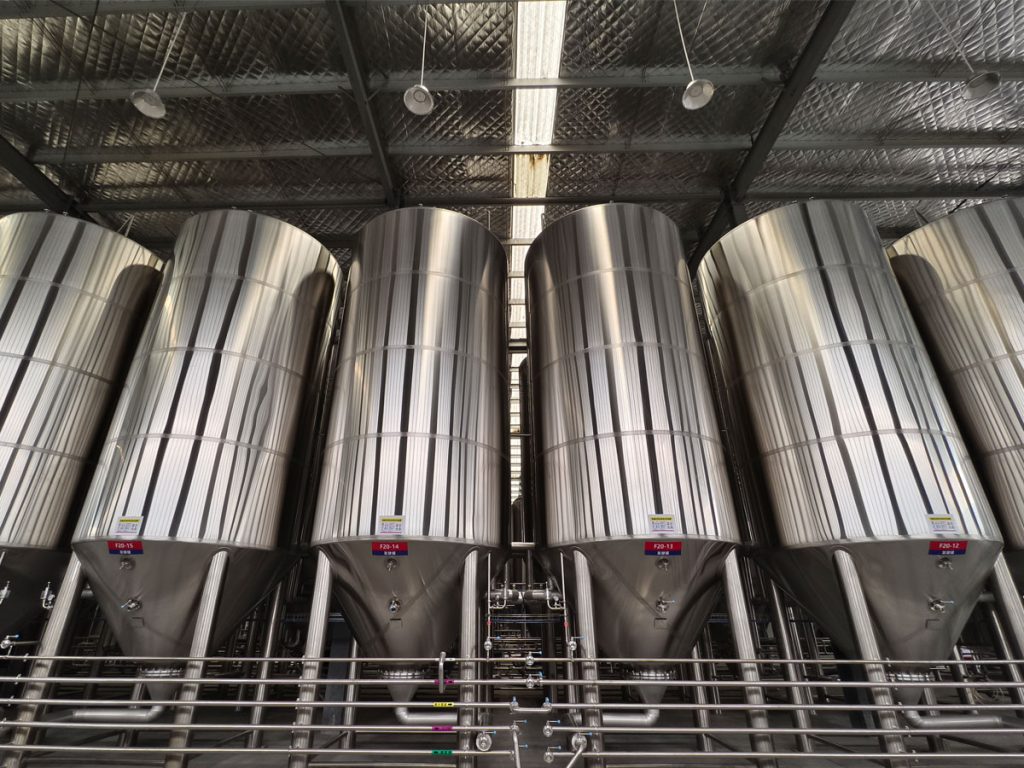
The global beer industry is dominated by large beer brands that produce millions of barrels every year. These companies serve customers in many countries at the same time. To do this well, they need modern brewing technology. Medium and large breweries are always looking for ways to improve their production. They want equipment that is reliable, efficient, and easy to clean.
This guide explains the essential equipment used in modern breweries. We will look at mixing tanks, fermenters, brewhouse systems, and more. Understanding these tools is the first step to success in the brewing industry.
The Core Equipment Every Large Brewery Needs
A modern brewery is a complex facility. It requires many different types of equipment working together. Large breweries need systems that can produce consistent beer in huge volumes. Let us look at the most important equipment categories.
Brewhouse Systems
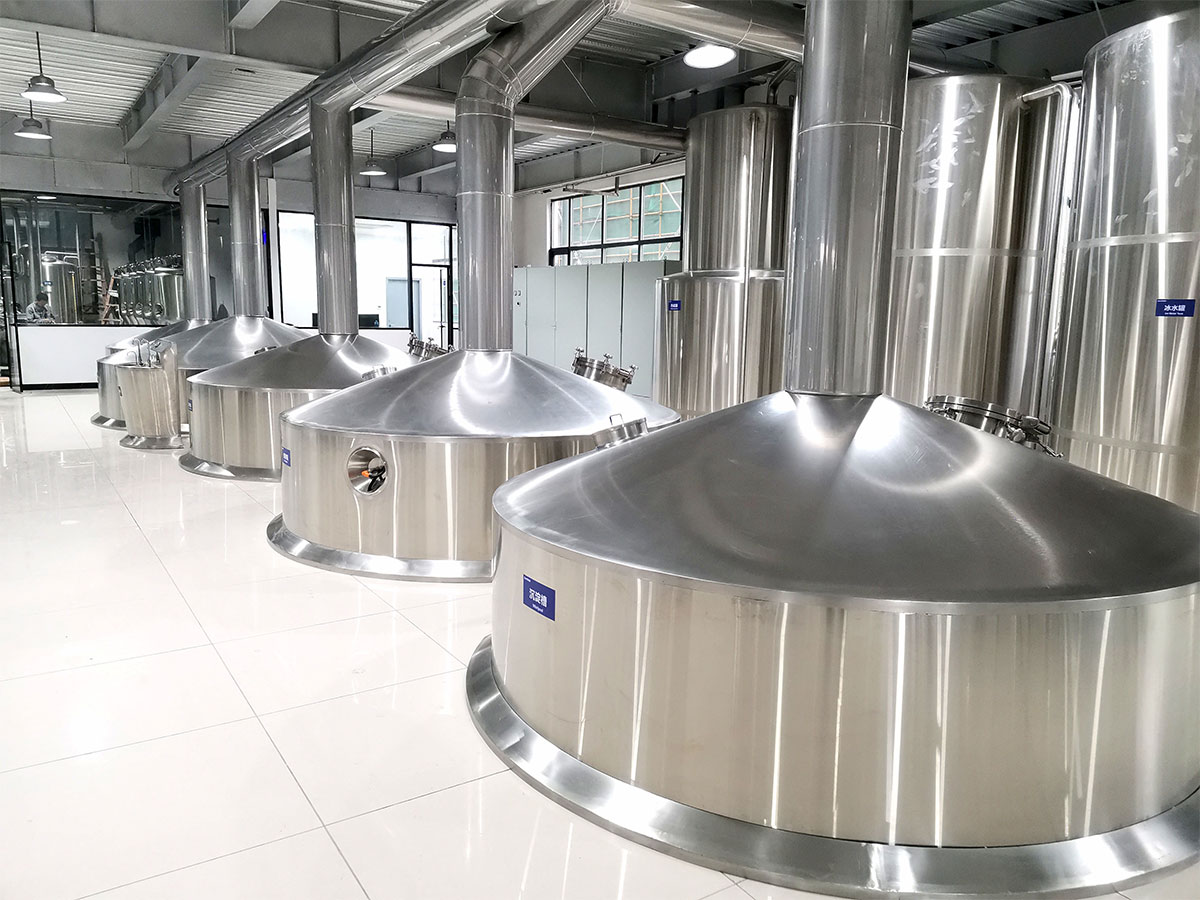
The brewhouse is the heart of any brewery. This is where raw materials become wort. Wort is the sugary liquid that will become beer. A typical brewhouse has several vessels.
The mash tun is the first vessel. Here, malted barley mixes with hot water. This process activates enzymes. These enzymes convert starches into fermentable sugars.
Next is the lauter tun. This vessel separates the sweet liquid from the spent grain. It works like a large filter.
The brew kettle comes next. Here, the wort boils with hops. This adds bitterness and flavor. It also sterilizes the liquid.
Finally, there is the whirlpool. This vessel removes solid particles from the boiled wort. It uses spinning motion to create a cone of solids at the bottom.
Many large breweries use a five-vessel configuration. This allows for continuous brewing. Modern brewhouses often have automatic valves and inline monitoring. Some systems can do 2 to 8 brews per day. Automation helps maintain consistency.
The Importance of Quality Mixing Tanks
What is a Mixing Tank?
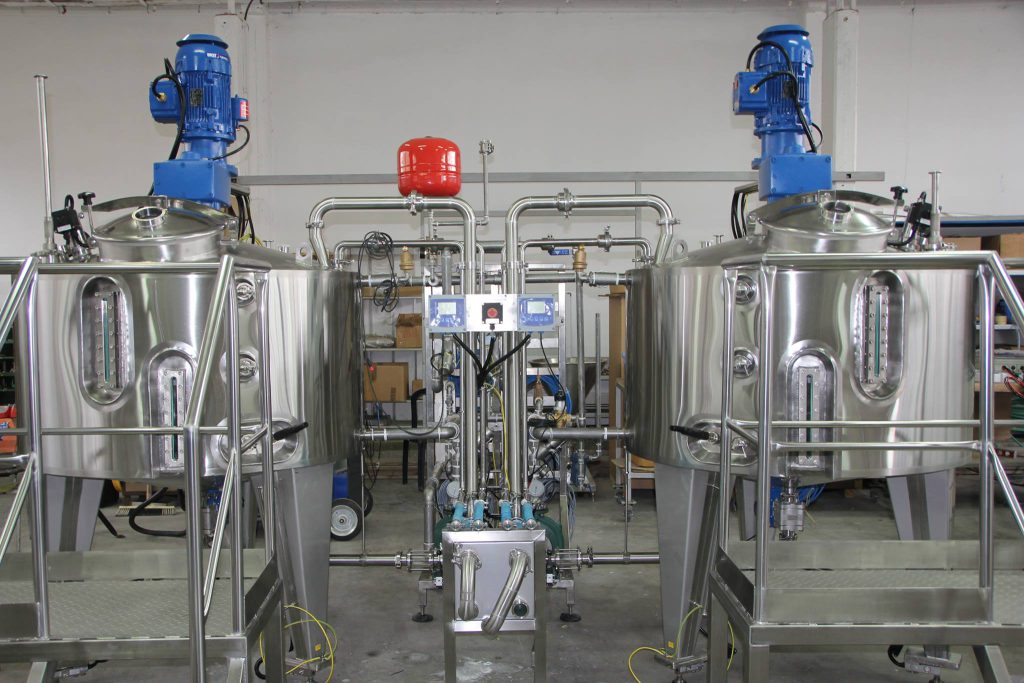
A mixing tank is a versatile piece of equipment. It is used for many purposes in a brewery. The main function is to combine ingredients thoroughly. This can be liquids, powders, or solids.
Mix tank designs vary based on their use. Some have simple agitators. Others have complex mixing blades. The tank body is usually cylindrical. This shape helps with even mixing and cleaning.
A mixing tank may also be known as a blending vessel or process tank. The names can be different, but the purpose is similar.
Features of Professional Mixing Tanks
Professional mix tanks are built to high standards. They must handle the demands of commercial brewing.
Stainless steel construction is standard. The most common grades are 304 and 316 stainless steel. Grade 316 offers higher corrosion resistance. This is important for acidic beer processing.
Temperature control is a critical feature. Many mixing tanks have heating and cooling jackets. These allow brewers to control the temperature precisely. This is essential for processes like hot water preparation or cooling after boiling.
Agitator design affects mixing quality. Different impeller types create different flow patterns. Some mix tanks use high-speed mixing. Others use gentle blending speeds.
Applications in Brewing
Mixing tanks have many uses in a brewery. They are not just for simple blending. They play a role in several key processes.
Mashing is a good example. In some breweries, a mixing tank is used to mix grist and water. This creates the mash before it goes to the lauter tun.
Preparation of brewing water often uses a mixing tank. Brewers may need to add minerals or adjust pH. A mix tank makes this easy and consistent.
Priming sugar mixing is another application. This happens before packaging. Sugar is mixed with beer for carbonation. A mixing tank ensures the sugar dissolves evenly. This prevents “gushing” or the “fountain effect” in packaged beer.
Fermentation and Cellaring Equipment
Fermentation Tanks
After the wort is ready, it moves to fermentation. This is where yeast turns sugar into alcohol. Fermentation tanks are among the most important vessels in a brewery.
Large breweries use many fermentation tanks. Molson Coors replaced older horizontal fermenters with over 100 vertical tanks at their Golden brewery. This modern design saves space and improves efficiency.
Stainless steel fermentation tanks are the industry standard. They are easy to clean and sanitize. They do not change the flavor of beer like some other materials.
Features of Quality Fermentation Tanks
Temperature control is crucial during fermentation. If it is too hot, the beer tastes bad. If it is too cold, fermentation stops. This is why modern tanks have cooling jackets and digital controls.
A good fermentation tank also has:
-
CIP spray balls for easy cleaning
-
Sampling valves for quality checks
-
Working platforms for easy access
-
Pressure relief valves for safety
The Role of Mixing in Consistency
Why Mixing Matters
Large beer brands must deliver consistent taste. Every batch should taste the same. Mixing plays a big role in this consistency.
When ingredients are not mixed properly, the beer can vary. Some bottles might be sweeter. Others might be more bitter. This is not acceptable for large beer brands.
Quality mixing tanks with agitators ensure even distribution. Ingredients are uniformly blended. This leads to consistent quality across every batch.
Cleaning Systems: CIP
Why Cleaning is Important
Sanitation is the key to success in brewing. If equipment is not clean, unwanted bacteria can grow. This can ruin an entire batch of beer.
Professional breweries use Clean-In-Place (CIP) systems. These systems clean equipment without disassembly. They save time and labor.
A CIP system uses cleaning solutions and water. These are sprayed inside the tanks using spray balls. The cleaning follows specific procedures. Good breweries have standard operating procedures for CIP.
CIP in Large Breweries
Large breweries require efficient CIP systems. Cleaning many tanks takes time. The system must be reliable and consistent.
Modern CIP systems are often automated. They follow a set program. This ensures consistent cleaning every time. It also reduces the risk of human error.
SKE provides integrated CIP solutions. Our systems are designed for efficiency and reliability.

Automation and Controls
The Move to Automation
Modern breweries are increasingly automated. Automation helps large beer brands maintain consistency. It also improves efficiency and reduces labor costs.
Automation can be applied at different levels. Some breweries automate only specific processes. Others have fully automated systems.
Key Automation Features
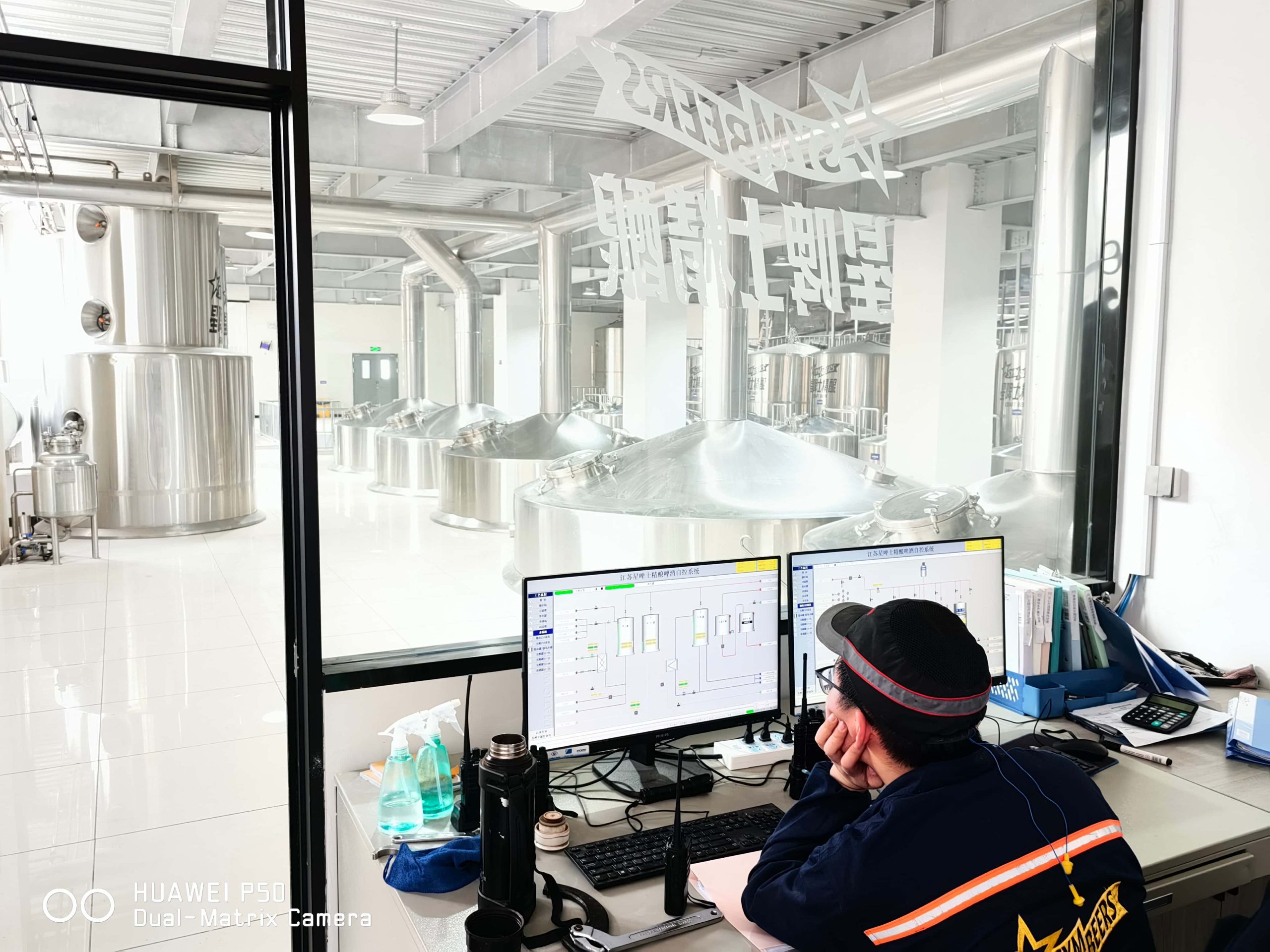
Digital temperature controls are common in modern tanks. They allow precise temperature management. This is critical for both fermentation and mixing.
Siemens-based control systems are popular in brewery automation. They are reliable and user-friendly. Allen Bradley is another common option.
Variable frequency drives (VFDs) control motor speed. These are useful for agitators and pumps. They allow operators to adjust speed as needed.
Remote monitoring is becoming more common. Operators can check tank status from anywhere. Some systems allow remote operation and troubleshooting.
Comparison of Brewery Equipment
The table below compares the main equipment types used in medium and large breweries.
| Equipment Type | Main Function | Key Benefit | Typical Capacity |
|---|---|---|---|
| Mash Tun | Mixing malt with hot water to create mash | Converts starches to sugar | 5,000L – 50,000L |
| Lauter Tun | Separating sweet wort from spent grain | Efficient liquid extraction | 5,000L – 50,000L |
| Brew Kettle | Boiling wort with hops | Adds flavor and sterilizes | 5,000L – 50,000L |
| Whirlpool | Removing solid particles from wort | Produces clear wort | 5,000L – 50,000L |
| Fermentation Tank | Fermenting wort into beer | Consistent flavor development | 5,000L – 100,000L+ |
| Bright Beer Tank | Storing finished beer before packaging | Carbonation and clarity | 5,000L – 50,000L |
| Mixing Tank | Blending ingredients or liquids | Versatile and easy to use | 100L – 50,000L |
Comparison of Mixing Tank Types
| Feature | Standard Mixing Tank | Jacketed Mixing Tank | High-Shear Mixing Tank |
|---|---|---|---|
| Material | 304 Stainless Steel | 316 Stainless Steel | 304 or 316 Stainless Steel |
| Temperature Control | No heating/cooling jacket | Yes, with heating/cooling jacket | Yes, often includes jacket |
| Agitator Type | Simple paddle or propeller | Variable speed agitator | High-speed rotor-stator |
| Best For | General blending | Temperature-sensitive processes | Breaking down particles |
| Capacity Range | 100L – 50,000L | 200L – 50,000L | 100L – 10,000L |
SKE: Your Brewery Equipment Partner
Why Choose SKE?
SKE provides solutions for all brewery sizes. We can build small 1HL craft systems. We also handle large 500KL commercial systems. Our equipment is tested before shipping.
Quality is important to us. Our equipment complies with international standards. We use high-quality materials and advanced manufacturing processes.
SKE Product Range
Our product range includes:
-
Brewhouse systems
-
Fermentation tanks
-
Bright beer tanks in various sizes
-
Mixing tanks and processing vessels
-
CIP cleaning systems
-
Keg washing and filling systems
-
Complete turnkey brewery solutions
Frequently Asked Questions
1.What equipment is essential for a medium-sized brewery?
A medium-sized brewery needs a brewhouse system, fermentation tanks, bright beer tanks, and a reliable mixing tank. They also need a CIP cleaning system and some level of automation.
2.Why do large beer brands use stainless steel fermentation tanks?
Stainless steel tanks are easy to clean and control temperature well. They do not change beer flavor. This is why they are preferred by the world’s largest breweries.
3.What is the difference between a mixing tank and a fermentation tank?
A mixing tank is used to blend ingredients or prepare liquids. A fermentation tank is used to turn wort into beer using yeast. They serve different purposes in the brewing process.
4.How much does a commercial mixing tank cost?
Costs vary widely based on size, material, and features. A small 200L mixing tank may cost a few thousand dollars. Large industrial tanks can cost significantly more.
5.Can SKE provide custom brewery equipment?
Yes, SKE provides custom solutions for breweries of all sizes.
6.What are the benefits of automation in brewing?
Automation improves consistency, reduces labor costs, and increases efficiency. It also helps maintain quality standards. Many large breweries now use automated systems.
Conclusion
Medium and large breweries rely on specialized equipment. This equipment must be reliable, efficient, and easy to clean. Key equipment includes brewhouse systems, fermentation tanks, and mixing tanks.
Large beer brands depend on technology to maintain consistency. They produce millions of barrels each year. Their success comes from investing in quality equipment and processes.
A mix tank is a versatile tool in any brewery. It is used for many purposes, from mashing to blending. Quality mixing tanks ensure consistent product quality.
Understanding brewery equipment is the first step to success. Whether you are starting a new brewery or upgrading, the right equipment makes a difference.
If you have any further questions, feel free to reach out!
- Facebook: SKE Equipment Facebook
- Email: info@skeequipment.com
Fill out the contact form below for customized solutions. We fully support all your production equipment demands for breweries and beverage plants.