
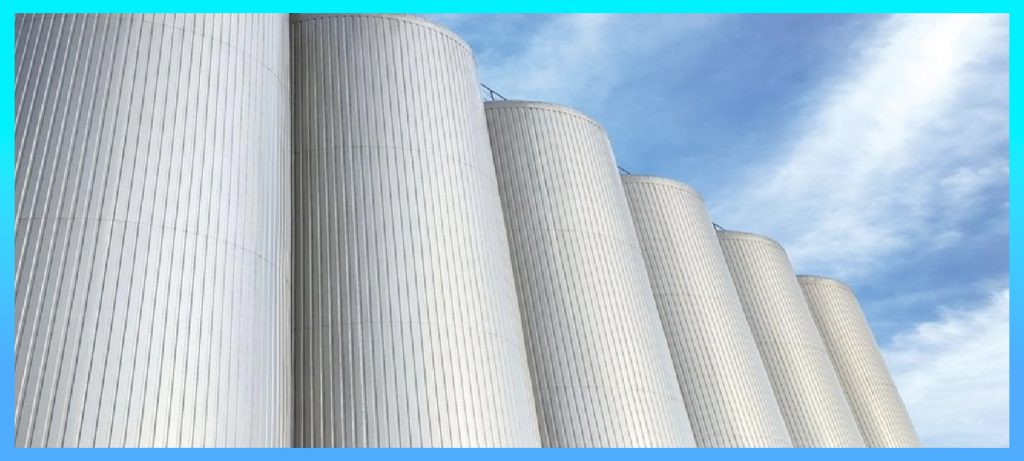
Water makes up roughly 90 to 95 percent of finished beer, and it does the work long before that: mashing, sparging, wort cooling, and CIP cleaning all run on it. A microbrewery can usually get by heating water as it’s needed. A national brand producing millions of litres a year cannot — the brewhouse, wort cooling, and cleaning cycles all draw water at different times and temperatures, often within the same hour, and a plant that can’t buffer that demand ends up bottlenecked on its own utilities.
That buffer is what a large water tank provides. Sizing it correctly, and building it from the right materials with the right hygiene design, is less about picking the biggest tank available and more about matching capacity, insulation, fittings, and controls to the brewery’s actual production pattern. This guide covers the factors that matter and how SKE approaches large-scale water tank design for breweries.
Why Large Breweries Depend on Water Storage
A national beer brand runs multiple brewing cycles a day, and each stage pulls water on its own schedule. The brewhouse needs hot water for mashing and sparging. Wort cooling needs chilled water right after boiling. CIP and general cleaning need hot water too, often overlapping with the next cycle’s mash. Without storage, the plant would need its heating and cooling systems to respond instantly to every demand spike — an expensive and unreliable way to run a brewery.
A large water tank decouples water preparation from water use. Hot and chilled water are produced ahead of the next cycle and drawn down as needed, and a single well-sized tank can support several production lines at once. For a plant running near-continuous cycles, that buffer is what keeps production from stalling during peak demand or a supply interruption.
Hot Liquor Tanks and Cold Liquor Tanks
Brewers use the traditional term “liquor” for the water used in the brewing process itself. The two tanks that matter most are the Hot Liquor Tank (HLT) and the Cold Liquor Tank (CLT), and both are potable water tanks — built and maintained to store water safe for direct use in a food product.
Hot Liquor Tank (HLT)
The HLT stores water at the temperature the process needs, which varies by brewing method and cleaning protocol. It typically supplies mashing, sparging, and hot-water CIP cycles. Because different stages call for different temperatures, the tank and its heating controls should be sized around the plant’s actual process data rather than a generic setpoint.
Cold Liquor Tank (CLT)
The CLT stores chilled water, most often used as the cooling medium in a wort chiller. Its target temperature depends on incoming water temperature, refrigeration capacity, heat exchanger design, and the brewing schedule — which makes the CLT part of the plant’s overall cooling system, not just a holding vessel.
Recovering Heat From Wort Cooling
Wort cooling is also a heat-recovery opportunity. As hot wort passes through the heat exchanger, it heats the incoming cooling water: cold water in, warm water out. Instead of discharging that warm water, a brewery can route it to storage and reuse it — commonly for mashing, sparging, or hot-water cleaning, depending on the temperature it comes out at.
How much energy this saves depends on brewing volume, wort and inlet water temperatures, heat exchanger efficiency, and how many cycles run per day, so there’s no single number that applies across breweries. A system sized around the plant’s real process data will capture meaningfully more of that heat than one sized on rules of thumb.
Sizing a Large Brewery Water Tank
An undersized tank can’t cover peak demand; an oversized one adds unnecessary cost, footprint, and standing energy load. The right size comes from working through the plant’s actual demand profile rather than scaling up from brewhouse capacity alone.
| Factor | Why It Matters |
|---|---|
| Brewhouse capacity | Sets water demand per batch |
| Brews per day | Sets daily and peak demand |
| Mashing and sparging needs | Sets hot-water volume |
| Wort cooling needs | Sets chilled-water volume |
| CIP and cleaning cycles | Adds to total demand |
| Heat recovery | Can offset fresh water and energy demand |
| Brewing schedule | Sets when water is needed, not just how much |
| Available space | Constrains tank footprint and height |
| Future expansion | Affects whether to size for headroom now |
SKE handles this as a full system-engineering exercise, not a tank quotation — balancing scheduling, cooling load, and CIP demand against energy and water use to size the storage system around the plant’s real operating pattern.
Material: 304 vs. 316/316L Stainless Steel
Stainless steel is the standard for potable water tanks because it’s durable, corrosion-resistant, and won’t affect the taste or safety of the stored water. The choice between grades comes down to what the water and cleaning chemistry demand.
SS304 offers solid corrosion resistance at a lower cost and is a common choice where water chemistry and cleaning cycles are moderate. SS316/316L adds molybdenum for better resistance to chloride-driven corrosion, and is generally the better choice where water chemistry, cleaning chemical strength, or long-term reliability requirements push toward the more resistant grade.
Hygiene Design and Drainage
A brewery water tank has to support real cleaning and inspection, not just look clean. Interior surfaces should be smooth, sanitary fittings should minimize contamination risk, and the design should avoid geometry where water or cleaning solution can pool. Bottom design (sloped, dished, or another profile) is chosen based on tank size and drainage needs, not a fixed standard shape — the goal is complete drainage and easy cleaning, not a particular look.
CIP requirements vary by tank: what’s stored, tank size and geometry, and hygiene needs all determine whether spray-ball coverage or a more involved cleaning cycle is required. A tank that looks clean but has poor spray coverage in its headspace or fittings is a common source of contamination that inspection alone won’t catch.
Insulation and Automation
Insulation reduces heat loss from hot storage and heat gain into chilled storage, which matters most for a plant running storage tanks around the clock. Thickness and material depend on the application, and external cladding protects the insulation layer over the tank’s service life.
At scale, automation replaces manual monitoring of level, temperature, pump status, and valve position with a control system that runs to programmed sequences and logs the data. That matters less for a single tank than it does for a plant running several tanks and production lines together, where manual coordination becomes the bottleneck.
SKE’s Approach to Large Water Tank Systems
SKE builds Hot Liquor Tanks, Cold Liquor Tanks, process water storage tanks, and automated control systems as part of a single engineered water system — not standalone vessels. Capacity, material, insulation, and automation level are set by the brewery’s actual production data, demand schedule, available space, and expansion plans, and every tank is built to potable water hygiene standards from the start.
Frequently Asked Questions
What does a large water tank actually do in a brewery?
It stores water for brewing, wort cooling, and cleaning, acting as a buffer so water is available exactly when each process stage needs it — which is what lets a large brewery run continuous production without its heating and cooling systems chasing every demand spike.
What’s the difference between an HLT and a CLT?
An HLT stores hot water for mashing, sparging, and cleaning. A CLT stores chilled water used mainly as the cooling medium for wort cooling.
How do I figure out the right tank size?
Start from batch size, brews per day, hot and cold water demand, cleaning needs, heat recovery potential, and expansion plans — a full process analysis, not a multiple of brewhouse capacity.
Can SKE build a custom tank for our brewery?
Yes. Capacity, dimensions, insulation, fittings, instrumentation, and automation are all specified against the project’s requirements.
Can a new tank integrate with our existing system?
Generally yes — a properly engineered tank connects into existing pumps, valves, heat exchangers, CIP systems, and automation, though the final design depends on what’s already in place.
Conclusion
A large water tank earns its place in a brewery by doing more than storing water: sized correctly, it smooths out demand spikes, recovers heat that would otherwise be wasted, and keeps hot and cold water available exactly when the process needs it. Material selection, hygiene design, and insulation determine whether it holds up over years of continuous use rather than becoming a maintenance liability.
SKE designs stainless steel water tank systems for breweries of every scale, built around actual production capacity, water demand, and space constraints rather than a standard catalog size. Contact SKE to work through your brewery’s water tank requirements.
- Facebook: SKE Equipment Facebook
- Email: info@skeequipment.com
Fill out the contact form below for a customized proposal for your brewery’s water storage needs.