

When a brewery invests in equipment, the conversation often focuses on capacity, tank sizes, or price. Yet the factor that quietly determines whether a brewhouse runs smoothly for the next decade is something less visible: manufacturing capability. For SKE, this concept is not an abstract marketing term. It is the practical ability to turn stainless steel sheets and pipes into fermentation tanks, bright beer tanks, and brewhouses that fit together precisely and perform reliably under pressure, heat, and daily cleaning.
This article explains what manufacturing capability means in the brewery equipment industry and how three types of automated machinery shape it: the automated cutting machine, automated production equipment, and automated welding machine.
What Manufacturing Capability Really Means
In simple terms, manufacturing capability is the proven ability of a factory to produce goods that consistently meet specifications. It combines equipment, processes, people, and quality control into a system that delivers predictable results.
For brewery equipment, this predictability matters more than in many other industries. A fermenter that is slightly out of round may still hold liquid, but it may not seal properly against a manway door. A weld that looks acceptable on the outside may harbor micro-cracks that become contamination risks after repeated clean-in-place cycles. Manufacturing capability is what separates a vessel that lasts twenty years from one that causes headaches in year two.
At SKE, manufacturing capability is measured by how well the production line can repeat exact dimensions, surface finishes, and weld quality across every unit—whether the order is for a small craft brewery or a larger production facility.
The Role of the Automated Cutting Machine
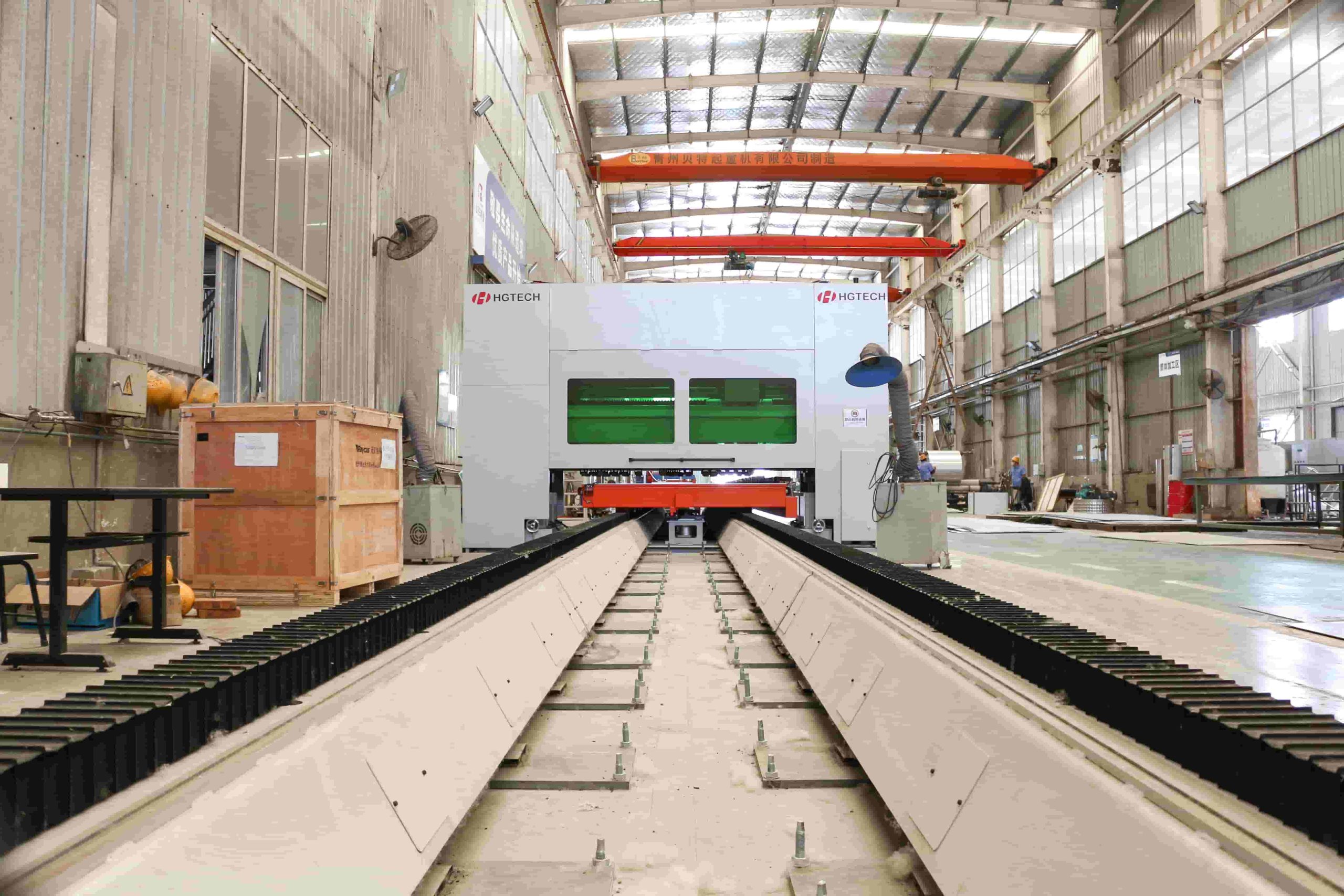
Every stainless steel vessel begins as flat sheet or pipe. The first step in turning raw material into a tank shell or dished head is cutting it to the right size and shape. An automated cutting machine performs this task using CNC-controlled plasma, laser, or waterjet technology.
The advantage over manual cutting is not just speed. Automated cutting removes human variation from the process. The machine follows a digital drawing and produces edges that are square, smooth, and dimensionally accurate. This accuracy matters because the next step—welding—depends on parts fitting together closely. A gap of even one millimeter can force a welder to fill space with extra wire, creating a weld that is thicker, hotter, and more prone to distortion.
Automated cutting also reduces material waste. Nesting software arranges parts on the sheet to maximize usage, which helps control costs without compromising quality. For brewery equipment, where stainless steel is the dominant cost, this efficiency contributes directly to a more competitive product.
Automated Production Equipment: The System Behind the Machine
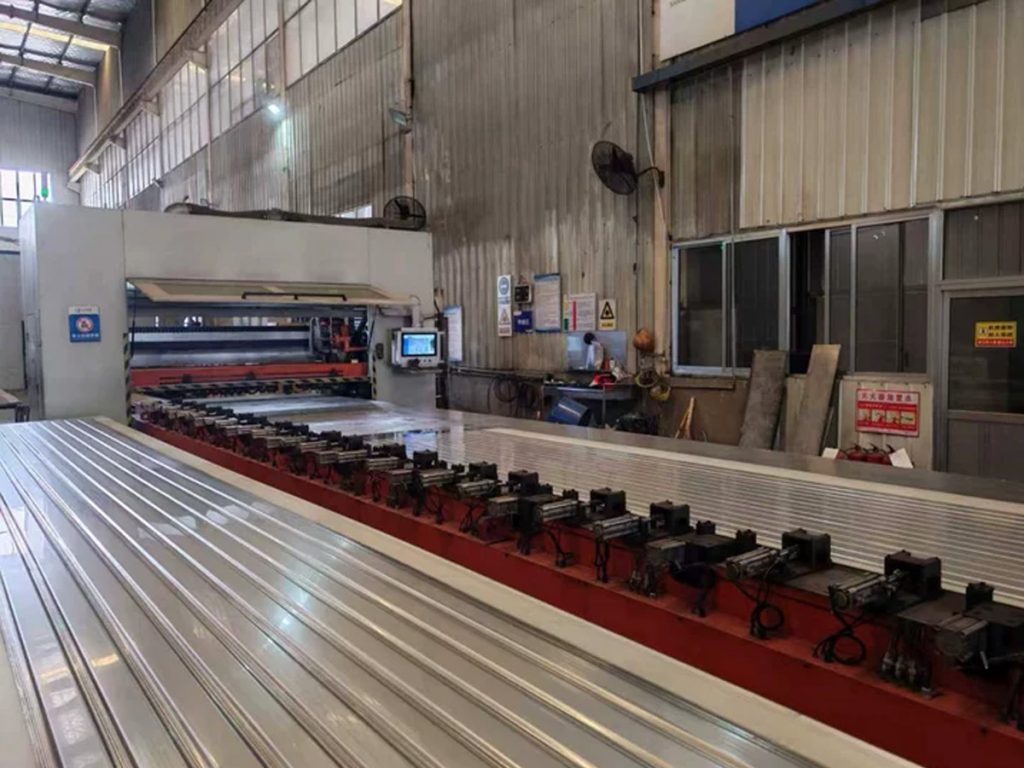
A single cutting machine does not create manufacturing capability on its own. It must work as part of a coordinated system. Automated production equipment refers to the connected machines, handling systems, and controls that move material through the factory with minimal manual intervention.
In a brewery equipment factory, this might include automated rolling machines that bend sheet into cylindrical shells, automated polishing stations that restore the stainless surface after welding, and handling equipment that moves large tanks between stations without damage. The goal is not to eliminate workers, but to let them focus on judgment and inspection rather than heavy lifting and repetitive positioning.
When automated production equipment is well integrated, the factory gains flexibility. A line that can switch between different tank diameters or jacket styles without long setup times allows SKE to serve customers with different batch sizes and space constraints. This flexibility is itself a form of manufacturing capability—the ability to adapt without losing precision.
Why Automated Welding Matters Most
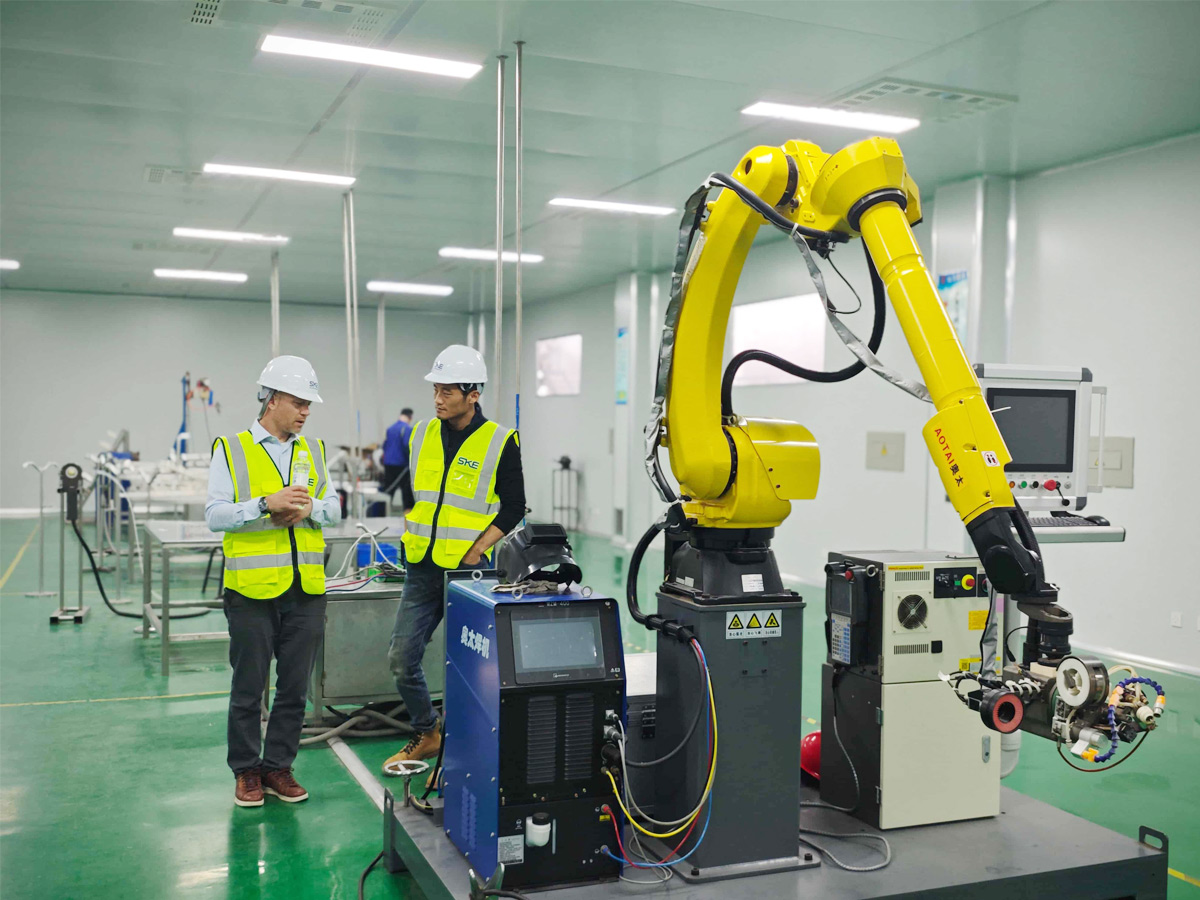
If cutting sets the stage, welding determines whether a brewery vessel is safe and durable. An automated welding machine—typically an orbital or column-and-boom system—performs consistent, repeatable welds on tank shells, dish ends, and pipe connections.
Manual welding skill varies between individuals and even between hours of the day. Automated welding removes that variability. The machine controls travel speed, arc voltage, wire feed rate, and shielding gas flow with a precision no human hand can match. The result is a weld bead that is uniform in width and penetration, with fewer defects such as porosity or lack of fusion.
For brewery equipment, this consistency has direct consequences. Fermentation tanks and bright beer tanks are pressure vessels. Their welds must hold not only liquid but also cleaning chemicals at elevated temperatures. A weld that is slightly undercut or inconsistent can become a crevice where bacteria hide, making sanitation difficult and risking product quality. Automated welding, combined with proper inspection, gives brewers confidence that the vessel will perform as expected.
SKE uses automated welding for critical seams, while skilled welders handle complex geometries and final connections. This combination balances the repeatability of automation with the adaptability of human craftsmanship.
How the Three Technologies Work Together
| Technology | Primary Function | Impact on Manufacturing Capability |
|---|---|---|
| Automated cutting machine | Cuts stainless sheet and pipe to precise dimensions | Ensures parts fit closely, reduces weld distortion and material waste |
| Automated production equipment | Integrates rolling, polishing, and material handling | Creates smooth workflow, enables flexible production of different tank sizes |
| Automated welding machine | Performs consistent orbital and linear welds | Delivers uniform penetration and finish, reduces contamination risks |
Each technology supports the others. Precise cutting makes automated welding easier. Automated handling protects the surfaces that polishing has already finished. Together, they create a production system where quality is built in rather than inspected in at the end.
For SKE, investing in these technologies is not about replacing craftsmanship. It is about giving skilled workers better tools so that every brewery customer receives equipment that meets the same high standard, regardless of when it was made or which model was ordered.

FAQ
Q1: Does automated welding make the equipment more expensive?
A: The initial investment in automated welding equipment is significant, but it often reduces long-term costs by lowering rework rates and improving consistency. For brewery equipment, where a single defective weld can require costly repairs, the investment typically pays for itself through reliability.
Q2: Can automated cutting machines handle the thick stainless steel used in brewery tanks?
A: Yes. Modern automated cutting machines are configured for the thickness ranges used in brewery vessel fabrication, typically between 2 mm and 10 mm depending on the application. The specific cutting method—plasma, laser, or waterjet—is selected based on the material and thickness.
Q3: What is the difference between automated production equipment and a single automated machine?
A: A single machine performs one task. Automated production equipment refers to the integrated system of machines, handling devices, and controls that work together. The system is what creates smooth workflow and consistent output; individual machines are components of that system.
Q4: How does SKE ensure manufacturing capability is maintained over time?
A: SKE maintains its manufacturing capability through regular equipment calibration, welder qualification, and inspection at multiple stages of production. Automation provides consistency, but it still requires trained operators and quality control personnel to verify that every vessel meets specifications before shipment.
Contact Us
If you have any further questions, feel free to reach out!
- Facebook: SKE Equipment Facebook
- Email: info@skeequipment.com
Fill out the contact form below for customized solutions. We fully support all your production equipment demands for breweries and beverage plants.