Introduction
Purchasing and installing a CIP system for your processing facility is a considerable undertaking. It requires careful analysis, detailed planning, and above all, the right partners. For brewery and beverage manufacturing plant owners, choosing the right cleaning solution is not just about maintenance—it is about protecting product quality and consumer safety.
Making food and beverages safe is the primary goal for all processing plants. Cleaning in place is an important tool for reaching that goal. CIP systems designed especially for the food, dairy, beverage, and pharmaceutical processing industries deliver the efficient cleaning processes you need. They help you avoid risks to product quality and purity.
What is CIP Tank Cleaning Equipment?
CIP tank cleaning equipment refers to the automated systems used to clean the interior surfaces of tanks, pipes, and other process equipment. The great advantage is that you do not need to disassemble anything. This method was developed in the 1950s for the dairy industry. Since then, it has become standard across the food and beverage world.
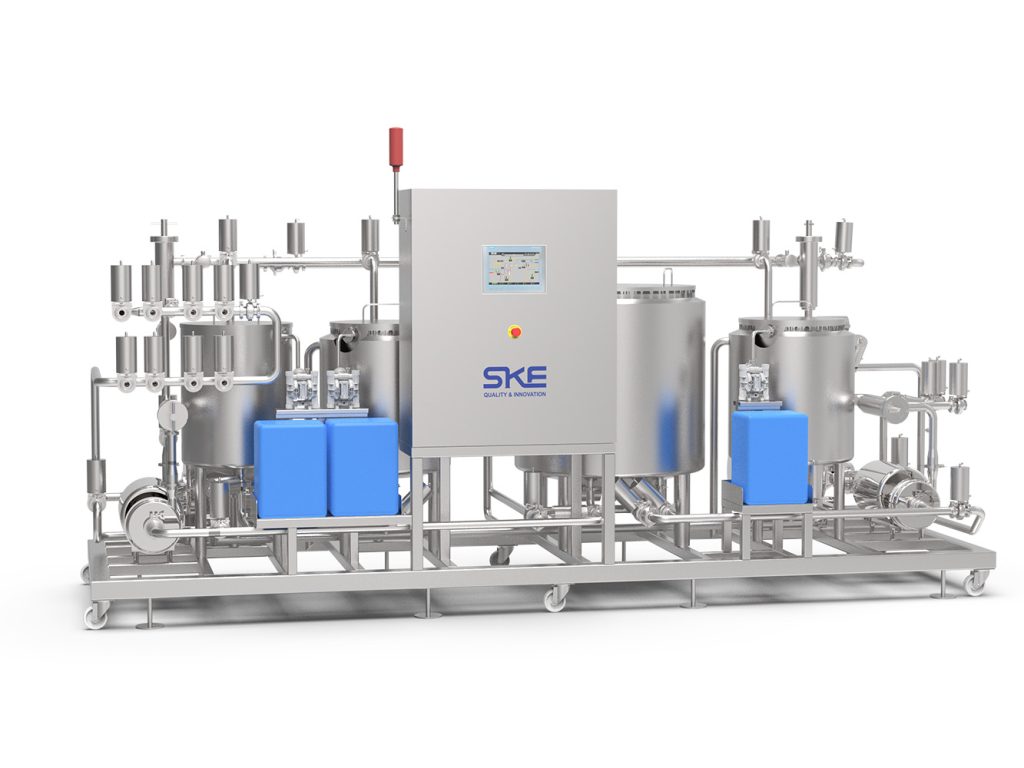
In a typical brewery or beverage manufacturing plant, the equipment includes several key components. These are cleaning solution tanks, heaters, circulating pumps, and control panels. The heart of the system is the spray ball or rotary jet device. These are mounted inside the tanks and use liquid pressure to direct sprays of cleaning solution toward every part of the internal surface.
Modern CIP systems are a necessity, not just a convenience. In large breweries, the cleaning processes are so comprehensive that automation is required. This helps control costs, manage time and energy, and ensure consistency.

The Importance of CIP in Breweries and Beverage Plants
For any beverage manufacturing plant, cleanliness is directly linked to product quality. During fermentation, leftover sugars, proteins, and yeast can become breeding grounds for bacteria. If tanks are not cleaned thoroughly, this can ruin an entire batch. It can even affect the next batch you produce.
The cleaning process removes product residue and biofilm with conditioned media. This is often achieved using a combination of alkaline and acid solutions at high temperatures. These solutions are circulated through the equipment in a manner similar to a dishwasher.
For a brewery or beverage plant, the stakes are high. Without proper cleaning, you risk changes in flavor, contamination, and loss of production. A reliable CIP system ensures that every tank and pipe is clean enough to “reflect your reflection.” This protects your brand and your customers.
Key Components of an Effective CIP System
A well-designed CIP system consists of several important parts working together. Each component plays a vital role in achieving a perfect clean every time. Here are the main elements you will find in a modern system.
1.Tanks for Cleaning Solutions
Most systems have separate tanks for different cleaning agents. These typically include a tank for alkali (caustic) and a tank for acid. Some systems also include a tank for sanitizer or disinfectant.
2.Heat Exchangers
Heaters are used to raise the temperature of the cleaning solution. Heat improves the cleaning efficiency. The right temperature helps dissolve fats, proteins, and sugars more effectively.
3.Circulating Pumps and Valves
These components move the cleaning solution through the system. They ensure that the solution reaches all parts of the equipment at the right pressure and flow rate. Proper flow is essential for creating the mechanical action needed to remove dirt.
4.CIP Tank Cleaning Equipment (Spray Balls and Rotary Jets)
These are the devices that physically spray the cleaning solution inside the tanks. They are mounted inside the vessel as part of the construction. Using liquid pressure, they direct sprays toward every internal surface.
5.Automatic Control Panels
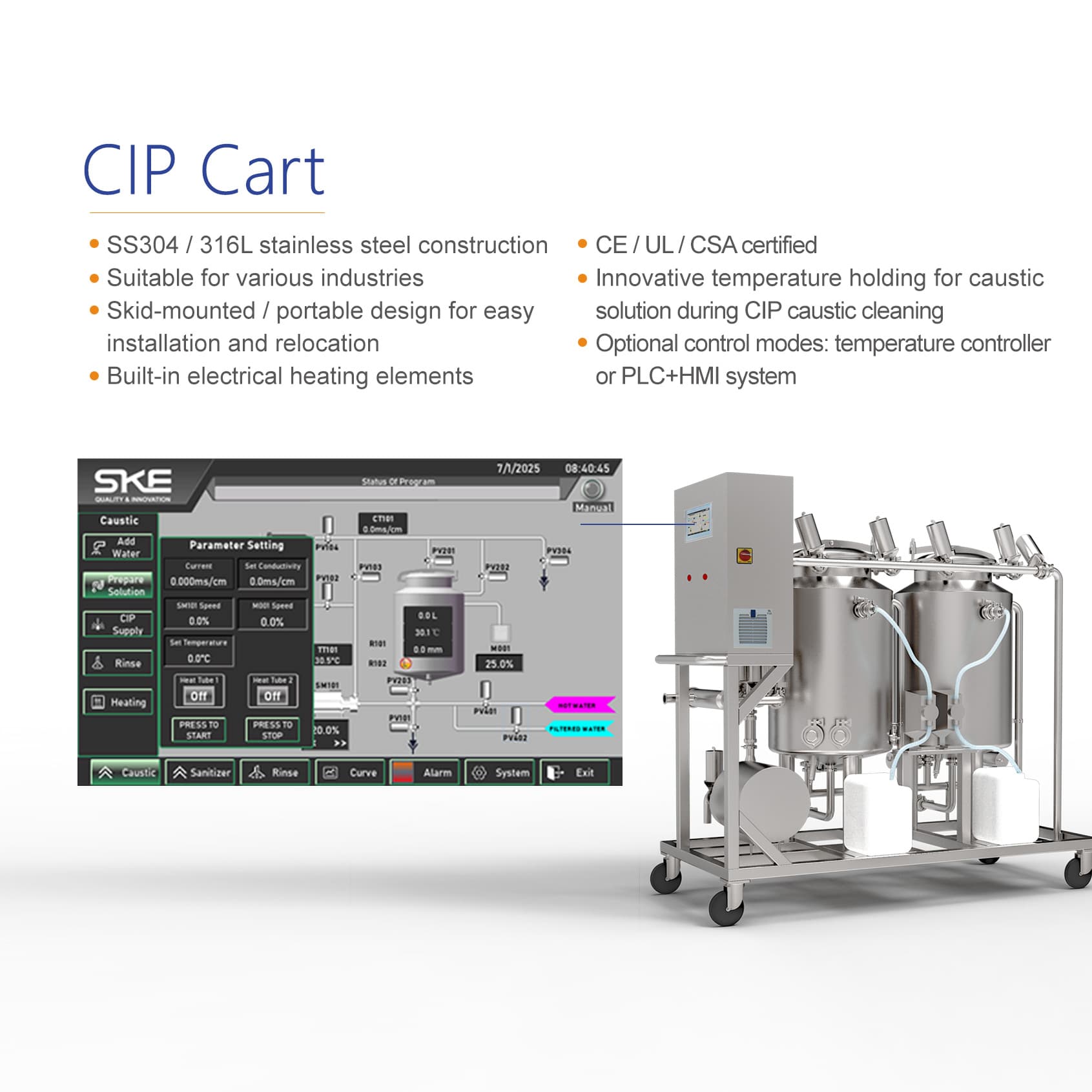
Modern CIP systems use programmable logic controllers (PLCs). These adjust parameters such as time, temperature, and flow rate. They allow operators to set up different cleaning programs for different types of equipment.
The TACT Principle: How CIP Cleaning Works
The performance of a CIP system depends on four key factors. These are often called the TACT principle. Understanding these factors helps you appreciate why modern CIP systems are so effective.
| Factor | Description | Why It Matters |
|---|---|---|
| Time | The duration of each cleaning step | Too short leads to poor cleaning. Too long wastes resources. Proper timing is critical for efficiency. |
| Action (Mechanical) | The force of the fluid flow and spray | Spray balls and jets provide the physical scrubbing action. The system must maintain correct pressure for this to work. |
| Chemistry | The cleaning agents used (alkali, acid, sanitizer) | Different chemicals dissolve different types of soil. Alkali breaks down proteins and fats. Acid removes mineral scale. |
| Temperature | The heat of the cleaning solution | Higher temperatures generally improve cleaning efficiency. However, each chemical has an optimal temperature range. |
By carefully controlling these four parameters, a CIP system ensures efficient cleaning. This helps optimize water, energy, and chemical consumption.
Why Modern CIP Systems are More Durable
Modern CIP systems are built to last. They are designed to withstand harsh chemicals, high temperatures, and frequent use. This durability is essential for a brewery or beverage manufacturing plant that runs 24/7.
For example, components like pumps and seals are now made from materials that resist corrosion. Smooth surfaces and hygienic welds prevent bacteria from hiding in cracks. Systems are also designed to be self-draining. This prevents residue from collecting in dead spaces.
SKE uses high-quality stainless steel and cutting-edge components in their systems. Their equipment complies with international standards like ASME and PED. This ensures long-term reliable performance from a single investment.
Advantages of CIP Tank Cleaning Equipment
Switching to a modern CIP system offers many clear benefits. It is an investment that pays off in improved quality, safety, and efficiency. Here are the main advantages.
1.Consistent and Repeatable Cleaning Results
Unlike manual cleaning, a CIP system performs the exact same process every time. It removes the risk of human error. You get reliable hygiene and validated cleaning cycles.
2.Reduced Production Downtime
Automated cleaning is much faster than manual cleaning. There is no need to disassemble and reassemble equipment. This means you can clean between batches and get back to production quickly.
3.Improved Product Safety
A thorough CIP cycle removes allergens, bacteria, and product residue. This protects your product from contamination. It helps ensure the safety of your food and beverages.
4.Lower Labor Costs and Reduced Chemical Exposure
The system does the work for you. This frees up staff for other tasks. It also keeps workers safe by preventing direct contact with hot or dangerous cleaning chemicals.
5.Savings on Water, Energy, and Chemicals
Modern systems use automated controls to measure exactly what is needed. They recycle cleaning solutions when possible. This reduces waste and lowers your utility bills.
CIP System Applications in a Brewery
In a brewery, CIP systems are used to clean every part of the process that comes into contact with beer. This includes many different types of equipment.
-
Fermentation Tanks: These must be free of yeast residue and bacteria before the next batch.
-
Bright Beer Tanks (Brite Tanks): These require absolute cleanliness to maintain beer clarity and stability.
-
Brewhouse Equipment: This includes mash tuns, lauter tuns, and brew kettles.
-
Piping and Valves: The network of pipes that transfers liquid between tanks must also be cleaned.
-
Heat Exchangers: These need cleaning to remove fouling and maintain efficiency.
-
Filling Machines: The equipment used to package the final product must be sanitized.
Choosing the Right CIP System for Your Plant
Selecting a CIP system is a major decision. It requires you to think about your specific needs. You should consider the size of your plant and the type of products you make.
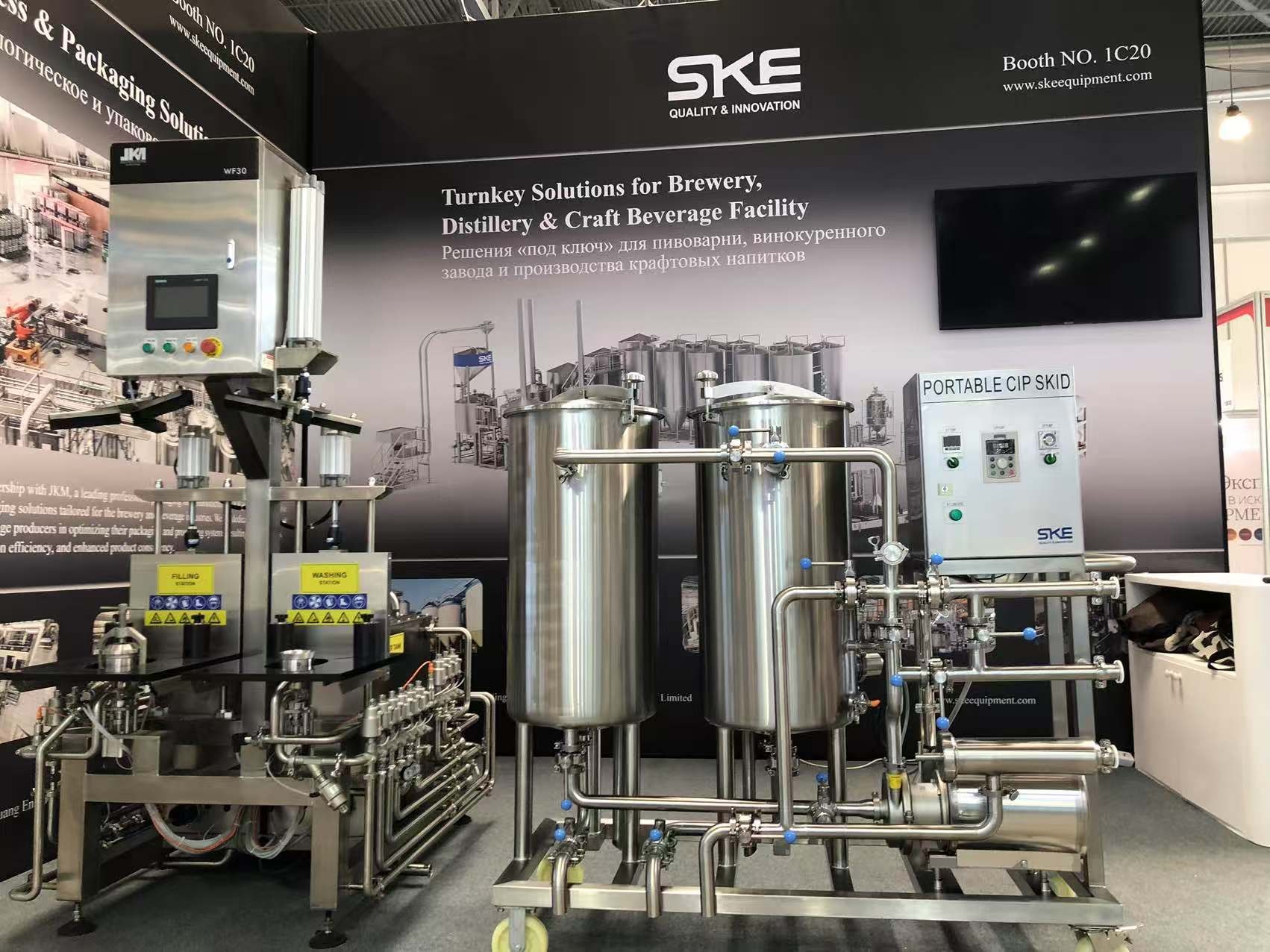
Are you a small craft brewery or a large-scale beverage manufacturing plant? The answer will affect the system you need. Small craft breweries might benefit from compact, skid-mounted systems. These are easy to install and move. Larger plants need complex, multi-tank systems with high flow rates.
Your chosen partner should help you design the system. They need to understand your process. SKE provides customized solutions for everything from small nanobreweries to large commercial operations. They guide clients every step of the way.

The SKE Advantage
SKE has been a leading manufacturer of brewery and beverage equipment since 2000. They bring decades of application expertise to your project. Their solutions balance cost-effectiveness, flexibility, and efficiency.
When you choose SKE, you choose quality and reliability. Their equipment features self-cleaning functions. This includes hot water rinses and caustic/sanitizer CIP. They also use cutting-edge international brand instruments for higher reliability. Their team offers 24/7 technical support and a lifetime service support.
Conclusion
Modern CIP tank cleaning equipment is essential for any modern brewery or beverage manufacturing plant. It provides the durable, efficient, and reliable cleaning you need. This helps you protect product quality, ensure safety, and reduce costs.
Investing in a CIP system is not just about buying equipment. It is about building a partnership for success. With a trusted partner like SKE, you can get a system tailored to your operation. This allows you to focus on what you do best: creating great beverages.
Frequently Asked Questions (FAQ)
1.What does CIP stand for in the brewing industry?
CIP stands for Cleaning in Place. It is a method of cleaning the interior surfaces of pipes, tanks, and other equipment. It is done without disassembling the equipment.
2.How does a CIP system clean a fermentation tank?
A CIP system uses spray balls or rotary jets mounted inside the tank. These devices spray hot cleaning solutions (like caustic and acid) against all internal surfaces. The mechanical action of the spray, combined with the chemicals and heat, removes all residue.
3.Is a CIP system only for large breweries?
No. While large breweries rely heavily on CIP, small craft breweries also use them. Systems are available in various sizes. Some are designed specifically as compact, skid-mounted units for smaller operations.
4.What is the TACT principle?
TACT is an acronym for Time, Action, Chemistry, and Temperature. These are the four key factors that must be controlled to ensure effective cleaning in a CIP process.
5.Why is CIP better than manual cleaning?
CIP is more consistent and reliable than manual cleaning. It reduces human error, lowers labor costs, uses less water and chemicals, and requires less downtime. It is also much safer for workers.
Contact Us
If you have any further questions, feel free to reach out!
- Facebook: SKE Equipment Facebook
- Email: info@skeequipment.com
Fill out the contact form below for customized solutions. We fully support all your production equipment demands for breweries and beverage plants.