
Introduction: Why Keg Cleaning Matters
In the brewing industry, the keg system plays an important role. Breweries use kegs to deliver beer to bars, restaurants, and stores. Before a keg can be filled with fresh beer, it must be properly cleaned and sanitized.
Traditional keg cleaning also uses a lot of water. Many older systems use fresh water at every stage, and the used water then goes down the drain. For breweries cleaning many kegs every day, this adds up in both water use and cost.
Today, more breweries want to save water and money while protecting the environment. This is where an automatic keg washer can help.
SKE makes brewery equipment that combines automatic cleaning and water savings. In this article, we explain how water-saving keg washing works and what to look for when choosing a machine.
By the SKE Process Engineering Team
Key Takeaways
- The brewing industry’s average water-to-beer ratio is about 7:1, while efficient craft breweries run below 3:1, according to the Brewers Association.
- SKE’s automatic keg washer uses a cascade recovery system that reuses final-rinse water for the next keg’s pre-rinse, cutting fresh water use to under 2 liters per 50-liter keg.
- Water recovery is only used for pre-rinsing; fresh water is always used for the final rinse and sanitizing stage, so cleaning quality is not compromised.
- U.S. craft brewery counts fell 2.9% in the Brewers Association’s most recent report, making operational efficiencies like water and labor savings more important for margins.
- SKE-KW-Ⅲ combines washing and filling in one PLC-controlled, touchscreen-operated machine built from food-grade stainless steel.
The Problem: Water Waste in Keg Cleaning
Cleaning a beer keg is not simple. A typical cleaning cycle includes several stages:
- Draining old beer
- Pre-rinse
- Caustic wash
- Intermediate rinse
- Hot water rinse
- Sanitizing
- CO₂ purge
Each stage has a different purpose. The pre-rinse removes leftover beer, the caustic wash removes dirt and beer stone, and the hot water and sanitizer kill bacteria.
The problem is that some older systems use fresh water for every stage. After one use, the water is gone — this is called a “once-through” process.
According to the Brewers Association, the average brewery uses around seven barrels of water for every barrel of beer produced, while the most water-efficient craft brewers run below a 3:1 ratio. More recent industry benchmarking from First Key Consulting puts the current industry average closer to 3 hectoliters of water per hectoliter of beer, with leading breweries reaching as low as 1.4 liters per liter.
Keg cleaning is one of the largest contributors to that ratio for breweries running high keg turnover. For a brewery cleaning 500 kegs daily at roughly 10 liters of water per 50-liter keg with an older once-through system, that is 5,000 liters of water every day.
For regional craft breweries, this is a real problem. Water costs money, wastewater treatment costs money, and high water use hurts both profits and the environment.
That is why more breweries are switching to an automatic keg washer with water recovery.
How SKE’s Automatic Keg Washer Saves Water
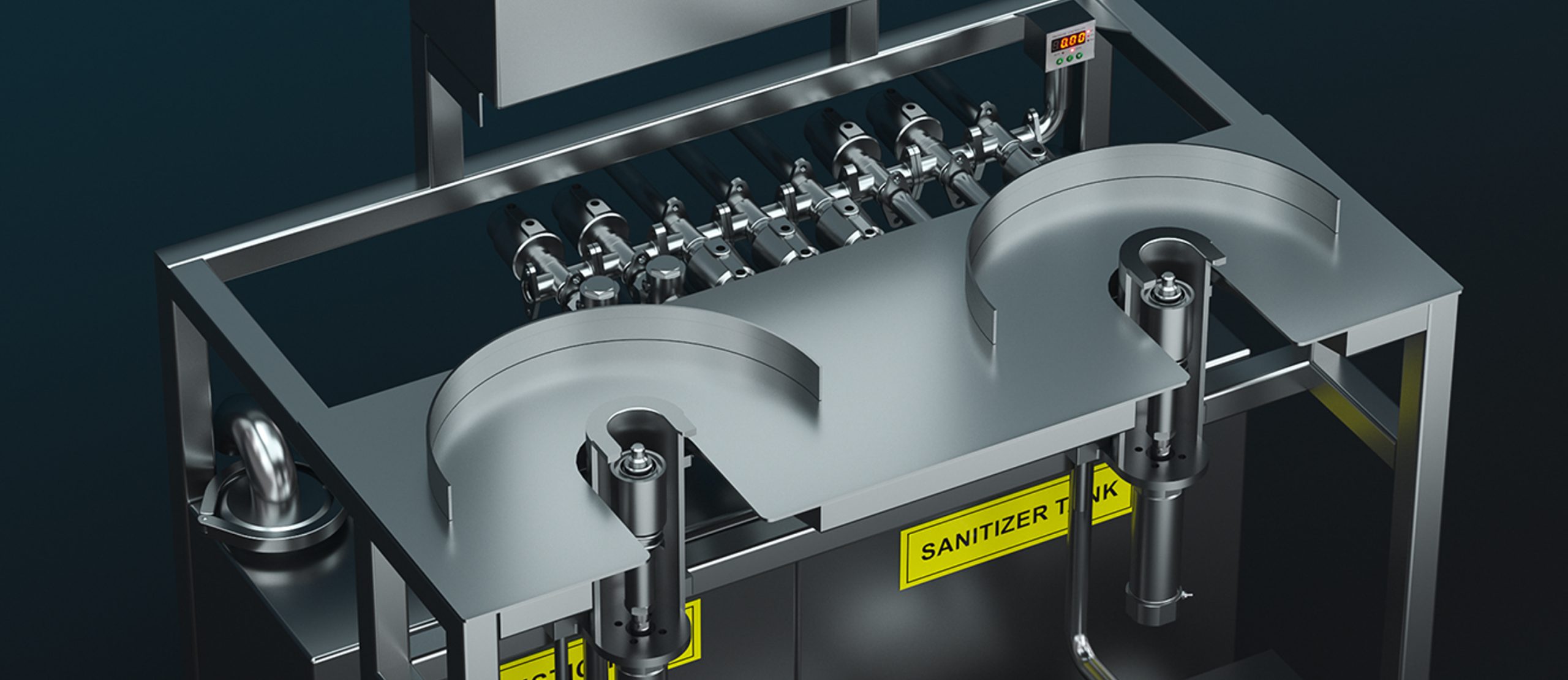
SKE’s automatic keg washer uses a simple idea called cascading.
The principle is easy to understand:
Use clean water where it matters most. Recover suitable rinse water for another stage.
During cleaning, the final rinse water is much cleaner than the first rinse water. Instead of throwing it away, the machine stores it in a tank, and this water can then be used for the pre-rinse of the next keg.
The flow looks like this:
Fresh Water → Final Rinse → Recovery Tank → Next Pre-Rinse → Drain
This means the same water is used twice, and fresh water is reserved for the stages that need it most.
This approach can greatly reduce water use. While a traditional system may use around 10 liters per keg, SKE’s system is designed to use less than 2 liters — an 80% reduction based on SKE’s internal testing.
For a regional craft brewery cleaning 500 kegs daily, this saves roughly 4,000 liters of water every day. Over a year, that is over one million liters.
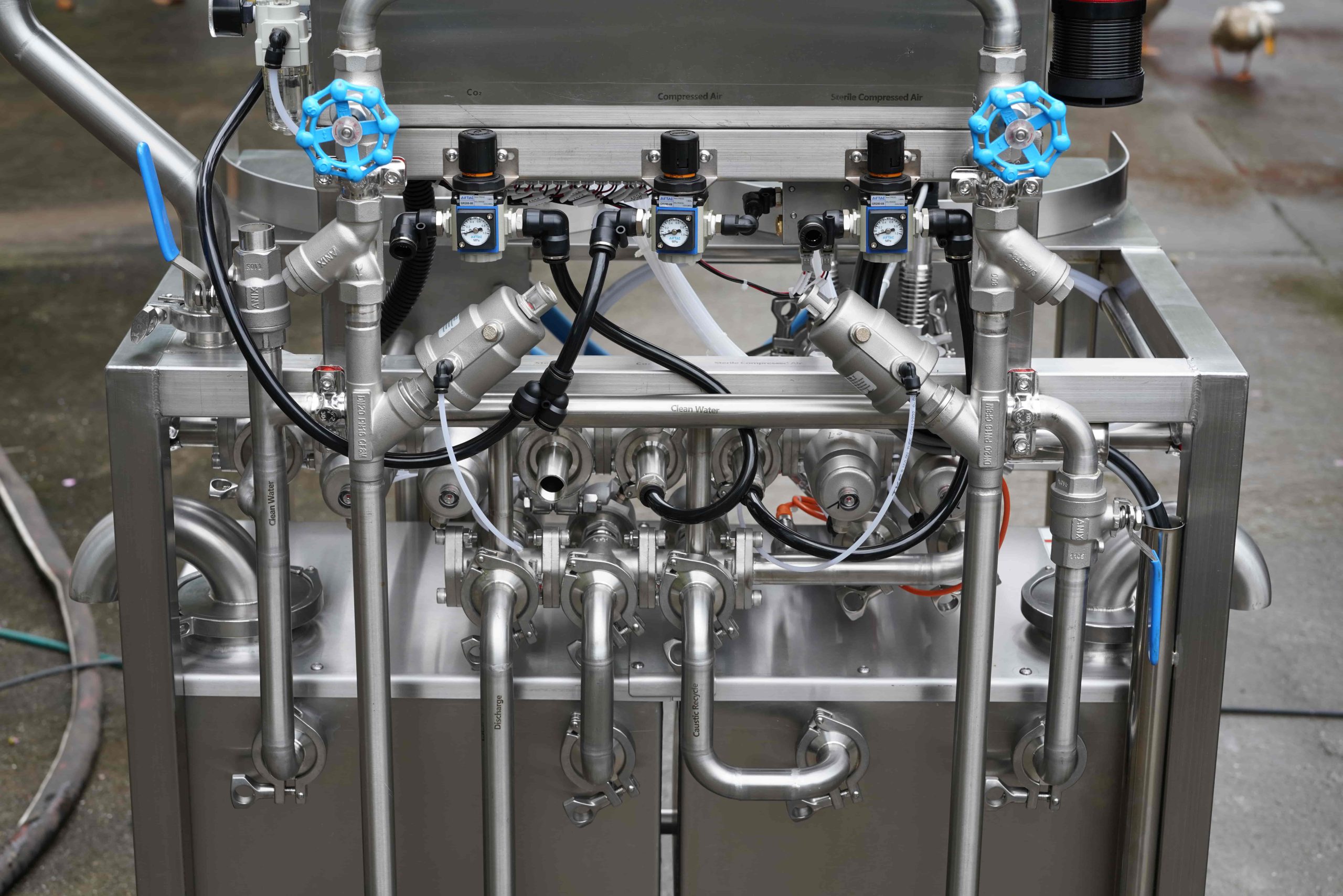
SKE machines are built with food-grade stainless steel and equipped with reliable pumps and smart sensors. These sensors check water temperature, flow, and quality, helping ensure good cleaning while saving water.
Water Saving Without Compromising Cleaning Quality
Saving water is good, but cleaning quality must always come first.
A dirty keg can ruin a batch of beer — leftover yeast or bacteria can cause off-flavors. That is why water recovery must be controlled carefully.
SKE’s system uses tanks, valves, pumps, and sensors to manage water wisely. Recovered water is only used for suitable stages like pre-rinsing. Fresh water is always used for the final rinse and sanitizing.
Temperature and flow are also controlled automatically, so the machine maintains the right conditions for each stage.
With SKE, the goal is not just to use less water. The goal is to use water more efficiently while keeping the same high cleaning standards.
SKE machines are built for durability and reliability, providing consistent results every time.

Why Regional Craft Breweries Choose Automation
Automatic keg washing is not just for large breweries.
Many regional craft breweries are also choosing automation. They face rising labor costs and growing production needs, and they also want consistent quality.
Manual keg cleaning takes a lot of time. Workers must connect each keg and monitor the process, and different workers may clean differently, which can cause problems.
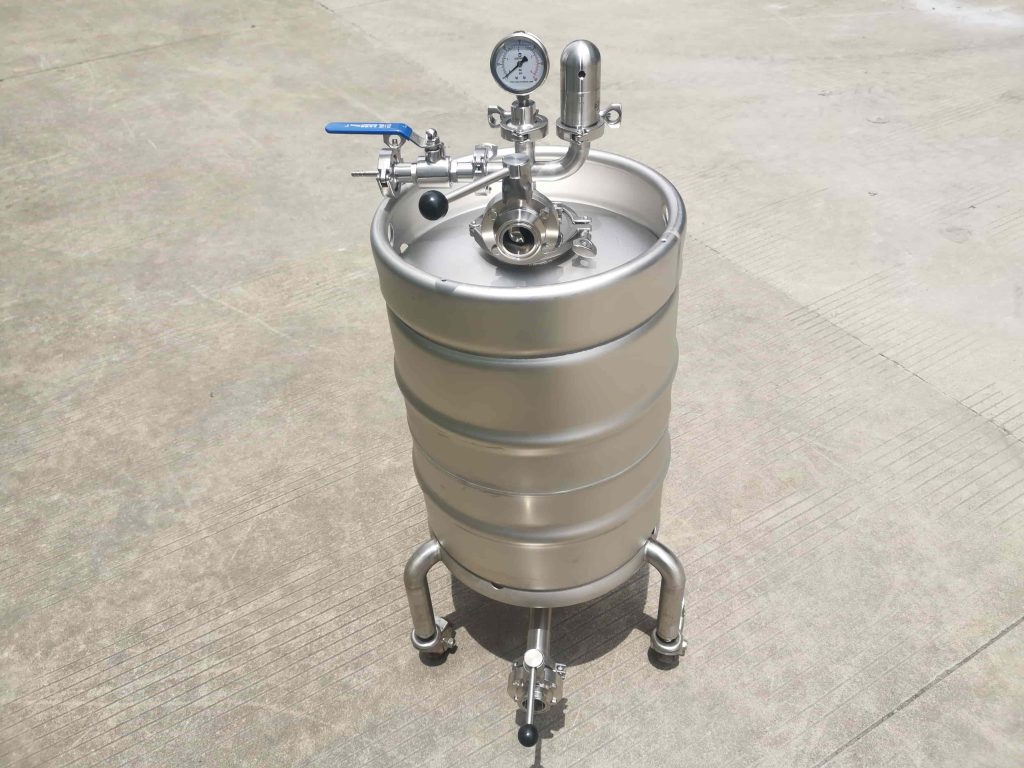
An automatic keg washer solves these issues. The machine follows the same program every time, so every keg gets the same clean.
The benefits include:
- More consistent cleaning
- Less manual labor
- Better process control
- Easier production planning
For a growing craft brewery, automation means cleaning more kegs without adding more staff.
The Brewers Association’s most recent industry report found that the number of operating U.S. craft breweries fell to 9,578, a 2.9% net decline from the prior year, with tighter margins across the industry. In a contracting market like this, operational efficiencies — including water, labor, and chemical savings from automation — matter more than ever for staying competitive.
SKE machines are designed for different production sizes. They are compact and easy to use, and workers can learn to operate them quickly.
Saving Money with SKE
An automatic keg washer requires an initial investment, but it saves money every year after that.
Here are the main areas of savings:
Water and Wastewater
Water recovery reduces fresh water use. It also reduces the amount of wastewater, which lowers both water bills and treatment costs.
Labor
Automation reduces the need for manual work. One worker can run the machine instead of two or three.
Chemicals
SKE machines have dedicated tanks for caustic and sanitizer. These solutions can be reused for several cycles, which cuts chemical costs.
Maintenance
SKE machines are built with stainless steel and heavy-duty parts, so they last longer and need fewer repairs.
Marketing
Customers care about the environment. If your brewery saves water, you can tell your customers — this helps your brand.
When you add all these savings together, the machine pays for itself in a few years.
Quality and Safety First
Water saving should never reduce cleaning quality. SKE machines are designed to do both.
Our beer keg washing machine controls important parameters:
- Water temperature
- Flow rate
- Cleaning time
- Chemical concentration
Sensors monitor these values during the cycle. If something is wrong, the machine stops and alerts the operator.
Safety is also important. SKE machines have a double-button start — the operator must press both buttons to start, which protects the operator’s hands.
The machine also uses a low-flow pulse valve that cleans the keg neck and stem area thoroughly. These are hard-to-clean areas, and the pulse valve does a great job.
With SKE, you get water savings, excellent cleaning, and safe operation.
Comparison Table
| Feature | Manual / Semi-Automatic | SKE Automatic Keg Washer |
|---|---|---|
| Water use per 50L keg | Up to 10 liters | Less than 2 liters |
| Water recycling | No | Yes (cascade system) |
| Cleaning consistency | Varies | Always the same |
| Labor needed | 2-3 workers | 1 worker |
| Temperature control | Manual | Automatic |
| Control system | Manual | PLC + touchscreen |
| Safety start | No | Double-button |
| Keg compatibility | Limited | Multiple sizes |
SKE machines outperform traditional systems in every key area. They save water, reduce labor, and give consistent results.
What to Look for in a Keg Washer
If you are buying a beer keg washing machine, consider these factors:
1. Capacity
How many kegs do you clean per day? Choose a machine that matches your needs, and think about future growth.
2. Water Use
Ask about fresh water consumption per keg. Look for a machine with water recovery — this saves money in the long run.
3. Cleaning Stages
Check what stages are included. A good machine should have pre-rinse, caustic wash, rinse, sanitizing, and CO₂ purge.
4. Automation
A PLC-controlled machine is easier to use and gives more consistent results. A touchscreen makes operation simple.
5. Chemical Management
Can the machine reuse caustic and sanitizer? This saves money and reduces waste.
6. Keg Compatibility
Does your brewery use different keg sizes? Choose a machine that can handle multiple types.
7. Support
Does the supplier offer training and spare parts? Good support reduces downtime.
SKE offers all these features. Our machines are reliable, efficient, and easy to maintain.
SKE-KW-Ⅲ: Washing and Filling in One Machine
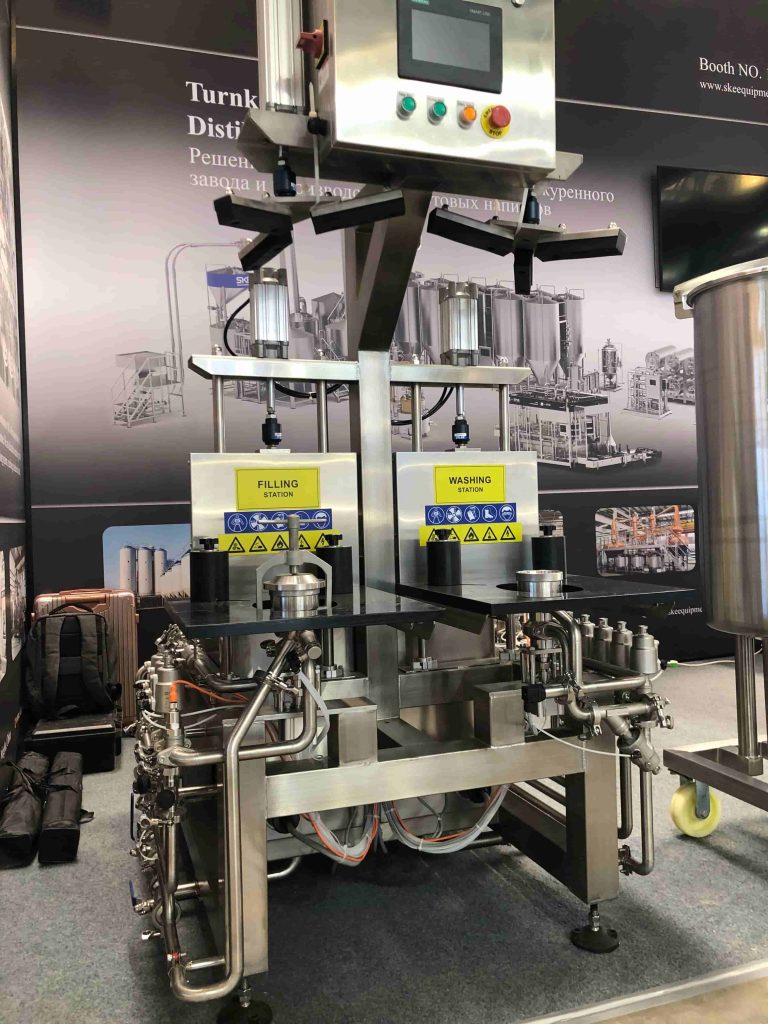
For breweries that want an all-in-one solution, SKE-KW-Ⅲ combines keg washing and filling.
This two-station machine has a fully automatic control system. It is energy-saving, efficient, and works with multiple keg sizes.
Key features:
- PLC automatic control
- Touchscreen operation
- Stainless steel construction
- Water-saving cascade system
- Multiple keg size compatibility
- Double-button safety start
- Low-flow pulse valve for precise cleaning
For regional craft breweries, this machine is a great choice. It is compact and fits in small spaces, reduces manual work, and improves consistency.
For larger breweries, it can handle higher production volumes — a flexible solution for growing businesses.

Building a Greener Brewery
Sustainability is important for modern breweries. Customers and governments care about water use.
Keg cleaning is one area where breweries can improve. An automatic keg washer with water recovery helps reduce your water footprint.
The approach is simple:
Measure → Control → Recover → Reuse
SKE machines follow this principle, helping breweries save water, chemicals, and energy.
Many regional craft breweries have already switched to SKE. They are saving money and telling their customers about it, which helps them stand out in a competitive market.
The future of brewing is sustainable. With SKE, you can be part of it.
Conclusion
Keg cleaning is essential for beer quality, but it does not have to waste water.
SKE’s automatic keg washer uses a cascade recycling system that is designed to cut water use by up to 80% per keg. It also reuses chemicals and reduces labor.
For regional craft breweries, SKE machines are a smart choice. They fit your space and budget, help you grow without adding staff, and help you build a greener brand.
SKE-KW-Ⅲ combines washing and filling in one machine. It is energy-saving, efficient, and reliable, works with multiple keg sizes, and is easy to operate.
If you are ready to upgrade your keg cleaning, contact SKE today. We will help you find the right beer keg washing machine for your needs. Save water, save money, and make better beer with SKE.
Frequently Asked Questions
Q: What is an automatic keg washer?
A: It is a machine that cleans beer kegs automatically. You load the keg, press start, and the machine does the rest.
Q: Is this machine good for a craft brewery?
A: Yes. SKE makes compact models for regional craft breweries that are easy to use and fit in small spaces.
Q: Can I reuse cleaning chemicals?
A: Yes. SKE machines have tanks for caustic and sanitizer that can be reused for several cycles.
Q: Does water recycling affect cleaning quality?
A: No. Recovered water is used only for pre-rinsing. Fresh water is always used for the final rinse and sanitizing.
Q: Is the machine easy to operate?
A: Very easy. It has a touchscreen and pre-programmed cycles, and staff can learn in one day.
Q: Does it need a lot of space?
A: No. SKE-KW-Ⅲ has a compact design that fits in most brewery layouts.
Contact Us
If you have any further questions, feel free to reach out.
- Facebook: SKE Equipment Facebook
- Email: info@skeequipment.com
Fill out the contact form below for customized solutions. SKE fully supports all your production equipment demands for breweries and beverage plants.