
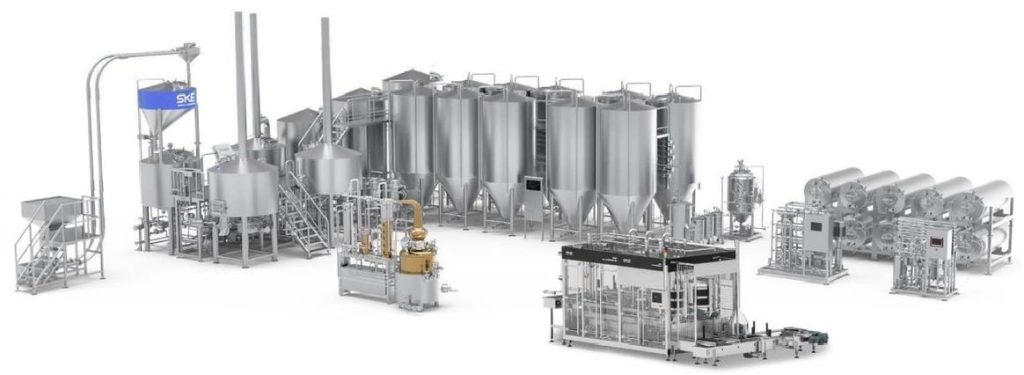
Introduction: What Is a Turnkey Brewery?
Starting a commercial brewery requires more than buying a brewhouse and several fermentation tanks. A successful project needs process engineering, equipment selection, utilities, piping, automation, installation, commissioning, and operator training.
This is where a turnkey brewery solution can simplify the project. Instead of purchasing major systems from different suppliers, a turnkey brewery project combines the main process equipment and engineering work into one coordinated solution.
For brewery owners, investors, and production managers, this approach can reduce coordination work and improve system compatibility. The supplier can design the process flow, select equipment, manufacture the vessels, support installation, and help bring the brewery into operation.
In this guide, SKE explains how a turnkey brewery project works, what equipment is normally included, and what buyers should consider before choosing a commercial brewery equipment supplier.
What Does a Turnkey Brewery Include?
A turnkey brewery normally covers the main stages required to move from a brewery concept to working production equipment. The exact scope depends on the project size, site conditions, and contract.
A typical project may include:
- Brewery process design
- Equipment layout and process flow
- Brewhouse system
- Fermentation and conditioning tanks
- Glycol cooling system
- CIP cleaning system
- Pumps, valves, and sanitary piping
- Heat exchanger and hot water system
- Control and automation system
- Packaging equipment
- Equipment delivery
- Installation guidance or supervision
- Commissioning support
- Operator training
A turnkey project does not always include building construction, local utility connections, permits, or every packaging and utility system. These items should be clearly defined before the project begins.
The main benefit is coordination. When the major equipment is designed as one system, the brewhouse, tanks, pumps, piping, controls, cooling, and cleaning systems can be matched to the same production requirements.
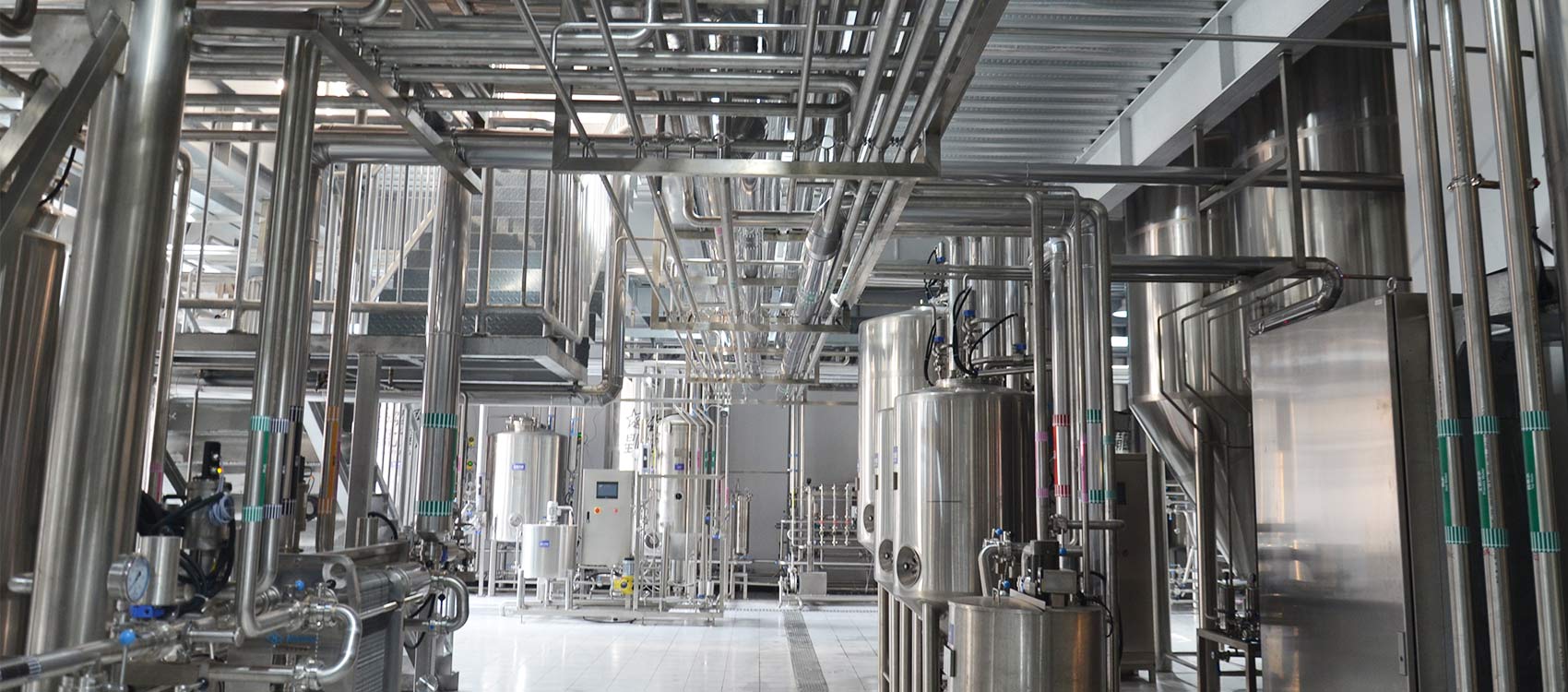
How a Turnkey Brewery Project Works
A professional turnkey brewery project normally starts with production planning.
The supplier first needs to understand the target annual output, batch size, beer styles, packaging format, available building space, utilities, and future expansion plans. These factors affect equipment sizing and process design.
The next stage is engineering. The supplier develops the process flow, equipment layout, tank arrangement, utility requirements, and control concept. For larger projects, process documentation may include P&ID drawings and detailed equipment specifications.
After design approval, the equipment is manufactured. Stainless steel tanks are fabricated, welded, polished, tested, and prepared for shipment. Electrical and control components are also integrated according to the approved design.
After delivery, installation and commissioning begin. Depending on the contract, the supplier may provide installation supervision, testing, start-up support, and operator training.
This process creates a clear connection between commercial brewing systems, engineering, manufacturing, and production.
Core Commercial Brewery Equipment
A commercial brewery is an integrated process system. Each equipment section has a specific role, and the capacity of one section can affect the performance of the whole brewery.
1. Brewhouse System
The brewhouse is the main processing area for wort production. Depending on the brewery design, it may include:
- Mash tun or mash kettle
- Lauter tun
- Wort kettle
- Whirlpool tank
- Hot liquor system
- Wort transfer pumps
- Plate heat exchanger
The mash system converts malt starches into fermentable sugars. The lauter system separates wort from spent grain. The kettle provides controlled boiling for wort concentration and hop utilization. The whirlpool helps separate hop material and trub before fermentation.
Different breweries use different vessel combinations. For example, a mash-lauter vessel can reduce equipment footprint, while a separate kettle and whirlpool can provide more process flexibility.
The correct configuration depends on batch size, beer styles, production schedule, and available space.

2. Fermentation and Conditioning Tanks
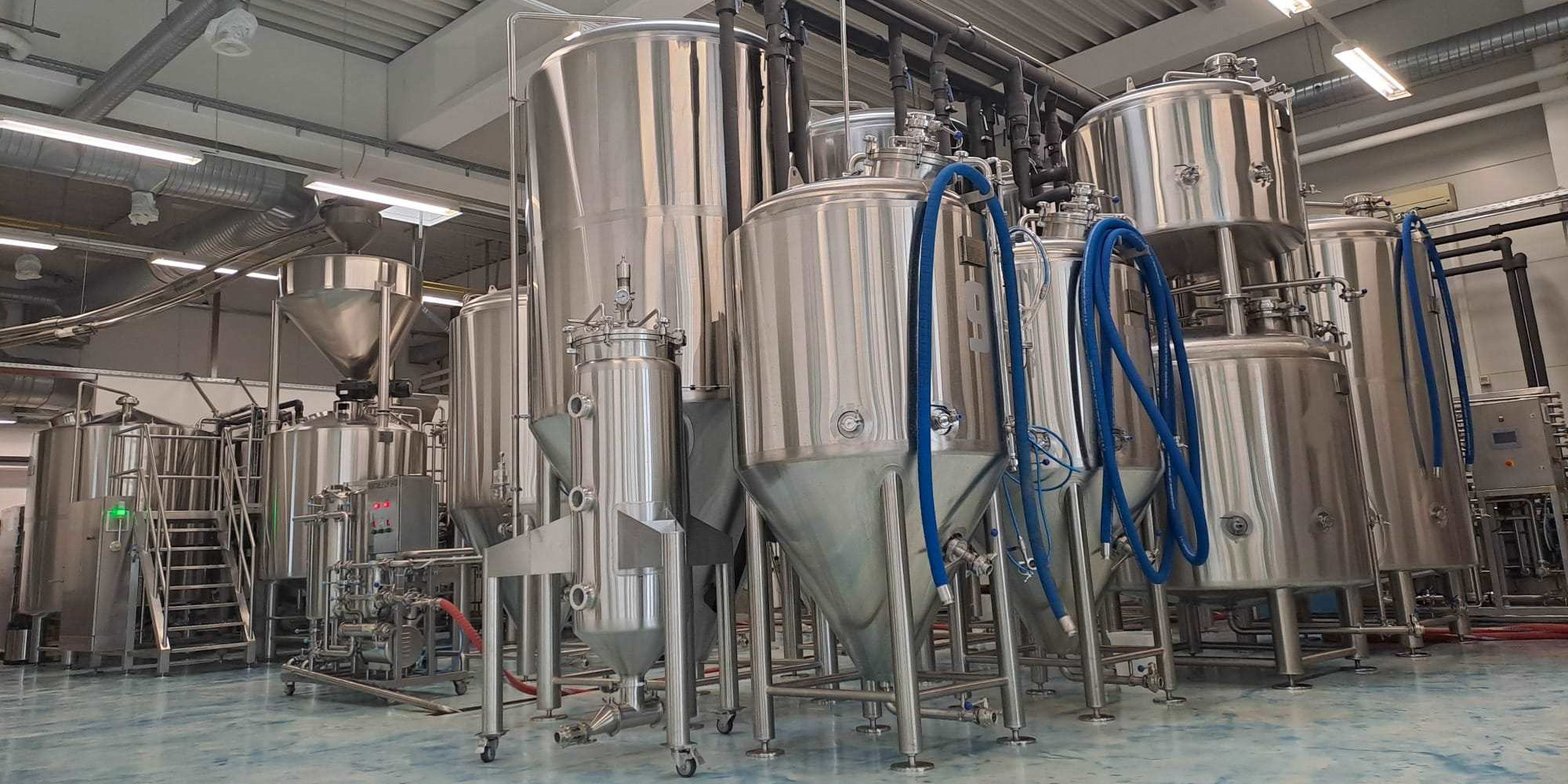
After wort cooling, the wort enters fermentation tanks. Cylindrical-conical tanks, often called CCTs or CCFVs, are widely used in commercial breweries.
These tanks provide controlled fermentation and allow yeast collection from the cone. Some breweries also use separate bright beer tanks for maturation, carbonation, and final beer preparation.
Tank sizing is important because fermentation time can be longer than the brewhouse cycle. A brewery may have enough brewhouse capacity but still experience production limits if it does not have enough fermentation volume.
Temperature control is also essential. A properly sized glycol system helps maintain the required fermentation and conditioning temperatures.
3. CIP and Utility Systems
Cleaning is a core part of commercial brewing. A CIP system circulates water, caustic solution, acid, and other cleaning media through tanks, pipes, and process equipment without requiring manual disassembly of the complete system.
A typical brewery CIP system may include:
- CIP tanks
- Cleaning pumps
- Spray devices
- Valves
- Piping
- Temperature control
- Control system
Other utilities may include a glycol chiller, steam boiler or electric heating system, compressed air, water treatment, hot water storage, and electrical distribution.
Utility capacity should be calculated from actual production requirements rather than selected only from the brewhouse size.
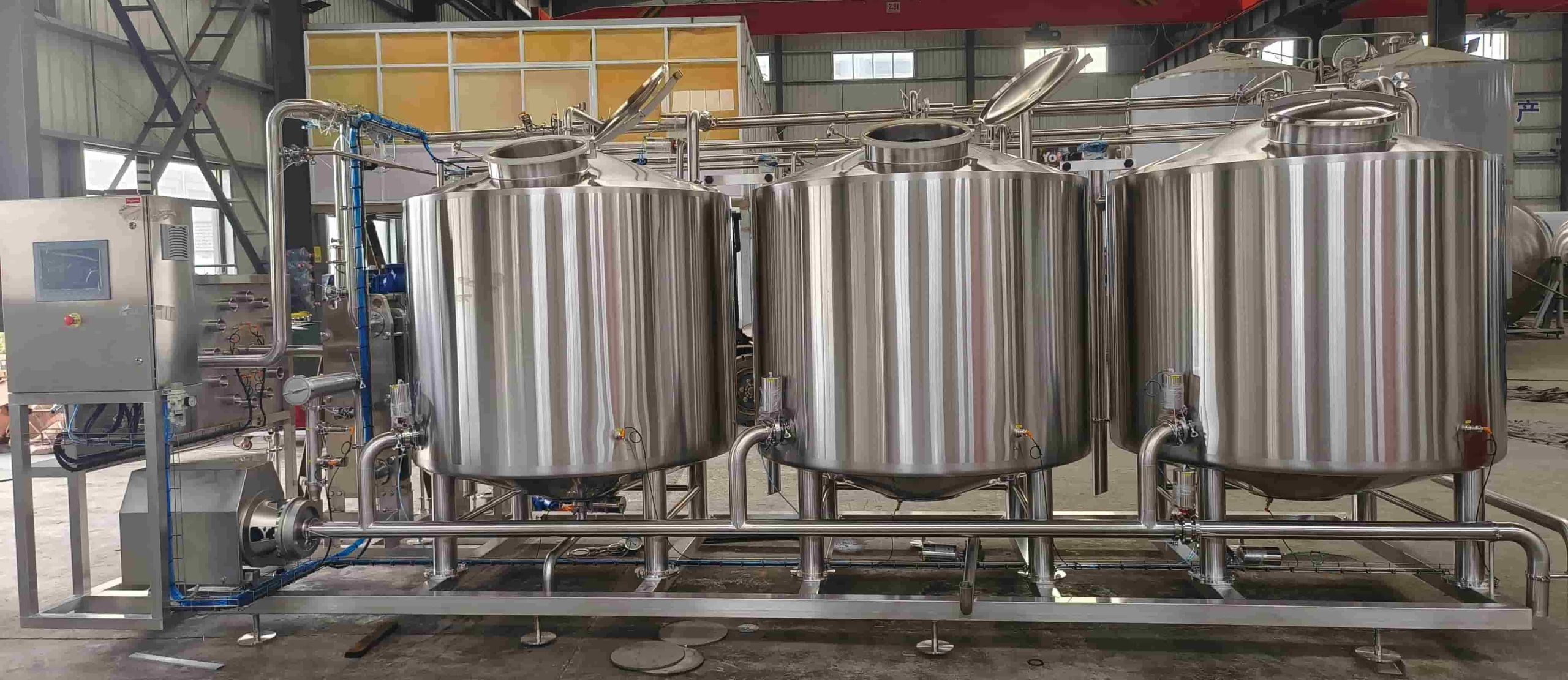
Process Equipment and Brewery Automation
The performance of a commercial brewery depends heavily on its process equipment.
Sanitary pumps transfer water, wort, beer, cleaning solutions, and other liquids between process areas. Centrifugal pumps are widely used for normal liquid transfer, while positive displacement pumps may be selected for yeast, viscous products, or applications that require controlled transfer.
Heat exchangers are another important part of the system. A plate heat exchanger can rapidly cool hot wort to fermentation temperature. During this process, heat can be transferred to brewing water for reuse, helping reduce overall energy consumption.
Automation provides another layer of process control. Modern commercial brewing systems may use PLC-based control panels and touchscreen interfaces to monitor temperatures, operate valves, control pumps, and manage cleaning procedures.
The level of automation can range from manual controls to highly automated systems with recipe management and production data monitoring. The correct level depends on production volume, labor availability, process requirements, and budget.
How to Choose a Turnkey Brewery Supplier
Choosing a turnkey brewery supplier should involve more than comparing equipment prices.
Engineering Capability
Ask whether the supplier can provide process flow diagrams, equipment layouts, utility calculations, and suitable technical documentation.
Good engineering should connect the brewhouse, fermentation cellar, CIP system, cooling system, piping, controls, and packaging area into one practical production flow.
Manufacturing Quality
Material selection and fabrication quality directly affect equipment life and cleanability.
304 stainless steel is widely used for brewery vessels and process equipment. 316 or 316L stainless steel may be selected for applications that require higher corrosion resistance.
Buyers should also check welding quality, internal surface finish, sanitary fittings, insulation, pressure design, and relevant material documentation.
Automation and Controls
Ask what control system is included and which processes are automated.
The control system should be suitable for the equipment configuration and provide clear operation, alarms, temperature monitoring, and process control.
For larger breweries, recipe management, data recording, and production monitoring may also be important.
Installation and Training
Equipment delivery is only one part of a brewery project.
Installation support, commissioning, operator training, and technical documentation can help the production team understand the system and reduce start-up problems.
After-Sales Support
A brewery may operate for many years, so technical support matters after commissioning.
Before signing a contract, clarify warranty terms, spare parts, remote support, service response, and procedures for future upgrades.
Supplier Evaluation Table
| Area | Questions to Ask | What to Check |
|---|---|---|
| Engineering | Can you provide process and layout drawings? | Complete project documentation |
| Materials | What stainless steel is used? | 304/316L and material certificates |
| Fabrication | How are tanks welded and finished? | Weld quality and internal finish |
| Automation | What functions are automated? | PLC, HMI, alarms, control logic |
| CIP | How is cleaning designed? | Tank, pump, spray device, piping |
| Installation | What support is included? | Installation and commissioning scope |
| Training | Is operator training provided? | On-site or remote training |
| Warranty | What does the warranty cover? | Duration and exclusions |
| Expansion | Can the system be upgraded? | Spare utility and connection capacity |
Why Choose SKE for a Turnkey Brewery?
SKE provides turnkey brewery solutions for breweries that need coordinated process equipment rather than individual vessels only.
Our engineering approach starts with the brewery’s production goals, beer styles, site conditions, available space, and future capacity plans. These factors are used to develop the equipment configuration and process layout.
SKE can supply key systems including brewhouses, fermentation tanks, bright beer tanks, CIP systems, glycol cooling systems, pumps, heat exchangers, sanitary piping, control systems, and packaging-related equipment.
For new breweries, we can support the project from equipment design and manufacturing through installation guidance and commissioning. For existing breweries, we can also support capacity expansion, tank additions, and equipment upgrades.
Our focus is to build a brewery system in which the main process equipment works together as one production line.
Frequently Asked Questions
1.What does a turnkey brewery normally include?
A turnkey brewery normally includes process engineering, major brewing equipment, manufacturing, delivery, installation support, commissioning, and operator training.
2.How long does a turnkey brewery project take?
The timeline depends on project size, equipment configuration, manufacturing lead time, shipping, site preparation, and local requirements. Small projects may be completed within several months, while larger commercial brewery projects can take significantly longer.
3.What size brewery should I choose?
There is no single correct size. The decision should be based on expected sales, annual production targets, beer styles, brewing frequency, fermentation time, packaging requirements, available space, and future expansion plans.
4.Can a turnkey brewery be expanded later?
Yes. A well-planned system can support future expansion. Common upgrades include additional fermentation tanks, larger glycol systems, expanded CIP capacity, packaging equipment, and additional brewhouse capacity.
5.How much automation does a commercial brewery need?
Automation can range from manual operation to PLC-based systems with automatic temperature control, valve operation, CIP sequences, recipe management, and production monitoring.
Conclusion
A turnkey brewery is more than a collection of stainless steel tanks. It is an integrated production system that connects brewing equipment, process engineering, utilities, automation, cleaning, cooling, installation, and operator training.
For commercial breweries, the most important step is to match equipment capacity with the actual production plan. Brewhouse size, fermentation volume, cooling capacity, CIP design, packaging speed, and future expansion should all be considered together.
Working with an experienced turnkey supplier can simplify project coordination and help ensure that the major systems are designed to work together.
For breweries planning a new facility, expansion, or equipment upgrade, SKE can provide customized commercial brewing systems based on production requirements, site conditions, and future growth plans.
- Facebook: SKE Equipment Facebook
- Email: info@skeequipment.com
Fill out the contact form below for customized solutions. We fully support all your production equipment demands for breweries and beverage plants.