
In large-scale beer production, small changes in process conditions can have a major effect on final product quality. One of the most important factors brewers need to control is dissolved oxygen (DO). Too much oxygen after fermentation drives oxidation reactions that flatten hop aroma, darken color, and shorten shelf life — and the effect is measurable, not just anecdotal.
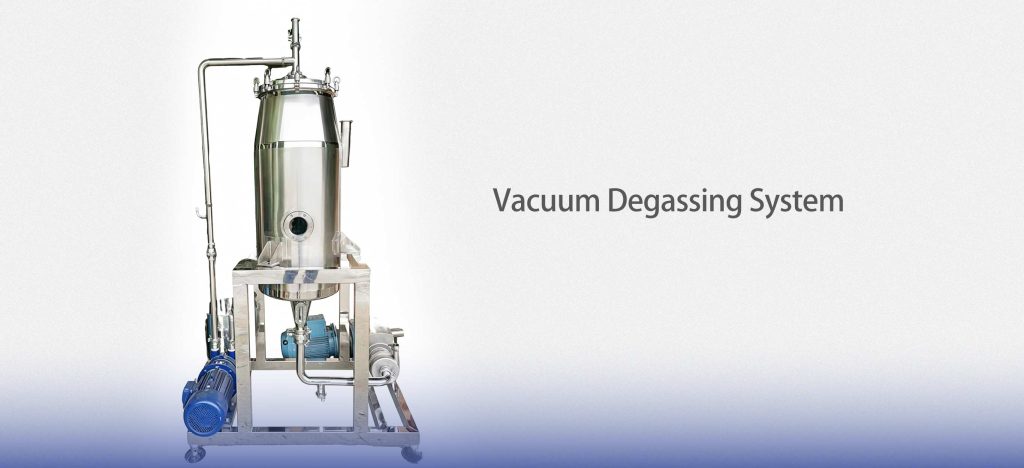
A vacuum degassing system removes dissolved gases from water and other liquids by reducing the pressure above the liquid surface. In brewing, its main job is producing deaerated brewing water that keeps oxygen pickup low from the moment water enters the process. For medium and large breweries, the value goes beyond a single number on a spec sheet: a well-designed system supports continuous production, stable process conditions, and sanitary operation across every batch.
Key Takeaways
- The brewing industry’s widely cited target for total package oxygen (TPO) is under 50 ppb (µg/L) in the finished package (MBAA Technical Quarterly, 2020).
- Poor dissolved-oxygen control can cut sensory shelf life from around 6 months to 2 months for the same beer — a difference documented in the same MBAA analysis.
- Peer-reviewed research found dissolved oxygen has a measurable effect on dry-hop aroma stability after just two weeks of aging, even at typical cellar temperatures (Barnette & Shellhammer, Journal of the ASBC, 2019).
- Commercial vacuum degassing modules from major manufacturers span roughly 10 to 1,800 hl/h, covering everything from a microbrewery to a large regional plant.
Why Dissolved Oxygen Is a Real Quality Problem, Not Just a Theoretical One
Oxygen is useful during fermentation, but unwanted oxygen exposure afterward creates measurable problems. When oxygen reacts with beer components, it produces stale, cardboard-like, or sherry-like off-flavors that mask hop character and malt sweetness. Oxidation also darkens color and speeds sediment formation during storage.
The brewing industry has a specific target for this. The Master Brewers Association of the Americas (MBAA) reports that breweries should aim for less than 50 ppb (µg/L) of oxygen in the final package, and that the gap between good and poor oxygen management can mean the difference between a beer holding its flavor for 6 months versus only 2 months (MBAA Technical Quarterly, vol. 57, 2020).
This isn’t just a packaging-line issue. Researchers at Oregon State University tested dissolved oxygen levels from roughly 40 to 250 µg/L in dry-hopped beer stored at both refrigerated (3°C) and accelerated-aging (30°C) conditions. They found dissolved oxygen had a measurable, significant impact on tropical, citrus, and hop aroma retention after only two weeks — well before most beer reaches the consumer (Barnette & Shellhammer, Journal of the American Society of Brewing Chemists, 2019).
The financial side matters too. Insurers that underwrite craft breweries list spoilage and contamination of finished product among the top three most severe losses a brewery can experience (The Hanover Insurance Group, Craft Brewers Exposure Guide). Oxygen control is a quality issue and a risk-management issue at the same time.
| Oxygen-related concern | Documented effect |
|---|---|
| Total package oxygen above target | MBAA target is <50 ppb; exceeding it accelerates staling |
| Dissolved oxygen during dry-hopping / storage | Measurable aroma loss after 2 weeks at 40–250 µg/L DO (ASBC, 2019) |
| Shelf-life impact | Roughly 6 months (low DO) vs. 2 months (high DO) sensory life (MBAA, 2020) |
| Business risk | Spoilage/contamination ranks among top-3 brewery loss categories (Hanover Insurance) |
How a Vacuum Degassing System Works
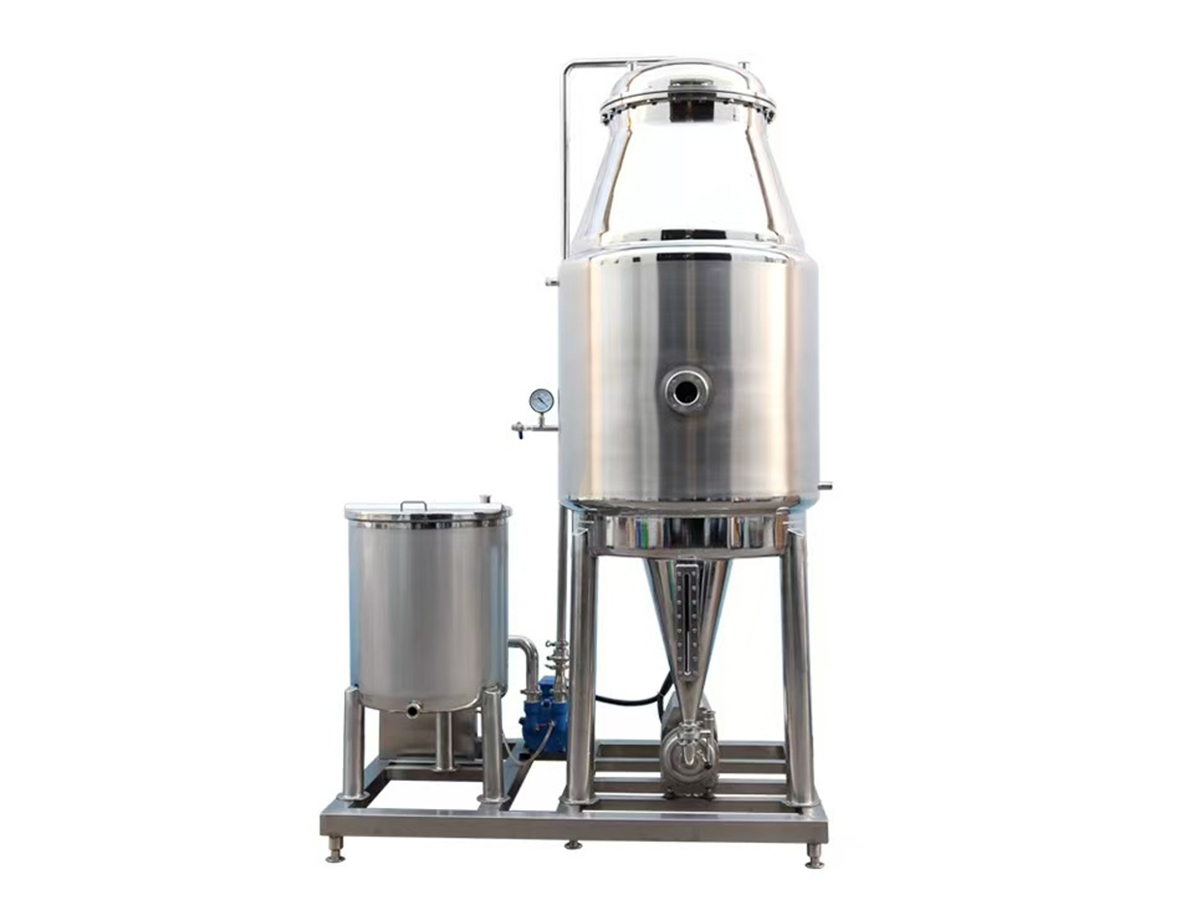
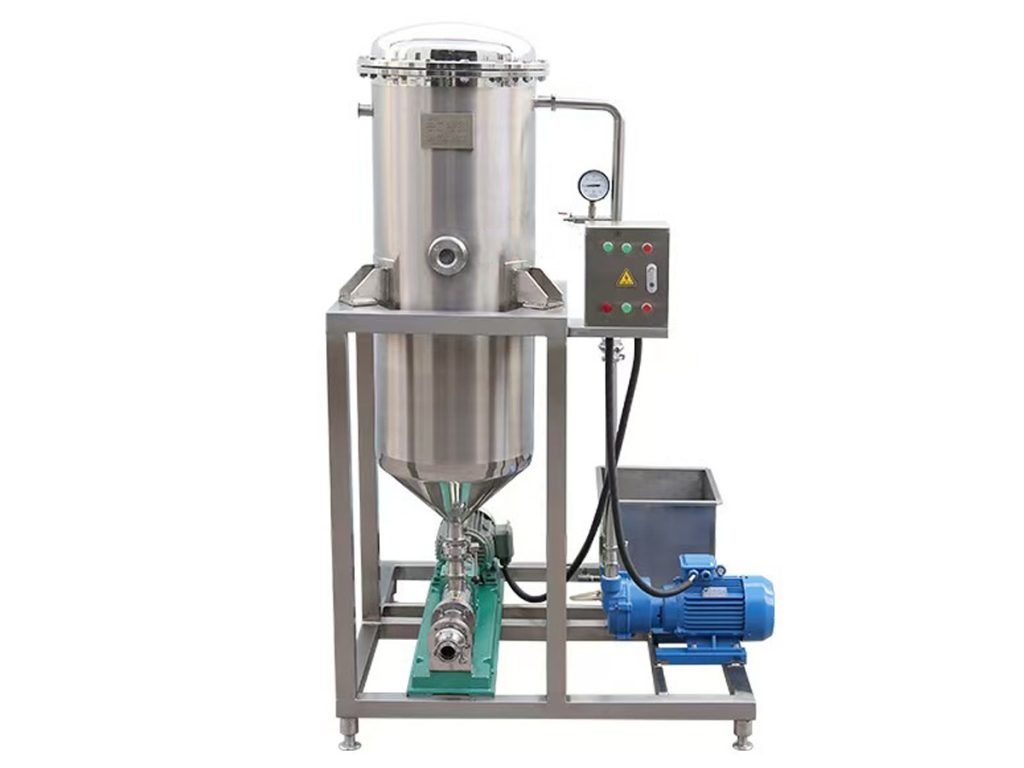
The operating principle is straightforward: when pressure above a liquid drops, the solubility of dissolved gases drops with it, so gases leave the liquid more easily. A vacuum degassing system normally includes a vacuum vessel, a liquid distributor, a vacuum pump, a sanitary liquid pump, a control system, and stainless steel piping.
Liquid enters the vacuum vessel and spreads across a large surface area. The vacuum environment pulls dissolved gases out of the liquid, the vacuum system continuously removes those separated gases, and the degassed liquid moves on to the next process step. In brewing, the most common application is producing deaerated brewing water, since even visually clean water can carry enough dissolved oxygen to become a source of unwanted oxygen pickup once it enters the process.
Vacuum Degassing at Brewery Scale: What Capacity Do You Actually Need?
Vacuum degassing systems scale well beyond small installations. Two major process-equipment manufacturers publish overlapping capacity ranges that give a realistic picture of what’s available:
- Alfa Laval’s Aldox deaeration modules cover roughly 10 to 1,800 hl/h, reaching dissolved oxygen levels below 10 ppb with CO₂ retention efficiency above 95% (Alfa Laval, Aldox product specifications).
- GEA’s VARIDOX-C cold-water deaeration systems handle roughly 20 to 1,000 hl/h, with residual oxygen as low as 10–30 ppb depending on tower configuration (GEA, VARIDOX-C specifications).
For context on how that maps to real production: German brewing-industry analysis has documented that a large brewery producing around 2.5 million hl per year needs degassing throughput up to roughly 450 hl/h, while a mid-size 200,000 hl/year brewery needs a fraction of that (Brauindustrie technical analysis, via Corosys/BBT). In practice, sizing depends on your actual flow rate, not a single headline number.
Continuous operation. Large breweries need equipment that runs reliably for long periods. Inline continuous degassing saves space and simplifies pipeline layout compared to batch processing.
Automation. Modern systems use PLC controls to monitor and adjust vacuum pressure, liquid flow, and process status, which improves repeatability and cuts manual adjustment.
Integration. A properly designed system connects into an existing line, tying together upstream brewery water treatment and storage with a downstream beer bottling line or brewing equipment.
Key Benefits of a Vacuum Degassing System
- Dissolved oxygen control that’s measurable, not guesswork. Reducing dissolved oxygen in process water lowers the risk of unwanted oxygen pickup throughout production, moving the finished beer closer to the sub-50 ppb TPO target discussed above.
- Better flavor stability. Since oxidation measurably degrades hop aroma within two weeks under certain conditions, controlling oxygen exposure earlier in the process protects the beer’s intended character for longer.
- Extended shelf life. Removing oxygen slows the chemical reactions behind staling, which is consistent with the roughly 2-to-6-month shelf-life gap documented by MBAA.
- Lower CO₂ consumption than older cold-column methods. German brewing-industry data comparing degassing methods found cold column degassing consumes roughly 2 to 3 g/l of CO₂ to reach residual oxygen below 0.05 ppm, while vacuum column degassing reaches equal or better oxygen removal with CO₂ consumption closer to 0.2 g/l (Brauindustrie, via Corosys/BBT).
- Compact process integration. A properly designed inline system reduces the need for large intermediate storage tanks, which simplifies layouts and saves floor space.
- Automated operation. PLC and HMI controls monitor vacuum pressure, liquid flow, and pump operation, improving consistency and cutting operator workload.
Cold Degassing vs. Hot Degassing vs. Cold-Column Degassing
Different liquids call for different degassing methods, and the CO₂ and oxygen-removal numbers above make the trade-off concrete.
| Feature | Cold Vacuum Degassing | Cold Column Degassing | Hot Degassing |
|---|---|---|---|
| Operating principle | Vacuum without heating | Water column, no vacuum | Heat plus vacuum |
| Typical CO₂ consumption | ~0.2 g/l | 2–3 g/l | Higher (energy for heating) |
| Residual oxygen achievable | Equal to or better than cold column | <0.05 ppm | Depends on process |
| Thermal impact on product | Low | Low | Higher |
| Best fit for beer | Preferred | Workable but less efficient | Not typical for finished beer |
Beer is a heat-sensitive product with delicate flavor compounds that high temperatures can damage, and it’s also sensitive to unnecessary CO₂ stripping and re-dosing costs. Cold vacuum degassing protects flavor while removing oxygen efficiently, and it does so with meaningfully lower CO₂ consumption than older cold-column designs (Brauindustrie technical comparison).
SKE Vacuum Degassing Systems
SKE designs stainless steel process equipment for brewing, beverage, and food applications, and configures vacuum degassing systems around each customer’s process requirements, production capacity, and plant layout.
Sanitary stainless steel construction. SKE systems use 304 or 316L stainless steel, with internal geometry focused on hygienic production, smooth surfaces, and effective cleaning.
Efficient liquid distribution. The liquid distributor is sized to the liquid’s characteristics and required capacity; effective distribution increases contact between the liquid and the vacuum environment.
Automatic vacuum control. Stable vacuum conditions matter for repeatable degassing, so an automatic control system monitors conditions and adjusts as needed.
Inline continuous operation. Systems can be designed for continuous operation, connecting with upstream water treatment and downstream processing equipment such as brite tanks.
CIP-compatible design. Equipment supports CIP (Clean-in-Place) cleaning, which reduces manual cleaning work and supports consistent sanitation.
Applications Beyond Beer
Juice and fruit beverages. Oxygen accelerates oxidation of sensitive compounds; vacuum degassing helps reduce dissolved oxygen before processing.
Dairy beverages. Milk-based products can be oxidation-sensitive, and vacuum processing is used in select dairy applications for this reason.
Tea and plant-based beverages. These also benefit from controlled dissolved-gas removal.
Fermented beverages. Other fermented products require careful oxygen management during processing, for the same reasons that apply to beer.
How to Choose the Right System
- Production capacity. Match required flow rate to both current production and any expected increase — the 10–1,800 hl/h range above shows how wide the field is.
- Inlet dissolved oxygen. Knowing the starting DO level helps determine the vacuum conditions needed to hit your target.
- Liquid temperature. Temperature affects gas solubility and degassing performance.
- Product characteristics. Viscosity, solids content, and foaming behavior all influence equipment selection.
- Required outlet condition. Define the target dissolved-oxygen level clearly — many breweries work toward the sub-50 ppb TPO benchmark referenced earlier.
- CIP requirements. The system should fit existing cleaning procedures.
Reviewed by the SKE Equipment process engineering team, which designs stainless steel vacuum degassing and brewery process systems. Learn more About SKE or see our contact details for project-specific questions.
Frequently Asked Questions (FAQ)
What does a vacuum degassing system do?
It removes dissolved gases from a liquid by reducing the pressure around it. In brewing, it reduces dissolved oxygen in water before that water enters the process.
What total package oxygen (TPO) target should breweries aim for?
The Master Brewers Association of the Americas cites under 50 ppb (µg/L) as the widely used industry target for finished packaged beer (MBAA Technical Quarterly, 2020).
Why is dissolved oxygen a problem in beer?
Unwanted oxygen drives oxidation reactions that affect flavor, aroma, color, and shelf life — documented research shows measurable aroma loss within two weeks of elevated dissolved oxygen exposure.
What is deaerated brewing water?
Water treated to reduce dissolved gases, especially oxygen. It’s used in brewing or dilution wherever low oxygen levels matter.
Is cold vacuum degassing suitable for beer?
Yes. It reduces dissolved gases without high-temperature treatment, protecting delicate beer flavors, and it uses meaningfully less CO₂ than older cold-column methods.
Can a vacuum degassing system be added to an existing brewery?
Yes. A properly designed system can be integrated into an existing production line alongside upstream water treatment and downstream packaging.
What materials are used?
Food-grade stainless steel, typically 304 or 316L, for product-contact components.
Conclusion
For medium and large breweries, controlling dissolved oxygen isn’t a nice-to-have — it’s the difference between a beer that holds its flavor for six months and one that fades in two. A vacuum degassing system gives brewers a controlled, measurable way to reduce dissolved gases, combining liquid distribution, vacuum generation, and automatic control into one part of a modern production line.
SKE designs and manufactures customized stainless steel vacuum degassing equipment for breweries, beverage plants, and other liquid-processing applications, working from your actual production requirements through design and installation.
If you have any further questions, feel free to reach out!
- Facebook: SKE Equipment Facebook
- Email: info@skeequipment.com
Fill out the contact form below for customized solutions. We support production equipment needs for breweries and beverage plants.