
Water is one of the most important resources in beer production. A mid-size brewery may need hot water for mashing and sparging, chilled water for wort cooling, and treated water for brewing and cleaning. As production increases, managing all these water needs becomes more difficult.
Water storage tanks address this by acting as a buffer between the water source and the production process. They let a brewery prepare and hold water before it’s actually needed, instead of relying on whatever the incoming supply delivers at that moment.
For a growing brewery, the question isn’t simply how much water to store. It’s what type of water is needed, how much, at what temperature, and how the tank will be cleaned and integrated into the rest of the system.
Key Takeaways
- Storage tanks buffer a brewery’s hot, cold, and treated water supply so production isn’t limited by incoming municipal flow or temperature.
- Most mid-size breweries use three tank types: a Hot Liquor Tank, a Cold Liquor Tank, and a treated process-water tank.
- 304 stainless steel covers most general brewery water storage needs; 316L is worth the added cost when water quality or chemical exposure is harsher.
- Tank sizing should be based on peak demand and CIP load, not just brewhouse volume, since there’s no single “right” size across breweries.
Why Water Storage Matters in a Mid-Size Brewery
Storage tanks matter because municipal supply alone can’t keep up with a brewery’s peak demand. Daily water use swings sharply between brewing, cleaning, and idle periods, and incoming water pressure and temperature aren’t built for that variability.
Breweries pre-heat hot water and hold it in hot-water tanks ahead of brewing operations. Chilled water can be made in advance and kept in cold-water tanks. Water treated by filtration or reverse osmosis can also be stored as process water.
Water use varies significantly by brewery design and efficiency. According to the Brewers Association’s water and wastewater sustainability guidance, the industry average is roughly seven barrels of water for every barrel of beer produced, while more water-efficient craft breweries run closer to a three-to-one ratio. Storage and reuse are part of how a brewery closes that gap.
This provides several benefits:
- More stable water supply
- Better temperature control
- Less waiting during production
- Better management of peak demand
- More consistent water quality
- Greater flexibility for future expansion
Water Storage Tanks vs. Direct Water Supply
The table below compares direct supply against a storage tank system across the factors that matter most in daily operation.
| Factor | Direct Water Supply | Storage Tank System |
|---|---|---|
| Peak demand | Depends on incoming supply | Provides a water buffer |
| Temperature | Often needs to be adjusted when used | Can be prepared in advance |
| Production planning | Less flexible | More flexible |
| Treated water | Limited storage | Can be stored for later use |
| Peak water demand | More difficult to manage | Easier to manage |
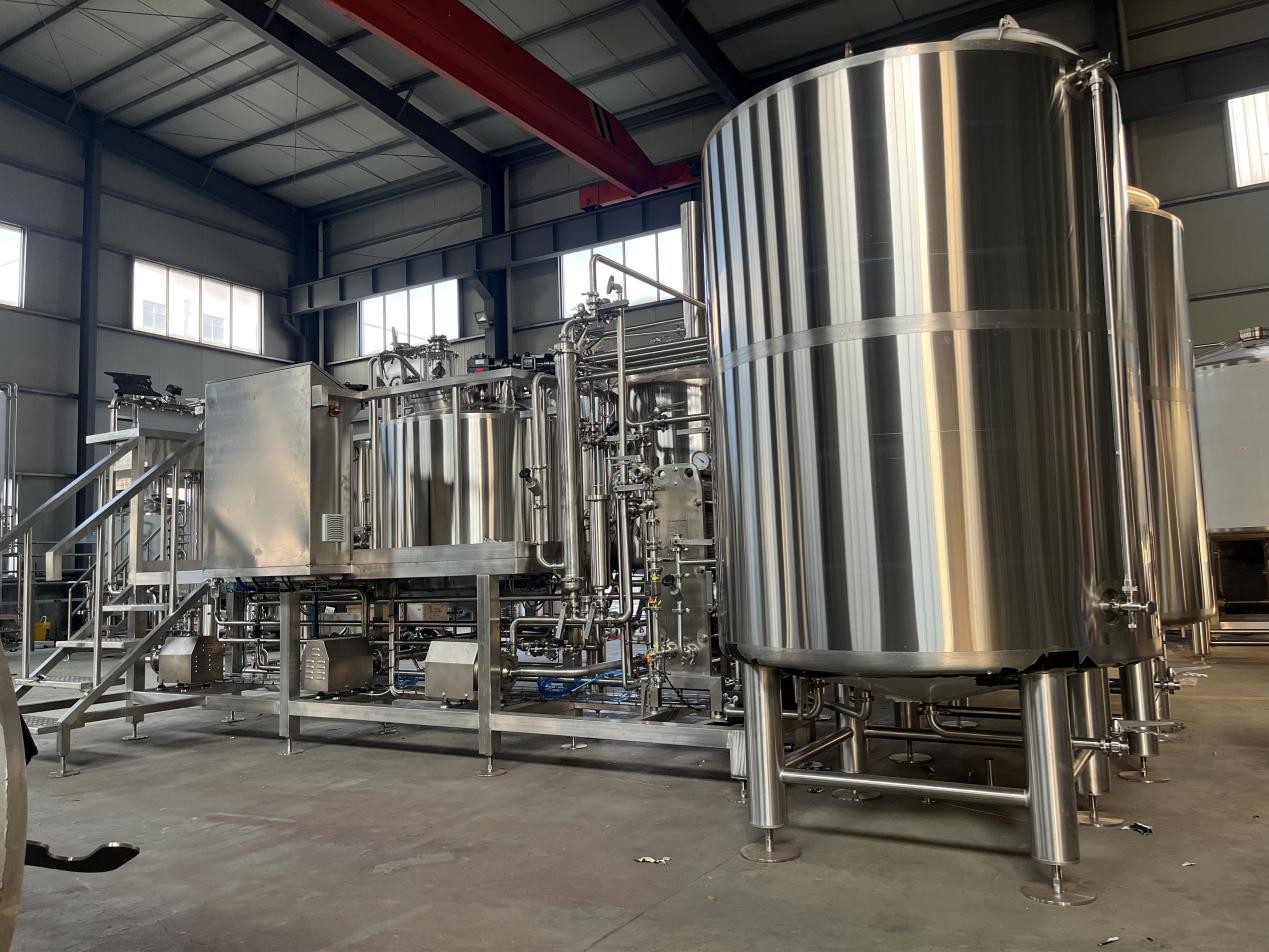
A storage tank does not replace the brewery’s water source. Instead, it gives the brewery better control over how water is prepared and used.
Main Types of Brewery Water Storage Tanks
Most mid-size breweries rely on three tank types, each built around a different stage of the brewing process: a Hot Liquor Tank, a Cold Liquor Tank, and a treated water storage tank.
- Hot Liquor Tank (HLT)
- Cold Liquor Tank (CLT)
- Treated Water Storage Tank
The exact combination depends on the brewery’s process, but each tank type serves a distinct purpose.
Hot Liquor Tank
A Hot Liquor Tank (HLT) stores heated brewing water for mashing and sparging.
In brewing terminology, “liquor” means brewing water.
The HLT normally has insulation to reduce heat loss. Depending on the brewery design, water may be heated by steam, electric heating, or another method.
The tank should be sized according to the brewery’s production schedule rather than brewhouse volume alone. A brewery running several batches a day can have a much higher peak hot water demand than its brewhouse size suggests.
Cold Liquor Tank
A Cold Liquor Tank (CLT) stores chilled water, mainly for wort cooling.
After boiling, hot wort passes through a heat exchanger. Chilled water removes heat from the wort and carries that heat away in the cooling water.
The CLT provides a ready supply of cold water for this process. Depending on the brewery design, cooling may use:
- Glycol cooling
- A chilled-water loop
- A refrigeration system
- Another suitable cooling method
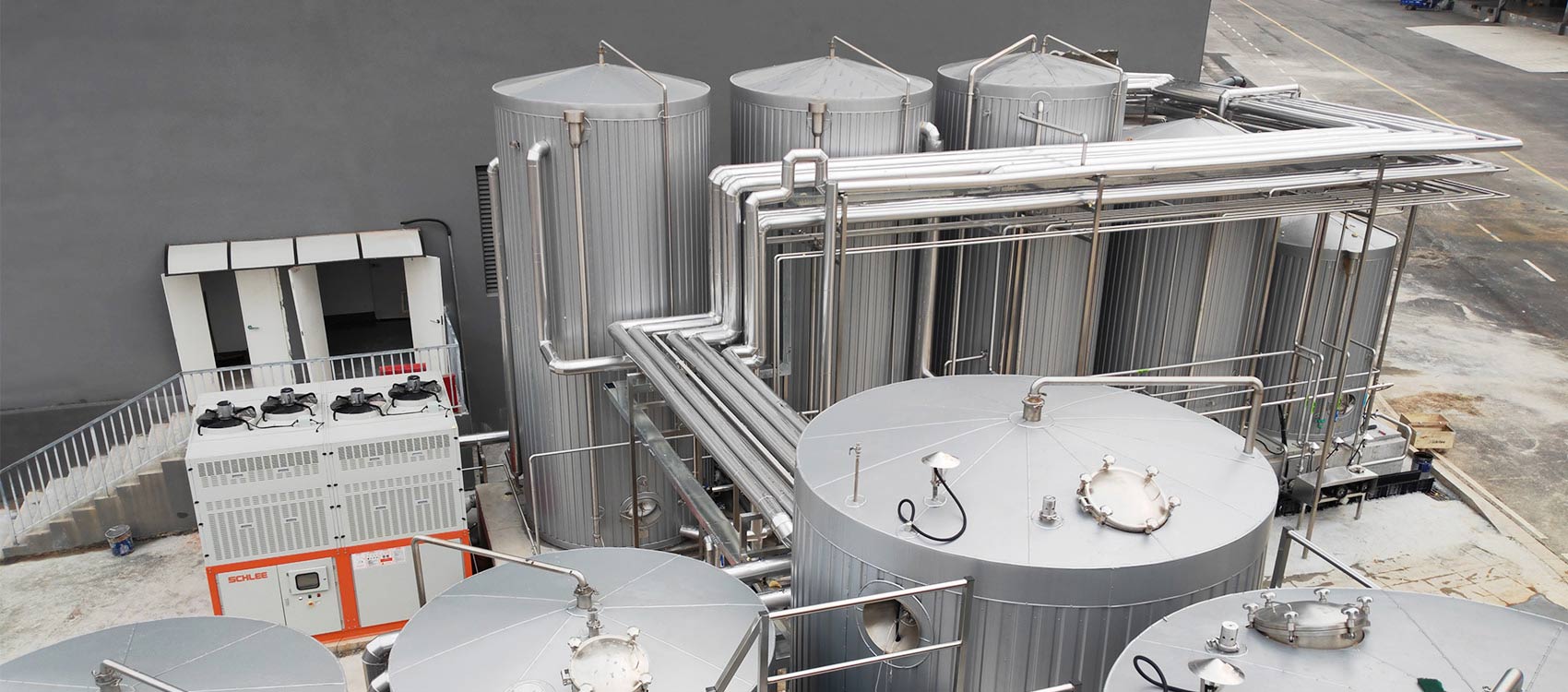
The CLT normally requires insulation to reduce heat gain and condensation. Its capacity depends on more than brewhouse size, wort volume, cooling-water temperature, heat exchanger efficiency, production schedule, and water reuse all factor in.
Treated Water Storage Tank
A treated water storage tank stores water after filtration, reverse osmosis, or another water treatment process.
Source water can contain minerals, chlorine, and other substances that affect brewing performance and beer flavor. Depending on the source water and the brewery’s requirements, treatment may include:
- Filtration
- Carbon filtration
- Reverse osmosis
- Mineral adjustment
Treated water is then stored for controlled use in brewing, final rinsing, or other process applications. The treatment system and storage tank should be designed together so water quality stays consistent throughout production.
How to Size a Brewery Water Storage Tank
Tank capacity should be set by peak water demand and CIP load, not by brewhouse volume alone. A brewhouse rated for a given batch size can still need a much larger tank if it runs several batches back-to-back or has heavy cleaning cycles between them.
Factors that typically drive sizing include:
- Production output and daily brewing batches
- Peak water demand
- CIP requirements
- Process temperature specifications
- Future expansion plans
There’s no single tank size that fits every mid-size brewery. Sizing should be confirmed with a process engineer or equipment supplier based on the brewery’s actual production schedule and water treatment needs, not estimated from brewhouse volume alone.
Why Stainless Steel Is Widely Used for Brewery Water Tanks
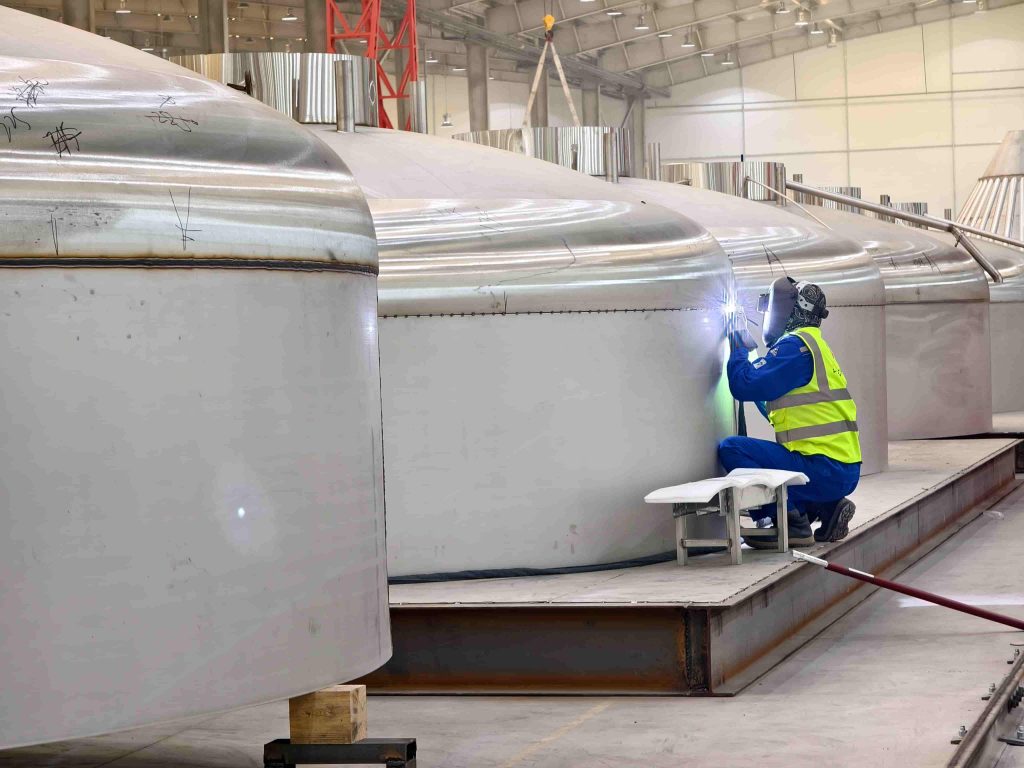
Stainless steel is widely used for brewery water storage tanks because it combines corrosion resistance, cleanability, durability, and hygienic performance.
A smooth internal surface is easier to rinse and clean, and proper welding and finishing reduce areas where residue can collect. Important construction features include:
- Food-contact stainless steel
- Smooth internal surfaces
- Hygienic welds
- Sanitary fittings
- Proper drainage
- CIP connections
- Suitable insulation
304 vs. 316L Stainless Steel
Both 304 and 316L stainless steel are common in food and beverage equipment.
| Feature | 304 Stainless Steel | 316L Stainless Steel |
|---|---|---|
| Corrosion resistance | Good | Higher |
| General brewery use | Common | Common |
| Relative cost | Lower | Higher |
| More demanding environments | Less suitable | Better suited |
For many general brewery water storage applications, 304 stainless steel is a practical choice. 316L may be selected when water quality, cleaning chemicals, chloride exposure, or operating conditions require higher corrosion resistance.
The most suitable grade should be selected based on actual process conditions, not simply by choosing the more expensive material.
Hygienic Design and CIP Cleaning
A brewery water tank has to be designed for effective cleaning, not just for storage. A hygienic tank normally combines smooth internal surfaces, sanitary connections, good drainage, suitable CIP coverage, and minimal stagnant areas.
CIP, or Clean-In-Place, allows the tank to be cleaned without removing it from the production system. A typical cleaning program may include:
- Pre-rinse
- Caustic cleaning
- Intermediate rinse
- Acid cleaning when required
- Final rinse
- Sanitization when required
The exact cleaning cycle depends on the tank application, water quality, cleaning chemicals, temperature, and the brewery’s sanitation SOP.

Spray Device and Cleaning Coverage
A spray ball or other spray device distributes cleaning solution across the internal tank surfaces. However, installing a spray ball doesn’t by itself guarantee effective cleaning.
Performance depends on:
- Tank geometry
- Spray device design
- Installation position
- Flow rate
- Pressure
- Cleaning temperature
- Chemical concentration
- Cleaning time
The spray device should be selected as part of the complete CIP system, not chosen on its own.
The Role of the CIP Pump
The CIP pump circulates cleaning solution through the tank’s spray device, and it has to deliver the flow and pressure the cleaning system needs.
If flow is too low, cleaning action can fall short. If pressure isn’t right, the spray device may not reach full coverage. The CIP pump should be selected together with the tank size, spray device, piping, valves, and cleaning requirements.
Hygienic piping design matters here too. A dead leg is an area where liquid flow is very low or stagnant, poorly designed valve branches, instrument connections, or unused pipe sections can create these areas. Reducing dead legs lowers sanitation risk and supports more effective cleaning.
Water Reuse and Energy Efficiency
Water storage also lets a brewery capture and reuse water that would otherwise go straight down the drain. During wort cooling, for example, cooling water absorbs heat from the wort and leaves the heat exchanger warmer than when it went in.
Instead of sending all of that warm water to the drain, a brewery can collect it in a storage tank for later use. Depending on water quality and process requirements, recovered water may be used for:
- Cleaning
- Pre-rinsing
- Equipment preparation
- Other suitable utility applications
This reduces fresh water demand, and the residual warmth in the recovered water can also cut the energy needed to heat fresh water for a later process.
For this reason, modern brewery water management should look beyond simple storage. Storage, water treatment, water reuse, and heat recovery work together as one system rather than as separate decisions.
What to Look for in a Brewery Water Tank Supplier
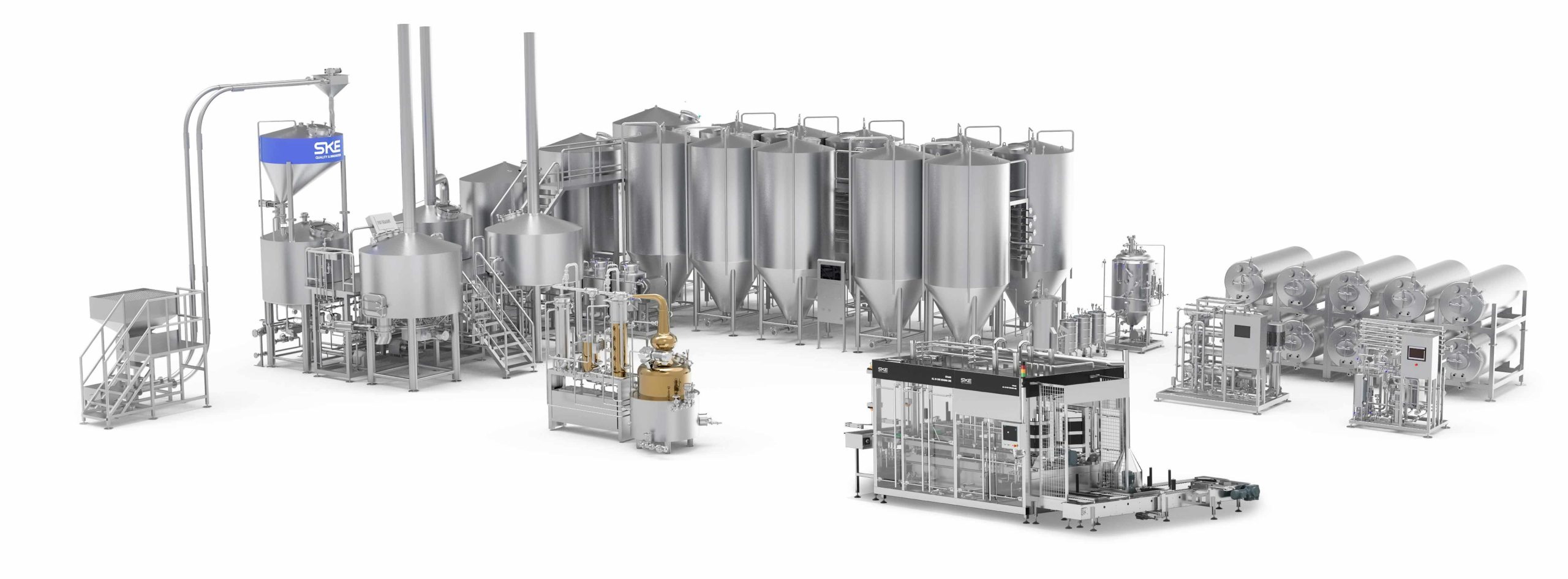
A tank design has to match a brewery’s exact process conditions, not just its overall size, so supplier selection matters as much as the tank spec itself. Custom-built stainless steel tanks are typically engineered around a defined project scope rather than picked from a generic catalog.
Water storage tanks are usually specified according to project conditions such as:
- Tank volume
- Application: hot-water tank or cold-water tank
- Treated process-water requirements
- Heating and cooling demands
- Insulation layer configuration
- CIP setup
- Sanitary fittings
- Overall tank dimensions
- Piping connection layout
- On-site installation space
- Automation requirements
- Provision for future capacity expansion
A capable supplier runs a project assessment and integrated planning process so the tank, CIP system, and piping work together as one system, whether the project is new brewery construction or a retrofit and upgrade.
Frequently Asked Questions
1. What are water storage tanks used for in a brewery?
Water storage tanks hold hot, cold, treated, or recovered water for specific brewing and cleaning processes. This lets a brewery prepare water ahead of when it’s actually needed and manage peak demand more evenly.
2. What is the difference between an HLT and a CLT?
An HLT, or Hot Liquor Tank, stores heated water mainly for mashing and sparging. A CLT, or Cold Liquor Tank, stores chilled water mainly for wort cooling.
3. How large should a brewery water storage tank be?
Tank capacity depends on brewhouse size, batches per day, peak water demand, CIP requirements, heating and cooling needs, and future expansion plans. There is no universal size for every brewery, sizing should be confirmed against the specific production schedule.
4. Can brewery water be reused?
Yes. Some water streams, such as warm water generated during wort cooling, can be collected and reused for cleaning or other suitable processes. The reuse plan should be based on water quality and process requirements.
5. Can brewery water storage tanks be customized?
Yes. Tank capacity, dimensions, insulation, fittings, heating or cooling configuration, and CIP connections can typically be customized by the equipment manufacturer to match a brewery’s production and installation requirements.
Conclusion
Water storage tanks are a core part of water management for mid-size and larger breweries. They let a brewery handle hot water, cold water, treated process water, and recovered water in a controlled way, and they help manage peak production demand without over-relying on incoming municipal supply.
Tank specifications should be matched to plant capacity, process requirements, water-treatment standards, heating and cooling needs, CIP requirements, available space, and future expansion plans. Equipment suppliers such as SKE Equipment build custom-engineered tanks around these project conditions rather than offering one standard size.
If you have any further questions, feel free to reach out:
- Facebook: Facebook page
- Email: info@skeequipment.com
A contact form is available below for project-specific inquiries about tank sizing, materials, and CIP requirements for breweries and beverage plants.