Keg Hygiene Essentials in Brewery Filling Lines
A beer keg filling line integrates washing, sterilization, CO₂ pre-pressurization, isobaric filling, capping, inspection, labeling, and palletizing. As precision pressure vessels, kegs directly affect beer freshness, carbonation retention, and microbial safety. Quality brewing is only half the story: poorly sanitized kegs can trigger bacterial growth, off-flavors, and full batch losses, which is why professional keg washers and fillers rank among the most critical machines on a production floor.
This guide walks through how a beer line keg system works, what a standard cleaning cycle involves, and how large-scale breweries balance throughput with water and energy costs.
Key Takeaways
- A beer line keg system combines an exterior washer, an interior washer/filler, and packaging equipment into one automated line, typically controlled by a PLC.
- Industry-wide, craft breweries average roughly 7 liters of water per liter of beer produced, while top-performing large breweries (10,000+ barrels/year) report a water-to-beer ratio near 3.3:1, according to Brewers Association benchmarking data.
- A standard wash cycle runs six stages: de-ullage, pre-rinse, caustic wash, acid wash, post-rinse, and sanitization, followed by a CO₂ purge.
- Cascading rinse-water reuse is the most common lever breweries use to cut keg-washing water consumption without compromising hygiene.
What Is a Beer Line Keg System?
A beer line keg system is a complete production line that takes empty kegs, cleans them inside and out, and fills them with the correct volume of beer. In large breweries the process runs fully automated, with several machines working in sequence rather than a single unit.
The exterior washer removes dirt, labels, and dust from the outside of each keg first. From there, kegs move to the interior washer, the most demanding stage in the line: each keg is inverted, and high-pressure nozzles spray cleaning solution through the spear and into the shell. After washing, the keg is purged with CO₂ to displace oxygen, filled with beer, then capped, weighed, and palletized for shipping.
Key Components of a Beer Line Keg System
| Component | Main Function |
|---|---|
| External Keg Washer | Rotating nozzles clean the outside of the keg and remove labels and grime. |
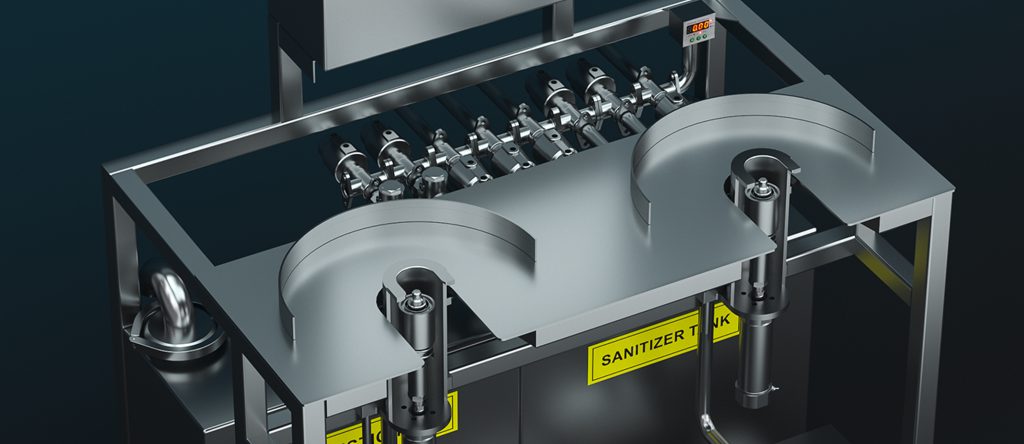
| Internal Keg Washer & Filler | The heart of the system. Cleans and sanitizes the inside, then fills the keg with beer. |
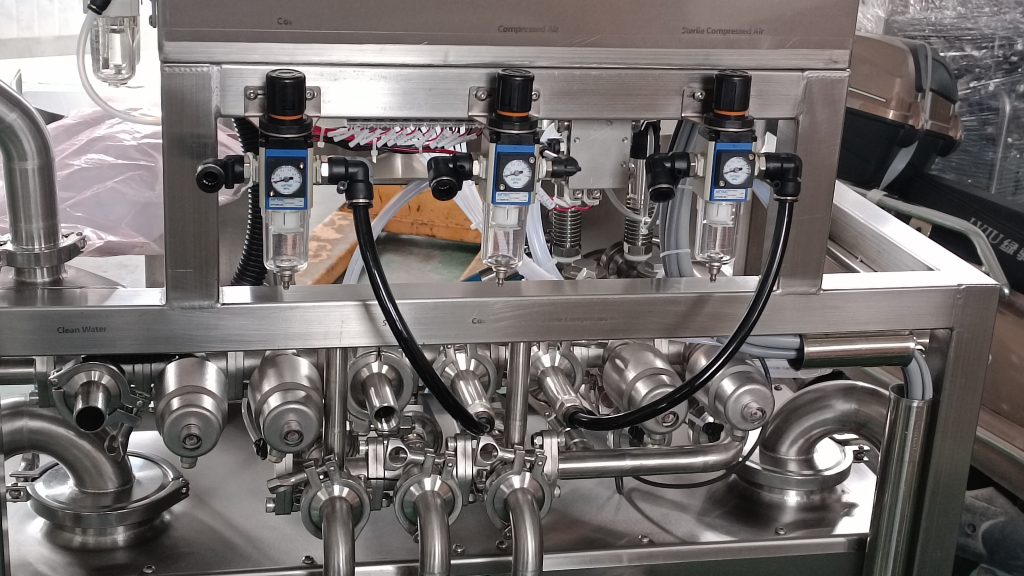
| CIP Station (Clean-in-Place) | Supplies cleaning chemicals from dedicated tanks for caustic, acid, hot water, and sanitizer. |
| Keg Weigher and Rejecter | Weighs each filled keg and rejects any that fall outside the target fill weight. |
| Palletizer | Stacks filled kegs onto pallets for shipping. |
The Heart of the Line: The Keg Washing System
The keg washing system is the most critical part of the process. Washing a keg is not simply rinsing it with water; it is a controlled sequence of heat, chemical action, and pressure designed to remove every trace of old beer residue and kill any microorganisms that could infect the next fill.
A dirty keg is expensive in more than one way. Old beer residue causes off-flavors, and bacteria or wild yeast contamination can spoil an entire batch, which is why a product recall from a contaminated keg run can cost far more than the wash cycle itself.
The Standard Cleaning Cycle
A typical cleaning cycle in a keg washing system includes:
- De-ullage: The machine releases the remaining pressure and gas from the returned keg.
- Pre-rinse: Water sprayed inside removes loose sediment before chemical stages begin.
- Caustic Wash: Hot caustic soda (NaOH) dissolves organic residue such as yeast and proteins.
- Acid Wash: Removes mineral deposits like calcium oxalate, known in the industry as beer stone.
- Post-rinse: Hot water rinses away remaining cleaning chemicals.
- Sanitization: Heat or chemical sanitizer eliminates any remaining bacteria.
- CO₂ Purge: The keg is filled with CO₂ to displace oxygen before filling.
Each step runs on a specific time and temperature. If even one stage is skipped or shortened, hygiene can be compromised even though the keg looks clean from the outside.
Large Scale Brewing: Meeting High Demands
Large-scale brewing is a volume and consistency problem. Breweries producing millions of hectoliters a year need equipment that keeps running around the clock, since unplanned downtime on a packaging line is one of the costliest failures in a brewery’s operation.
At this scale, manual keg washing isn’t realistic. Fully automated systems are built to sustain high hourly throughput on continuous shifts, and the priorities shift from labor cost to efficiency: less water, less energy, fewer chemicals, and equipment that needs minimal intervention to keep running.
Key Demands of Large-Scale Brewing
- High Throughput: The line must process a high volume of kegs per hour without bottlenecking downstream packaging.
- Low Operating Costs: Water and energy savings compound quickly at industrial volumes and directly affect margins.
- Reliability: Equipment must run continuously with minimal unplanned stops.
- Automation: Reducing manual touchpoints lowers both labor cost and contamination risk.
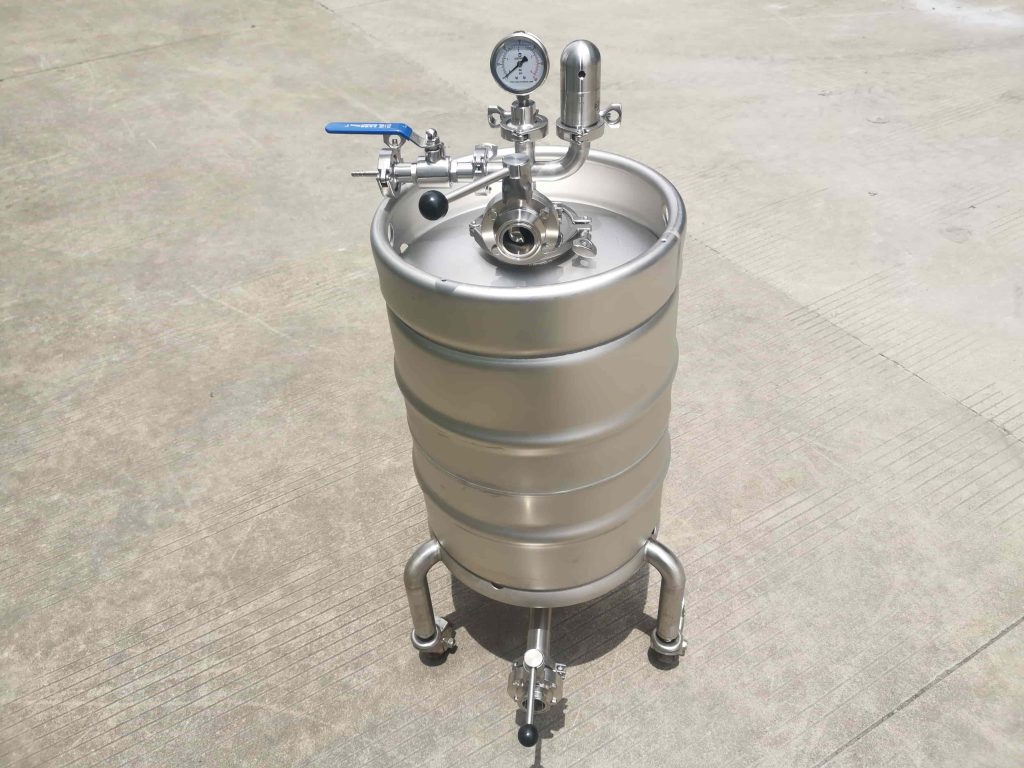

Washer for Kegs: Types and Technologies
There are two broad categories of keg washer, and the right one depends on brewery size and budget: manual/semi-automatic and fully automatic.
Manual or Semi-Automatic Washers: Common in small breweries and brewpubs. An operator connects each keg by hand, starts the cycle, and monitors it, usually washing one or two kegs at a time. Lower upfront cost, higher labor demand.
Fully Automatic Washers: Built for large-scale brewing. Kegs load onto a conveyor and pass through washing, filling, and capping without manual intervention, which is where SKE’s systems are designed to operate.
The Role of CIP
A CIP (Clean-in-Place) system is the backbone of any washer for kegs. It supplies and manages hot water, caustic, and acid, mixing each to the correct concentration and heating it to the right temperature for the current stage. In large-scale brewing, automated CIP keeps cleaning results consistent from keg to keg and reduces chemical waste compared to manual dosing.
Technology Behind SKE’s Beer Line Keg Systems
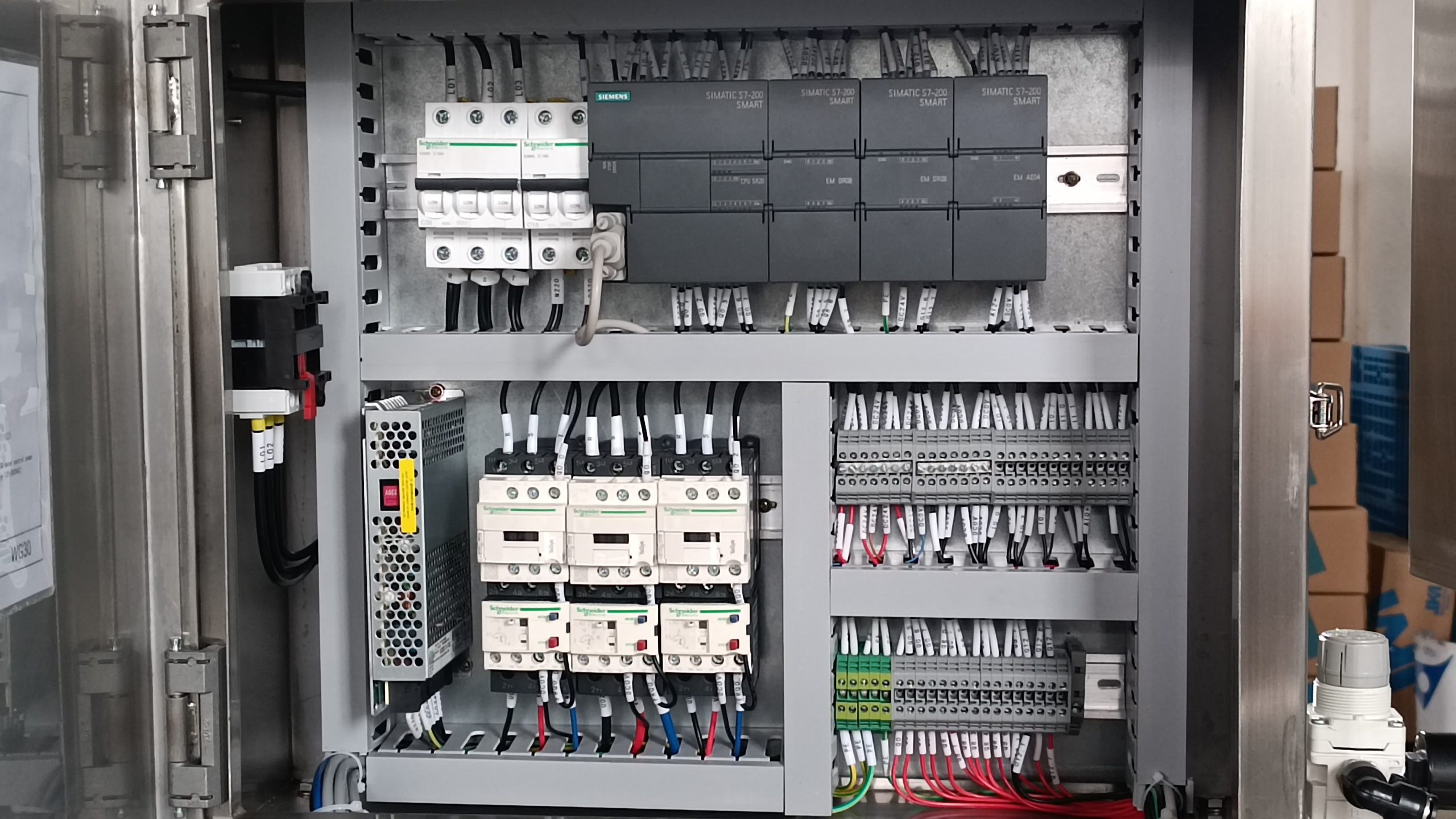
SKE builds its beer line keg systems from 304 stainless steel and controls them with Siemens PLC controllers and touchscreen interfaces, letting operators set different recipes for different keg sizes and monitor cleaning parameters in real time.
A key lever for water reduction is cascading rinse reuse: later-stage rinse water, which is cleaner than earlier wash water, gets redirected into an earlier pre-rinse stage instead of going straight to drain. This single design choice is why water-to-beer ratios vary so widely between breweries even when using similar chemistry.
For context on why this matters: Brewers Association benchmarking data shows the industry average sits near 7 liters of water per liter of beer produced, while its best-performing large-member breweries (10,000+ barrels per year) report ratios closer to 3.3:1 (Brewers Association Sustainability Benchmarking Report). Keg washing is one of several water-intensive stages inside that total, alongside brewing, fermentation cleaning, and general sanitation, so cascading recovery at the keg line contributes directly to closing that gap.
SKE’s Approach to Sustainability
SKE designs its keg washing systems around cascading water recovery: fresh water is reserved for the final rinse, while water from earlier, cleaner stages is recovered for reuse in pre-rinsing. This keeps hygiene standards intact while cutting fresh-water draw compared to a single-pass wash design.
Common Keg Washing Problems and Solutions
Even a well-built washer for kegs runs into issues over time. The table below covers the problems operators report most often, their likely causes, and the first troubleshooting step to try.
| Problem | Possible Cause | Recommended Solution |
|---|---|---|
| Kegs not clean after cycle | Low caustic concentration or low temperature | Check chemical dosing and heating system. Verify temperature sensors. |
| Beer stone remains inside | Acid wash step is skipped or too short | Increase acid wash time or frequency. Check acid concentration. |
| High water consumption | Rinse stages are not optimized | Implement cascade water recovery. Check for leaks in valves. |
| Filling weight inconsistent | Pressure fluctuations in the filler | Stabilize CO₂ and beer supply pressure. Check filler seals. |
| Machine stops frequently | Clogged nozzles or faulty sensors | Clean nozzles regularly. Calibrate or replace faulty sensors. |
| Chemical carryover in beer | Insufficient final rinse time or flow | Increase final rinse duration or flow rate. Check rinse water quality. |
FAQ: Common Questions About Beer Line Keg Systems
Q1: What is a beer line keg system?
A: An integrated production line that cleans, sanitizes, and fills reusable beer kegs, automating the entire process from empty keg to sealed, filled keg ready for shipping.
Q2: Why is it important to purge CO₂ before a caustic wash?
A: CO₂ reacts with caustic (NaOH) and neutralizes it, weakening the cleaning action. The reaction can also create a vacuum inside the keg that damages seals, so operators always depressurize the keg first.
Q3: How much water does a modern keg washer use?
A: It varies by design. Older or manual systems can use well over 10 liters per keg, while automated systems with cascading rinse-water recovery, like SKE’s, are built to use a fraction of that per keg. Brewers Association benchmarking puts top-performing large breweries near a 3.3:1 overall water-to-beer ratio, against an industry average closer to 7:1 (source).
Q4: What is “beer stone” and how is it removed?
A: Beer stone is a hard mineral deposit, mainly calcium oxalate, that forms inside a keg during use. Standard caustic cleaners do not dissolve it; an acid wash stage is needed to remove it, which is why skipping or shortening that step is a common root cause of dirty kegs.
Q5: What are the benefits of an automatic keg washer?
A: Consistent cleaning quality cycle after cycle, less manual labor and human error, and lower water, chemical, and energy use per keg compared to manual washing.
Conclusion: Investing in Quality with SKE
A reliable beer line keg system is the piece that protects everything upstream of it: the beer itself. Investing in a well-built keg washing system protects your brand from contamination and spoilage while improving throughput and reducing per-keg operating cost.
For large-scale brewing, automation is less a preference than a requirement for the speed and consistency modern demand requires. SKE builds keg systems around cascading water recovery and PLC-controlled consistency, aiming to help breweries hold hygiene standards while managing water and energy costs.
Questions about sizing a system for your production volume? Reach out below.
- Facebook: SKE Equipment Facebook
- Email: info@skeequipment.com