Table of Contents
- Introduction
- What Is a Kegging System?
- Main Parts of a Keg Line
- Step-by-Step: Washing and Filling
- Craft Breweries vs. Large Breweries
- How to Choose a Kegging System
- What Is CIP?
- SKE Kegging Solutions
- FAQ
- Why Choose SKE & Conclusion
1. Introduction
After beer is brewed, it needs to be packaged. One important way to package beer is in kegs, while many breweries also rely on bottling line equipment for bottled products. A good kegging system makes sure that each keg is clean, safe, and filled correctly before it goes to customers.
During packaging, breweries face problems like germs, oxygen, and high labor costs. Without good equipment, even great beer can taste bad when it reaches the customer.
At SKE, we make brewery equipment. We help craft brewers and large breweries package their beer better. Our goal is to help you save time and keep your beer fresh.
By the SKE Process Engineering Team
Key Takeaways
- A kegging system combines outside cleaning, inside washing, sanitizing, CO2 flushing, filling, and pressure control into one process to protect beer from oxygen pickup and contamination.
- Oxygen introduced during packaging starts the staling process that shortens shelf life, which is why counter-pressure filling and CO2 flushing matter as much as the wash cycle.
- Craft breweries typically run 30-60 kegs/hour on semi- or fully automatic lines, while large breweries run hundreds of kegs/hour on fully automatic lines built for continuous output.
- Clean-in-Place (CIP) is considered an essential brewery sanitation method because it cleans pipes and vessels thoroughly without major disassembly.
- SKE’s automatic keg washer uses Siemens PLC control, stainless steel 304 construction, and pulsed cleaning valves, and is certified to CE/UL/CUL standards.
- A stainless steel keg has a service life of 30+ years and turns over roughly five times per year, so a single keg can dispense about 25,000 glasses of beer over its lifetime — a strong argument for investing in equipment that protects that asset.
- The global beer kegs market was valued at USD 1.19 billion in 2025 and is projected to reach USD 1.96 billion by 2033, reflecting steady demand for keg-based packaging equipment.
2. What Is a Kegging System?
A kegging system is a machine that cleans and fills beer kegs. It does several jobs in one process.
A typical system includes:
- Outside cleaning
- Inside cleaning
- Sanitizing (killing germs)
- CO2 gas flushing
- Beer filling
- Pressure control
The main goal is simple: keep the beer fresh and safe from the brewery to the customer.
After fermentation, beer can easily go bad. Germs inside the keg can change the taste. Oxygen can also make the beer less fresh — as the Brewing Industry Guide explains, oxygen introduced during packaging starts the staling process that shortens shelf life. That is why breweries use automatic or semi-automatic machines. These machines give consistent results. Many use PLC technology to control the process.
Kegs are also a long-term asset, not a one-time purchase. According to Micromatic, a stainless steel keg has a service life of over 30 years and turns over roughly five times per year, meaning a single keg can dispense about 25,000 glasses of beer over its lifetime. A kegging system that cleans and fills gently — without damaging valves or seals — protects that investment.
3. Main Parts of a Keg Line
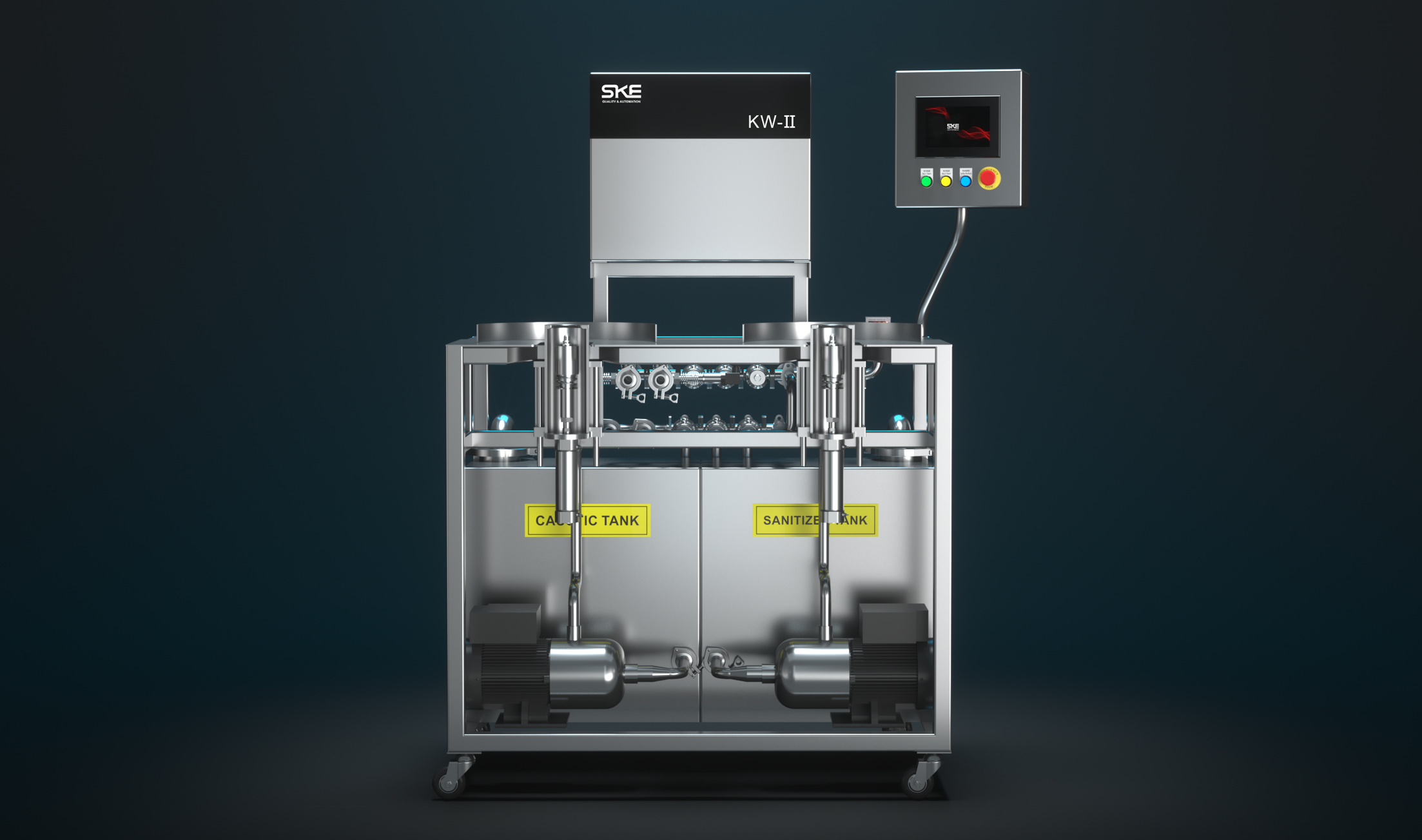
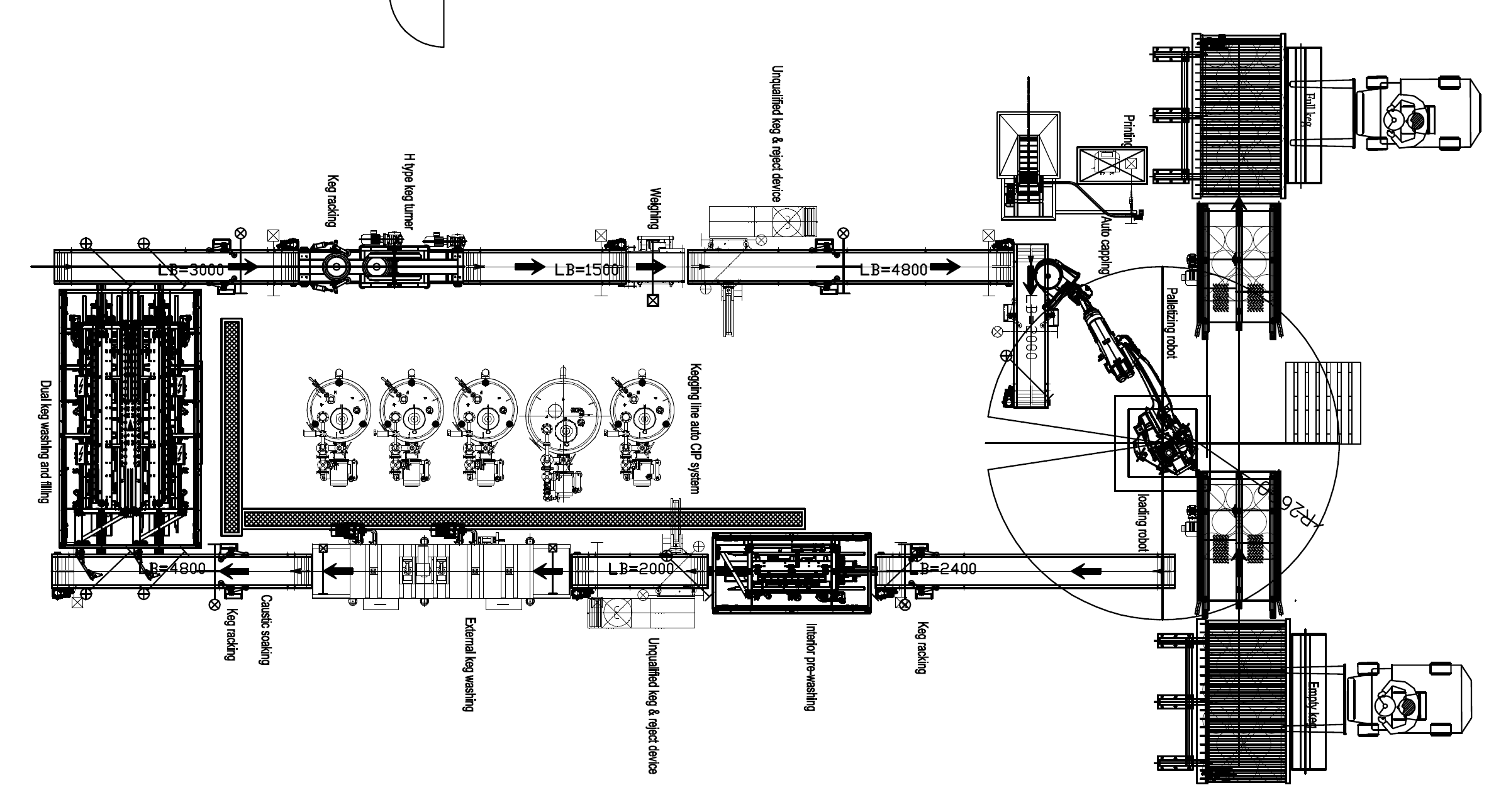
A complete keg line has several stations. Each station does a specific job.
The main steps are:
- Outside washing
- Inside washing
- Sanitizing
- Filling
Every step is important for beer quality.
4. Step-by-Step: Washing and Filling
Step 1: Outside Washing
First, the outside of the keg must be cleaned. Kegs can be dirty from transport. They may have dust, dirt, or old labels. If this dirt gets inside, it can cause problems. Professional machines use water and soap to clean the outside.
Step 2: Inside Cleaning (Keg Washing)
This is the most important step. Keg washing removes old beer, yeast, and germs.
A normal cleaning cycle includes:
| Step | What It Does |
|---|---|
| Pre-rinse | Removes leftover beer and foam |
| Caustic wash | Removes proteins and dirt |
| Rinse | Washes away the soap |
| Acid wash | Removes mineral buildup |
| Final rinse | Makes sure no soap is left |
| Sanitizing | Kills all germs |
Step 3: Sanitizing
After cleaning, the keg must be sanitized. This means killing all remaining germs. Steam is often used because it works well and leaves no chemicals behind.
Step 4: Filling
Filling must be done carefully to keep oxygen out. The process includes CO2 flushing, pressure adjustment, and filling. This method reduces foam and protects beer quality. After filling, the keg is sealed and ready to go.
5. Craft Breweries vs. Large Breweries
Different breweries need different types of kegging systems. Craft breweries and macro breweries have different needs.
| Feature | Craft Brewery | Macro Brewery |
|---|---|---|
| Speed | 30-60 kegs/hour | Hundreds+ kegs/hour |
| Automation | Semi or fully automatic | Fully automatic |
| Main Focus | Flexibility | High speed |
| Best For | Growing breweries | Big production |
Craft breweries want machines that are easy to use and flexible. Large breweries need machines that run all day without stopping. SKE makes solutions for both.
Demand for this equipment keeps growing on both ends of the market. ResearchAndMarkets estimates the global beer kegs market at USD 1.19 billion in 2025, projected to reach USD 1.96 billion by 2033 — a 6.7% CAGR driven by craft brewery expansion and the shift toward reusable, sustainable packaging.
6. How to Choose a Kegging System
Here are some things to think about before buying:
1. How much beer do you make?
Choose a machine that fits your production now. Also think about future growth.
2. How much automation do you need?
More automation means less manual work and fewer mistakes. It also saves labor costs.
3. How well does it clean?
Good cleaning prevents bad tastes and germs. Make sure the machine cleans thoroughly.
4. Can it handle different keg sizes?
Your machine should work with sizes like 20L, 30L, and 50L. This gives you more flexibility.
5. Is it reliable?
Look for stainless steel construction and good components. This helps the machine last longer.
7. What Is CIP?
CIP stands for Clean-in-Place. It is a way to clean the inside of pipes and machines without taking them apart. CIP is very important for modern keg lines. The Brewers Association considers CIP an essential brewery sanitation method that thoroughly cleans equipment without major disassembly.
A normal CIP process includes water rinse, caustic cleaning, acid cleaning, final rinse, and sanitizing. CIP saves time, reduces manual work, and keeps everything hygienic. For a closer look at how these systems operate, see our CIP machine guide.
8. SKE Kegging Solutions
SKE makes customized keg washing and filling machines for breweries around the world. Our systems improve cleaning, consistency, and safety.
SKE Automatic Keg Washer – Key Features:
- Automatic Keg Connector – Connects to the keg automatically. No manual work needed.
- Two Cleaning Stations – Two stations work independently. This speeds up the process.
- Pulsed Cleaning Valves – High and low-pressure pulses clean hard-to-reach areas like the keg stem.
- Stainless Steel 304 – Strong and hygienic material.
- Siemens PLC Control – Easy to use and reliable. Certified with CE/UL/CUL.
9. FAQ
Q1: What is the difference between keg washing and keg filling?
A: Washing cleans the keg. Filling puts beer into the clean keg. Both steps are needed.
Q2: Why do breweries use steam for sanitizing?
A: Steam kills germs very well. According to ST Industry, dry saturated steam sanitization is effective without leaving chemical residue behind.
Q3: Can one machine handle different keg sizes?
A: Yes. Machines like SKE’s can work with sizes from 10L to 60L.
Q4: What is counter-pressure filling?
A: The keg is filled with CO2 gas before beer goes in. This reduces foam and keeps oxygen out.
Q5: How fast is the SKE keg washer?
A: It can clean about 30-40 kegs per hour. This is good for craft breweries.
Q6: What power does it need?
A: The electric model needs 8kW. The steam model needs 2.2kW.
10. Why Choose SKE & Conclusion
Why Choose SKE?
- More than 10 years of experience
- Customized solutions for all brewery sizes
- High-quality materials – Stainless steel 304
- Reliable automation – Siemens PLC with CE/UL/CUL
- Global support – Spare parts and technical help
Conclusion
A good kegging system is very important for beer quality. Every step—from washing to filling—matters.
For craft breweries, a compact automatic keg washer saves labor and improves consistency. For large breweries, advanced keg lines provide the speed they need.
SKE offers customized keg washing and filling solutions for all types of breweries.
Contact SKE today to talk about your needs. We can give you a customized proposal.
- Facebook: SKE Equipment Facebook
- Email: info@skeequipment.com
Fill out the contact form below for customized solutions. We fully support all your production equipment demands for breweries and beverage plants.