
Learn how CIP cleaning machines improve brewery hygiene, reduce downtime, and optimize sanitation. SKE provides automatic CIP solutions for medium and large breweries.
Introduction: Why a CIP Machine is Non-Negotiable
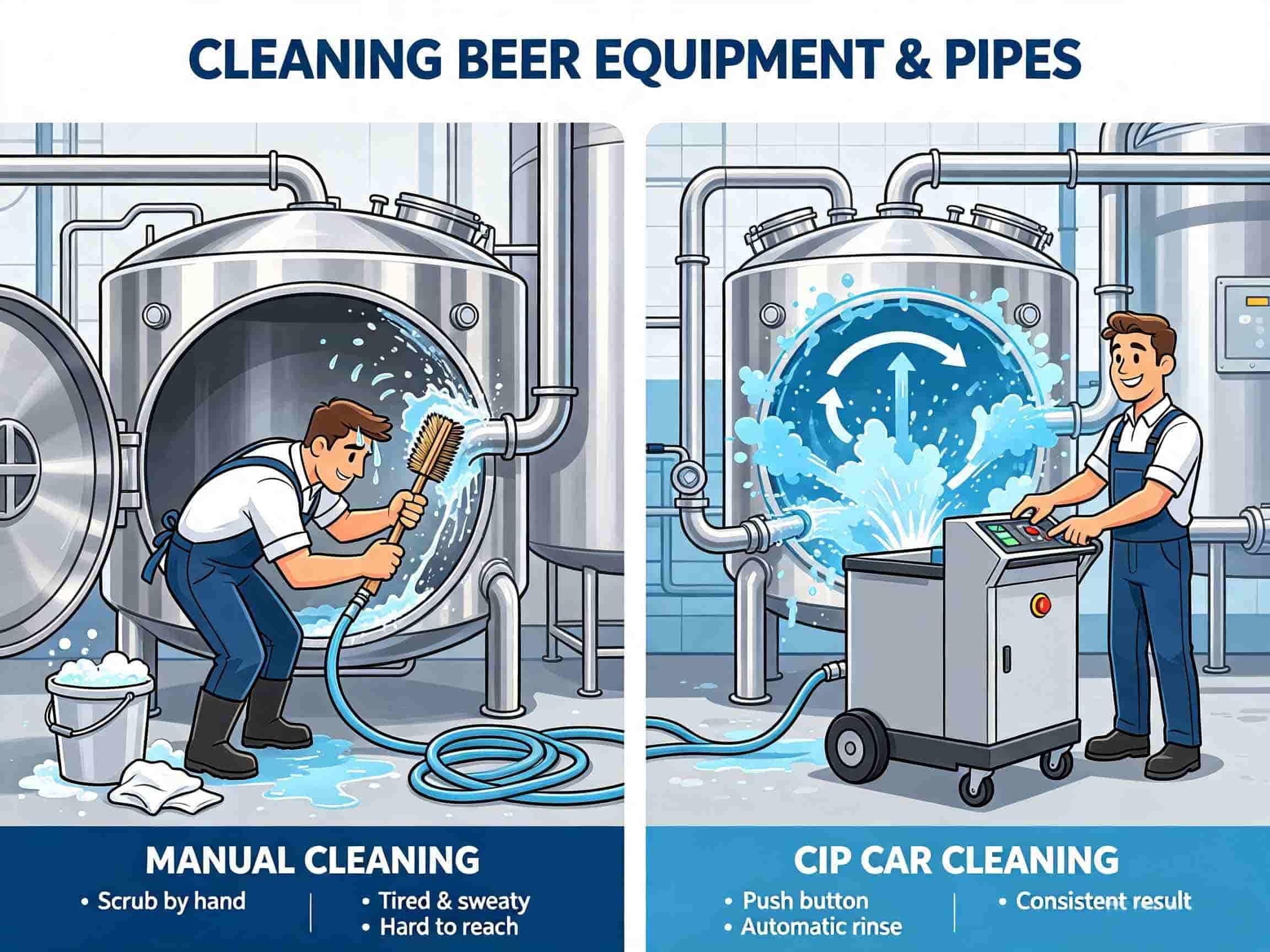
For any brewery, especially those producing beer on a medium to large scale, cleanliness is just as important as the recipe. Beer taste and quality depend on spotless equipment. In the past, cleaning meant long hours of manual work. Workers had to take apart pipes and tanks, scrub them by hand, and reassemble everything. This process was tiring, slow, and risked damaging equipment or creating hygiene problems.
Today, modern breweries use a CIP machine. CIP stands for “Cleaning in Place.” This technology allows a brewery to clean tanks, pipes, and other equipment without disassembly. The CIP machine automatically sends cleaning liquids, water, and sanitizers through the system, cleaning every surface that beer touches.
Using a CIP machine saves time, reduces manual labor, and guarantees higher cleanliness standards. With automated cycles, brewers know every batch starts in a perfectly clean environment. This is vital for flavor and stability. A reliable CIP system is a smart investment for any growing brewery aiming to become a top beer producer.
- A CIP (Cleaning in Place) machine cleans tanks, pipes, and equipment automatically, without disassembly — a standard cycle runs pre-rinse, caustic wash, intermediate rinse, acid wash, and final rinse.
- Central CIP systems suit high-volume 24/7 breweries; mobile CIP trolleys suit smaller or craft operations with hard-to-reach equipment.
- A PLC+HMI control system automates and logs every cycle, which is what auditors and quality teams check first.
- SKE’s modular CIP stations are plug-and-play, built in SS304/SS316L, and carry CE, UL, and CUL certification.
Understanding the Core Components of a CIP System
A standard CIP system is a network of different parts working together. The main components include tanks, pumps, and a central control system.
CIP Tanks: These large storage tanks hold cleaning solutions. A typical system has several tanks: one for rinse water, one for caustic solution (like sodium hydroxide) to remove organic residues, and one for acid solution to remove mineral deposits. Tanks are usually stainless steel with sensors for temperature and liquid level.
Pumps and Heat Exchangers: Powerful pumps push cleaning liquids through pipes and tanks at high speed, creating a scrubbing action. Heat exchangers heat the solutions to the right temperature, making chemicals more effective at dissolving brewing residues.
Control Valves and Piping: A network of pipes and automated valves directs liquids to the right place. Valves open and close at the right time, ensuring liquid flows through a specific tank or pipeline and returns to the CIP system.
The CIP Control System: The Brain of the Operation
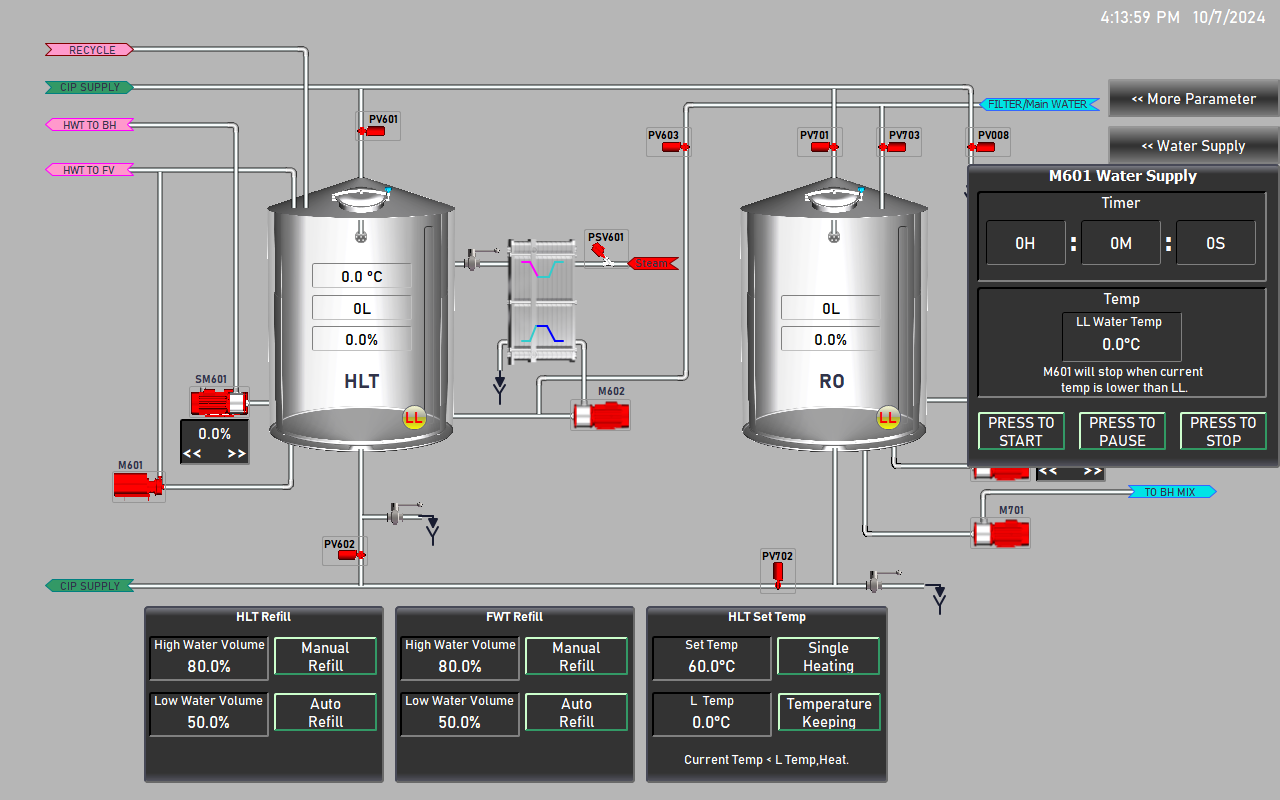
The CIP control system is the “brain” of the cleaning process. It is often a Programmable Logic Controller (PLC). This system automates the entire cleaning cycle, telling pumps, valves, and heaters when and how to operate. Operators use a user-friendly HMI touchscreen interface.
With this system, cleaning is consistent and repeatable. The operator selects a program for a specific tank, and the CIP control system automatically runs through these steps:
-
Pre-rinse: Water flushes out loose residue.
-
Caustic Wash: Hot caustic solution removes organic soil like yeast and proteins.
-
Intermediate Rinse: Water removes the caustic solution.
-
Acid Wash: Acid solution removes mineral scale.
-
Final Rinse: Clean water removes all chemical traces.
The CIP control system monitors temperature, pressure, flow rate, and chemical concentration throughout the cycle. If something is wrong, it sends an alert. This ensures thorough, safe cleaning every time. For breweries scaling up production, a strong control system is essential—it provides data to prove cleaning standards are met, a key requirement for top producers.
System Architecture and Integration in a Brewery
In a medium or large brewery, the CIP system is part of the whole operation. Its architecture must be well-planned for efficiency, especially in a 24/7 facility.
There are two main setups. A central CIP system is a large, fixed unit piped to all tanks—a permanent installation in a utility area. A mobile CIP trolley is smaller and portable, often used in smaller breweries or for cleaning specific hard-to-reach equipment.
For large-scale production, a central automated CIP system is most efficient. It can clean multiple tanks simultaneously, from fermentation vessels to a stainless steel mix tank. Integrating it with a CIP control system lets brewers manage cleaning schedules from one location. Leading breweries also use industrial networks to integrate CIP with brewhouse and packaging lines, enabling early problem detection and improved efficiency.
SKE’s Modular Approach to Automated CIP Stations
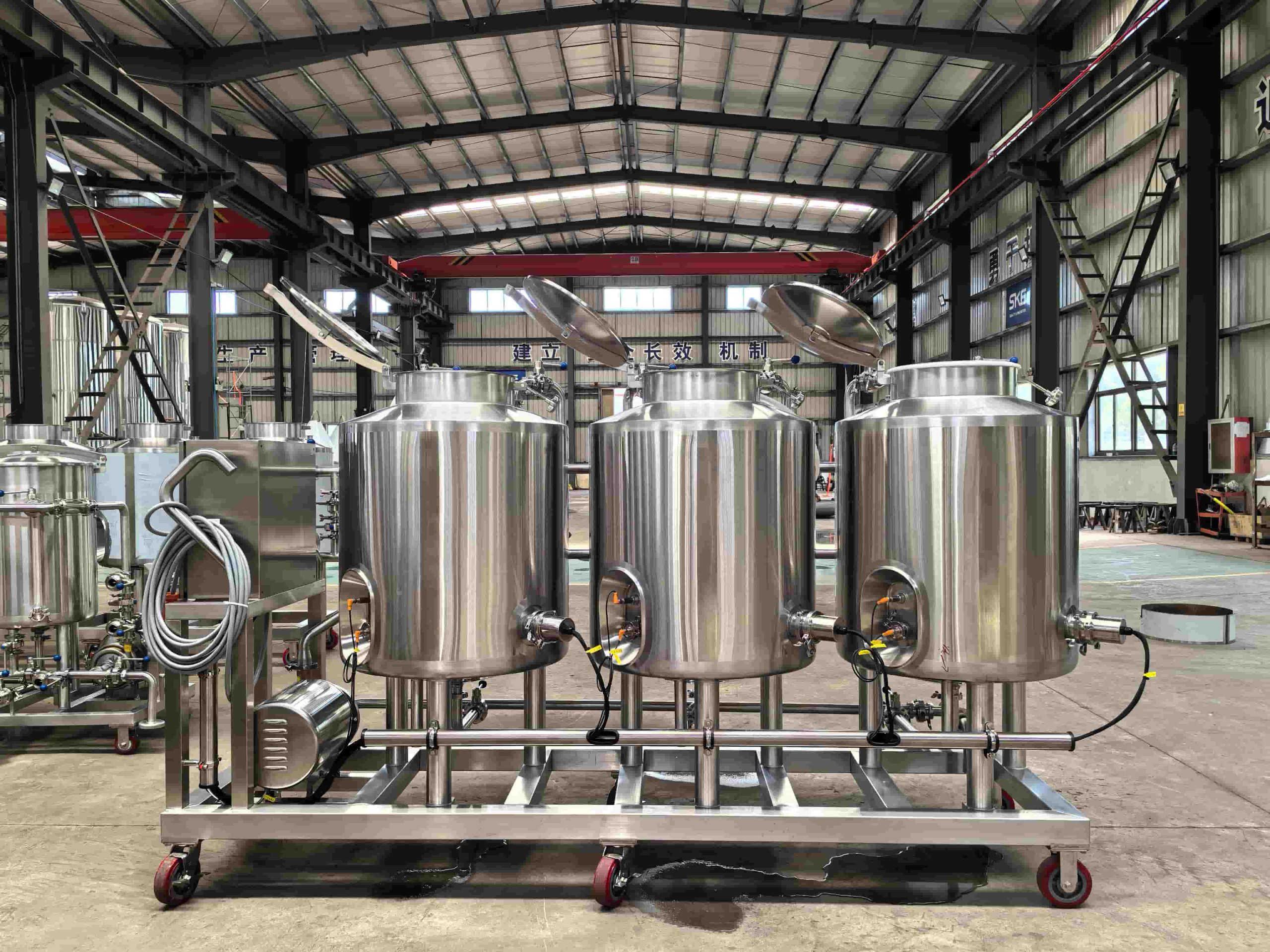
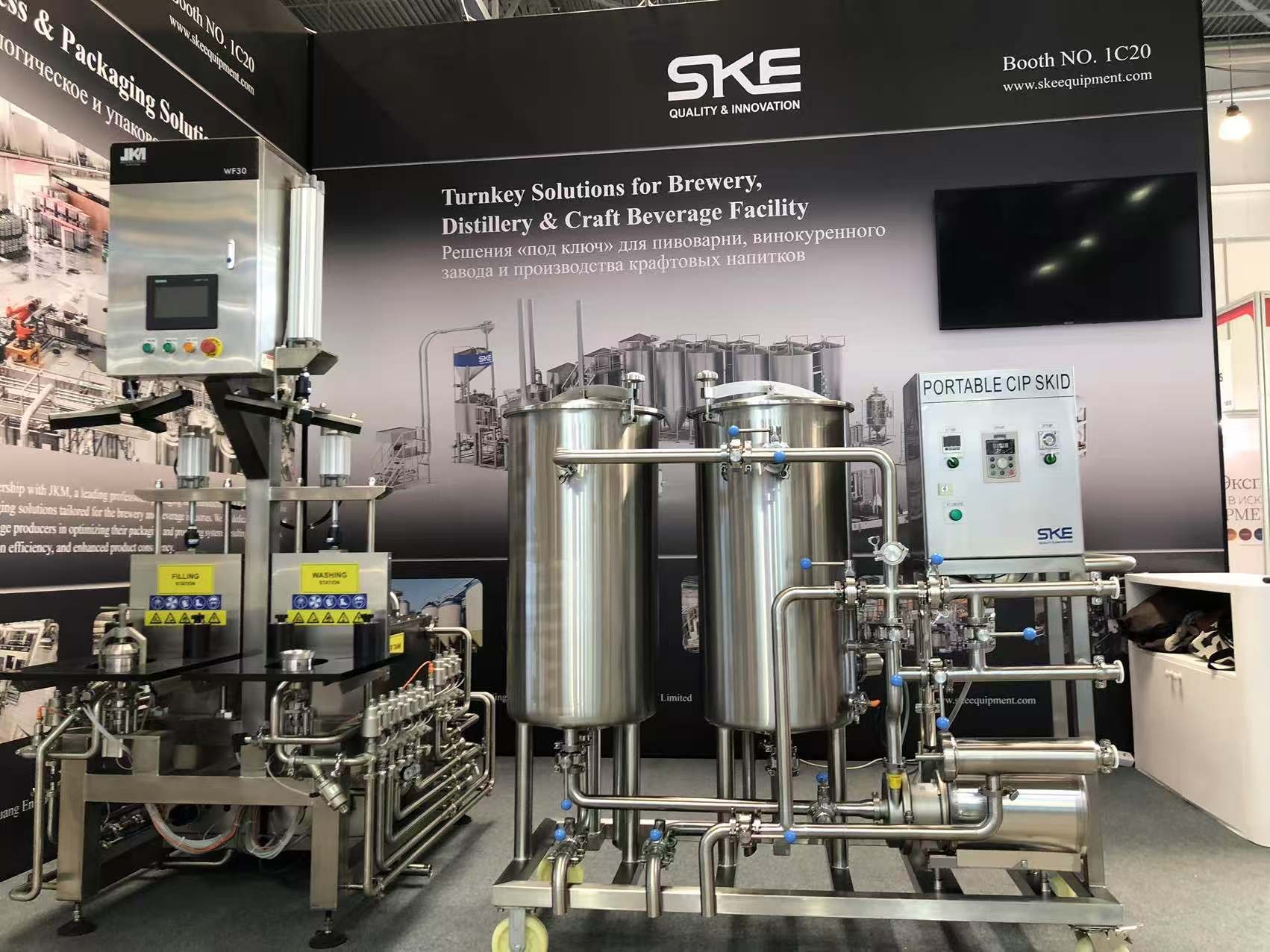
SKE understands that every brewery has unique cleaning needs. That is why we designed our SKE Automatic CIP Station as a modular, fully customizable system. This compact, plug-and-play solution comes pre-assembled with pipelines, plate heat exchangers, pumps, and all instrumentation. Every module is rigorously tested before delivery.
The SKE CIP Station is built for targeted cleaning of piping, mixing vat systems, fermentation tanks, storage vessels, filling machines, and other production units. It gives brewers full control over the cleaning process. All critical parameters—time, temperature, pH, pressure, and flow rate—are fully adjustable. This flexibility allows brewers to optimize cycles for their specific soil types and equipment.
Compliance is a top priority. SKE CIP stations fully meet brewing, beverage, and food industry standards. All components are crafted from high-quality stainless steel (SS304 or SS316L) with heat-resistant seals. The compact, modular design saves floor space and adapts easily as the brewery grows.
SKE offers standard configurations to meet different needs. A typical setup includes multiple tanks (water rinse, caustic, acid, sterilizer, and optional recovery), a supply/return manifold with automatic butterfly valves, dosing pumps, and a plate heat exchanger. The system also includes RTD sensors, flow sensors, conductivity sensors, pH sensors, level sensors, and pressure sensors. A VFD on the supply pump ensures optimal flow and energy savings.
The SKE Control System: Precision and Remote Monitoring
At the heart of the SKE Automatic CIP Station is a powerful PLC+HMI control system. This advanced CIP control system fully automates the cleaning cycle. Operators select pre-programmed recipes for different tanks or create new ones via the intuitive touchscreen. The system manages valve switching, pump speed, heating, and chemical dosing.
One standout feature is comprehensive real-time monitoring. The system tracks supply/return temperatures, flow rate, pressure, conductivity (for chemical concentration), and pH level. If any parameter deviates, the system alerts the operator immediately. This feedback ensures every cycle is effective and repeatable.
For optimized operations, the SKE CIP station offers remote monitoring. The control system integrates with the brewery’s central network, allowing supervisors to check cycle status from anywhere. Data logging records all cleaning data for quality assurance and regulatory compliance. This transparency helps breweries demonstrate their hygiene commitment—a critical factor for top producers. SKE also provides CE, UL, and CUL certifications, ensuring international safety standards. With low maintenance and long-term reliability, SKE CIP stations deliver years of trouble-free operation.
CIP Machine Selection and System Upgrades
Choosing the right CIP machine is critical. Breweries must consider tank size and number, beer type, budget, and whether the facility is new or an expansion.
One key decision is semi-automated vs. fully automated CIP control systems.
| Feature | Semi-Automated CIP System | Fully Automated CIP System |
|---|---|---|
| Operation | Requires more manual input for cycles and valves. | Fully automated via PLC and HMI. |
| Consistency | Can vary by operator. | Guarantees consistent cleaning every time. |
| Labor Costs | Higher due to manual steps. | Lower, with minimal supervision needed. |
| Scalability | Suitable for smaller or stable volumes. | Ideal for large breweries and future growth. |
| Cost | Lower initial investment. | Higher initial investment, but long-term savings. |
Many breweries upgrade existing systems—replacing old manual setups with automated ones or updating the CIP control system software for better data tracking.
Upgrades bring significant benefits. Modern controls enable “cleaning with intent”—optimizing water, chemical, and energy use to reduce waste and costs. They also simplify documentation for quality standards, helping brands gain recognition as top beer producers.
SKE’s Commitment to Brewery Efficiency and Reliability
SKE is more than a supplier; we are a long-term partner for breweries worldwide. Our CIP stations are designed with practical needs in mind. The plug-and-play design ensures quick, straightforward installation, minimizing downtime. Since each system is pre-assembled and factory-tested, breweries can trust it will work correctly from arrival.
The modular design offers easy adaptability. As a brewery grows or changes product lines, the CIP system can be reconfigured or expanded with minimal effort—adding tanks or creating new cleaning programs on the PLC. This future-proof design protects the investment for years.
Maintenance is another SKE strength. Our CIP stations use robust, corrosion-resistant materials and high-quality components that need minimal upkeep. The straightforward design simplifies routine checks. SKE also provides comprehensive technical support and documentation, helping breweries maintain peak performance. Choosing SKE means gaining a reliable partner dedicated to the highest hygiene and operational efficiency standards.
Conclusion: The Future of Brewery Cleaning
The CIP machine has become indispensable in modern brewing. It has transformed cleaning from a slow, labor-intensive job into a fast, automated, reliable process. The trend toward more advanced CIP control systems and better integration is clear.
For medium and large breweries, a sophisticated CIP system is essential for survival and growth. It ensures product quality, improves food safety, and reduces costs. As competition increases, the efficiency and consistency of automated CIP machines will remain key to success.
Frequently Asked Questions (FAQ)
Q1: What is the main benefit of a CIP machine?
A1: It allows cleaning without disassembly, saving time and labor while ensuring a more consistent, thorough clean than manual methods.
Q2: What does a typical CIP cycle include?
A2: A standard cycle has five steps: pre-rinse, caustic wash, intermediate rinse, acid wash, and final rinse.
Q3: What is a “CIP control system”?
A3: It is the automated system (usually PLC with HMI) that controls the cleaning process, managing pumps, valves, heaters, and monitoring temperature, pressure, and chemical concentration.
Q4: How do I choose between a fixed and trolley CIP system?
A4: A fixed central system suits large breweries with high volume and many tanks. A trolley system is portable and more flexible for smaller craft breweries.
Q5: How can an upgrade improve efficiency?
A5: Upgrades enable “cleaning with intent,” optimizing water, chemical, and energy use. They also improve data tracking for quality assurance.
Q6: What makes SKE’s CIP station different?
A6: SKE’s CIP station is a plug-and-play, modular system fully customizable to your needs, with a powerful PLC+HMI, remote monitoring, international certifications, and factory pre-assembly and testing.
Contact Us
If you have any further questions, feel free to reach out!
- Facebook: SKE Equipment Facebook
- Email: info@skeequipment.com
Fill out the contact form for customized solutions. We fully support all your production equipment demands for breweries and beverage plants.