
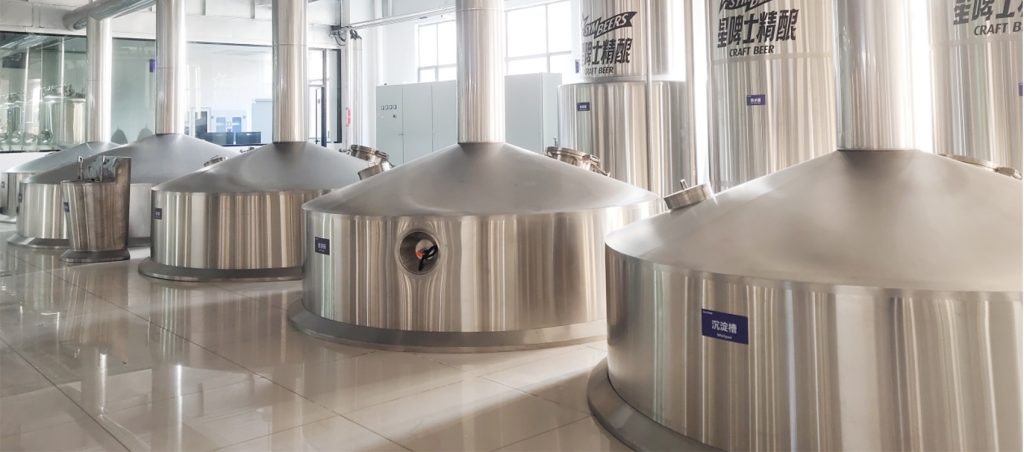
For medium and large breweries, the mixing vat (often referred to as the mash tun) is where the brewing process begins and where quality is first determined. Choosing the right mixing vat, along with its supporting systems, is one of the most consequential investment decisions a brewery can make.
This guide examines the essential role of the mixing vat in commercial brewing, drawing lessons from the world’s largest breweries to inform equipment selection for ambitious operations.
By the SKE Process Engineering Team
Key Takeaways
- The mixing vat (mash tun) is where enzymatic conversion of starches into fermentable sugars begins; poor design directly reduces extract yield and raises energy costs.
- According to the BarthHaas Report 2025/2026, the top three global brewers (AB InBev, Heineken, China Resources Snow) account for more than half of the output of the top 40 brewing groups worldwide, underscoring how much efficiency matters at scale.
- A commercial mixing vat is a three-part system: the vessel itself, the large tank mixer (agitator), and the heating and temperature control system, each engineered to 3-A Sanitary Standards for food-contact surfaces.
- Industry best practice is to size a mixing vat with 15-25% excess capacity to accommodate growth, and to evaluate total cost of ownership rather than purchase price alone.
- PLC-based automation and heat recovery systems are now standard requirements for medium and large breweries, with heat recovery reducing energy costs by an estimated 20-35%.
1. Why the Mixing Vat Matters
The mixing vat is the foundation of the mashing process. It is where crushed malt combines with hot water to initiate enzymatic conversion of starches into fermentable sugars. A poorly designed mixing vat leads to:
- Uneven mash consistency and reduced extract yield
- Inconsistent wort quality between batches
- Higher raw material costs due to inefficient sugar extraction
- Increased energy consumption from poor heat transfer
For commercial-scale production, the mixing vat must deliver uniformity at volume, every time, batch after batch.
2. What Global Brewing Leaders Teach Us About Scale
The world’s largest brewing groups operate at a scale that demands uncompromising equipment performance. According to the BarthHaas Report 2025/2026, the top 10 breweries by production volume are:
| Rank | Brewery | Production (Million HL) |
|---|---|---|
| 1 | AB InBev | 484.19 |
| 2 | Heineken | 235.65 |
| 3 | China Res. Snow Breweries | 110.30 |
| 4 | Carlsberg | ~99.00 |
| 5 | Molson Coors | ~85.00 |
| 6 | Tsingtao | ~75.00 |
| 7 | Asahi | ~55.00 |
| 8 | Yanjing | 46.00 |
| 9 | BGI/Groupe Castel | ~40.00 |
| 10 | Constellation Brands | ~35.00 |
Together, these top three companies (AB InBev, Heineken, and China Resources Snow) account for more than half of the total output of the top 40 brewing groups worldwide. This concentration underscores a key insight: at scale, every percentage point of efficiency translates to millions of dollars in annual savings.
AB InBev alone controls approximately 26.4% of global beer production, producing over 13 billion gallons annually, according to Visual Capitalist’s analysis of BarthHaas Report data. For equipment suppliers serving this tier of breweries, the mixing vat is not a commodity. It is a precision-engineered asset that must perform with surgical accuracy across thousands of batches per year.
3. Core Components: The Mixing Vat System
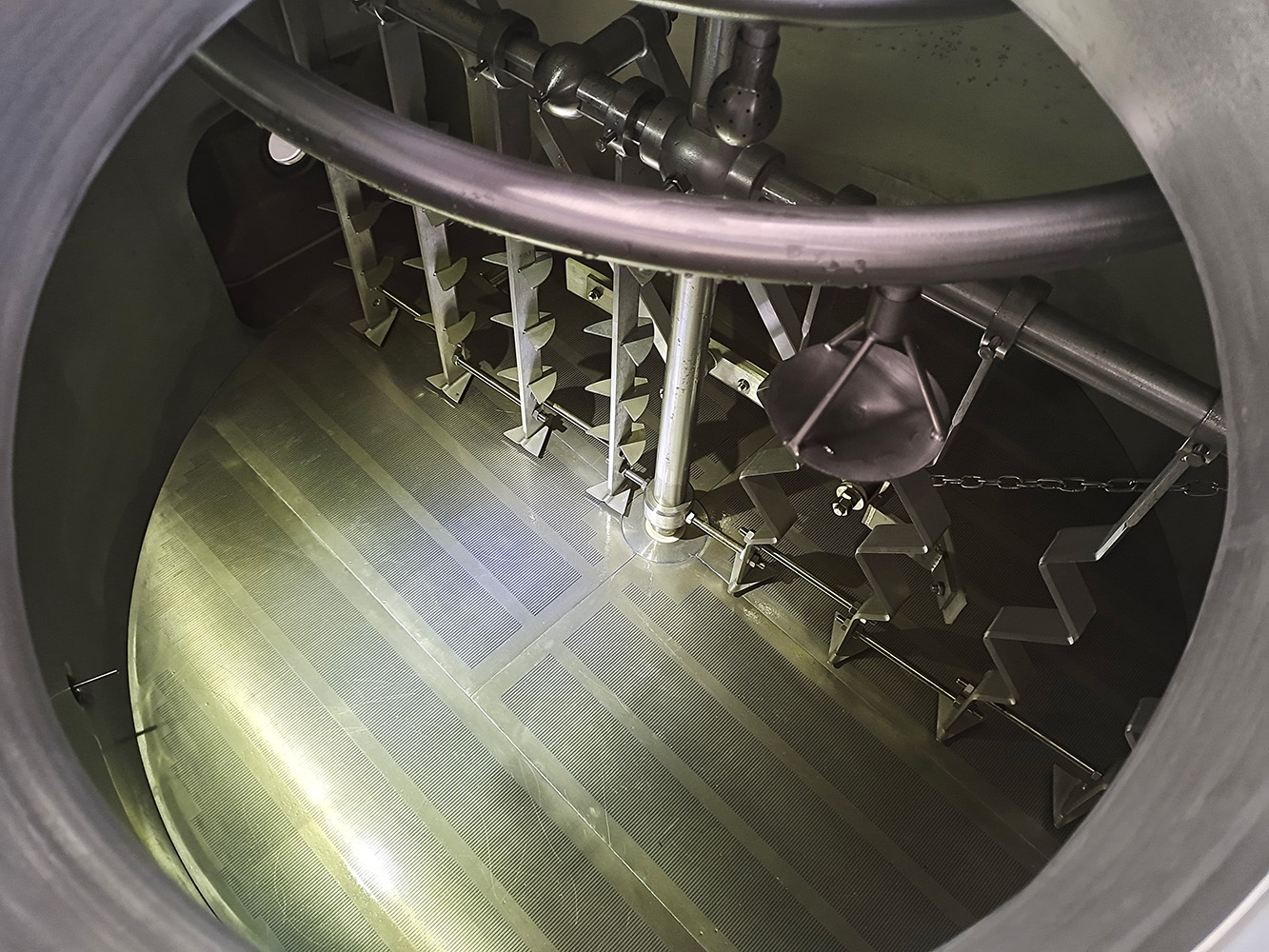
A commercial mixing vat is more than a stainless steel vessel. It is an integrated system comprising three critical elements:
3.1 The Vessel Itself
- Material: Food-grade stainless steel (SUS304 for standard applications, SUS316L for high-corrosion environments) with sanitary internal finishes (Ra ≤ 0.8 μm, the maximum roughness specified by 3-A Sanitary Standards for food-contact surfaces). The same material and finish requirements apply to a stainless steel mix tank used for blending and holding duties elsewhere in the brewhouse.
- Geometry: Optimized diameter-to-height ratio and bottom profile (dish or cone) to promote uniform mixing and complete draining
- Heating Jacket: Laser-welded dimple or spiral jackets for efficient heat transfer; separate heating zones for bottom and side walls allow precise temperature control
- Insulation: Stone wool or equivalent to minimize heat loss and improve energy efficiency
3.2 Large Tank Mixer (Agitator System)
The large tank mixer is the mechanical heart of the mixing vat. Its design directly determines mash homogeneity and heat distribution.
Key specifications:
- Top-mounted configuration is industry standard for commercial breweries due to easier maintenance and superior sealing, including compatibility with automated cleaning-in-place routines. See our CIP machine guide for sanitation best practices.
- Variable frequency drive (VFD) enables stepless speed control, critical for adapting to different mash viscosities and grain bills
- Dual-direction rotation with outer paddles improves mixing efficiency and aids in grain removal
- Stainless steel impeller blades designed to minimize shear while achieving complete suspension of grain particles
A well-designed agitator narrows temperature gradients across the mash bed, improving process stability and enzyme activity compared with unagitated or poorly mixed systems.
3.3 Mixing Tank with Heater (Temperature Control System)
The mixing tank with heater integrates temperature control into the mashing process. Different enzyme families activate at specific temperature rests, making precision heating non-negotiable:
| Temperature Range | Enzyme | Function |
|---|---|---|
| 45–50°C | β-glucanase | Breaks down gums |
| 50–55°C | Protease | Degrades proteins for foam stability |
| 62–65°C | β-amylase | Produces fermentable maltose |
| 72–75°C | α-amylase | Creates dextrins for body |
Heating method options:
- Steam jacketed heating is preferred for medium and large breweries, offering rapid, uniform heat distribution and lower operating costs with existing boiler infrastructure
- Electric heating provides installation flexibility but carries higher operating costs
Automation requirements:
- PID temperature control with multiple PT100 sensors
- PLC-based recipe management with batch logging
- Separate regulation for bottom and side heating zones
- HMI touchscreen interface for operator control
4. Brewhouse Configurations: Matching System to Scale
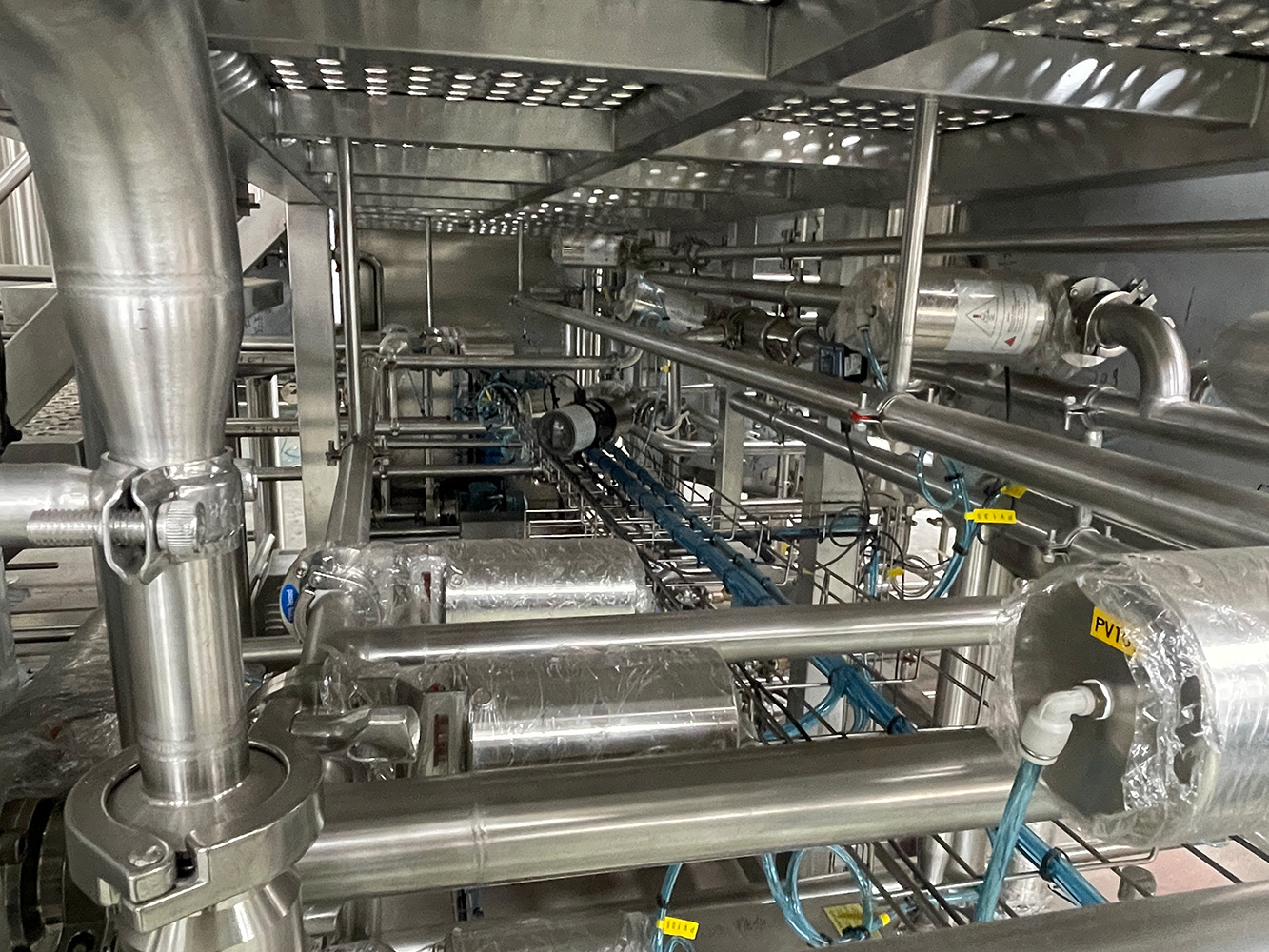
The overall brewhouse configuration determines the relationship between the mixing vat and other vessels. Three common configurations serve different production needs:
| Configuration | Vessels | Best For | Typical Annual Output |
|---|---|---|---|
| 2-Vessel | Mash/Lauter + Kettle/Whirlpool | Growing breweries, limited space | Up to 15,000 HL |
| 3-Vessel | Mash + Lauter + Kettle/Whirlpool | Medium breweries, balanced efficiency | 15,000–50,000 HL |
| 4-Vessel | Mash + Lauter + Kettle + Whirlpool | Large breweries, maximum throughput | 50,000+ HL |
For medium and large breweries, 3-vessel and 4-vessel systems are most common. The dedicated lauter tun in these configurations allows the mixing vat to focus solely on mashing, enabling overlapping operations and shorter brew cycles.
5. Capacity Planning: Sizing for Growth
One of the most common mistakes in equipment selection is sizing solely for current demand. Industry best practice recommends selecting a mixing vat with 15–25% excess capacity to accommodate organic growth without requiring premature equipment replacement.
Key relationships to consider:
- Brewhouse output should match fermentation capacity (typically 2–4 weeks of brewhouse production)
- Batch frequency determines effective annual capacity. A 10 HL brewhouse running 5 batches per week produces roughly 5,000 HL annually, while 8 batches per week pushes this to roughly 8,000 HL
- Total cost of ownership (TCO) matters more than purchase price. A system with a lower capital cost but meaningfully worse energy efficiency can cost more over its lifecycle
6. Energy Efficiency and Heat Recovery
For medium and large breweries, energy costs represent a significant and ongoing expense. The mixing vat with heater consumes substantial thermal energy during mashing and heating steps. Heat recovery systems can reduce energy costs by 20–35%, with payback periods of 2–4 years.
Key efficiency features to specify:
- Well-insulated vessels (R-value 4–6 minimum)
- VFD-controlled pumps and agitators (20–30% energy savings)
- Steam trap optimization
- Condensate return systems
7. Automation: From Manual to Intelligent
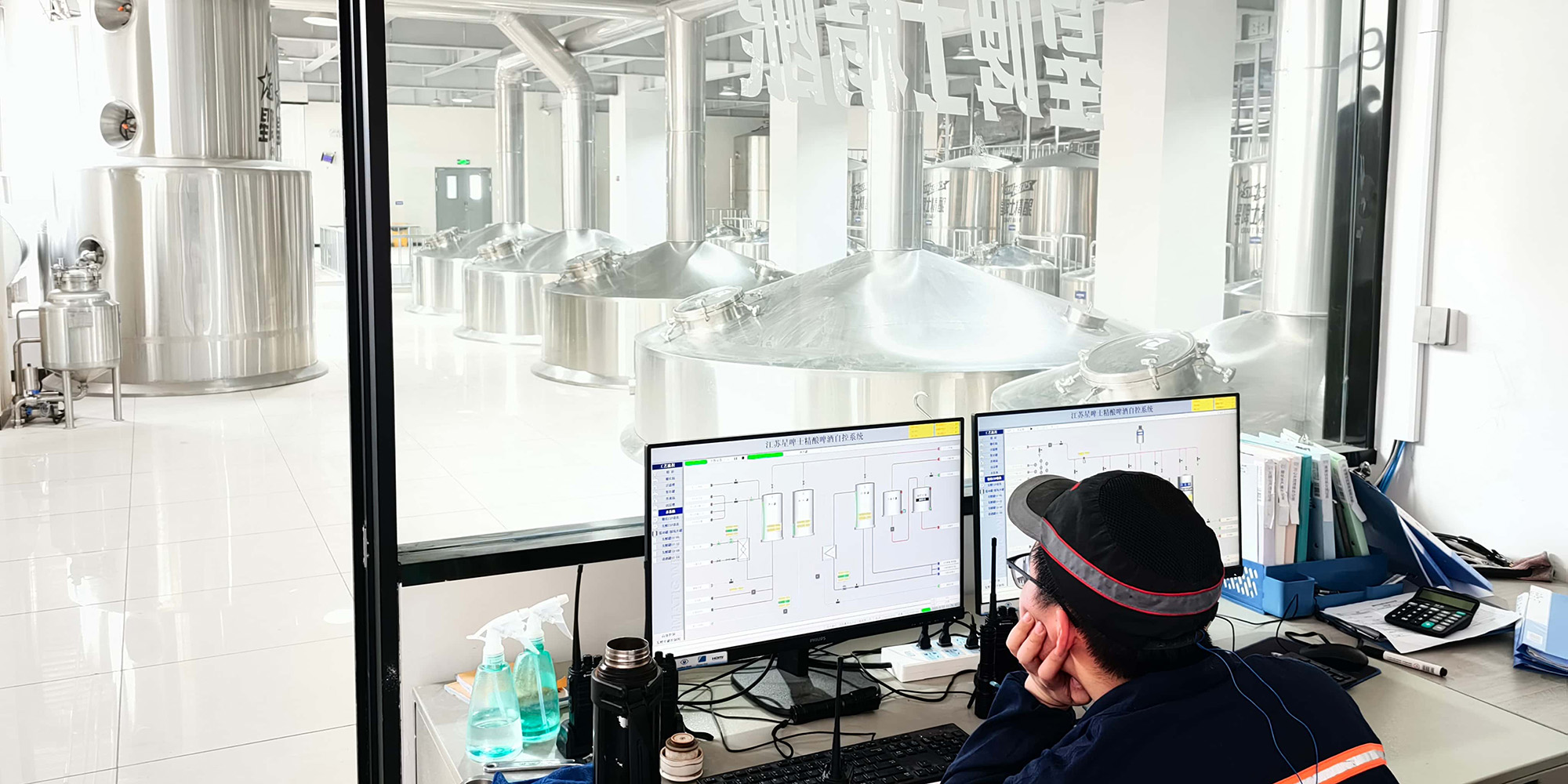
The level of automation in brewhouse equipment directly impacts labor costs, product consistency, and production scalability. For medium and large breweries, PLC-based automation is strongly recommended.
Essential automation capabilities:
- Multi-step mashing profiles with temperature and time programming
- Automated agitator speed profiling based on mash viscosity
- Batch reporting for quality traceability
- Remote diagnostics capability
8. Supplier Selection Checklist
When evaluating mixing vat suppliers for a commercial brewhouse project, technical managers should verify:
| Criteria | Questions to Ask |
|---|---|
| Material Certifications | Are mill test reports provided? Is it 304 or 316L? |
| Welding Standards | Are TIG welds full-penetration and passivated? |
| Performance Guarantees | What brewhouse efficiency is guaranteed (target: 80–85%+)? |
| References | Can we visit operating breweries using your equipment? |
| Commissioning Support | Is installation supervision and operator training included? |
| Spare Parts | Are critical wear items stocked locally? |
| Expansion Capability | Can additional vessels be added without major rework? |
A credible manufacturer should demonstrate deep engineering capability, not just fabrication capacity.
Frequently Asked Questions (FAQ)
Q1: What is the difference between a mixing vat and a mash tun?
A: In commercial brewing, the terms are largely interchangeable. Both refer to the vessel where crushed malt is combined with hot water to convert starches into fermentable sugars during mashing.
Q2: What size mixing vat does a medium-sized brewery need?
A: Sizing depends on target annual output and batch frequency. As a starting point, breweries producing 15,000–50,000 HL per year typically run a 3-vessel brewhouse, and should size the mixing vat with 15–25% excess capacity for growth.
Q3: Is steam or electric heating better for a mixing vat?
A: Steam jacketed heating is generally preferred for medium and large breweries because it delivers rapid, uniform heat distribution at lower operating cost when boiler infrastructure already exists. Electric heating offers more installation flexibility but typically costs more to run.
Conclusion
The mixing vat, together with its large tank mixer and integrated heating system, forms the critical core of any commercial brewhouse. For medium and large breweries, investment decisions should be guided by the lessons of global brewing leaders: scale demands precision, efficiency, and relentless focus on total cost of ownership.
The right mixing vat system should match production goals, improve energy efficiency, reduce operating costs, and provide the flexibility to grow with your business. Whether planning a new brewery or upgrading existing capacity, selecting equipment engineered for commercial-scale performance is an investment that pays dividends across the equipment lifecycle.
SKE provides customized mixing vat systems and complete brewhouse solutions for breweries around the world.
If you have any further questions, feel free to reach out.
- Facebook: SKE Equipment Facebook
- Email: info@skeequipment.com
Fill out the contact form below for customized solutions. We fully support all your production equipment demands for breweries and beverage plants.