Introduction
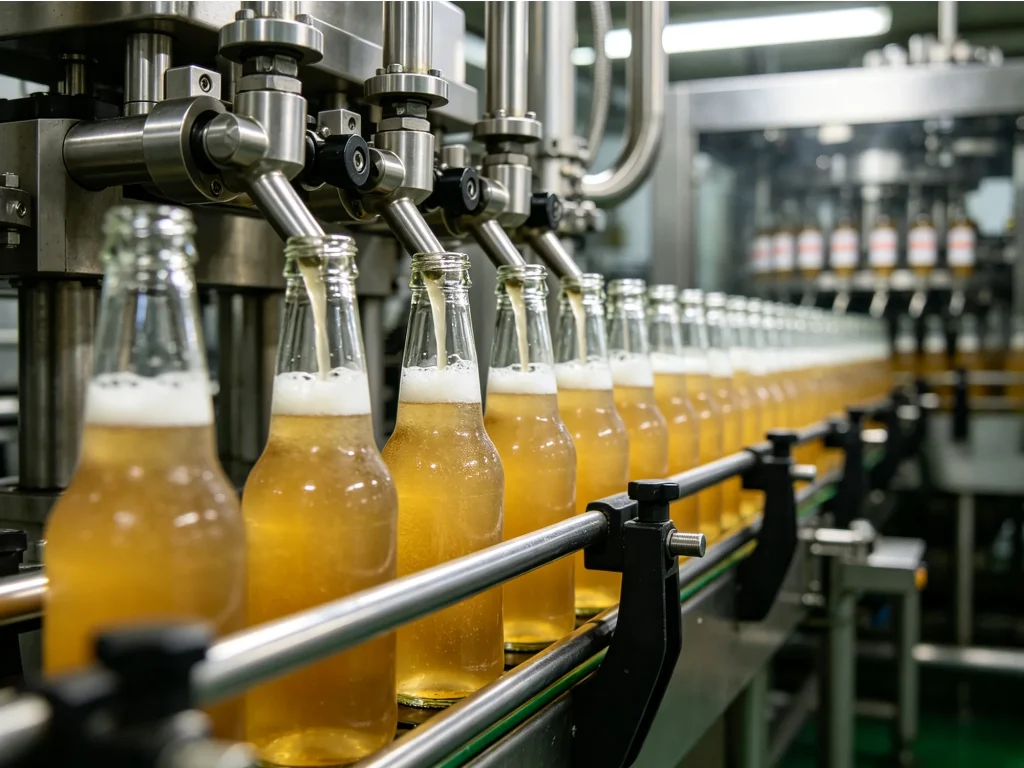
Glass bottles held roughly 22% of packaged craft beer volume in 2025, down from 31% three years earlier, as more breweries shifted toward cans (Brewers Association, 2026 packaging trends report). Bottles still matter, especially for premium and export-focused brands, and a well-run beer bottling line remains one of the more demanding pieces of equipment on a production floor.
A beer bottling line is an automated packaging system that takes finished beer from the bright tank and carries it through bottle preparation, filling, capping, labelling, date coding, and case packing. This guide breaks down how the line works, what typically goes wrong, and where auxiliary systems like portable CIP and keg washers fit into a brewery’s broader packaging setup.
Key Takeaways
- Craft beer packaging has shifted toward cans (78% share in 2025), but bottles still lead for premium and export-oriented brands (Brewers Association).
- Oxygen control is the single biggest quality risk on a bottling line; industry guidance targets under 100 ppb dissolved oxygen pickup during packaging, with modern fillers reaching 20-50 ppb.
- Portable CIP and dedicated keg washers are separate systems that solve different cleaning problems, not interchangeable equipment.
What Is a Beer Bottling Line?
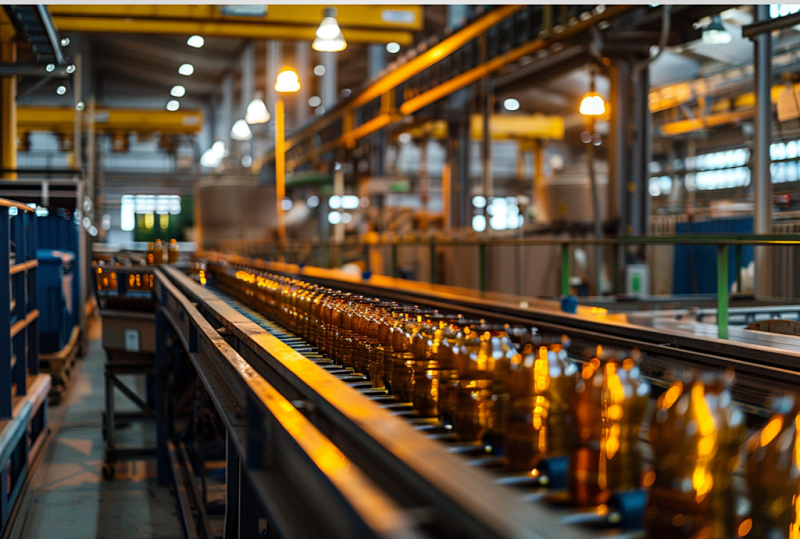
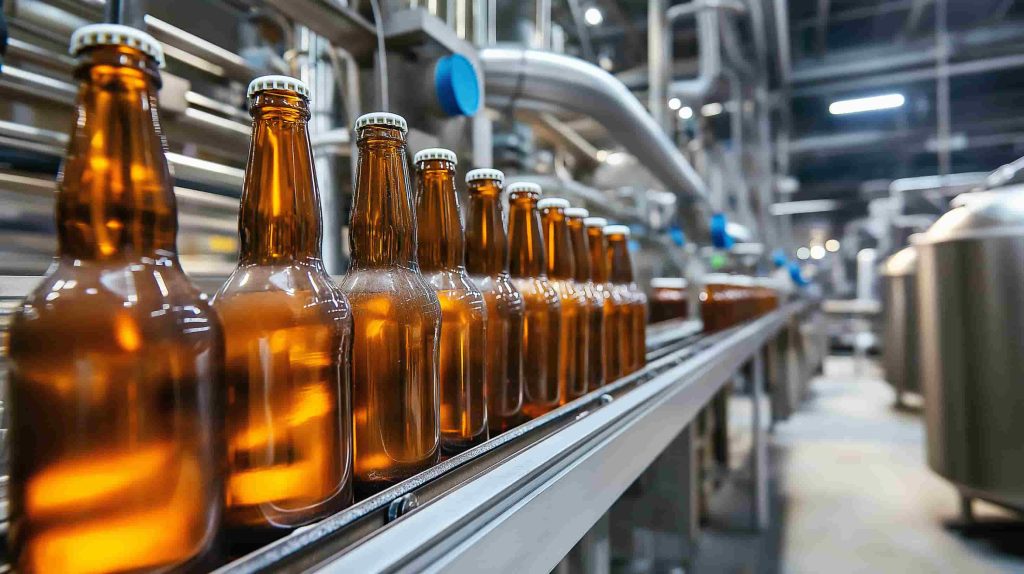
A beer bottling line is a sequence of connected machines, each handling one step, that turns empty bottles into sealed, labelled cases ready for shipping. A typical line includes:
-
Depalletizer – removes empty bottles from pallets and loads them onto the conveyor.
-
Bottle Rinser – clears dust and debris from inside each bottle using water or filtered air.
-
Beer Filler – the core of the line. Counter-pressure filling reduces foaming and oxygen pickup as beer enters the bottle.
-
Capper – crimps a metal crown cap onto each filled bottle to seal it.
-
Pasteurizer – heats filled bottles briefly to inactivate residual yeast and bacteria, extending shelf life. Not every line runs one; many craft breweries skip pasteurization and rely on cold-chain distribution instead.
-
Labeller – applies front, back, and neck labels.
-
Packer – loads finished bottles into cases or trays for shipping.
Fill accuracy is a legal requirement, not just a quality preference. Underfilling violates net-content labelling law in most jurisdictions, and overfilling wastes product across every run, so the filler’s calibration is worth checking on a fixed schedule rather than only when something looks wrong.
Key Challenges in Running a Beer Bottling Line
Operating a beer bottling line well takes more than installing the equipment. Five recurring issues shape most of the troubleshooting on a real production floor.
Oxygen Control
Oxygen is beer’s primary enemy after packaging. Once beer picks up dissolved oxygen, staling reactions begin almost immediately, producing cardboard-like off-flavors well before the “best by” date. Industry guidance calls for beer to reach the filler at under 50 ppb dissolved oxygen, and for total in-package oxygen pickup during filling to stay under 100 ppb; well-tuned modern counter-pressure fillers with CO₂ purging and deaerated rinse water can push that down to 20-50 ppb. If a line consistently runs above that range, foam-out, filler seal wear, or an under-pressurized bottle purge step are the usual culprits.
Foam Control
Excess foam causes underfilled bottles and wasted product. Filler speed, headspace pressure, and beer temperature all affect foam volume, and colder beer consistently foams less at the same fill speed.
Bottle Breakage
Glass breaks on the line occasionally, which halts production and creates a safety hazard from glass fragments and contamination risk in nearby open containers. Well-specified lines include broken-glass detection sensors that stop or reroute the conveyor automatically.
Water Usage
Rinsing and pasteurization are two of the more water-intensive steps in packaging. Water recovery loops and air rinsers in place of water rinsers are the two most common ways breweries reduce consumption without slowing the line down.
Maintenance
A bottling line has dozens of wear parts, from filler valves to conveyor guide rails. Skipping scheduled maintenance is the most common cause of unplanned downtime, since a single failed station stops the entire line rather than just its own step.
None of these challenges are unique to any one brewery size. What changes with scale is how much redundancy and automation a line justifies.
How Large-Scale Breweries Use Bottling Lines
National brewers such as Anheuser-Busch, Molson Coors, and Constellation Brands run multiple high-speed bottling lines in parallel, often around the clock, to supply retail distribution at national scale. Lines built for that volume are engineered to run tens of thousands of bottles per hour per line, well beyond what a regional or craft-scale line needs.
Even at that scale, the shift toward cans described above is visible in packaging mix: cans are lighter to ship, cheaper per unit to transport, and fully block light, which prevents the “skunky” off-flavor that UV exposure causes in hop-forward beers. Bottles have not disappeared, though. Premium and craft-positioned SKUs still lean on glass, partly because of consumer perception and partly because bottles tolerate certain distribution and retail-display conditions better than cans.
Large breweries typically run a central CIP system for their main tank farm, then supplement it with portable CIP carts for equipment that is not permanently piped in, such as mobile tanks or standalone filling skids. For draft beer, they rely on dedicated keg filling equipment, and every keg is run through a beer keg washer before refilling to guarantee consistent hygiene between uses.
Support System 1: Portable CIP
CIP means Clean-In-Place: cleaning tanks, pipes, and filling equipment without disassembly. Breweries generally choose between two configurations.
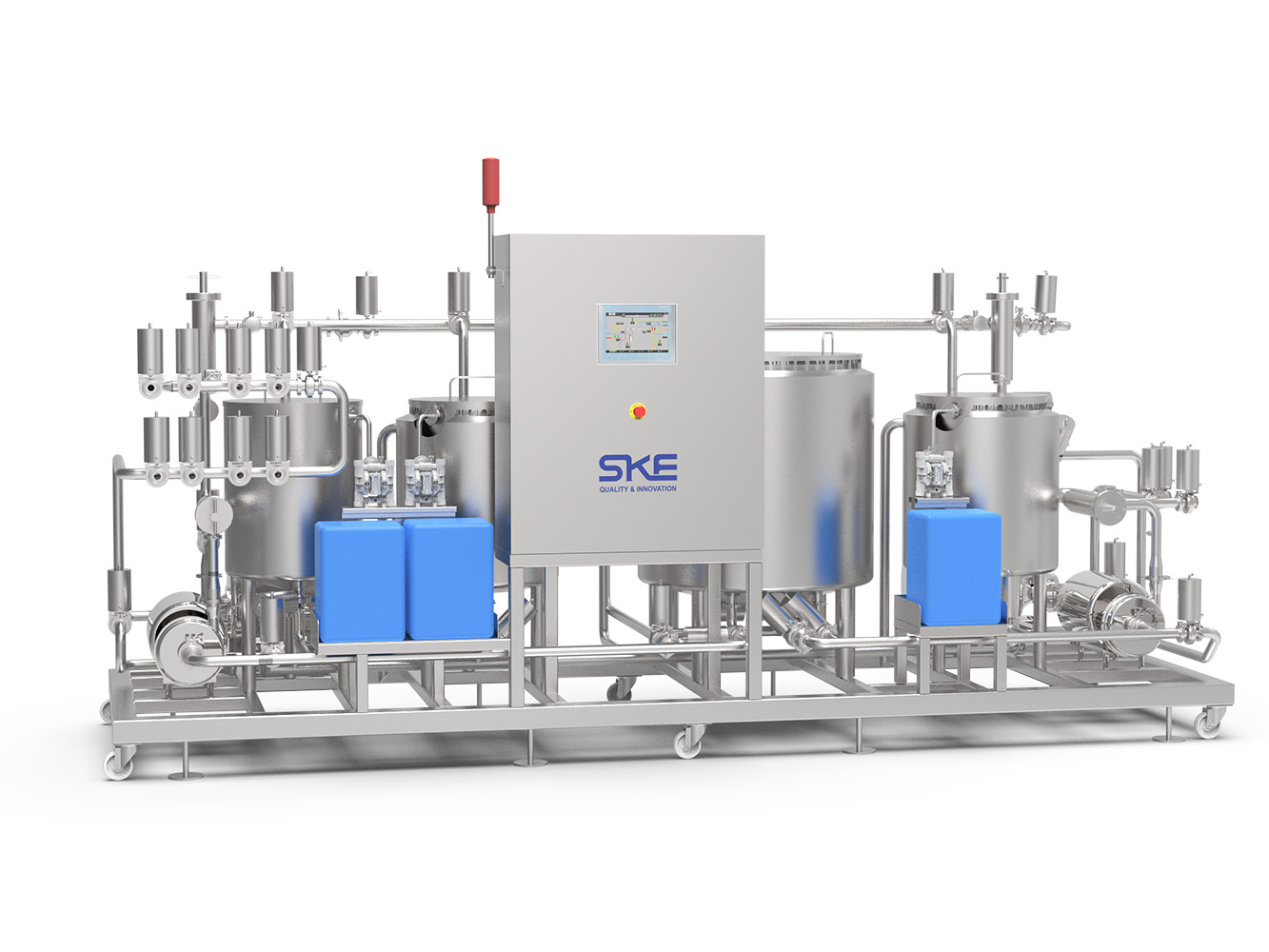
A central CIP system is a fixed installation piped to every tank. It is efficient at scale but expensive to install and inflexible once built. A portable CIP system sits on a wheeled cart with its own tanks, pump, and controls, and moves to whichever vessel needs cleaning.
A standard CIP cycle runs through these stages:
-
Pre-rinse with water
-
Hot caustic wash to dissolve organic residue
-
Intermediate rinse
-
Acid wash to remove mineral scale
-
Final rinse
-
Sanitization
Portable CIP tends to suit smaller breweries best: lower upfront cost, a smaller equipment footprint, and the flexibility to clean any vessel in the building with one unit. SKE builds stainless-steel portable CIP carts in several tank-volume configurations for this exact use case.
Support System 2: Beer Keg Washer and Keg Filling Equipment
Kegs are reusable, which is good for cost and for waste reduction, but it means every returned keg needs thorough cleaning before it goes back into service.
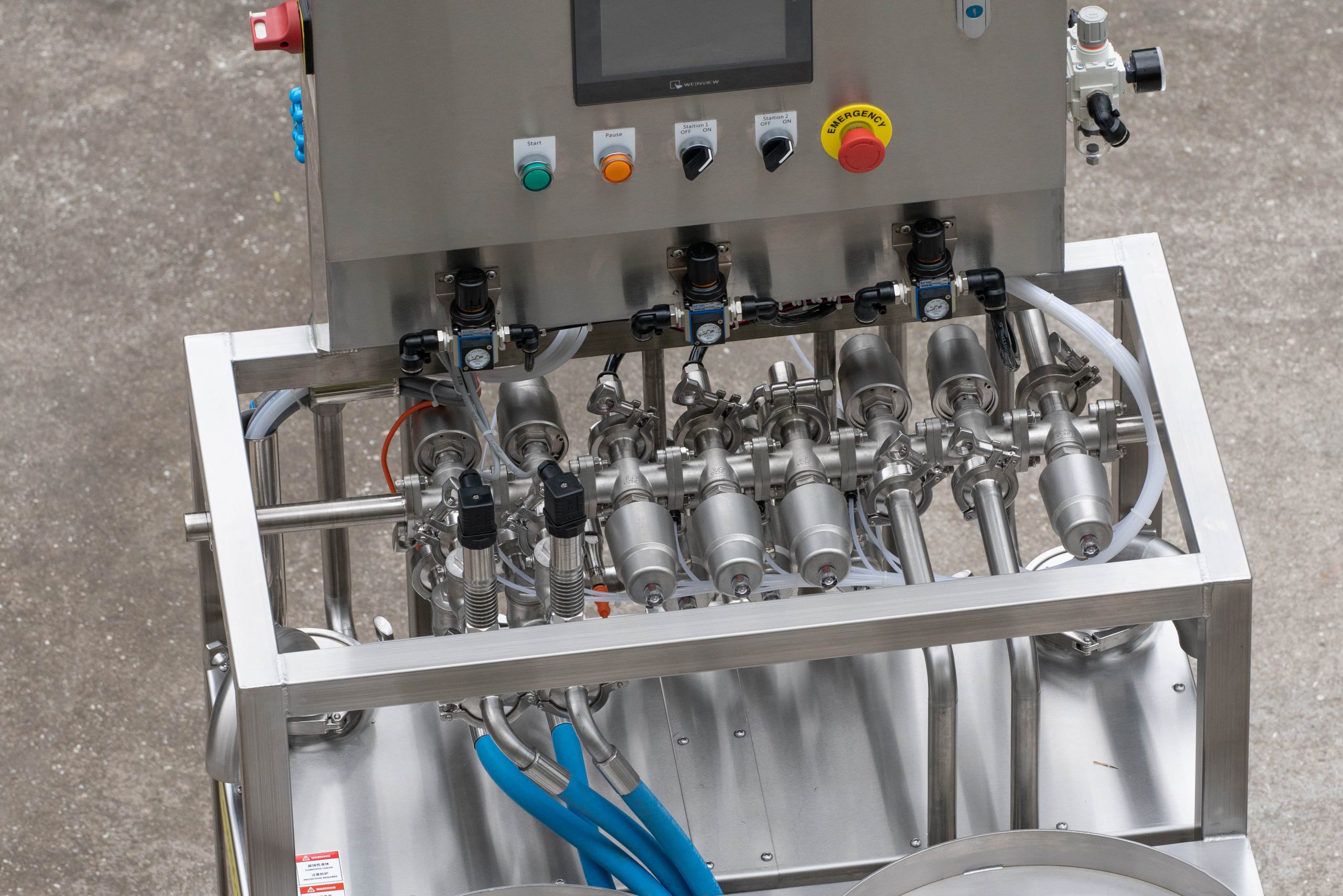
A beer keg washer automates that cleaning so every keg gets the same cycle: draining, rinsing, caustic wash, acid wash, sanitizing, and a CO₂ purge, typically completing in 5 to 10 minutes per keg. Skipping or shortening this step is a common source of off-flavors, since residual beer film can ferment and mineral scale can build up inside the keg over repeated fills.
Once a keg is clean, keg bottling equipment, more accurately called a keg filler, transfers beer from the bright tank into the keg. Most keg fillers use counter-pressure filling, pressurizing the keg with CO₂ before beer enters, which limits foam and keeps oxygen pickup low. Fill-level accuracy matters here too: an underfilled keg shorts the account pouring it, and an overfilled one risks excess headspace pressure.
Bottling Line vs. Keg Filling Equipment
The beer bottling line and keg bottling equipment serve different markets and rarely compete for the same sale.
| Feature | Beer Bottling Line | Keg Filling Equipment |
|---|---|---|
| Container | Glass bottle | Stainless steel keg |
| Market | Retail stores | Bars and restaurants |
| Speed | Very fast | Slower |
| Container Reuse | Usually no | Yes |
| Cleaning Needed | Bottle rinsing | Beer keg washer |
| Shelf Life | Longer | Shorter |
Most breweries run both systems side by side, selling into retail through bottles or cans and into the on-premise market through kegs. That dual approach is standard practice for breweries planning long-term growth rather than a single-channel strategy.
SKE Brewery Equipment Solutions
SKE has manufactured brewery equipment since 2000, including CIP systems, keg washers, and keg filling equipment for breweries planning a new build or a packaging-line upgrade. If you are scoping a project, our team can walk through configuration options for your target volume and layout.
Frequently Asked Questions (FAQ)
1. What is a beer bottling line?
A beer bottling line is a series of connected machines that fill glass bottles with beer, seal them, label them, and pack them into cases for shipping.
2. What is a portable CIP system?
A portable CIP system is a wheeled, self-contained cleaning unit that you move from tank to tank. It cleans tanks and pipes without disassembling them.
3. Why do I need a beer keg washer?
Returned kegs carry residual beer film and mineral scale that can spoil the next fill if left uncleaned. A dedicated keg washer runs a consistent, repeatable cleaning cycle every time.
4. What is the difference between a bottling line and keg filling equipment?
A bottling line packages beer into glass bottles for retail sale. Keg filling equipment fills stainless steel kegs for draft distribution to bars and restaurants. Most breweries need both.
5. Can I use a portable CIP cart to wash kegs?
No. A portable CIP cart is built to clean tanks and pipework. Kegs need a dedicated beer keg washer designed for their fittings and internal geometry.
6. What dissolved oxygen level should a bottling line target?
Industry guidance targets under 100 ppb total in-package oxygen pickup during filling, with beer arriving at the filler below 50 ppb. Well-tuned modern fillers can reach 20-50 ppb total pickup.
Conclusion
A beer bottling line stays central to craft and national brewing alike, even as the packaging mix shifts toward cans. Getting it right comes down to a short list of fundamentals: control dissolved oxygen, keep fill accuracy tight, maintain the line on a real schedule, and pair it with the right auxiliary systems, whether that is portable CIP, a beer keg washer, or both.
If you have questions about specifying a line for your production volume, reach out to our team.
- Facebook: SKE Equipment Facebook
- Email: info@skeequipment.com
Fill out the contact form below for customized solutions, or tell us about your production goals and we’ll help you scope the right equipment.