
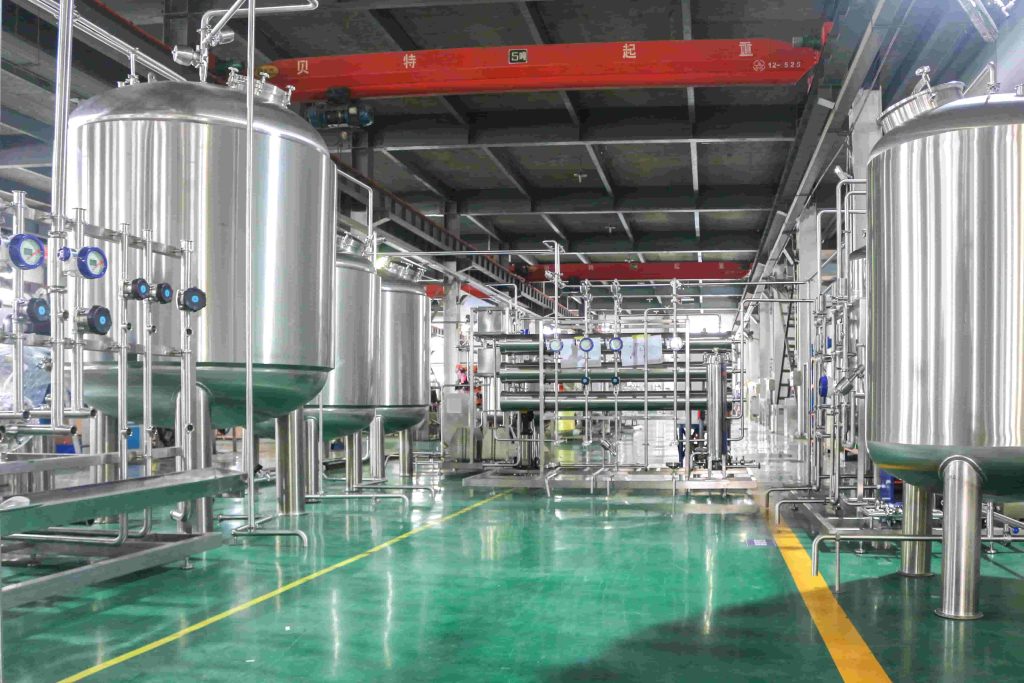
Water is the largest ingredient in beer by volume, beer is roughly 90-95% water. But the water a brewery actually consumes is far higher than what ends up in the bottle, because mashing, sparging, cooling, cleaning, and packaging all draw from the same supply.
For a large commercial brewery producing millions of barrels a year, that adds up to a serious daily demand. This is why large water tanks have become essential infrastructure. A big water tank does more than store water: it can hold water at different temperatures, recover warm water for reuse, and cut fresh water demand.
For medium and large breweries, the goal isn’t simply a bigger tank. It’s a storage system engineered around the entire brewing process. This article explains how large water tanks support water conservation, and what the data says about how efficient US breweries actually perform.
Key Takeaways
- Large breweries need dedicated water storage for brewing, cooling, and cleaning.
- Stainless steel water tanks provide hygienic, durable, long-life storage.
- Hot Liquor Tanks and Cold Liquor Tanks manage water at different temperatures.
- Recovery tanks collect warm water from wort cooling for reuse, cutting both water and energy use.
- Industry-wide, breweries average about 7 barrels of water per barrel of beer, but efficient large breweries get below 3.5:1 (Brewers Association).
How Much Water Do US Breweries Actually Use?
According to the Brewers Association’s water usage benchmarking, the average brewery uses about 7 barrels of water for every barrel of beer produced. That ratio varies widely by scale and process maturity: the Brewers Association’s Sustainability Benchmarking data shows large breweries producing over 10,000 barrels a year can reach roughly 3.3 barrels of water per barrel of beer, while the least efficient small breweries (under 1,000 barrels a year) can use 80 or more.
This water goes toward brewing, cleaning, cooling, and packaging. To manage that demand, breweries rely on large water tanks that store water at different temperatures for different uses: some hold hot water for mashing and cleaning, others store cold water for cooling the wort. Without this kind of staged storage, high-volume brewing becomes far less water-efficient.
Water scarcity makes the case sharper. In drought-prone regions like California, breweries have to find ways to use less water, and large water tanks help by capturing and reusing water instead of drawing fresh supply for every cycle. A big water tank also saves energy: when a brewery captures hot water after cooling wort, it can store that water for later use instead of heating new water from cold. One documented example is Full Sail Brewing Company in Oregon, whose hot water recovery system saves more than 3 million gallons of water a year, with an additional 1 million gallons saved annually through a high-efficiency mash filter.
For breweries at scale, this isn’t just an environmental choice, it’s a cost and operations decision. Lower water-to-beer ratios mean lower utility bills and a stronger sustainability record for customers and regulators.
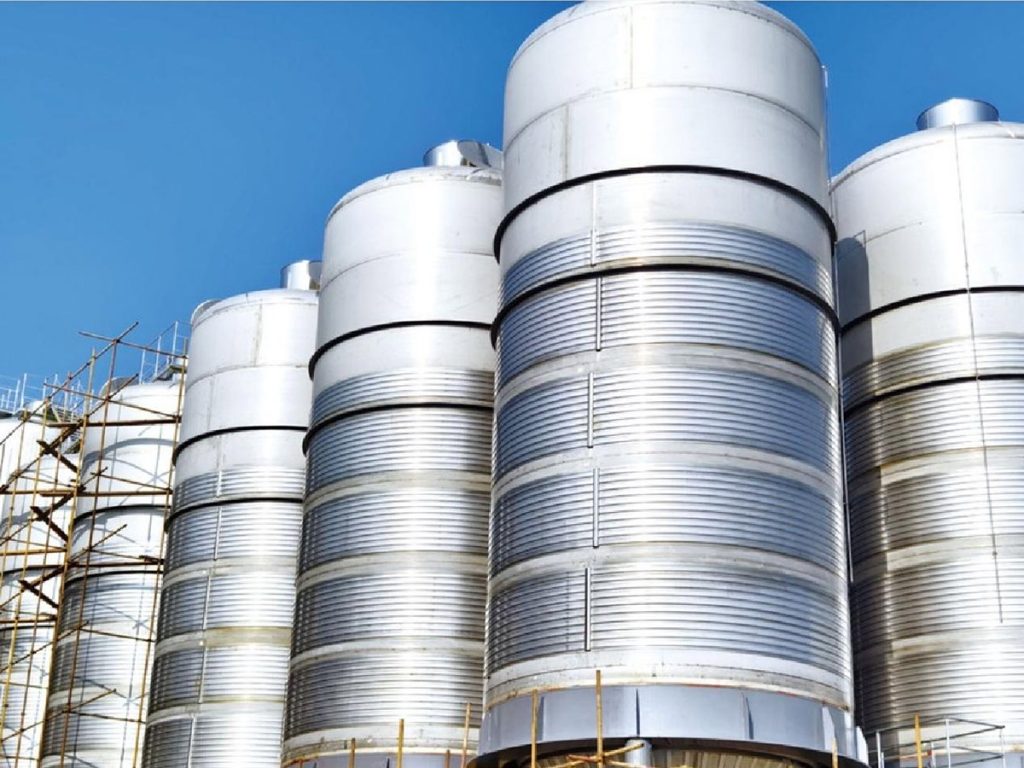
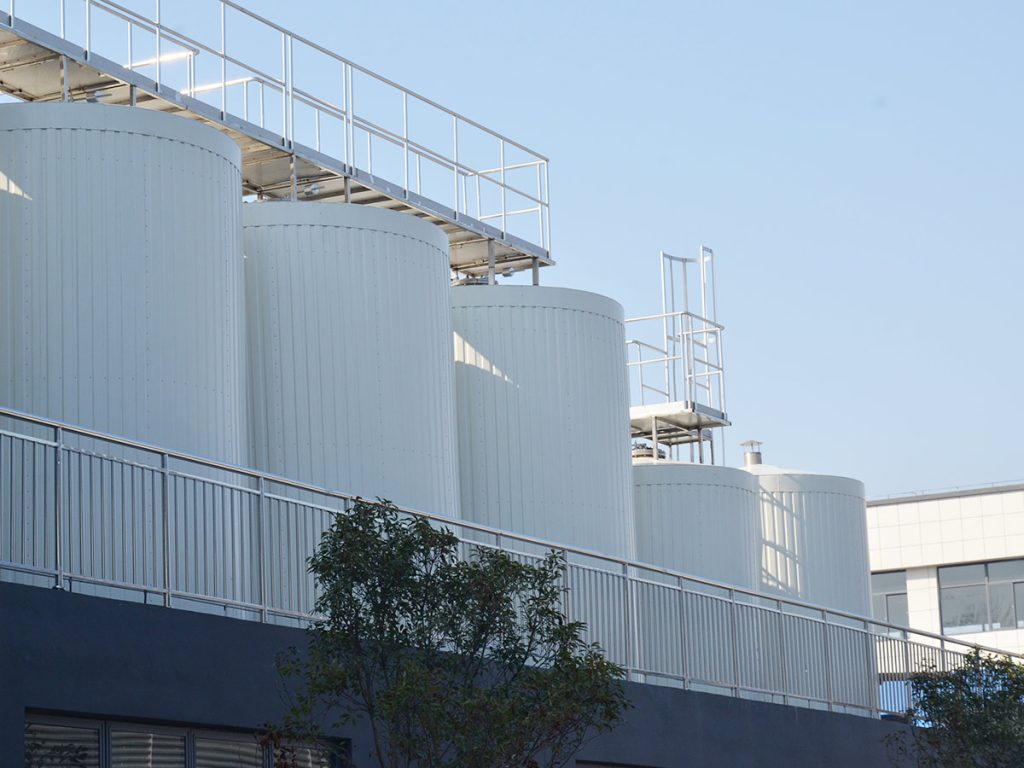
The Main Types of Water Tanks Used in Breweries
Different brewery operations require different water storage conditions. The most common systems are Hot Liquor Tanks, Cold Liquor Tanks, and recovery tanks. The table below summarizes the main types of water tanks used in a brewery.
| Tank Type | Main Function | Typical Temperature | Common Application |
|---|---|---|---|
| Hot Liquor Tank (HLT) | Stores hot brewing water | Approx. 75-85°C | Mashing, sparging, cleaning |
| Cold Liquor Tank (CLT) | Stores chilled water | Approx. 1-5°C | Wort cooling and process cooling |
| RO Water Tank | Stores treated or purified water | Ambient or chilled | Brewing and blending |
| Water Recovery Tank | Stores recovered warm water | Process dependent | Water reuse and heat recovery |
Actual temperatures depend on the brewery’s process design and equipment.
The Role of Steel Tank Water in Modern Brewing
When it comes to water storage in breweries, steel tank water systems are the standard. Most breweries use stainless steel tanks because the material is safe, durable, and easy to clean.
Stainless steel tanks come in different grades. SS304 is common for most brewery applications: it resists corrosion and doesn’t affect water taste. SS316L is used when extra corrosion resistance is needed, meeting strict hygiene standards for food and beverage contact.
A steel tank water system includes several key parts: the tank itself, insulation to hold the right temperature, cooling or heating jackets, and sensors that monitor water level and temperature. For high-volume breweries, this kind of system is what makes a consistent water supply possible during peak brewing.
Stainless steel’s other advantage is longevity. A well-maintained steel tank water system can last for decades, which makes it a durable capital investment rather than a recurring cost.
How a Big Water Tank Supports Water Conservation
A big water tank isn’t just for storage, it’s a core tool for water conservation. One of the most effective conservation methods is heat recovery. During brewing, wort has to be cooled quickly using a heat exchanger: cold water flows through the exchanger and pulls heat out of the hot wort, coming out the other side warm. Instead of discharging that warm water, a brewery can collect it in a big water tank for reuse in the next brew or for cleaning.
The Full Sail Brewing example above shows what this looks like at scale: millions of gallons recovered annually just from hot water recovery and an efficient mash filter. The principle scales down too. Any brewery with a heat exchanger and a recovery tank can capture water that would otherwise go straight to the drain.
The underlying idea is simple: don’t treat usable process water as waste when it can be recovered and reused. Large water tanks make that possible by giving the brewery somewhere to hold recovered water until it’s needed again.
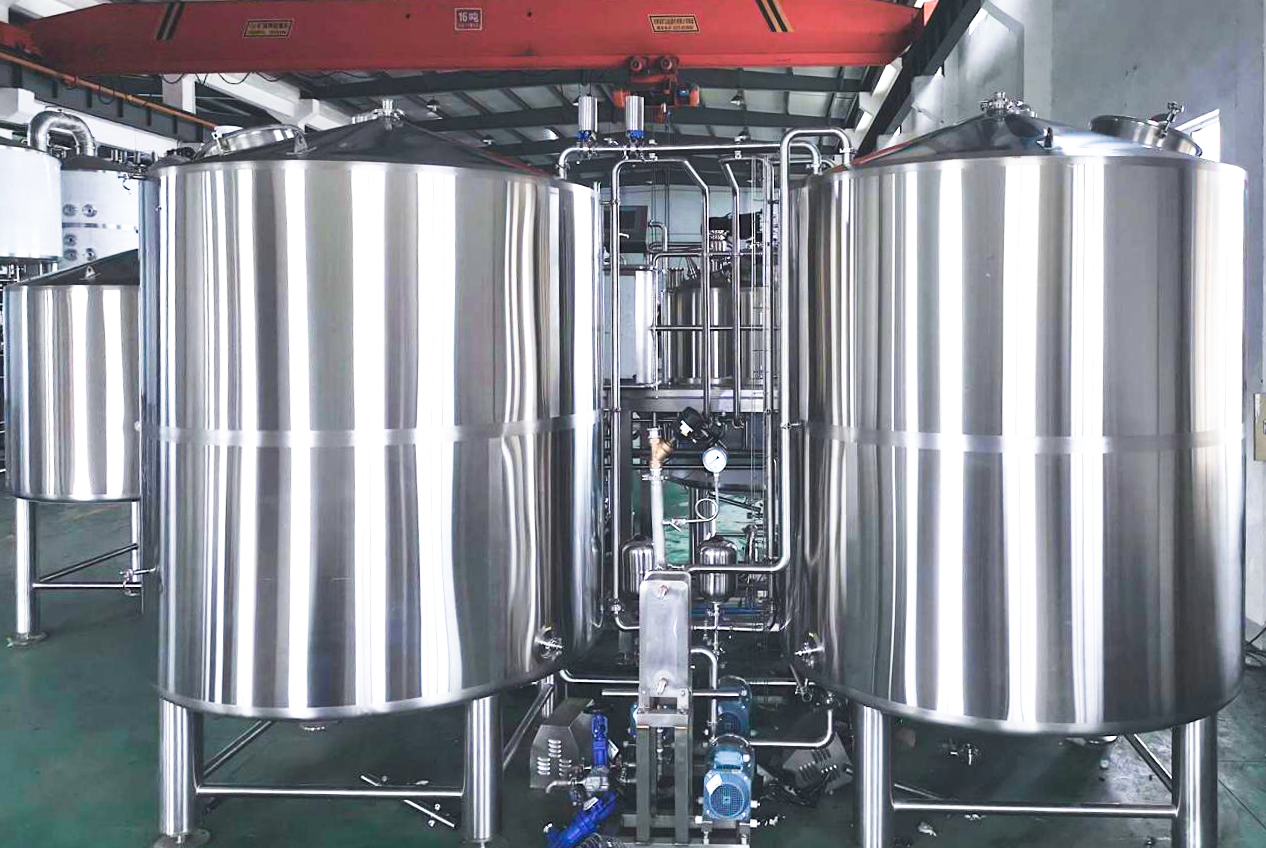
Water Conservation and Heat Recovery Work Together
Water conservation and energy conservation are closely linked in brewing. When cold water cools wort, it absorbs heat, so recovering that water also recovers useful heat. That means the recovered water often needs less additional heating before its next use.
Take the wort cooling process: a brewery needs cold water to pull heat out of hot wort. After the heat exchanger, that water is warm. Discharge it, and both water and energy are lost. Collect it in a recovery tank, and the brewery can use it again. The flow looks like this: Cold water → Heat exchanger → Warm recovered water → Storage → Reuse.
For high-volume breweries, this integration matters at scale. Capturing both water and heat through large water tanks reduces environmental footprint and supports corporate sustainability targets.
Large Water Tank Design: What Breweries Should Consider
Choosing a large water tank shouldn’t come down to capacity alone. A properly designed system accounts for the brewery’s complete water flow. Here are the factors that matter most.
1. Tank Capacity
The tank needs enough capacity for the intended process. Consider production capacity, brewing frequency, peak water demand, and future expansion.
2. Temperature Control
Different applications need different temperatures. An HLT needs heating and insulation. A CLT needs chilled water. Recovery tanks may need to handle a range of changing temperatures.
3. Insulation
Insulation reduces heat loss from hot water storage. For large tanks, even small reductions in heat loss add up to real energy savings over years of operation.
4. Water Quality
Not every recovered water stream is suitable for every application. Breweries need to test water quality and decide where reuse is safe.
5. Pumps and Piping
Pumps, valves, and piping have to move water efficiently between processes. Poor piping design undercuts the benefits of an otherwise good storage system.
6. Automation
Large breweries benefit from automated monitoring of water level, temperature, and flow, which helps operators manage water consistently without manual checks at every stage.
How Large Breweries Can Improve Water Efficiency
Large breweries can improve water efficiency through several combined strategies: recovering warm water from wort cooling instead of discharging it, using separate tanks for hot, cold, and recovered water, and improving heat recovery with heat exchangers and dedicated storage.
Other levers include optimizing cleaning cycles to cut unnecessary water use, installing flow meters to monitor consumption and catch problems early, and planning for future expansion when designing the water system from the start.
These strategies work best in combination rather than isolation. Based on Brewers Association benchmarking, breweries that combine them can move from the roughly 7:1 industry-average water-to-beer ratio down toward the 3-3.5:1 range achieved by the most efficient large-scale operations. A big water tank sits at the center of most of these improvements.
SKE Large Water Tank Solutions for Breweries
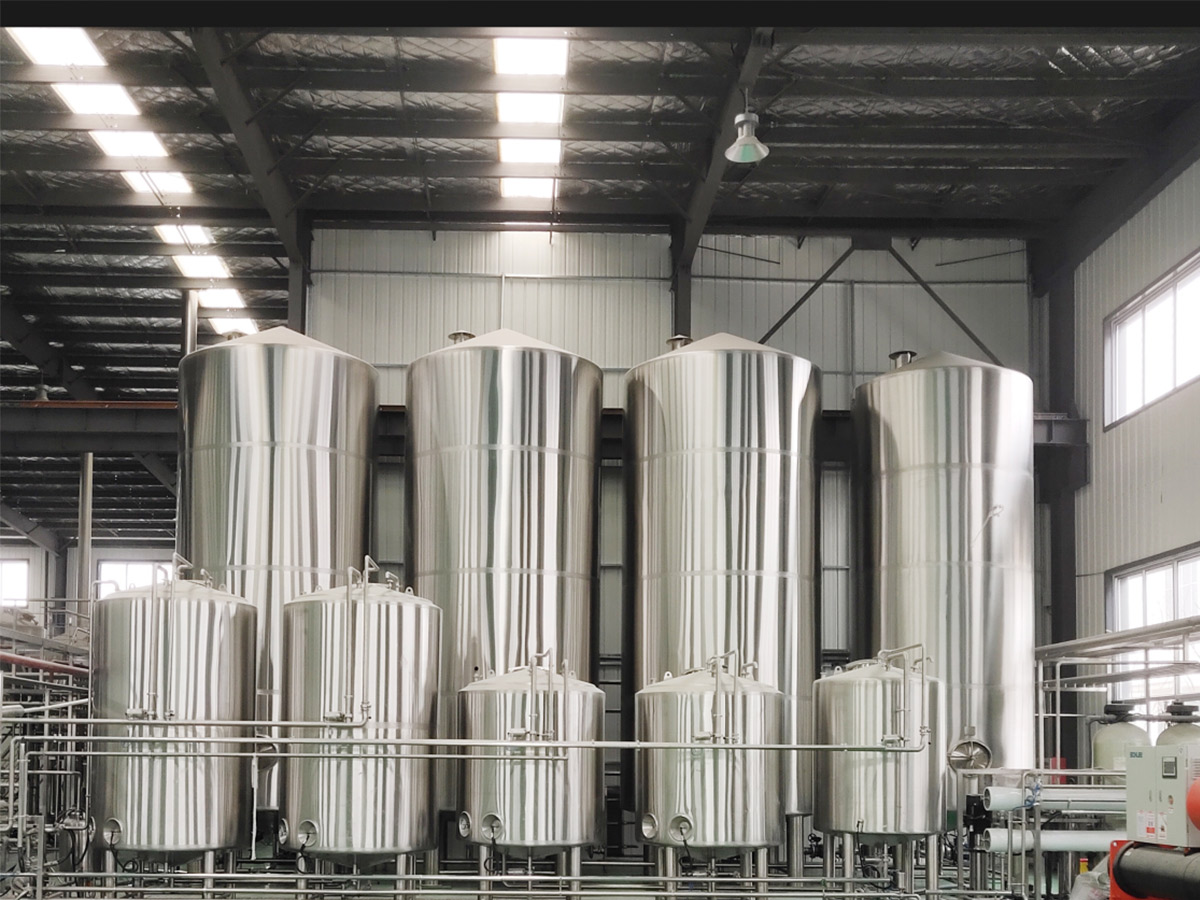
SKE designs and manufactures stainless steel tanks for commercial and industrial breweries, with customized solutions based on production capacity, available space, and water management goals. Our water tank lineup includes Hot Liquor Tanks, Cold Liquor Tanks, Stainless Steel Storage Tanks, Water Recovery Tanks, and RO Water Storage Tanks, adaptable in capacity, insulation, and sensor configuration.
The goal isn’t just supplying a large stainless steel tank. It’s building a water storage solution that works with a brewery’s entire production system, informed by the kind of efficiency data outlined above.
Frequently Asked Questions About Large Water Tanks
1. What is a large water tank used for in a brewery?
A large water tank stores water for brewing, cooling, and cleaning, and can also hold recovered water for later reuse.
2. Can a large water tank reduce brewery water consumption?
Not by itself. The tank enables savings only as part of a recovery and reuse system; savings come from how the water is captured and cycled back in, not from storage capacity alone.
3. Why do breweries use stainless steel water tanks?
Stainless steel is durable, hygienic, and easy to clean. A steel tank water system lasts for decades and doesn’t affect beer quality.
4. What is the difference between an HLT and a CLT?
An HLT stores hot water for mashing and cleaning. A CLT stores chilled water for cooling wort.
5. What is a water recovery tank?
A water recovery tank collects usable water from a process, such as warm water from wort cooling, so it can be stored and reused rather than discharged.
6. How does wort cooling help save water?
Cold water absorbs heat from hot wort during cooling. Instead of discharging the resulting warm water, the brewery collects it in a recovery tank for reuse.
7. How do I choose the right size water tank?
Tank size depends on brewing capacity, water demand, and future expansion plans, and should be sized as part of the brewery’s complete water system rather than in isolation.
8. What water-to-beer ratio should breweries aim for?
According to Brewers Association benchmarking, the industry average is about 7 barrels of water per barrel of beer. The most efficient large breweries operate closer to 3-3.5:1 through combined tank storage, heat recovery, and process optimization.
Conclusion
Water management keeps getting more important for modern breweries. As production scales up, the total water required for brewing, cooling, and cleaning grows fast. Large water tanks provide the storage needed to manage these water streams efficiently, and the Brewers Association’s own benchmarking shows just how wide the efficiency gap is between breweries that invest in this infrastructure and those that don’t.
When large water tanks are integrated with heat exchangers and recovery systems, they create a cycle of storage, recovery, and reuse that cuts fresh water demand and saves energy. For medium and large breweries, the right solution typically combines Hot Liquor Tanks, Cold Liquor Tanks, and recovery tanks sized to the brewery’s actual process.
SKE provides customized brewery equipment and stainless steel tank solutions. Contact SKE to discuss large water tanks and other brewery equipment sized to your production and water management goals.
- Facebook: SKE Equipment Facebook
- Email: info@skeequipment.com