

Choosing the right alcohol distillation still shapes everything downstream: how much spirit a producer can make, how it tastes, how much energy it burns, and how easy it is to clean between batches. That decision matters even more for breweries adding spirits production, since it determines how much of an existing brewhouse the operation can reuse instead of building a standalone plant.
SKE designs and builds beverage production equipment, including brewery systems, and applies that background to industrial distillation equipment for producers who need reliable, easy-to-operate systems.
This guide covers what an alcohol distillation still is, how it works, the main types on the market, and the factors that should drive a purchase decision.
Key Takeaways
- Pot stills favor flavor and batch flexibility; column stills favor speed, continuous operation, and higher purity. Hybrid systems combine both in one vessel.
- Copper in the vapor path binds sulfur compounds such as dimethyl sulfide and mercaptans, which is why most commercial systems still pair stainless steel tanks with copper vapor contact (PMC, 2022).
- The number of active U.S. craft distillers fell 25.6% between August 2024 and August 2025, to 2,282 permitted producers, per the 2025 Craft Spirits Data Project (ACSA/TTB, 2025) — a shift that makes reusing existing brewery infrastructure for distillation more attractive than a ground-up build.
- A federal Distilled Spirits Plant permit from TTB is required before any beverage distillation can legally begin, regardless of scale (TTB.gov).
What Is an Alcohol Distillation Still?
An alcohol distillation still is equipment that separates alcohol from a fermented liquid using heat, vapor, and condensation.
After fermentation, the liquid, called wash, contains alcohol, water, and other compounds. Because alcohol boils at a lower temperature than water, heating the wash turns the alcohol into vapor first. That vapor rises, moves through the still, and is cooled back into liquid.
A well-designed alcohol distillation still gives producers control over:
- Alcohol strength
- Flavor
- Production speed
- Energy use
- Cleaning
- Consistency from batch to batch
In commercial production, the still is one component of a complete alcohol distillation unit, which typically also includes tanks, columns, condensers, pumps, and a control system.
How Does an Alcohol Distillation Still Work?
The process runs through five main steps.
1. Fermentation
Producers first make a fermented liquid, or wash, from grains, sugar, or fruit. The wash contains alcohol, water, and other substances that the still needs to separate.
2. Heating
The wash goes into the alcohol distillation still and is heated with steam, electricity, or hot oil. Steady heating, rather than the fastest possible heating, produces cleaner separation and a more consistent result.
3. Vapor Separation
As the liquid heats, alcohol turns to vapor and rises through the still. In a column still, the vapor passes through plates or packing that improve separation with each pass.
4. Condensation
The alcohol vapor enters a condenser, where cooling turns it back into liquid alcohol.
5. Collection
The liquid alcohol collects in tanks, where the producer separates it into heads, hearts, and tails. The hearts, the cleanest fraction, become the final spirit.

Main Types of Alcohol Distillation Stills
Beverage producers generally choose among three still configurations.
Pot Still
A pot still runs in batches: fill it, heat it, collect the alcohol, then clean it before the next run. Pot stills preserve flavor well, which is why they remain common for whiskey, rum, and brandy.
Advantages:
- Strong flavor retention
- Flexible operation across product types
- Well-understood, traditional method
Disadvantages:
- Slower throughput than continuous systems
- More manual operator time per batch
Column Still
A column still runs continuously: wash enters at one end, alcohol comes out the other, and the still keeps running without a batch changeover. Column stills suit neutral spirits, vodka, and high-purity alcohol.
Advantages:
- Higher production speed
- Tighter process control
- Better energy efficiency at large scale
Disadvantages:
- Less flavor complexity in the output
- Higher upfront equipment cost
Hybrid System
A hybrid system combines a pot still and a column still in one setup, giving flavor control alongside stronger separation. That flexibility helps producers who want to run more than one product line through the same equipment.
Pot Still vs. Column Still vs. Hybrid System
The right configuration depends on the target product, not a general preference for one technology.
| Feature | Pot Still | Column Still | Hybrid System |
|---|---|---|---|
| Operation | Batch | Continuous | Flexible |
| Production scale | Small to medium | Medium to large | Small to large |
| Flavor | Rich, complex | Clean, light | Adjustable |
| Alcohol strength | Moderate to high | High | Adjustable |
| Process control | Moderate | High | High |
| Best for | Whiskey, rum, brandy | Vodka, neutral spirits | Specialty spirits |
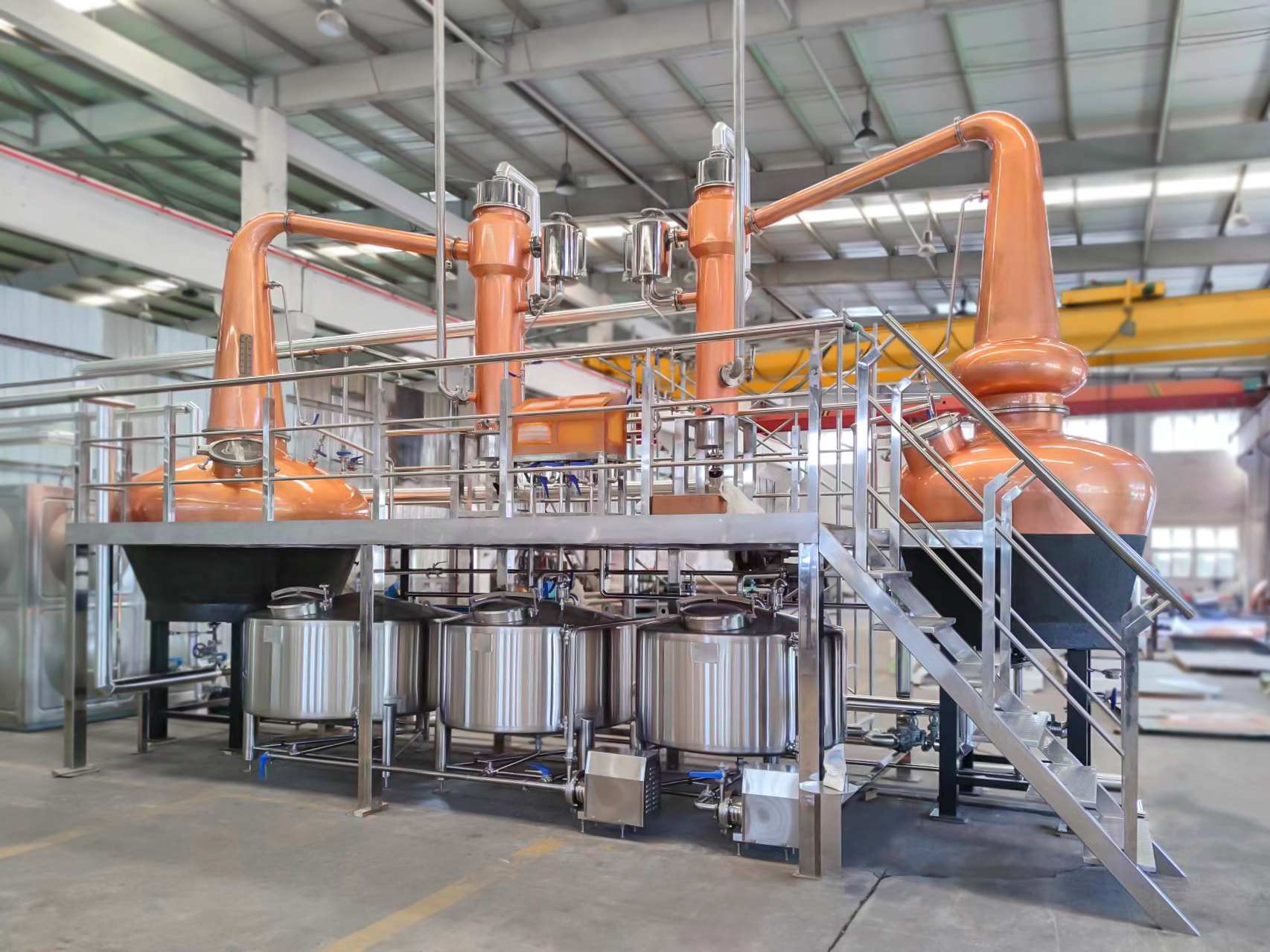
Key Parts of a Distillation System
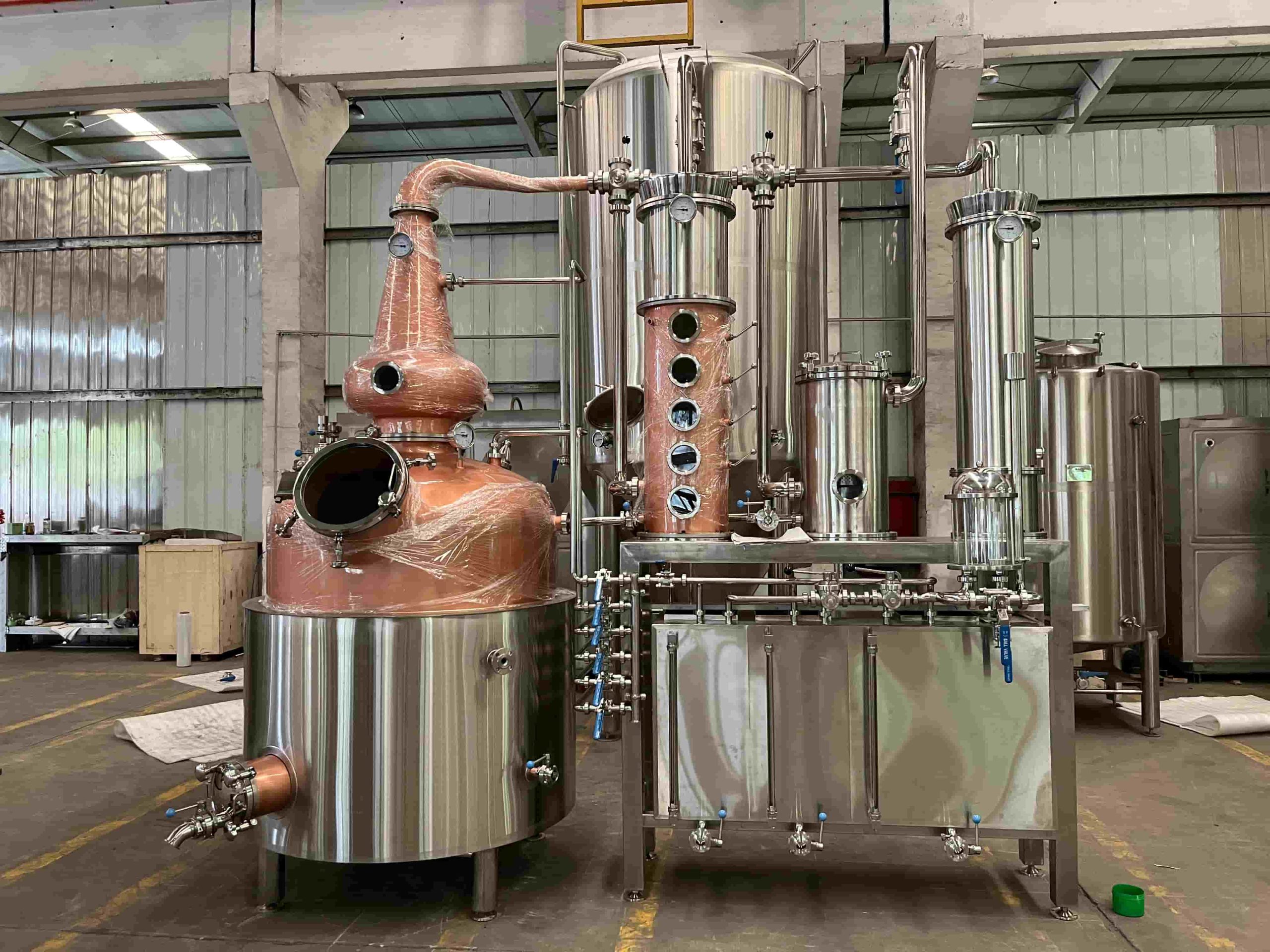
An alcohol distillation unit is built from several components that need to work together, not just a single vessel.
1. Fermentation Tanks
These tanks produce the wash. Breweries adding distillation can often reuse existing fermentation tanks for this step.
2. The Still
The main vessel. Its size, shape, and material affect flavor, output purity, and cleaning time.
3. Rectification Column
Added when a producer needs higher alcohol strength. Plates or packing inside the column increase the number of separation stages the vapor passes through.
4. Condenser
Cools the vapor back into liquid. Undersized or poorly maintained cooling reduces product recovery and slows the run.
5. Collection Tanks
Store the distilled alcohol and let the producer separate heads, hearts, and tails into different vessels.
6. Cleaning System (CIP)
Hygiene matters in beverage production. A CIP cleaning system cleans the equipment in place, without disassembly.
7. Control System
Modern distillery equipment includes sensors and automated controls so operators can repeat a process consistently, run after run.
How to Choose the Right Alcohol Distillation Still
A handful of factors drive most of the decision.
Production Capacity
Size the still to the fermentation volume, planned batches per day, annual production targets, and expected growth. An undersized still limits throughput; an oversized one adds cost without adding value.
Spirit Type
The product should drive the still choice, not the reverse. Whiskey and vodka call for different equipment, so weigh the alcohol strength needed, the flavor intensity wanted, and whether the spirit will be aged.
Pot, Column, or Hybrid?
- Pot still: best for flavor and flexible product runs
- Column still: best for speed and high alcohol strength
- Hybrid: best when a single system needs to do both
Stainless Steel or Copper?
Most commercial systems use both materials rather than picking one. Stainless steel handles the tanks and piping; copper lines the vapor path. That combination exists for a specific chemical reason: sulfur compounds produced during fermentation, such as dimethyl sulfide and volatile mercaptans, bind to copper surfaces and stay behind in the still rather than carrying through into the spirit (PMC narrative review, 2022). Removing those compounds lets the fruitier ester notes come through in the finished product.
| Material | Benefit | Typical Use |
|---|---|---|
| Stainless steel | Durable, easy to clean | Tanks, pipes |
| Copper | Binds sulfur compounds, supports ester formation | Vapor path |
| Both | Combines durability with flavor benefits | Most commercial systems |
Heating Method
Steam suits large systems well. Electric heating is clean and precise for smaller runs. The right choice depends on what utilities the facility already has.
Automation
Small operations can run on manual controls. Larger plants typically need automation for temperature control, pressure monitoring, flow management, and product collection, since manual tracking becomes harder to repeat accurately at scale.
Energy Efficiency
Distillation is energy-intensive by nature. Insulation, heat recovery, efficient heating elements, and correctly sizing the system for actual production volume all reduce operating cost over the equipment’s life.
Quick Selection Checklist
Before buying an alcohol distillation unit, work through these questions:
- What spirit will we make?
- How much will we produce each year?
- Do we have existing tanks and utilities we can reuse?
- Do we need batch or continuous operation?
- Do we need a rectification column?
- What heating source is available on-site?
- Do we need copper in the vapor path?
- How much automation do we need?
- How much floor space do we have?
- Will we expand production in the future?
Adding Distillation to an Existing Brewery
Many breweries already have infrastructure that supports distillation: fermentation tanks, hot water systems, steam, cooling, pumps, and CIP systems. Reusing that infrastructure lowers the capital needed to add a spirits line compared with building a standalone distillery from the ground up.
That capital-efficiency question has become more relevant, not less. The 2025 Craft Spirits Data Project, compiled from TTB permit data by the American Craft Spirits Association and Park Street, found the number of active U.S. craft distillers fell 25.6% between August 2024 and August 2025, down to 2,282 permitted producers from 3,069 the year before, alongside a drop in total craft-producer investment to $811 million in 2024 from $885 million in 2023 (ACSA/Park Street, 2025). For a brewery evaluating whether to add distillation, that data points toward integrating into existing operations over standing up a new, separately licensed facility.
Any beverage distillation, brewery-integrated or standalone, still requires a federal Distilled Spirits Plant permit before production can legally begin, along with the associated bond and registration forms (TTB.gov). That approval timeline is worth building into any project schedule early, since production cannot start before the permit is issued.
On the demand side, the broader brewing and distillery equipment market, valued at roughly $37.9 billion in 2024, is projected to grow at a 6.5% CAGR through 2034 as craft beer and spirits demand continues to expand globally (Global Market Insights, 2025). That growth is consistent with more breweries treating distillation as a natural product-line extension rather than a separate business.
Why Work With an Experienced Equipment Partner
Distillation success depends on the whole system working together, not just the still itself. SKE provides customized industrial distillation equipment, including pot stills, column stills, hybrid systems, and full system design, and draws on brewery-equipment experience to help with equipment selection, layout, utility planning, CIP design, and automation. The goal is a reliable production system, not just a still.
Frequently Asked Questions
What is an alcohol distillation still?
It is equipment that separates alcohol from a fermented liquid using heat and condensation, producing a higher-proof liquid from the original wash.
What is the difference between a pot still and a column still?
A pot still runs in batches and favors flavor-rich spirits such as whiskey and rum. A column still runs continuously and favors high-strength, cleaner spirits such as vodka.
Is copper or stainless steel better for a still?
Both play a role. Stainless steel is durable and easy to clean; copper in the vapor path binds sulfur compounds and supports the formation of fruitier ester flavors, which is why most commercial systems combine the two materials rather than choosing one exclusively.
What size alcohol distillation unit does a producer need?
Sizing depends on fermentation volume, planned batches per day, and annual production targets, with some allowance for future growth. An equipment supplier can help translate those production goals into a specific still and column size.
Can a brewery add distillation to its existing operation?
Yes. Many breweries already have tanks, steam systems, cooling, and CIP infrastructure that can support a distillation line, which reduces the capital needed compared with a standalone distillery build. A federal Distilled Spirits Plant permit is still required regardless of scale.
What equipment does a still need besides the vessel itself?
A complete system typically needs collection tanks, a condenser, a control system, pumps, piping, and a CIP cleaning system.
Does a distillery need a federal permit before producing spirits?
Yes. TTB requires an approved Distilled Spirits Plant permit, along with a distilled spirits bond and plant registration, before any beverage distillation can legally begin (TTB.gov).
Conclusion
An alcohol distillation still is a central piece of distillery equipment, and it shapes product quality, production speed, and operating cost more than any other single component. Pot stills, column stills, and hybrid systems each suit different products, so the right choice starts with the spirit a producer wants to make, not a general preference for one technology.
For breweries adding spirits production, integration with existing tanks, utilities, and floor space is usually the more capital-efficient path, particularly as recent industry data shows craft distillery formation slowing. Whatever the starting point, a federal Distilled Spirits Plant permit and the right vessel, column, condenser, and control system all need to be planned together for the equipment to run reliably from day one.
Reviewed by the SKE process engineering team, which designs distillation and brewery systems for commercial beverage producers.
If you have any further questions, feel free to reach out.
- Facebook: SKE Equipment Facebook
- Email: info@skeequipment.com
Fill out the contact form below for a production equipment quote tailored to your brewery or beverage plant.