
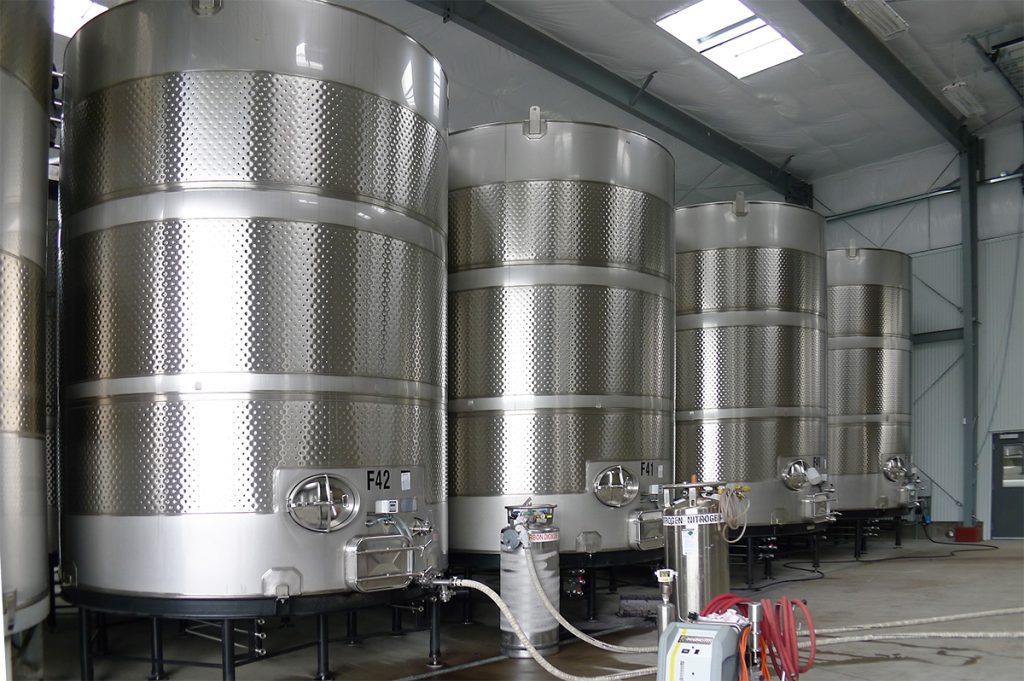

Wine storage tanks influence how a winery controls oxygen exposure, temperature, transfers and cleaning. Stainless steel provides a practical vessel material, but it does not manage those conditions by itself. Select the tank around the wine, holding period and cellar workflow.
Key takeaways
- Match the vessel to storage, fermentation or another defined duty.
- Manage headspace and transfers together when planning oxygen control.
- Specify cooling performance and cleanability, not just the presence of a jacket or spray device.
Separate storage requirements from fermentation requirements
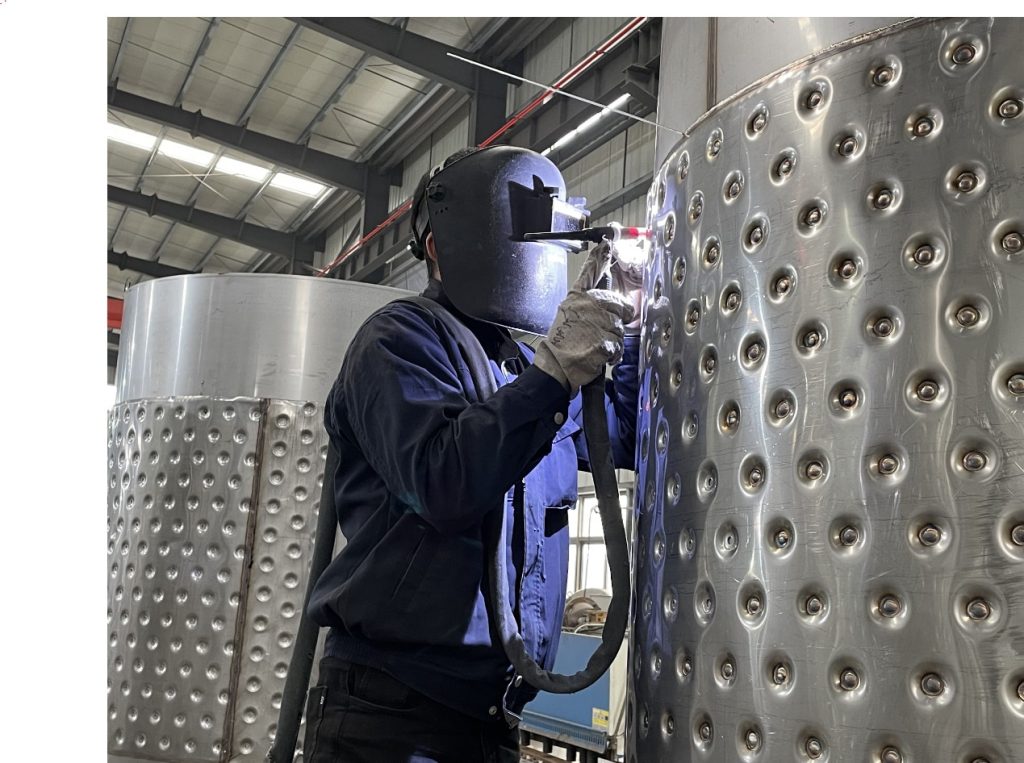
A storage tank does not automatically have the access, heat-transfer capacity or solids-handling features needed for fermentation. Describe the complete duty before selecting fittings and geometry. If one tank must serve several purposes, list the requirements for each stage.
Compare wine tank configurations using working volume, intended temperature range, sampling, drainage and cleaning access. A large nominal capacity has limited value if it forces repeated partial fills that do not suit the winery’s storage practice.
Plan oxygen control across the transfer route

Review tank headspace, seals, sampling, hoses and transfer procedures as one system. An inert-gas connection is useful only as part of an appropriate operating method. The gas, delivery arrangement and verification need to fit the wine and vessel.
The Australian Wine Research Institute’s guidance on protective gases discusses gas use during wine storage. The gases are not interchangeable: CO₂ can dissolve into the wine, while nitrogen is much less soluble. A blanketing arrangement intended to avoid oxygen exposure must also respect the wine’s desired dissolved-gas level. Use that guidance with the winery’s own quality criteria. Do not assume that adding gas once establishes ongoing protection after withdrawals or transfers. Confirm the tank’s pressure and vacuum limits and required protection before connecting a gas supply or selecting a transfer procedure; a closed storage tank is not automatically a pressure vessel.
Specify what temperature control must achieve
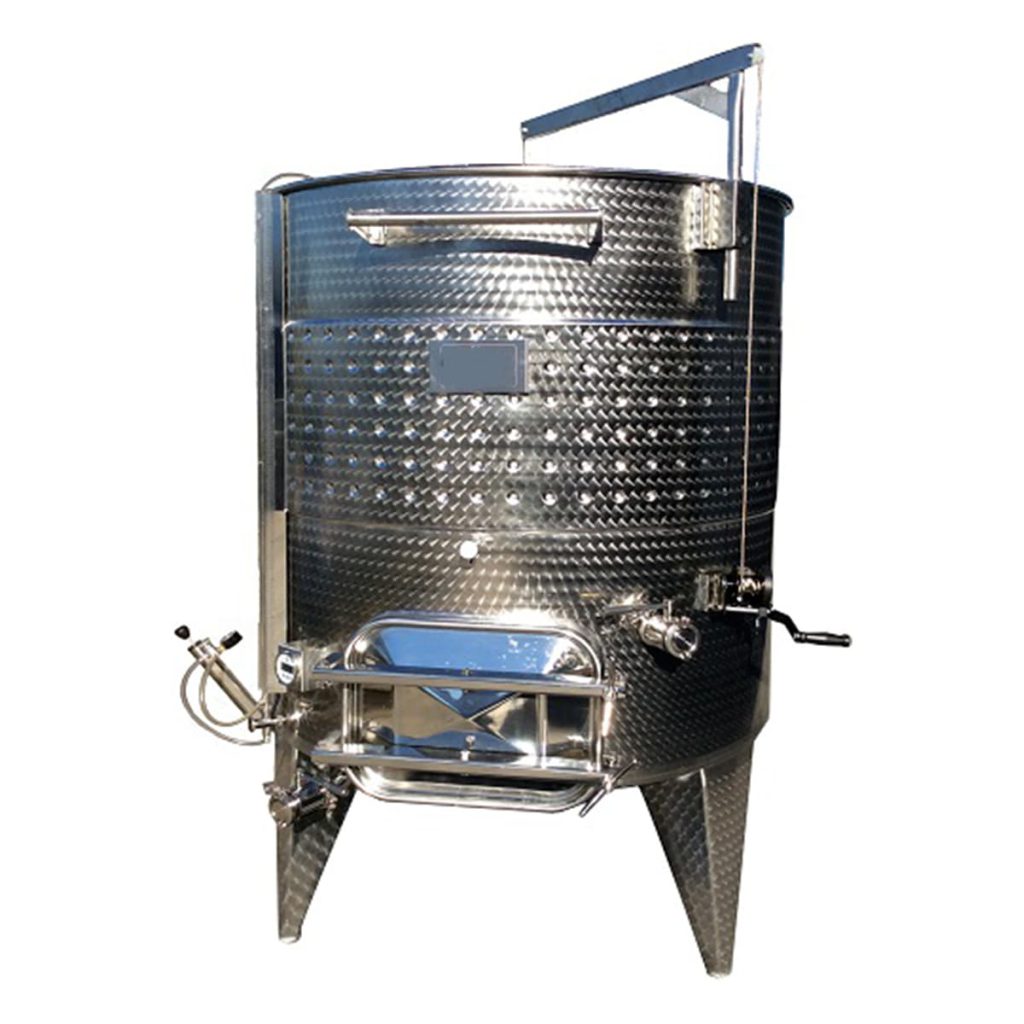
Give the supplier the initial wine temperature, required condition, batch range, ambient conditions and available cooling medium. Distinguish maintaining temperature from bringing a warm batch down to its target. Those tasks can require different cooling duties.
Ask where temperature is measured and how the system will be checked at partial fill. Jacket area, utility flow and controls must work together. Insulation and installation conditions also affect the duty; a jacketed tank is not a complete cooling system on its own.
Inspect the details that affect cleaning

Review the outlet, sample valve, level connections, manway seal and internal fittings. Product retention and hard-to-reach surfaces can make cleaning more difficult even when the main tank wall is smooth.
Request a cleaning arrangement suited to the vessel geometry and cellar utilities. Confirm how operators inspect the cleaned vessel and how residual rinse water is drained. For additional vessel considerations, see the stainless steel wine tank guide.
Compare materials by process intent
Stainless steel, oak and other vessel materials support different winemaking decisions. Choosing stainless steel does not reproduce the sensory effects of oak maturation. Likewise, changing the storage material does not remove the need to control temperature and oxygen.
Select stainless steel grade and seals using the wine, cleaning chemistry and operating environment. Outokumpu’s corrosion guidance is a reminder that stainless steel performance depends on the exposure conditions, not just the grade label.
Prepare a useful tank enquiry
Include wine type, batch sizes, storage duration, temperature-control duty, handling of lees, available utilities and the cellar layout. List the records or acceptance checks you need at handover. Where blending is part of the duty, review the separate mixing tank selection questions instead of assuming every storage tank is an effective blending vessel.
About this article: Prepared for the SKE Equipment blog with AI-assisted research and editing. Original byline: Mandy, equipment marketing specialist. The linked references support the technical background; this article does not report an SKE equipment trial or a project-specific engineering review.