
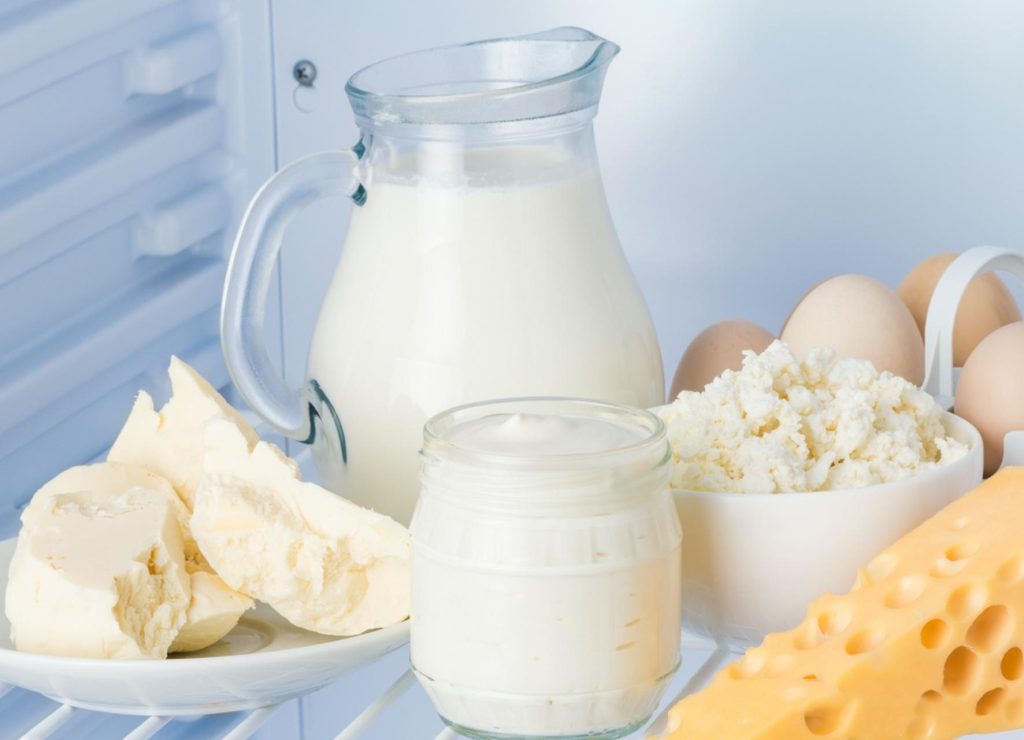
Pasteurization is common in the dairy and beverage industries. It makes products safer and more stable. A milk pasteurization machine uses controlled heat to reduce harmful microorganisms in milk. In brewing, a beer pasteurizer helps control spoilage organisms and extend shelf life.
For craft brewers, choosing the right pasteurization system is an important decision. The process can affect beer stability, flavor, energy use, and distribution. The best solution depends on your beer style, packaging format, production capacity, and target shelf life.
At SKE, we make flash pasteurizers and cabinet pasteurizers for breweries. This guide has three main parts. First, we introduce our flash pasteurizer and cabinet pasteurizer. Second, we explain how our equipment can pasteurize both beer and milk. Third, we compare the differences between milk and beer pasteurization. At the end, we summarize why SKE is an experienced brewery equipment manufacturer.
SKE Flash Pasteurizer and Cabinet Pasteurizer
SKE offers two main pasteurization systems for different production needs. Both systems use controlled heat to improve product stability and shelf life.
SKE Flash Pasteurizer
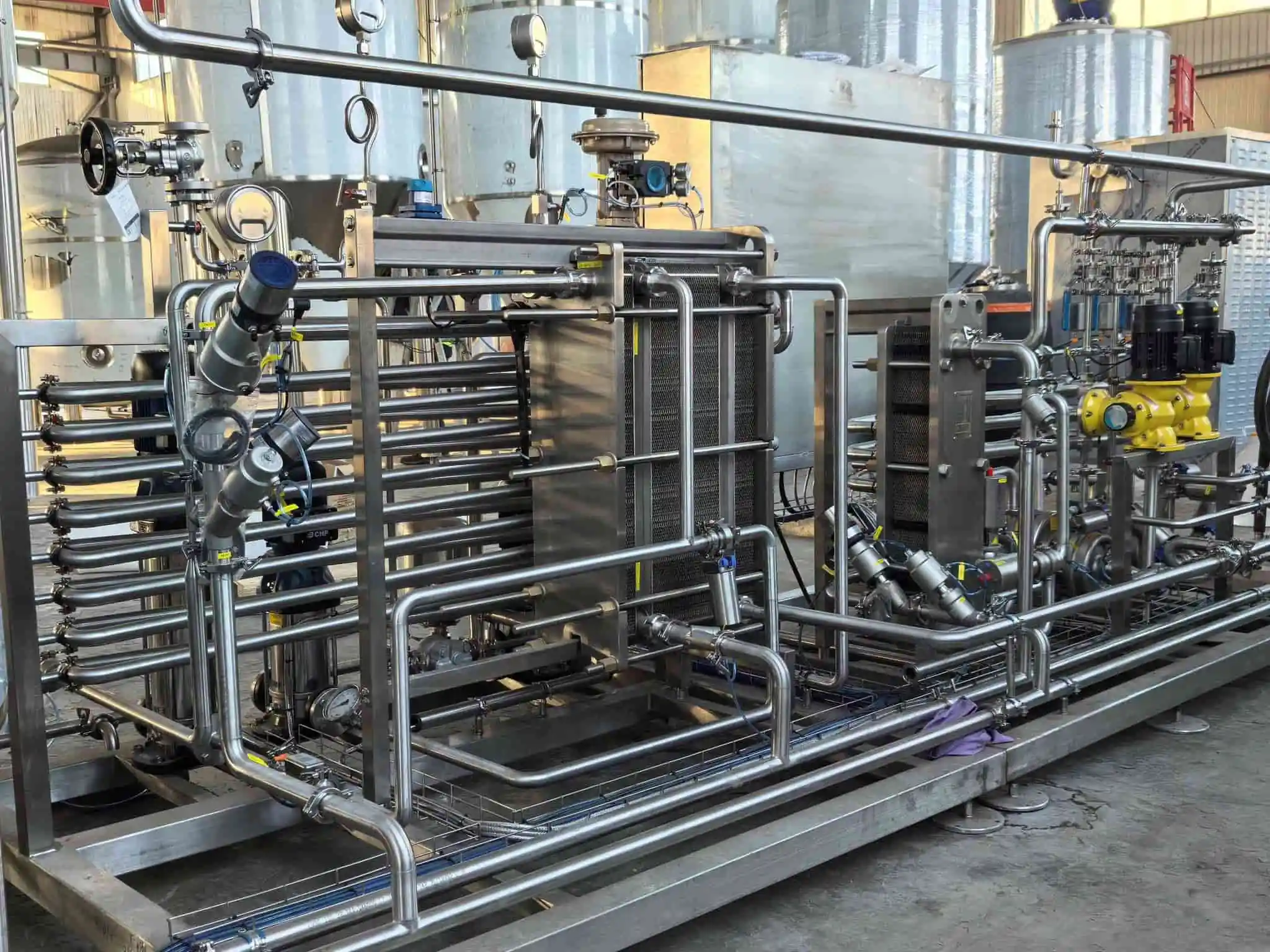
A flash pasteurizer, also called an in-line pasteurizer, treats beer continuously before filling. The product flows through a heat exchanger. It reaches a controlled treatment temperature. It stays at the required conditions for a defined time. Then it is cooled quickly.
Our flash pasteurizer can include:
-
Plate or tubular heat exchangers.
-
Heat recovery to reduce energy demand.
-
Automatic temperature and flow control.
-
PU monitoring and control functions.
-
Capacity options for different production requirements.
Flash pasteurization offers precise control of product temperature and treatment time. Heat recovery may also reduce energy demand. It transfers heat from outgoing hot beer to incoming cold beer.
A key point is filling hygiene. Since pasteurization happens before packaging, downstream pipes, tanks, and filling equipment must keep the required hygienic conditions. This prevents recontamination.
The final equipment configuration should be selected according to the beer type, target treatment conditions, production capacity, and downstream filling system.
SKE Cabinet Pasteurizer
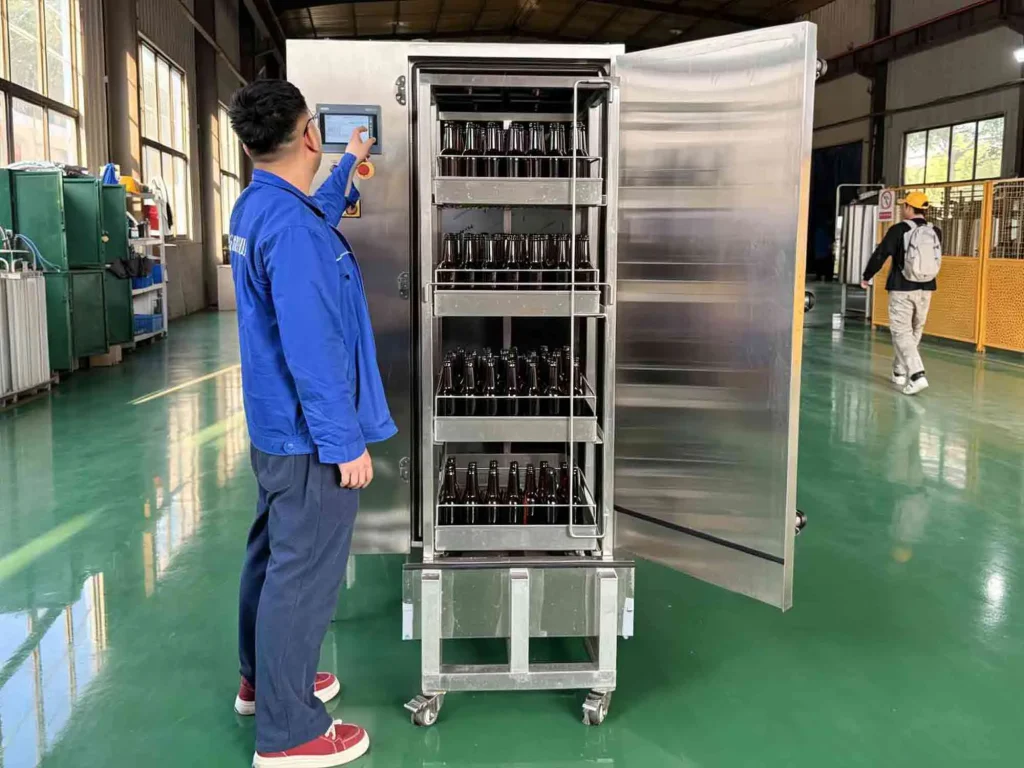
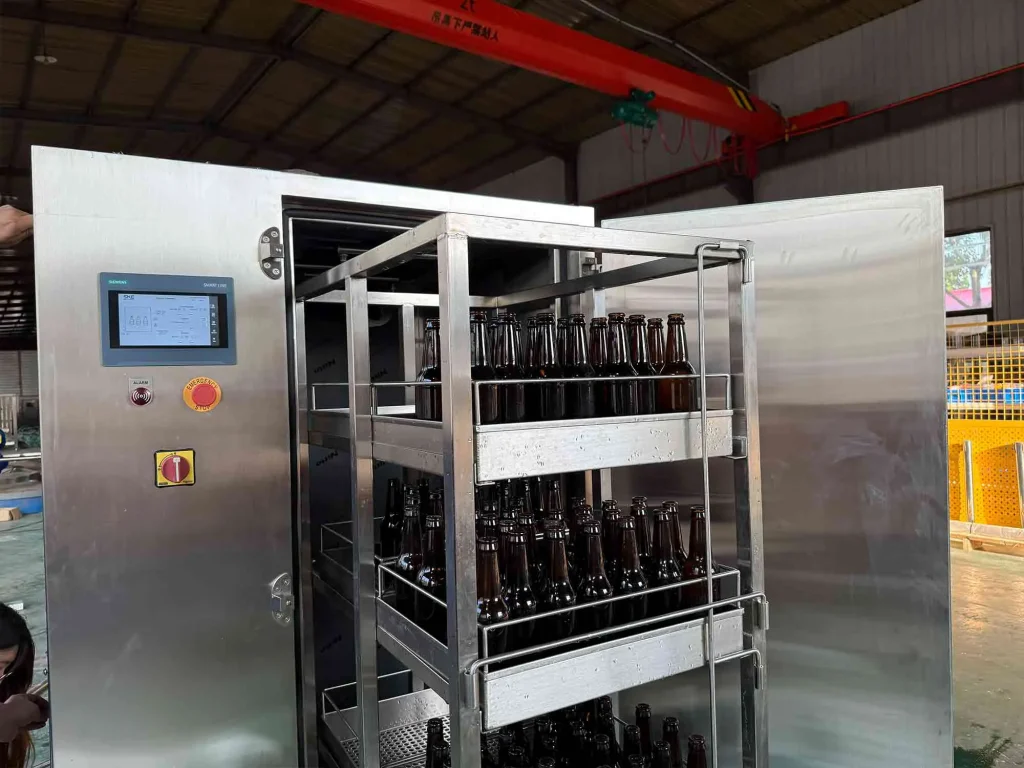
A cabinet pasteurizer treats beer after it has been filled into bottles or cans and sealed.
The containers go into a chamber with temperature-controlled water spray zones. The beer is slowly heated, held under controlled conditions, and then cooled.
The process treats both the beer and its package. This can be useful for breweries that want to pasteurize sealed products after filling.
However, cabinet systems need space for the equipment and suitable container handling. They also need careful control of heating and cooling. This avoids excessive thermal stress, package damage, or unwanted quality changes.
Energy consumption depends on cabinet design, production speed, insulation, water management, and heat recovery.
SKE cabinet pasteurizers provide an in-package treatment option for suitable applications. The exact operating method and configuration should be confirmed against the selected model.
SKE Equipment Can Pasteurize Both Beer and Milk
A milk pasteurization machine applies a controlled heat treatment to milk while keeping product quality. The same basic principle works for beer.
Pasteurization uses heat for a controlled time to reduce or kill target microorganisms. Both temperature and time affect the result.
In brewing, Pasteurization Units (PUs) measure the heat treatment applied to beer. One PU means holding a product at 60°C for one minute.
A common formula is:
PU = t × 1.393^(T − 60)
In this formula, “t” is the time in minutes, and T is the temperature in degrees Celsius. The formula estimates the pasteurization effect at a given temperature over a set time.
In real production, the product temperature changes during heating, holding, and cooling. So the total PU value should reflect the full treatment profile.
Milk and beer have different microbiological needs. A milk pasteurization machine aims to control disease-causing microorganisms and meet food safety rules. Beer pasteurization mainly targets spoilage yeast and bacteria, including some lactic acid bacteria and Pediococcus species.
Beer has alcohol, a relatively low pH, and hops compounds that help limit microbial growth. But these natural barriers do not remove all spoilage risks.
SKE flash pasteurizers and cabinet pasteurizers can be designed for both beer and milk applications. The treatment conditions must be selected and validated for each product. A milk pasteurization machine from SKE can use similar heat exchange technology. The difference is in the target microorganisms and the required treatment level.
For milk, the goal is to meet dairy safety standards. For beer, the goal is to control spoilage organisms and extend shelf life. Both products benefit from precise temperature and time control.
Milk vs. Beer Pasteurization Key Differences
Milk and beer pasteurization share the same basic principle. But their targets, conditions, and production requirements are different.
| Feature | Milk Pasteurization (HTST) | Beer Flash Pasteurization | Beer Cabinet Pasteurization |
|---|---|---|---|
| Main purpose | Meet milk safety rules | Control beer spoilage organisms | Control spoilage in packaged beer |
| Typical treatment | Example: 72°C for 15 seconds | Product-specific temperature and holding time | Controlled heating and cooling of sealed packages |
| Main equipment | Plate heat exchanger and holding tube | Heat exchanger and holding section | Multi-zone cabinet or suitable in-package system |
| Treatment point | Before milk packaging | Before beer filling | After filling and sealing |
| Heat recovery | Common in efficient HTST systems | Can reduce heating and cooling demand | Depends on cabinet design |
| Filling requirements | Suitable hygienic filling system | Hygienic downstream filling is essential | Product is treated in its sealed package |
| Main advantage | Efficient, controlled milk treatment | Precise control and continuous processing | Treatment after packaging |
| Main consideration | Compliance with applicable milk regulations | Protection against recontamination after treatment | Space, package handling, and energy use |
The table shows the main process differences. Actual performance depends on equipment design, product properties, operating conditions, and validated treatment requirements.
Milk pasteurization usually needs higher heat loads. This is because it targets dangerous pathogens. Beer pasteurization uses lower PU levels. This is because beer’s alcohol, hops, and low pH already stop many microbes.
Beer pasteurization targets vary with the recipe, initial microbial load, filling conditions, and required shelf life. Values like 5–25 PUs may be used as references in some applications. But no single target works for every beer. Each process should be validated for the specific product and production conditions.
For brewers, flash pasteurization offers continuous processing and precise control before filling. Cabinet pasteurization provides an option for treating beer inside sealed bottles or cans. The right choice depends on production capacity, packaging format, product stability, energy use, and the required shelf life.

Frequently Asked Questions
1.What is the difference between a milk pasteurization machine and a beer pasteurizer?
Both use controlled heat to reduce microorganisms. But their targets and process requirements differ. A milk pasteurization machine must meet applicable food safety rules. Beer pasteurization focuses mainly on controlling spoilage organisms and improving product stability.
2.What is an in-line pasteurizer?
An in-line pasteurizer treats beer continuously before filling. It heats the beer, holds it under controlled conditions, and then cools it before transfer to a compatible filling system. Cabinet pasteurization treats beer after it has been packaged and sealed.
3.How many PUs does craft beer need?
The required PU level depends on beer composition, microbiological risk, packaging hygiene, and target shelf life. Values like 5–25 PUs can serve as references for some applications. But the final treatment level must be validated for the specific product.
4.Will pasteurization affect beer flavor?
It can. Both flash and cabinet pasteurization may affect flavor if the treatment is too intense or other quality controls are inadequate. Proper temperature control, oxygen management, packaging, and storage all help maintain beer quality.
5.Can SKE equipment pasteurize both beer and milk?
Yes. SKE flash pasteurizers and cabinet pasteurizers can be designed for both beer and milk applications. The treatment conditions must be selected and validated for each product. A milk pasteurization machine from SKE uses similar heat exchange technology. The difference is in the target microorganisms and the required treatment level.
6.How do I choose between a craft beer pasteurizer and a milk pasteurization machine?
Start with the product and its processing requirements. A milk pasteurization machine must meet applicable dairy safety standards. Beer systems must address spoilage control, product quality, carbonation, and filling hygiene. Equipment should be designed and validated for the intended product rather than selected by temperature alone.
Conclusion
SKE is an experienced brewery equipment manufacturer. We provide flash pasteurizers and cabinet pasteurizers for different brewing applications.
Our flash pasteurizer treats beer continuously before filling. It offers precise control and heat recovery. Our cabinet pasteurizer treats beer inside sealed bottles or cans. It is a good choice for in-package treatment.
SKE equipment can also pasteurize milk. A milk pasteurization machine from SKE uses similar heat exchange principles. The treatment conditions are designed for each product.
Milk and beer pasteurization share the same basic principle: controlled heat treatment. However, their microbiological targets, operating conditions, and production requirements are different. Understanding these differences can help brewers make better decisions about their own pasteurization process.
If you are planning a new production line or upgrading existing equipment, contact SKE. We can discuss your beer type, target capacity, packaging format, and pasteurization requirements. Our team can help you evaluate a suitable solution for your brewery.
Contact Us
If you have any further questions, feel free to reach out!
- Facebook: SKE Equipment Facebook
- Email: info@skeequipment.com
Fill out the contact form below for customized solutions. We fully support all your production equipment demands for breweries and beverage plants.