
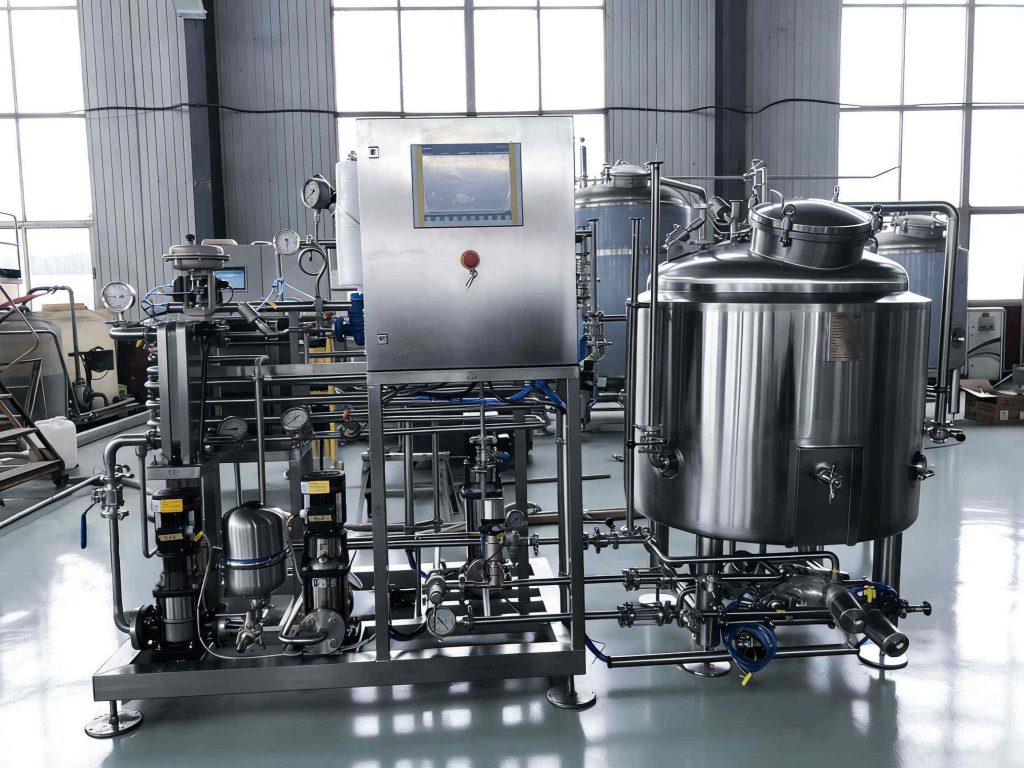
Beer producers need stable product quality, reliable shelf life, and controlled processing. A pasteurization machine provides controlled heat treatment that reduces spoilage microorganisms before or after packaging.
What Is Beer Pasteurization?
Beer pasteurization uses controlled heat to reduce microorganisms that may affect product stability and shelf life. A pasteurization machine does not normally make beer completely sterile. Instead, it applies a defined time-temperature treatment to achieve the required microbiological stability.
Beer already has natural protection from alcohol, low pH, carbon dioxide, and hop compounds. However, the required treatment depends on beer style, alcohol level, packaging, target shelf life, and process conditions. Low- and non-alcoholic beers may require different process control.
A common way to describe pasteurization intensity is the Pasteurization Unit (PU). One PU is commonly defined as the effect of holding a product at 60°C for one minute. The target PU should be selected according to the product and process, rather than treated as one universal value.
How Does a Flash Pasteurization Machine Work?
A flash pasteurization machine heats beer to a controlled temperature for a short holding time, then cools it before filling. The process is continuous and normally takes place upstream of the filler.
A typical process is:
Beer → Preheating → Pasteurization → Holding → Cooling → Filling
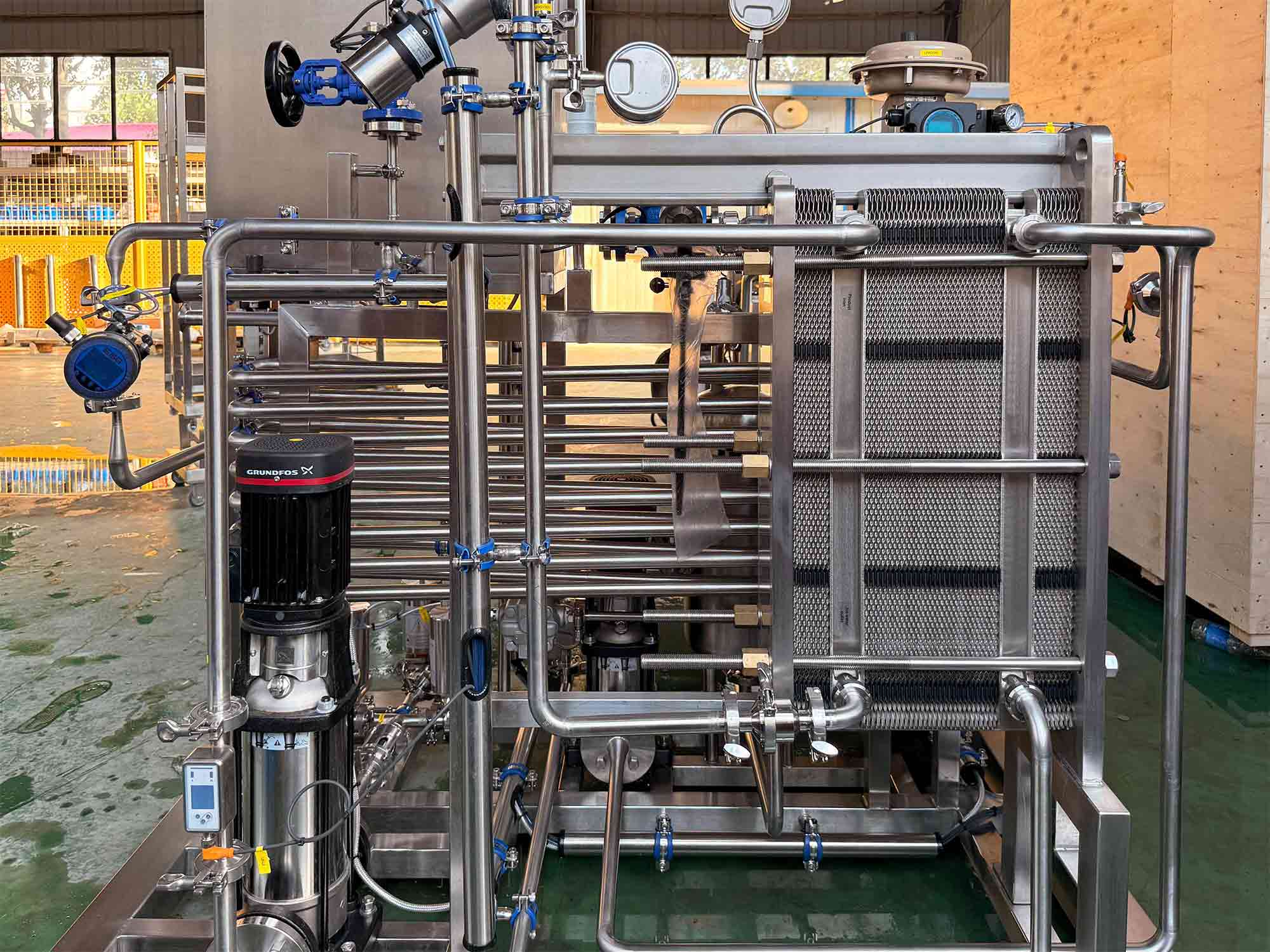
A sanitary plate heat exchanger (PHE) transfers heat efficiently. In a regenerative section, hot pasteurized beer can transfer heat to incoming cold beer. This reduces external heating and cooling demand.
After preheating, the beer reaches the pasteurization temperature. It then passes through a holding tube designed to provide the required residence time. After treatment, the beer is cooled to the temperature required by the filling process.
The system must keep temperature, flow, pressure, and holding time within the designed process range.
Flash vs. Tunnel Pasteurization
| Feature | Flash Pasteurization | Tunnel Pasteurization |
|---|---|---|
| Treatment point | Before filling | After filling |
| Main equipment | PHE + holding tube | Tunnel with water zones |
| Product flow | Continuous | Packaged product |
| Heat recovery | High potential with regeneration | Depends on design |
| Typical use | Continuous filling lines | Sealed packaged beer |
A flash pasteurization machine is often integrated with a continuous filling line. Tunnel pasteurization is performed after the beer has already been packaged. The right system depends on packaging, production layout, product type, and required process control.
Main Components of a Pasteurization Machine
1. Plate Heat Exchanger
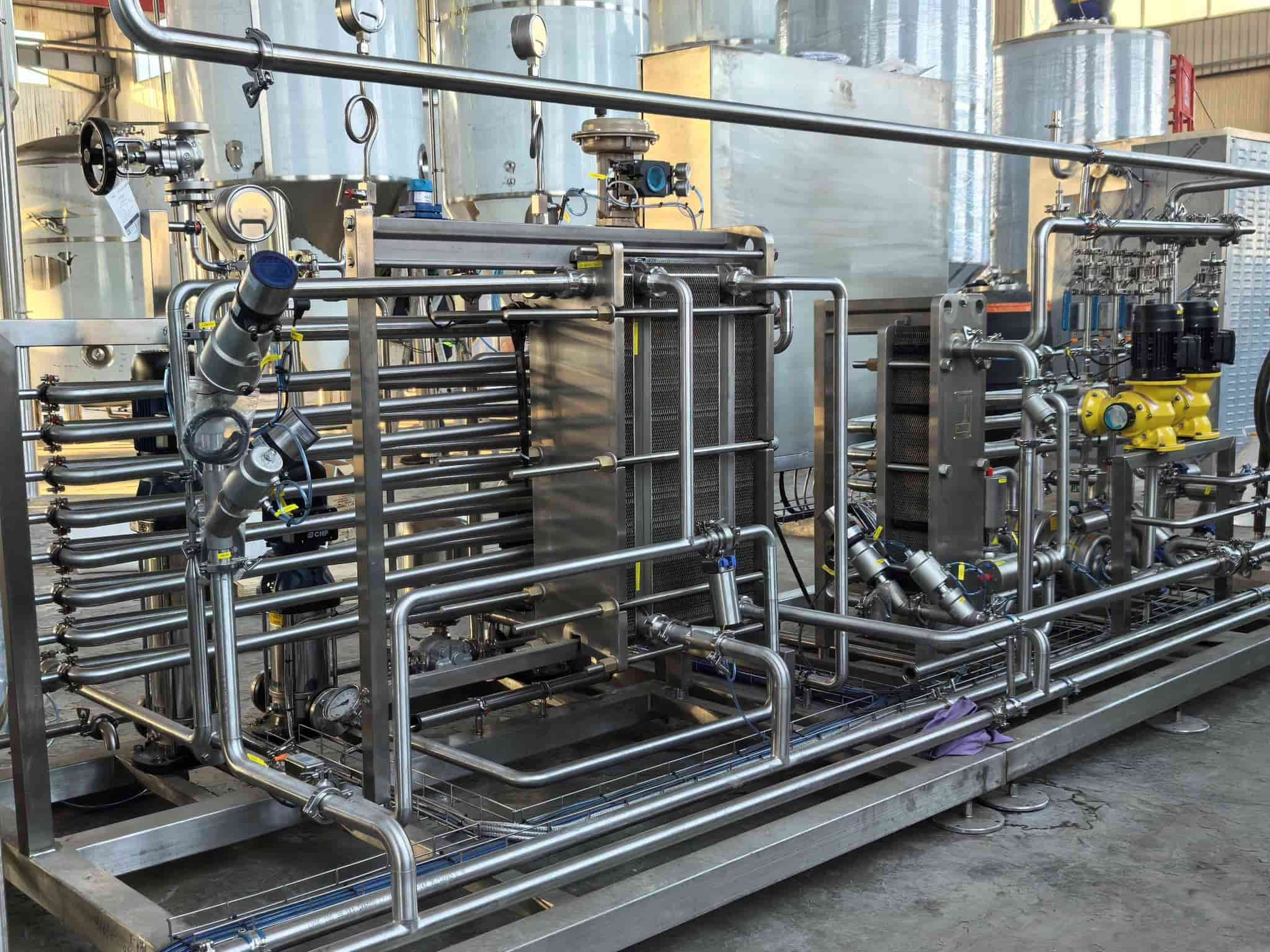
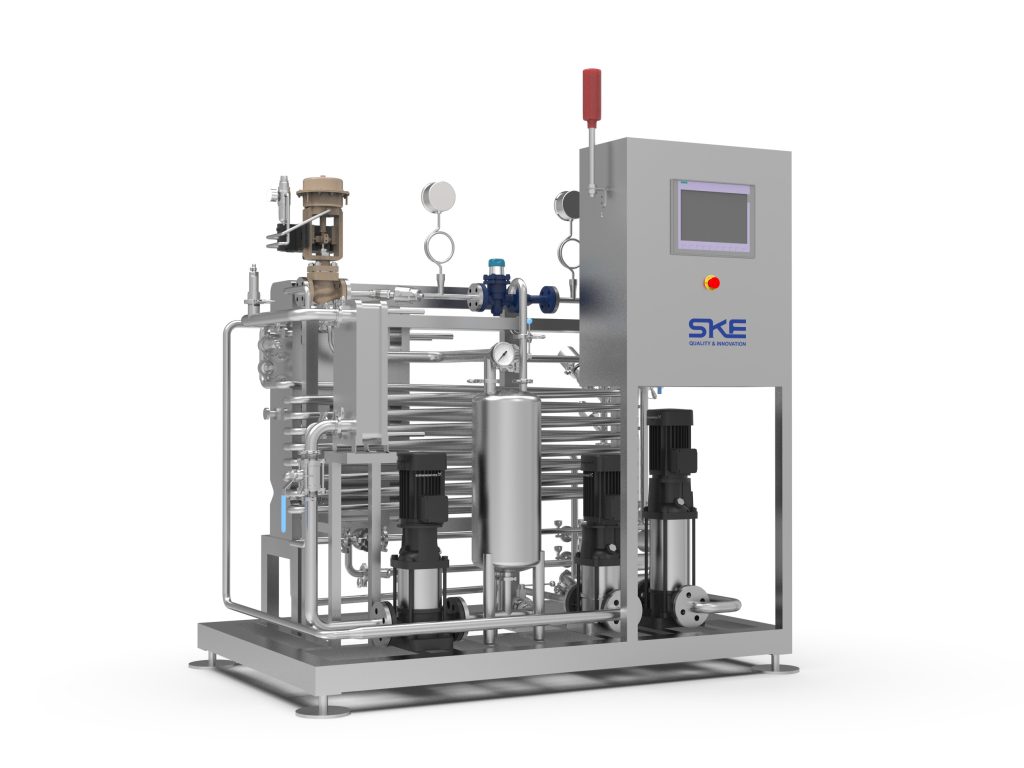
The PHE is one of the most important parts of a pasteurization machine. Stainless steel plates provide efficient heat transfer while maintaining a sanitary product path.
A regenerative heat-exchange section can transfer energy between incoming and treated beer. Actual heat recovery depends on equipment design, product temperature, flow rate, utilities, and operating conditions.
2. Holding Tube
The holding tube provides the required treatment time at the target temperature. Its length and internal diameter are selected according to product flow and residence time.
The pasteurization machine must be designed so that actual holding time matches the validated process. Incorrect sizing can affect treatment consistency.
3. Temperature and PU Control
Temperature control is central to pasteurization machine performance. Temperature sensors, flow measurement, control valves, and PLC logic work together to keep the process stable.
The system can monitor:
- Product temperature
- Product flow
- Holding conditions
- Pressure
- Calculated PU
- Alarms and process deviations
A good pasteurization machine should also include automatic control and product diversion when critical process conditions are not met.
4. Pressure Control
Pressure is important when processing carbonated beer. As beer temperature rises, CO₂ becomes less soluble, which can increase foaming or gas loss if pressure is not properly controlled.
A pasteurization machine therefore needs suitable pumps, valves, and back-pressure control. The required pressure is application-dependent and should be defined according to carbonation, temperature, flow, and filling conditions.
5. CIP System
CIP is essential for hygienic operation. A typical cleaning cycle may include pre-rinsing, caustic cleaning, intermediate rinsing, acid cleaning when required, final rinsing, and sanitization.
For a pasteurization machine, CIP performance depends on temperature, chemical concentration, flow velocity, contact time, and equipment design. Hygienic piping and good drainage also help reduce contamination risks.
6. Sanitary Piping and Valves
Product piping should minimize dead legs, retention areas, unnecessary pressure loss, and hard-to-clean sections. Sanitary valves help control product flow, CIP flow, and product diversion.
Piping layout directly affects system performance and hygiene.
7. PLC and HMI Control
Modern systems use PLC and HMI controls to manage temperature, pumps, flow, pressure, CIP sequences, alarms, and process data.
The system can record key parameters and provide alarms or automatic diversion when limits are not met.
Understanding PU in a Pasteurization Machine
PU helps describe the thermal effect applied to beer. A commonly used calculation is:
PU = t × 1.393^(T − 60)
Where:
- PU = Pasteurization Units
- t = treatment time in minutes
- T = product temperature in °C
For example, 72°C for 30 seconds gives approximately 15 PU under this calculation.
This example does not mean that 15 PU is suitable for every beer. The required PU depends on product composition, target microorganisms, packaging, filling conditions, and desired shelf life. The system should therefore be designed around the required process, not a fixed PU number alone.
How to Select a Pasteurization Machine
Breweries should evaluate several factors before purchasing a pasteurization machine.
Production Capacity
The system must match the filling line’s required flow rate. Oversizing can increase investment and utility costs, while undersizing can limit production.
Beer Type
Lager, ale, flavored beer, low-alcohol beer, and non-alcoholic beer may have different thermal and microbiological requirements. The system should match the actual product range.
Heat Recovery
Regenerative heat exchange can reduce heating and cooling demand. When comparing systems, breweries should look at the complete energy balance rather than only the rated heat-recovery percentage.
Filling System
The system must match the downstream filler and packaging process. Flow rate, product temperature, pressure, carbonation, and connection standards all need to be considered.
CIP and Maintenance
Easy cleaning and maintenance can reduce downtime and improve process reliability. Breweries should check plate and gasket access, valve arrangement, drainage, instrumentation, and CIP coverage.
FAQ About Pasteurization Machines
1.What does a pasteurization machine do?
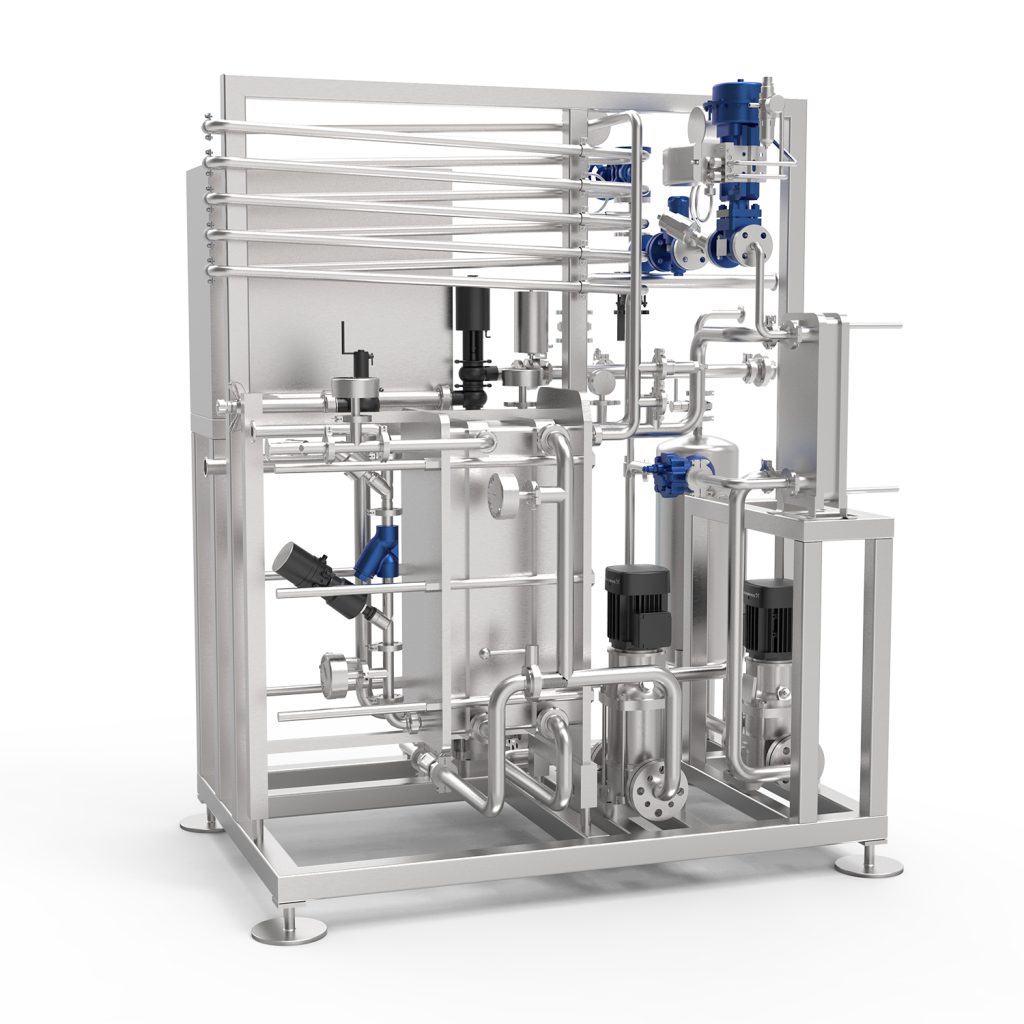
A pasteurization machine applies controlled heat to reduce microorganisms and improve product stability. It is a process-control system, not simply a heater.
2.What is the difference between flash and tunnel pasteurization?
Flash pasteurization treats beer before filling, while tunnel pasteurization treats sealed packages after filling. A pasteurization machine for flash processing is usually integrated into the liquid process line.
3.How many PU does beer need?
There is no single PU target for every beer. The required level depends on product characteristics, microbiological risk, packaging, and shelf-life goals.
4.Can a pasteurization machine be used for non-alcoholic beer?
Yes. Non-alcoholic beer can be processed with flash pasteurization, but its formulation and microbiological characteristics may require specific temperature and PU control.
5.Can it be added to an existing brewery?
In many cases, a pasteurization machine can be integrated into an existing filling line. Engineers need to check flow rate, available space, piping, utilities, filler requirements, and control interfaces.
6.Why is heat recovery important?
A regenerative pasteurization machine can transfer heat from treated beer to incoming beer. This can reduce utility demand and improve overall process efficiency.
Conclusion
SKE provides brewery pasteurization systems designed around production capacity, product requirements, filling conditions, CIP, and plant layout. Systems can be configured for new breweries, production expansion, and packaging line upgrades.
If you have any further questions, feel free to reach out!
- Facebook: SKE Equipment Facebook
- Email: info@skeequipment.com
Fill out the contact form below for customized solutions. We fully support all your production equipment demands for breweries and beverage plants.