
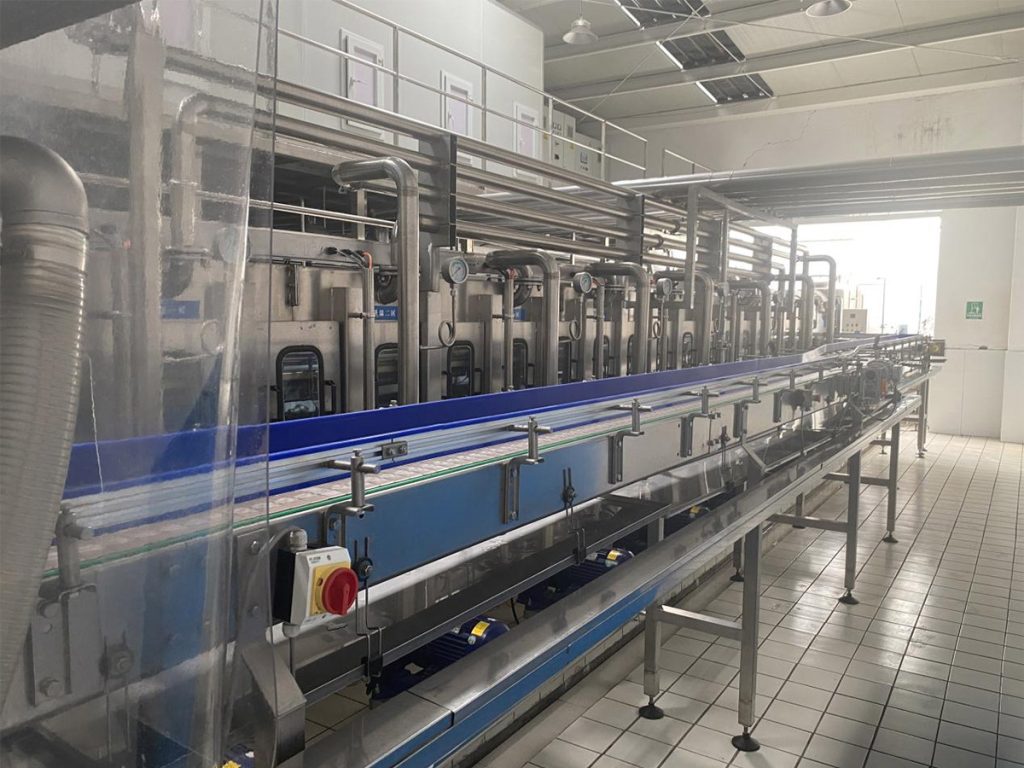
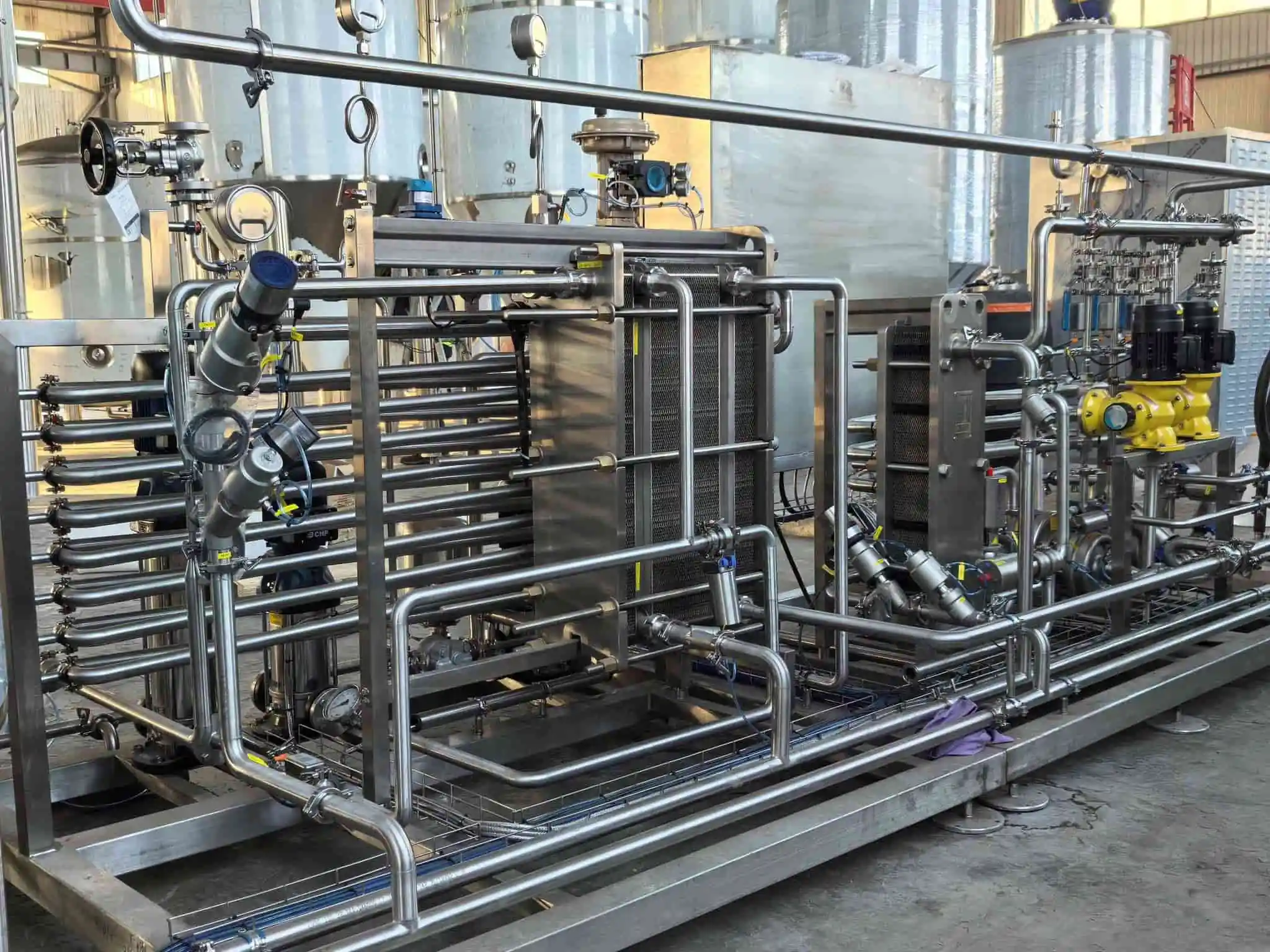
Choose a commercial pasteurizer around the beverage, packaging process and required microbial control. Flash pasteurization treats flowing product before filling. Tunnel pasteurization treats sealed packages. The decision is therefore about the whole packaging line, not which machine has the highest temperature or largest advertised output.
Key takeaways
- Evaluate the filling process alongside the heat treatment.
- Specify the product range and validated treatment requirements before sizing equipment.
- Compare utilities, stop-start behaviour and saleable output on the same basis.
Start with the product and package

Document the beverage composition, carbonation, viscosity, suspended solids and intended storage conditions. Beer, juice and a pulpy beverage should not be assigned the same process simply because they share a filling line.
The required treatment needs a product-specific basis. A beer pasteurization-unit calculation is not a general juice safety schedule. Use qualified process expertise to establish the treatment and validation requirements for each product family.
Compare the treatment locations
| Decision | Flash system | Tunnel system |
|---|---|---|
| Where treatment occurs | In the liquid process before filling | After the package is filled and closed |
| Important interface | Treated-product route and filler hygiene | Package compatibility and conveyor operation |
| Operating changes to assess | Flow changes, recirculation and product diversion | Line stops and package temperature history |
| Layout information needed | Skid, buffer, piping and service access | Tunnel, conveyors and service access |
These are process distinctions, not guarantees that one option uses less space or energy on every project. Compare actual proposals for the same product, packaging rate and utility conditions.
When flash pasteurization fits the line
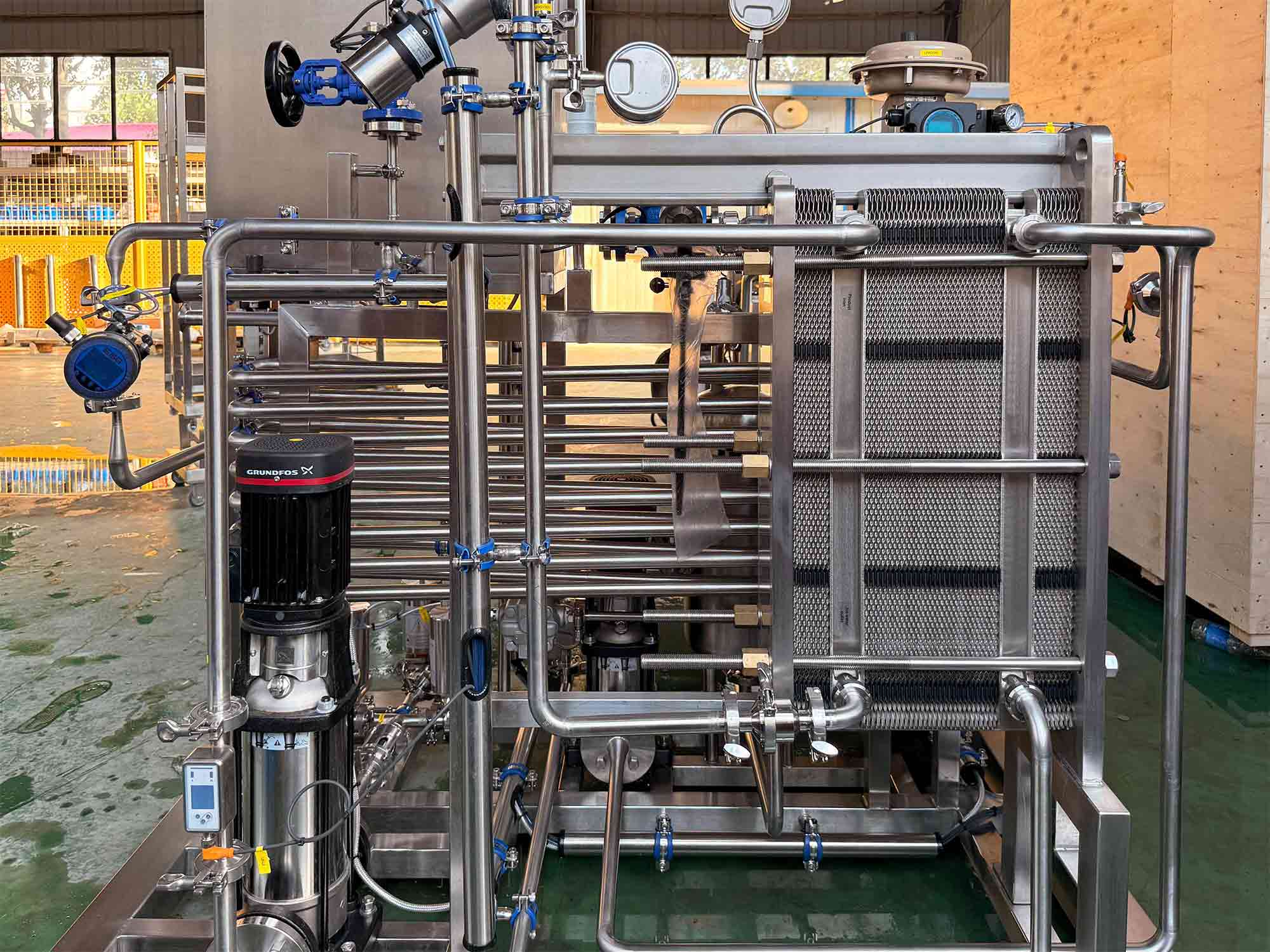
A flash system can suit a continuous liquid process when the downstream route and filler can protect the treated beverage. Regenerative heat exchange can transfer heat between outgoing and incoming streams. Alfa Laval’s Flexitherm Core documentation describes this type of beer and beverage module.
Ask how the system responds when the filler slows or stops. Product diversion, buffering and restart conditions need to be part of the proposal. For the instrumentation and control questions, see the flash pasteurization machine guide.
When in-package treatment deserves consideration
Treating the closed package changes where microbial control occurs in the process. It also makes package temperature history and package suitability central design inputs. Confirm that containers, closures and labels are compatible with the proposed treatment.
A batch pasteurizer cabinet and a tunnel are different arrangements. Compare a pasteurizer cabinet on its own operating cycle; do not assume it has a tunnel’s continuous production characteristics.
Compare quotations using a shared operating scenario
Give every supplier the same product inlet conditions, output requirement, utility temperatures and shift pattern. Request heating, cooling, water and power demand at those conditions. Define whether quoted consumption includes startup, cleaning and production interruptions.
Ask for the proposed validation approach, calibration access, recorded process variables and handling of out-of-specification product. A nominal litres-per-hour rating cannot answer these questions.
Build a decision record before purchase
Record why the selected process fits the beverage and packaging operation, what remains outside the supply scope and who will validate the installation. The flash pasteurization system page can inform an equipment discussion, but the final decision should follow the product and line requirements rather than a generic preference for one technology.
About this article: Prepared for the SKE Equipment blog with AI-assisted research and editing. Original byline: Mandy, equipment marketing specialist. The linked references support the technical background; this article does not report an SKE equipment trial or a project-specific engineering review.