
Choosing the best brewing systems is a key decision for any commercial brewery. The right equipment affects beer quality, production capacity, operating costs, labor needs, and future growth. However, the best brewing systems are not always the largest or most automated. They are the systems that match your beer styles, production goals, available space, and budget.
A commercial brewing system includes several connected parts: a brewhouse, fermentation tanks, beer tanks, cooling equipment, cleaning systems, and process controls. Each part has a different function, but all components must work together to support stable and efficient production.
SKE is a brewery equipment manufacturer providing equipment and customized solutions for commercial brewing projects. This guide explains the main components, important selection factors, and practical ways to plan a system for long-term business needs.
1. What Makes the Best Brewing Systems?
The best brewing systems combine suitable capacity, stable process control, reliable construction, and efficient operation. A good system should meet current production needs while allowing reasonable room for future growth.
Before choosing equipment, define your expected annual output, batch size, brewing frequency, beer styles, and packaging requirements. These details help determine the number, size, and configuration of vessels.
Equipment quality is equally important. Food-grade stainless steel, suitable surface finishes, reliable valves, and well-designed pipe connections support hygiene and daily operation. Tank pressure ratings, insulation, cooling jackets, and cleaning access must also match the intended process.
Automation can improve efficiency, but it should solve real production problems. A smaller brewery may need accurate temperature control and reliable pumps. A larger facility may benefit from recipe management, automated valves, process records, and coordinated vessel operation.
| Selection factor | What to evaluate | Why it matters |
|---|---|---|
| Production capacity | Batch size and daily output | Matches equipment to demand |
| Beer styles | Recipes and fermentation requirements | Supports process flexibility |
| Tank configuration | Number, size, and working volume | Helps manage production schedules |
| Automation | Manual, semi-automatic, or automatic | Affects labor and process consistency |
| Cleaning | CIP coverage and cleaning procedures | Supports hygiene and repeatable operation |
| Expansion | Available space and future capacity | Reduces the need for major redesign |
2. Brewhouse System Design and Capacity
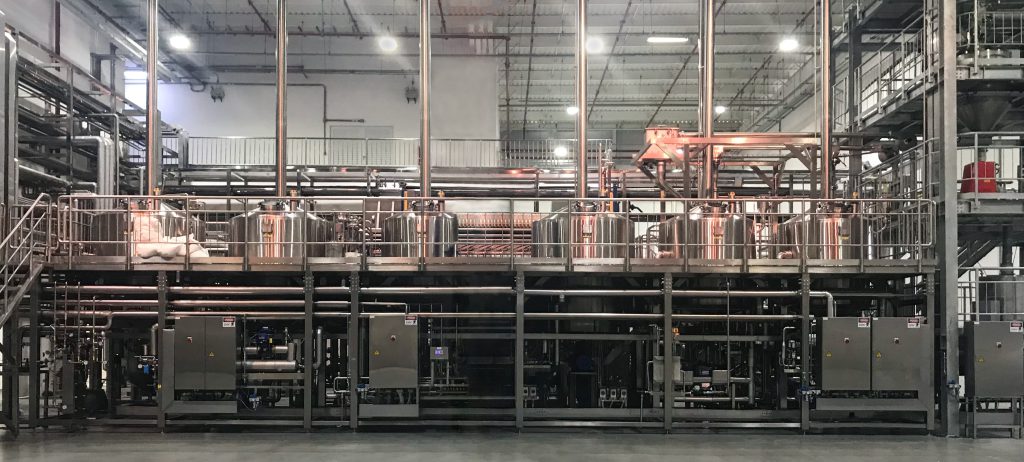
The brewhouse is the first major processing stage. It prepares wort before fermentation and directly affects production time, extract recovery, energy use, and recipe consistency.
A typical commercial brewhouse may include a mash tun, lauter tun, brew kettle, and whirlpool. Some configurations combine two or more functions in the same vessel. A two-vessel system can save space and reduce initial investment, while a three- or four-vessel design may offer greater flexibility and support more frequent brewing.
When comparing the best brewing systems, breweries should consider actual output rather than vessel size alone. Heating capacity, wort transfer time, filtration speed, and cleaning time all affect how many batches can be completed in a working day.
A larger brewhouse may suit a brewery with high demand, but it can increase costs if production volume remains low. A smaller setup may reduce initial investment but limit future growth. Breweries should also consider heat recovery, insulation, vessel access, and control options, which influence energy consumption and operating costs.
3. Fermentation Tanks and Bright Beer Tanks
Fermentation is the stage where yeast converts sugars into alcohol, carbon dioxide, and flavor compounds. Fermentation tanks therefore play a central role in beer quality and production planning. Their capacity, cooling performance, pressure rating, and internal design must match the brewing process.
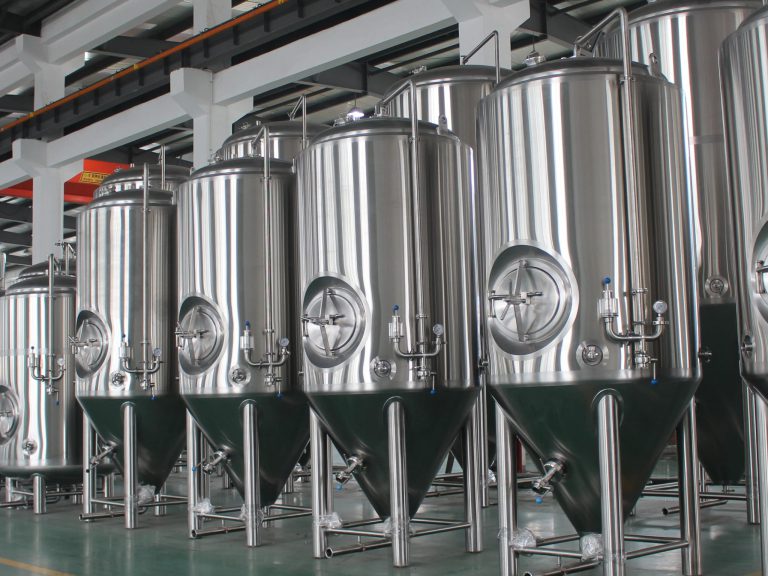
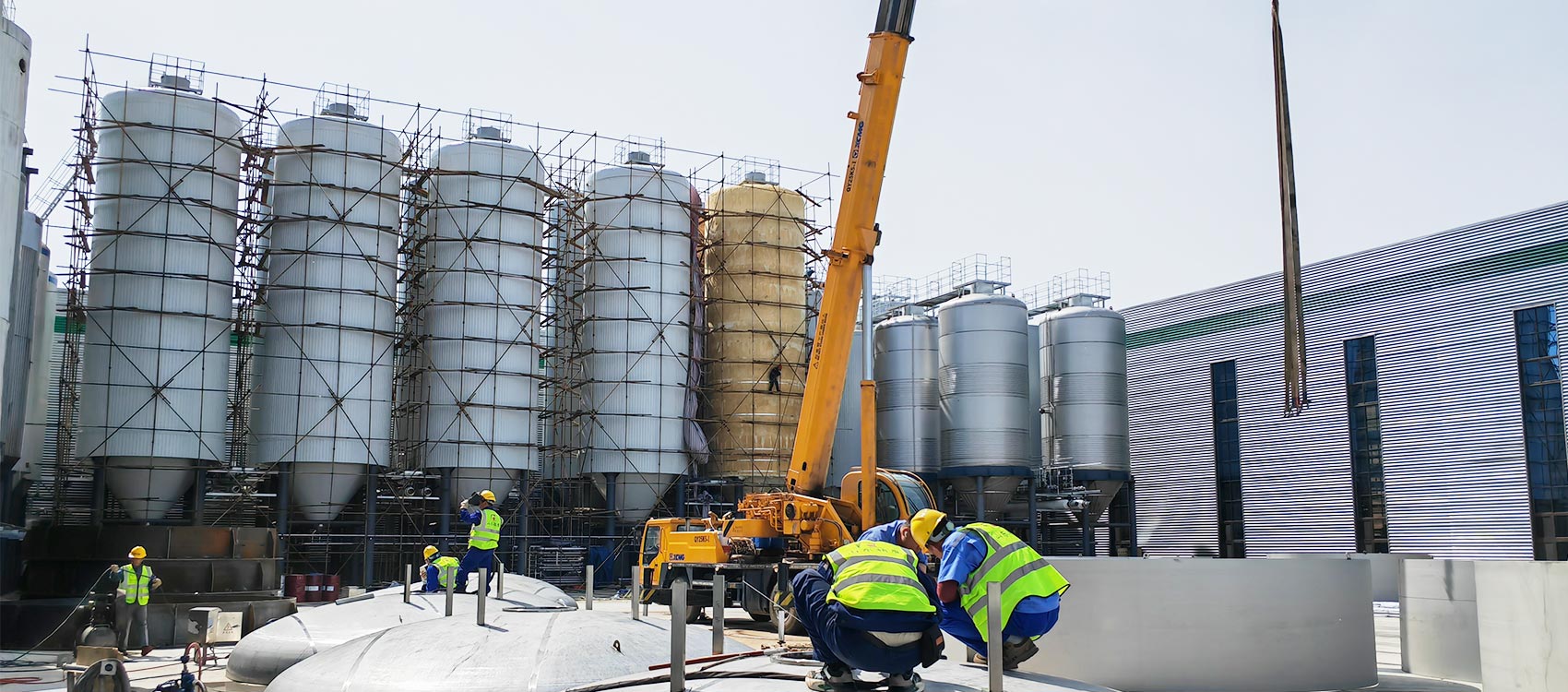
Stainless steel conical fermentation tanks are widely used in commercial breweries. Their conical bottoms help collect and remove yeast. Many designs also include cooling jackets, insulation, temperature sensors, and cleaning connections.
Tank quantity is just as important as tank size. Fermentation and maturation may take days or weeks, depending on the beer style and process. Too few tanks can force the brewhouse to stop even when demand is high. Production planning should account for the full tank cycle: filling, fermentation, maturation, emptying, and cleaning.
Bright beer tanks are used for conditioning, carbonation, and temporary storage before packaging. They help prepare finished beer for filling and allow brewing and packaging operations to follow different schedules.
| Equipment | Main function | Key selection points |
|---|---|---|
| Fermentation tank | Fermentation and maturation | Capacity, cooling, pressure rating |
| Unitank | Fermentation and additional processing in one vessel | Process requirements and flexibility |
| Bright beer tank | Conditioning, carbonation, and holding | Working volume, pressure, cooling |
| Yeast handling equipment | Yeast collection and transfer | Hygiene, access, and process needs |

4. Cooling and Temperature Control
Temperature control is essential throughout brewing. The brewhouse needs controlled heating and cooling, while fermentation requires close temperature management to support yeast activity and consistent beer quality.
Many commercial breweries use a glycol cooling system connected to insulated tanks with cooling jackets. The system may include a glycol chiller, storage tank, circulation pumps, pipework, valves, and controls. Glycol circulates through cooling circuits to remove heat from the vessels.
When selecting a cooling system, consider the total heat load, number of tanks, tank sizes, fermentation schedule, target temperatures, and local operating conditions. The system must handle periods when several tanks need cooling at the same time.
An undersized chiller may struggle during peak demand and cause temperature fluctuations. An oversized unit can increase investment and may operate inefficiently. Proper sizing should reflect the actual production schedule rather than the cooling demand of a single tank.
Breweries evaluating the best brewing systems should also check pipe insulation, pump capacity, control accuracy, and the possibility of adding tanks later. A properly planned cooling system supports reliable fermentation and reduces the risk of production delays.
5. Brewing Automation and Process Control
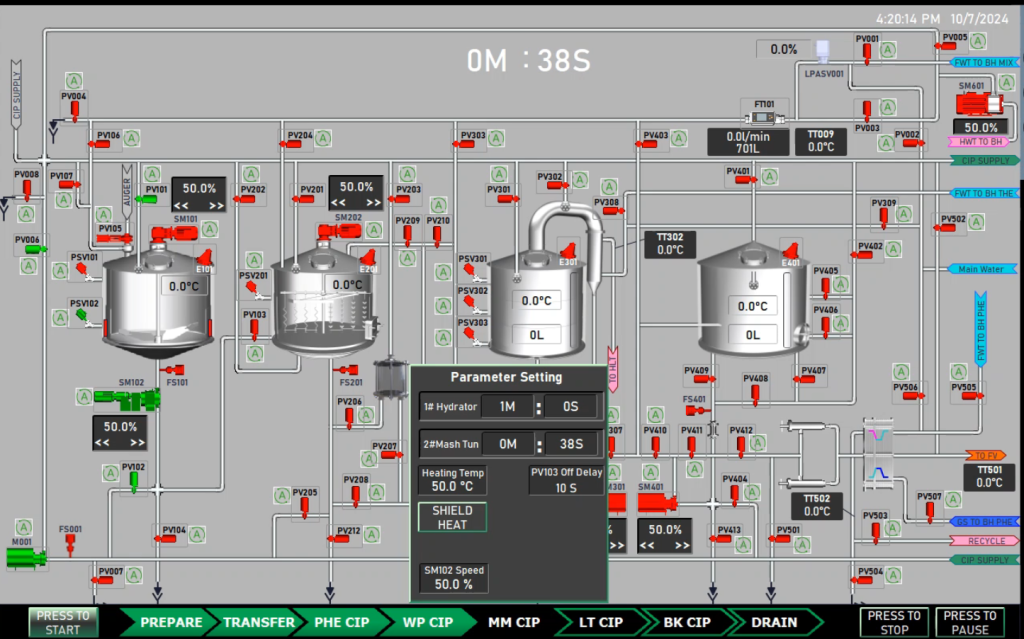
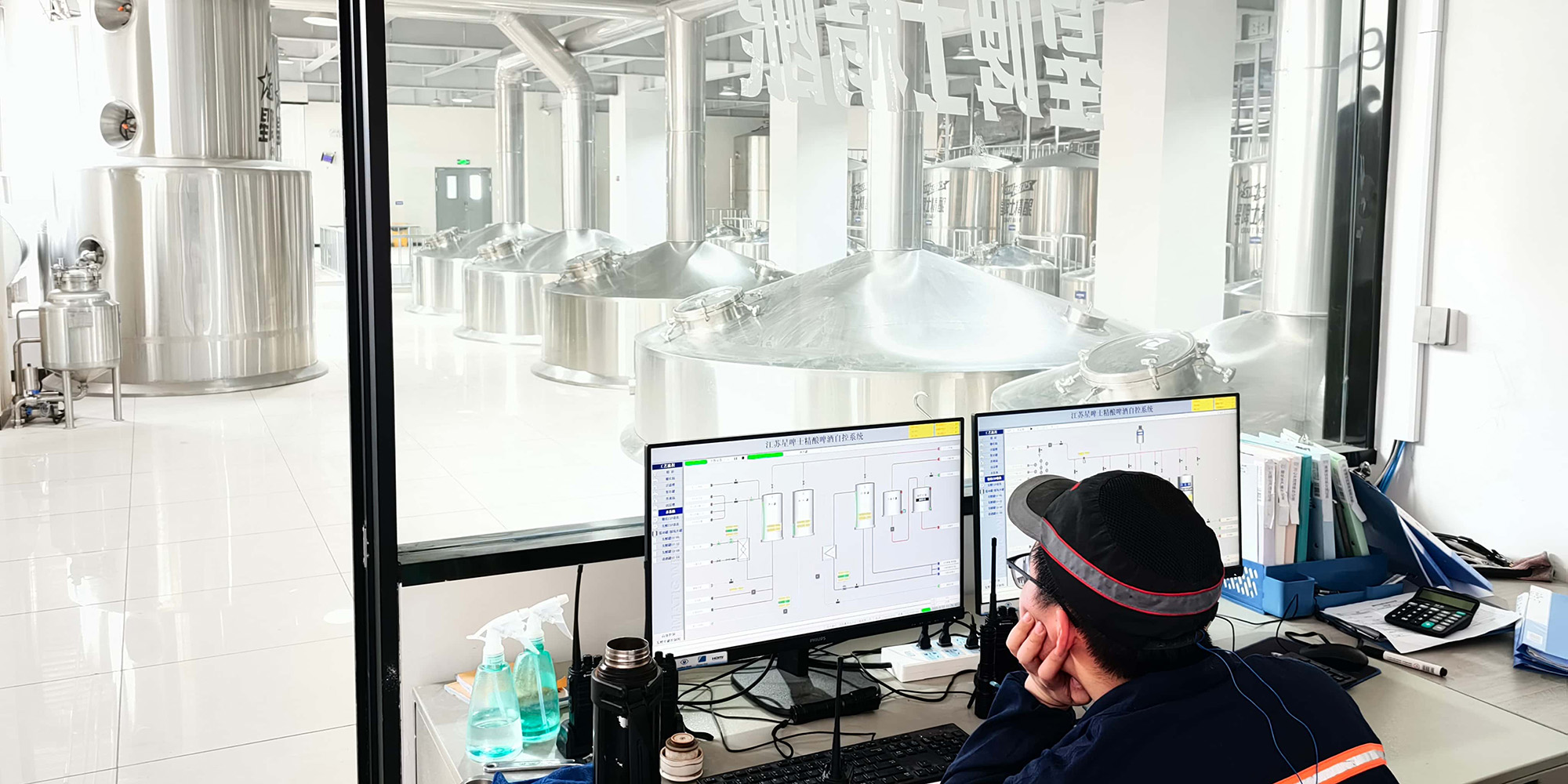
A brewing control system helps operators manage temperatures, pumps, valves, liquid transfers, and other process steps. Depending on the project, the system may use manual controls, a programmable logic controller (PLC), or a more advanced automated setup.
Manual systems can suit breweries that need simple operation and have trained staff at each stage. Semi-automatic systems automate selected tasks, such as temperature control and pump sequences, while allowing brewers to manage recipe decisions. Fully automated systems coordinate more operations and may provide recipe management, alarms, and production records.
Automation can improve repeatability and reduce routine work, but it cannot replace good process design, maintenance, or staff training. Before choosing a control system, identify which operations require automatic control and which are better managed manually. Check sensor accuracy, alarm functions, spare parts availability, technical support, and expansion options.
The right automation level depends on production scale, labor availability, operating targets, and budget. Instead of paying for every available feature, breweries should prioritize functions that improve consistency, reduce avoidable errors, or save measurable operating time.
6. CIP Systems, Hygiene, and Maintenance
Cleaning is a necessary part of commercial beer production. Residual beer, yeast, and organic material can affect the next batch if equipment is not cleaned correctly. A clean-in-place (CIP) system circulates cleaning solutions through tanks and pipework without requiring equipment to be removed from its installed position.
A CIP system may include cleaning tanks, pumps, valves, pipes, spray devices, and controls. Some breweries use a mobile CIP unit to serve different tanks; larger facilities may benefit from a fixed central system. The choice depends on the number of vessels, distances from the cleaning station, cleaning frequency, and available space.
Effective cleaning depends on flow rate, temperature, chemical concentration, contact time, and spray coverage. Equipment should be designed with suitable drainability and access so cleaning solutions can reach the required surfaces and be removed after the cycle. Breweries should establish and verify cleaning procedures for each vessel, and consider chemical handling, water consumption, wastewater disposal, and staff safety.
7. How to Choose a Reliable Brewing Equipment Manufacturer
Choosing a reliable manufacturer is as important as selecting individual vessels. A commercial brewing project involves many connected components, so the supplier should understand how tank design, process requirements, controls, cooling, and cleaning work together.
Start by checking the manufacturer’s experience with commercial brewing equipment and customized projects. Request clear technical specifications, including tank working volume, materials, pressure ratings, insulation, cooling arrangements, and connection details. These documents make it easier to compare proposals on the same basis.
Confirm what the quotation includes. Equipment supply, control systems, installation guidance, commissioning support, and operator training may be offered in different combinations. Get the project scope in writing, including delivery conditions, documentation, warranty terms, and installation responsibilities.
Communication also matters. A capable manufacturer should discuss production goals, answer technical questions, and identify design limitations before manufacturing begins. Clear drawings and an agreed equipment list can reduce misunderstandings during installation.
SKE serves customers with different production requirements and can discuss vessel configurations, tank capacity, automation, and supporting equipment according to the planned process. When comparing suppliers, look beyond the lowest quotation. Evaluate equipment specifications, system compatibility, technical support, operating costs, and long-term maintenance requirements.
Frequently Asked Questions
1. What are the best brewing systems for commercial breweries?
The best brewing systems combine a suitable brewhouse, fermentation tanks, bright beer tanks, cooling, cleaning, and control equipment. The right configuration depends on production capacity, beer styles, available space, labor, and budget.
2. How do I choose the right brewing system capacity?
Start with the required batch size and expected annual output, then consider brewing frequency, fermentation time, tank turnover, and packaging capacity. The entire production process should be balanced to avoid bottlenecks.
3. What is the difference between a brewhouse and a complete brewing system?
A brewhouse prepares wort through mashing, lautering, boiling, and whirlpool separation. A complete brewing system also includes fermentation tanks, bright beer tanks, cooling, cleaning, and process controls.
4. Are automated brewing systems better than manual systems?
Not always. Automation can improve repeatability and reduce routine work, but the appropriate level depends on production scale, labor, budget, and staff skills.
5. Why are stainless steel tanks widely used in breweries?
Suitable stainless steel grades offer corrosion resistance, cleanable surfaces, and durability. The material grade, surface finish, welding quality, and tank design must match the brewing process and cleaning conditions.
6. Can SKE customize brewing systems?
Yes. SKE can discuss equipment configurations based on production targets, process requirements, site conditions, and budget. The final equipment scope and technical specifications are confirmed during project planning.
Conclusion
Selecting the best brewing systems requires more than comparing tank sizes or purchase prices. Breweries should evaluate the brewhouse, fermentation capacity, bright beer tanks, cooling, automation, cleaning, and future expansion as parts of one production plan.
A well-matched system supports consistent beer production, manageable operating costs, and efficient use of labor and utilities. Working with an experienced manufacturer also helps clarify technical requirements before manufacturing and installation begin.
SKE provides brewery equipment solutions for new facilities, expansions, and equipment upgrades. Contact SKE to discuss your production requirements and develop an equipment configuration that fits your goals. The best brewing systems are designed around your process, not simply assembled from a catalog.
- Facebook: SKE Equipment Facebook
- Email: info@skeequipment.com
Fill out the contact form below for customized solutions. We fully support all your production equipment demands for breweries and beverage plants.