Choosing the right beer bottle filling machine is an important decision for any small or mid-sized brewery. Good equipment keeps carbonation in the beer. It also reduces oxygen pickup, makes filling more consistent, and helps control packaging costs. But not every filling machine is good for carbonated beer.
This guide explains how a beer bottle filling machine works and what it does on a real packaging day. It explains why counter-pressure filling is common for beer. It also shows what to check when you buy packaging equipment. Finally, it introduces a semi-automatic BIB filler as another option for breweries that want to sell in different ways.
What Does a Beer Bottle Filling Machine Do?
A beer bottle filling machine moves beer from a tank into bottles. At the same time, it helps keep the beer in good condition. Beer is not like water. It holds dissolved carbon dioxide (CO₂) and it reacts badly to oxygen.
If beer loses too much CO₂ during filling, it foams too much and goes flat. If oxygen gets into the bottle, the flavor changes faster and shelf life gets shorter. For a brewery, control of these two risks is the key to stable quality.
A beer bottle filling machine built for carbonated products should control pressure, not just move liquid. For most carbonated beer, a counter-pressure machine is a good choice. The machine seals the bottle against the filling head. Then it puts CO₂ into the bottle under pressure. After that, beer flows in. The pressure on both sides is kept close, so the beer foams less and keeps its CO₂.
Depending on the design, the process can include sealing, air removal or CO₂ purging, pressure equalization, filling, controlled release, and capping. Each step affects the final result.
How Counter-Pressure Filling Works
Counter-pressure filling is the main method used inside a beer bottle filling machine for carbonated beer. It helps keep CO₂ in the beer while the beer moves from the tank to the bottle.
The process usually has these steps:
-
Seal the bottle. The bottle is pressed against the filling head, so no gas can escape.
-
Remove air. The machine uses a CO₂ purge or, on some models, a vacuum cycle to push air out.
-
Equalize pressure. CO₂ enters the bottle until the pressure is close to the system pressure.
-
Fill with beer. Beer flows in under controlled pressure. The fill level depends on the machine design.
-
Release pressure slowly. Fast release causes too much foam.
-
Cap the bottle. Capping should happen soon after filling to limit oxygen contact.
Some machines offer two or more purge cycles for beers that need tighter oxygen control. Not every model has this. Buyers should check the real configuration before they pay.
A little foam near the end of filling is normal. If it is controlled and capping follows quickly, it helps push air away from the bottle opening. But too much foam means lost beer, uneven fill levels, and slower packing.

Counter-Pressure Filling vs. Gravity Filling
Different filling methods suit different products. Gravity or level filling can work for some still drinks. Counter-pressure filling is usually better for carbonated beer, where keeping CO₂ is the main goal.
| Feature | Gravity or Level Filling | Counter-Pressure Filling |
|---|---|---|
| CO₂ control | Limited for carbonated beer | Built to keep carbonation |
| Typical use | Still drinks and some other products | Carbonated beer and similar drinks |
| Oxygen control | Depends on the machine and process | Can include CO₂ purge and pressure control |
| Cost | Usually lower | Usually higher |
| Operation | Often simpler | Needs control of pressure, temperature, and filling conditions |
If a brewery only sells a small amount of still drinks, a simple gravity filler may be enough for those products. But it is not a good choice for carbonated beer. For most breweries that pack carbonated beer for shops or distribution, a well-set counter-pressure machine is the better starting point.
If you compare a gravity filler with a beer bottle filling machine designed for carbonated beer, the difference is clear in daily work. The final choice depends on your product, shelf life, package format, and quality target.
How to Reduce Oxygen Pickup During Beer Bottling
Oxygen control is one of the most important points when you choose a beer bottle filling machine. Oxygen can get in at several places: in the transfer lines, in the bottle before filling, in the space above the beer after filling, and in the time before capping.
A good filling process should deal with these risks by machine design and by good work practice.
1. Purge bottles and lines.
Air left in bottles and lines adds oxygen. A CO₂ purge or vacuum cycle helps remove it. In real work, this step is often skipped or shortened to save time. So check it during setup, do not just trust the manual.
2. Control filling turbulence.
Fast flow and splashing mix beer with air. The right pressure, beer temperature, and flow control give more stable results. Small changes in temperature or pressure can change foam and fill accuracy.
3. Cap as soon as possible.
After filling, bottles should go to the capper without delays. Some systems use controlled foam or a CO₂ jet before capping. Even a short stop on the conveyor can raise oxygen pickup.
4. Check the final seal.
A correct cap and a good seal protect the beer after packing. The bottle, cap, and capper must fit each other and be set right. A poor seal can waste all the good work of filling.
Types of Beer Bottle Filling Machines
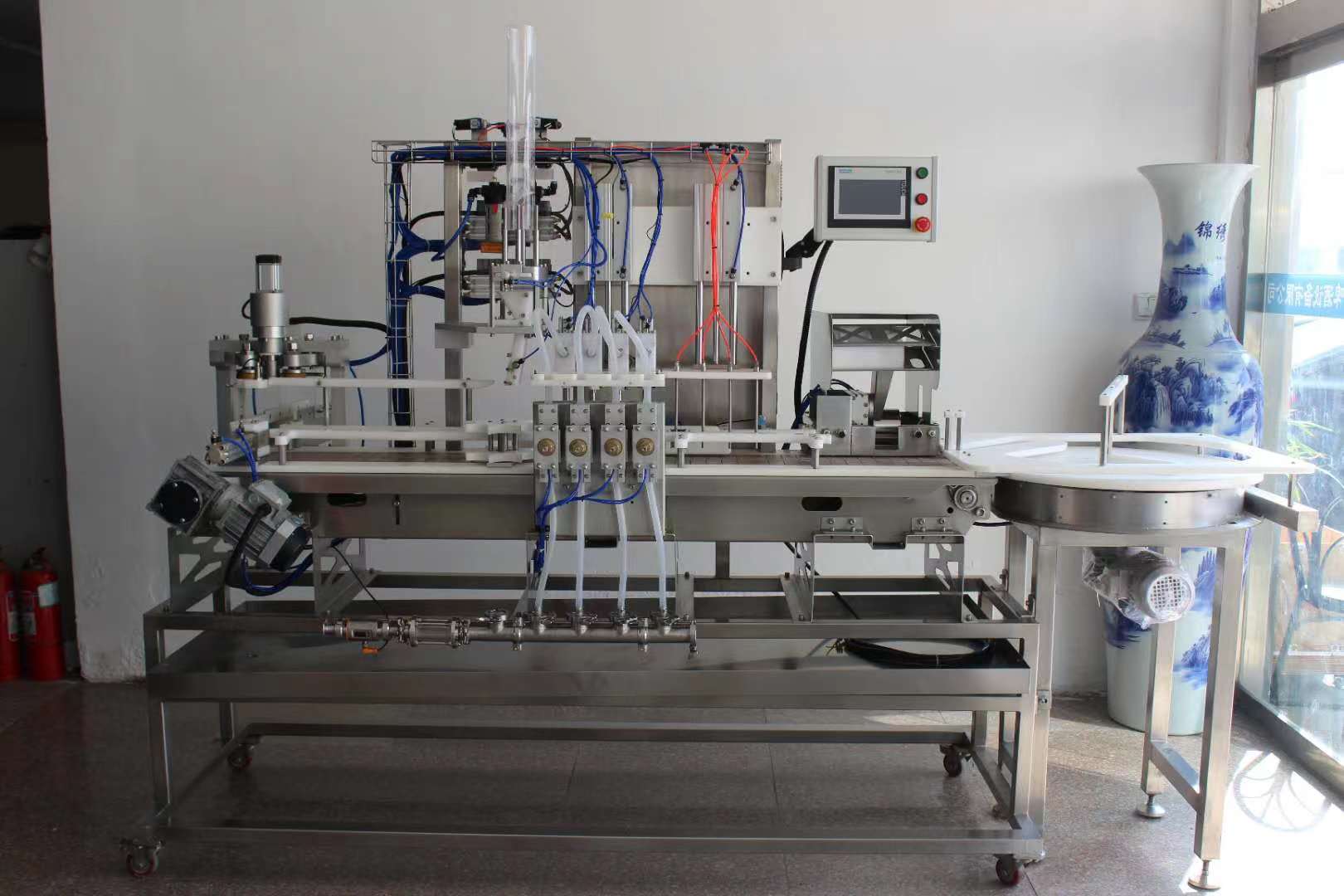
Beer bottle fillers range from manual and semi-automatic machines to fully automatic and rotary systems.
Every type of beer bottle filling machine has a different balance of speed, cost, and operator work. Manual and semi-automatic fillers are often good for small breweries, taprooms, test batches, and businesses with low packing volume. They need more work from the operator, but the first cost is lower.
Fully automatic machines reduce manual handling and give more stable output at higher volume. Rotary systems have many filling heads and are built for continuous, high-output work. They need a larger investment, more floor space, and a packing process that can keep up with them.
The table below sums up the main differences.
| Machine type | Typical output | Operator work | Investment | Typical user |
|---|---|---|---|---|
| Manual / tabletop | Very low, often under 200 bottles/hour | High | Lowest | Taprooms, test batches |
| Semi-automatic | About 300–1,000 bottles/hour | Medium | Low to medium | Small breweries, growing taprooms |
| Automatic in-line | About 1,000–3,000 bottles/hour | Low | Medium to high | Mid-sized breweries |
| Rotary | Several thousand bottles/hour and more | Very low | Highest | Large breweries, contract bottlers |
When you compare machines, look at both rated speed and real output. A machine rated at 500 bottles per hour will not give 500 saleable bottles in a full shift. Bottle changes, setup, cleaning, operator handling, and capping all take time.
Real output is the best way to judge a beer bottle filling machine, not the top speed on the spec sheet. Before you buy, ask the supplier for expected output with your bottle size, beer type, and planned working conditions. If your weekly output is already in the tens of thousands of bottles, a semi-automatic machine is not right for you. In that case, look at automatic rotary lines.
Bag-in-Box Filling: An Alternative Packaging Option
Bottles are not the only way to pack beer. Bag-in-Box (BIB) uses a flexible bag with a fitment or tap, placed inside a strong box. Depending on the product and design, it can be used for some distribution, events, and dispensing.
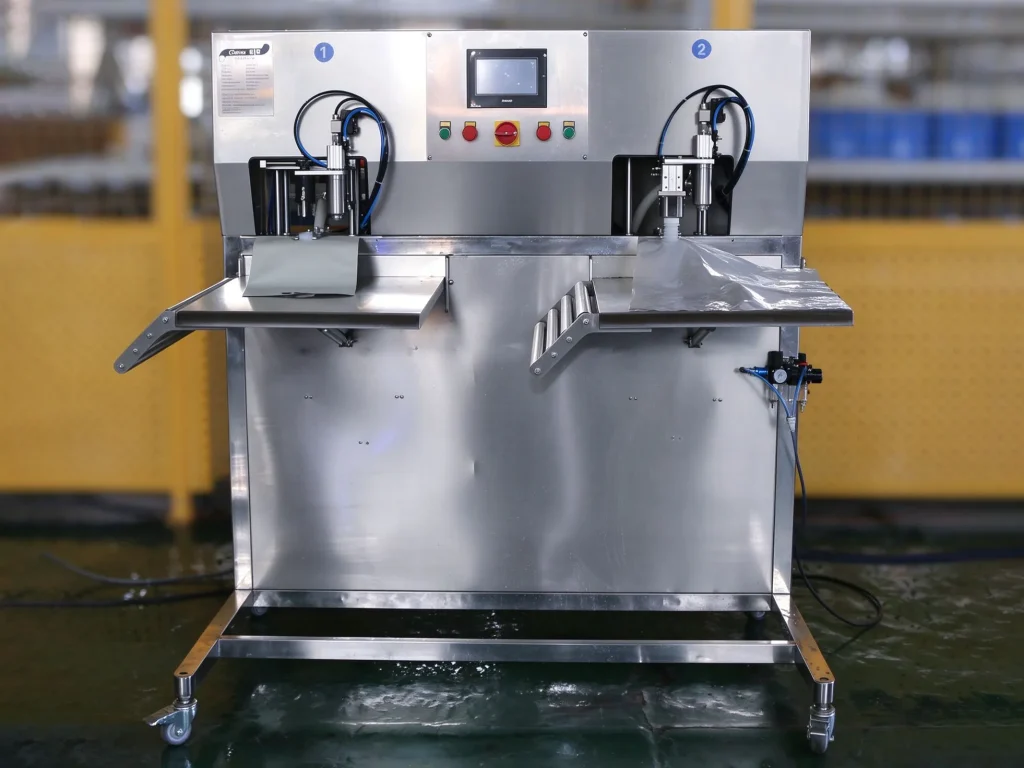
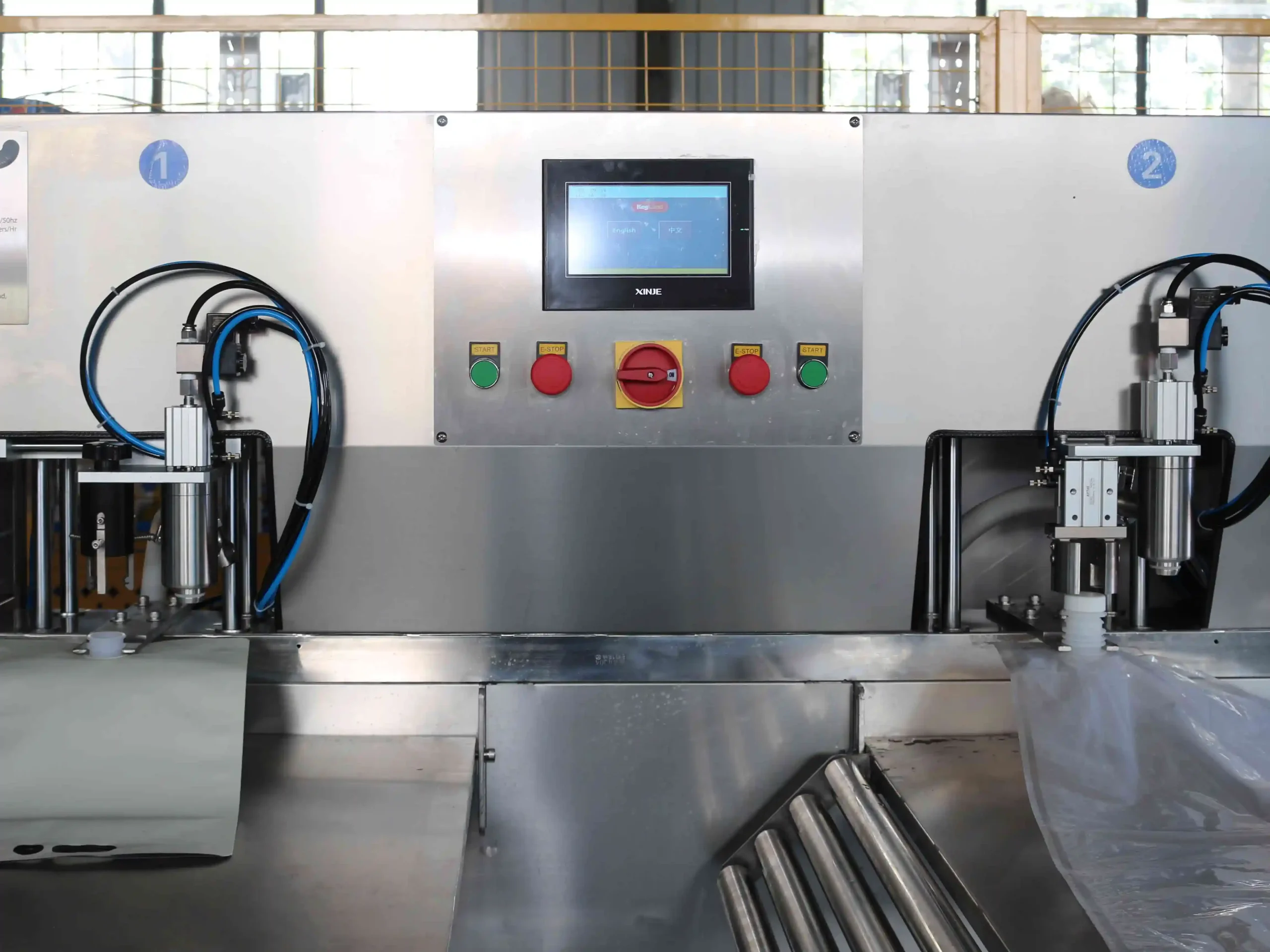
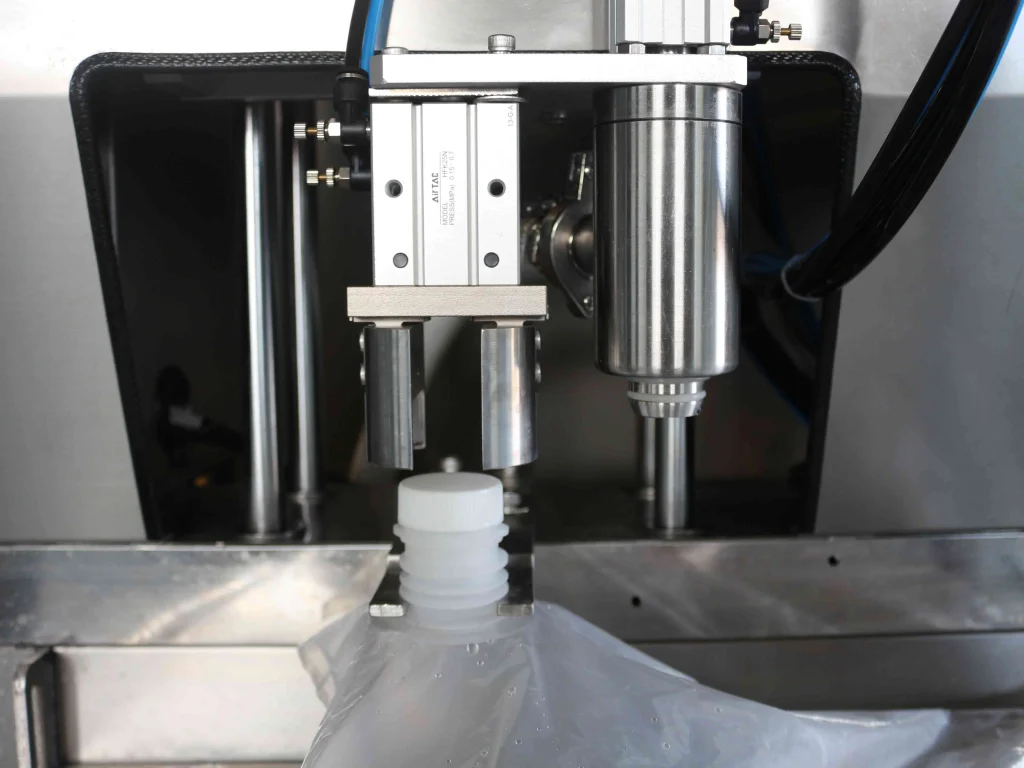
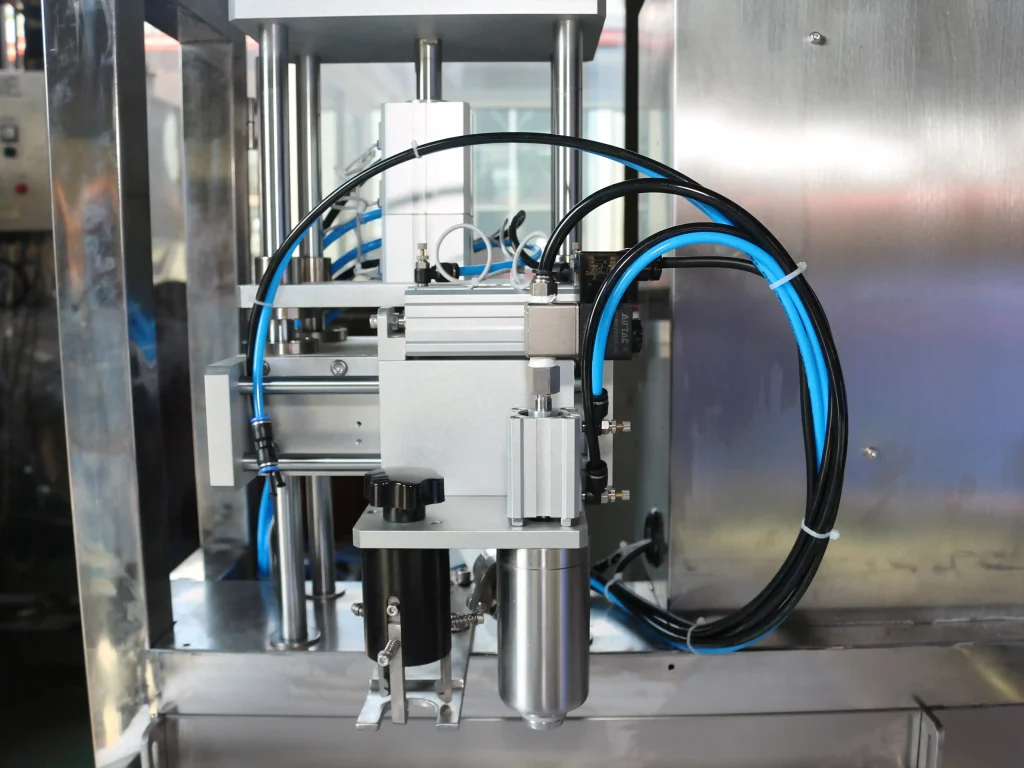
A semi-automatic BIB filler usually needs an operator to place the bag and connect or position the filling head. The machine then does the filling cycle. The operator loads, unloads, and packs the boxes.
Compared with glass bottles, BIB can cut package weight and storage space for some distribution needs. It can also suit breweries that supply larger amounts to some customers or dispensing sites.
But a semi-automatic BIB filler is not a direct replacement for a beer bottle filling machine. The two systems serve different packing needs.
For carbonated beer, the bag material, fitment, filler, and closure must suit the needed pressure and carbonation level. You also need to check the oxygen barrier and shelf life. Vacuum or nitrogen functions depend on the machine configuration and your product needs.
SKE offers beer bottle filling machines and semi-automatic BIB filling equipment for different packing needs. Breweries can compare these options by product range, package size, output, and sales model.
Matching Equipment to Your Packaging Plan
Choosing packing equipment is more than comparing prices. Breweries need to think about product compatibility, filling performance, cleaning needs, efficiency, and future plans.
A beer bottle filling machine and a BIB filler can work together in one small brewery. SKE provides beer bottle filling machines and semi-automatic BIB filling equipment for different beverage packing needs. By reviewing your output, package format, and product needs, you can find a configuration that fits your work.
If you plan a new brewery, upgrade a packing area, or add another sales format, contact SKE to discuss your needs and compare suitable options.
Frequently Asked Questions
1.Can a beer bottle filling machine fill other drinks?
Yes, some machines can handle other carbonated drinks, such as cider and sparkling drinks. This works only if the materials, filling method, pressure range, and product-contact parts are suitable. Check with the maker before you use a different product.
2.Why is counter-pressure filling important for beer?
Counter-pressure filling brings the bottle pressure close to the system pressure before beer enters. This helps keep CO₂ in the beer. With good purging and filling control, it also helps limit oxygen pickup.
3.What is the difference between a semi-automatic BIB filler and a beer bottle filling machine?
A bottle filler fills rigid containers, such as glass or suitable PET bottles. A semi-automatic BIB filler fills flexible bags with a fitment. They serve different package formats and need different handling and closing systems.
4.Is a semi-automatic filling machine good for a small brewery?
It can be a good option when output is moderate and operators are available for loading and unloading. The right choice depends on real output needs, cleaning time, package formats, and expected growth.
5.What should I ask a supplier before buying?
Ask about filling method, oxygen-control features, suitable containers, rated and expected output, cleaning steps, changeover needs, spare parts, and technical support. For BIB equipment, also check bag and fitment compatibility and whether the machine suits your carbonation and pressure needs.
Contact Us
If you have any further questions, feel free to reach out!
- Facebook: SKE Equipment Facebook
- Email: info@skeequipment.com
Fill out the contact form below for customized solutions. We fully support all your production equipment demands for breweries and beverage plants.