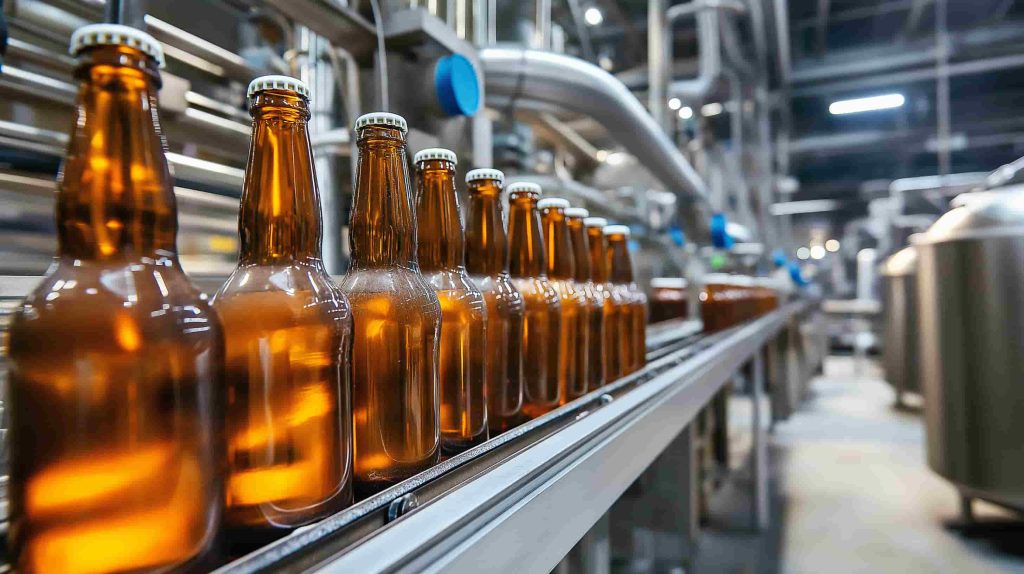
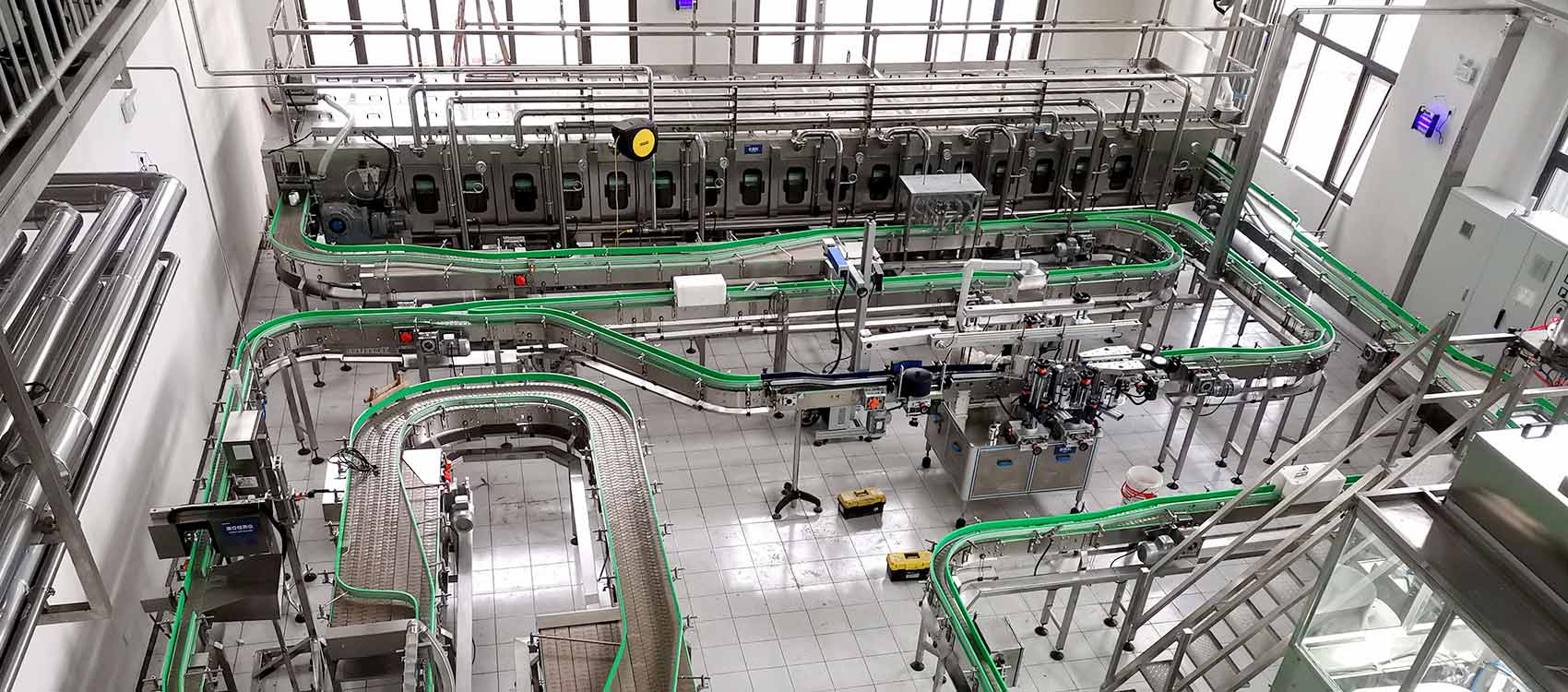
A beer filling line moves finished beer into a package while controlling filling, closure application and product handling. A bottling line describes the package being filled. In-line and rotary describe equipment arrangements, so they are not alternative names for the same decision.
Key takeaways
- Compare in-line and rotary proposals using the same containers, product and output requirement.
- Evaluate oxygen pickup, carbonation, closure quality and saleable output together.
- Check the actual cleaning design and layout rather than assuming one arrangement is always simpler.
Define the package and production duty first
Specify bottle or can dimensions, closure types, product temperature, carbonation and the planned format range. Include the required output over a shift as well as nominal machine speed. Changeovers, short stops, cleaning and rejected packages affect the number of saleable units produced.
A bottling line needs compatible handling and closing equipment. A canning line uses a different closing process. Do not assume that one machine can handle both formats without documented configuration and changeover requirements.
Understand the filling sequence

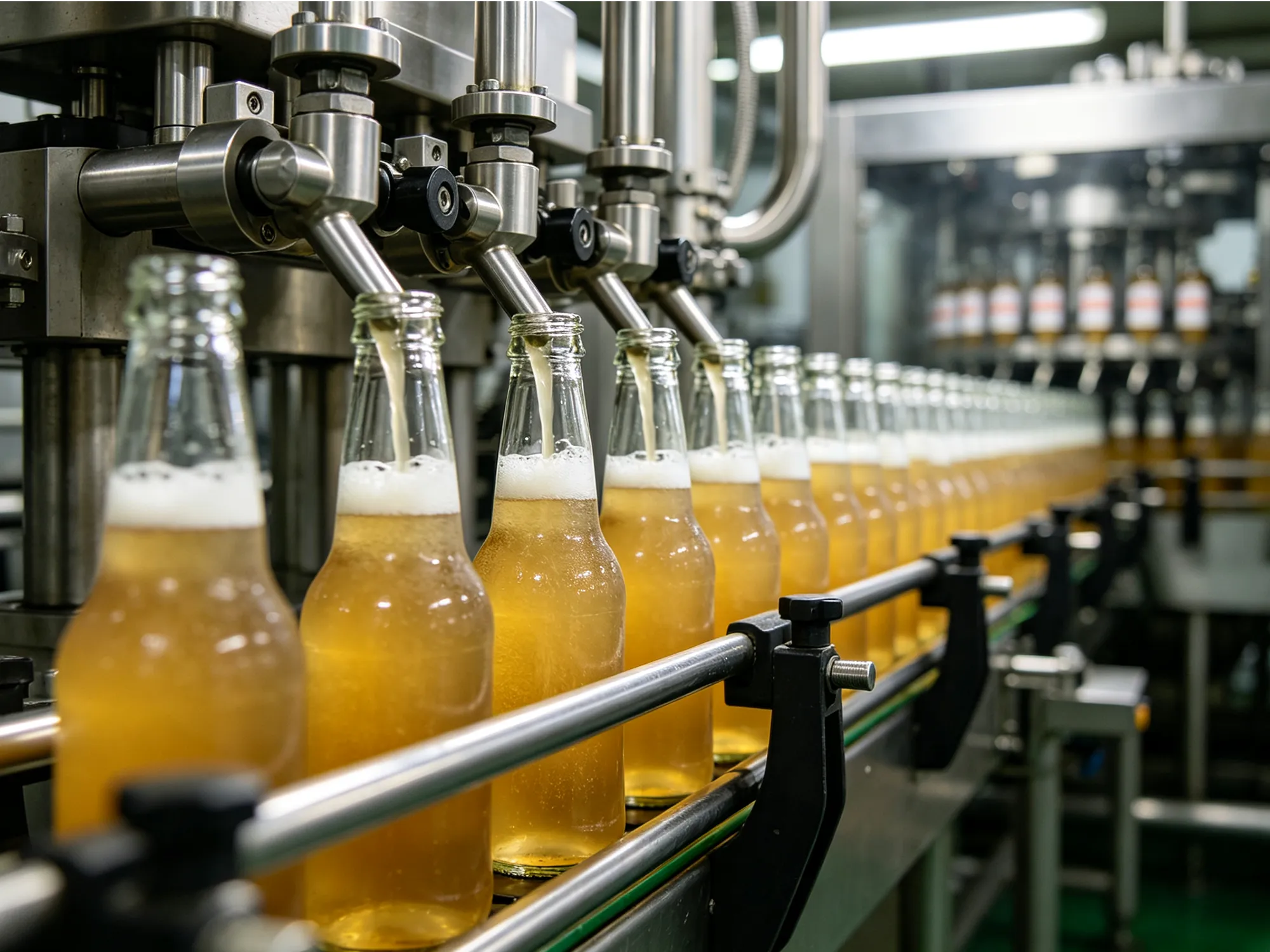
Counter-pressure filling controls the pressure relationship between the package and product during filling. The detailed sequence depends on the machine and container. Purging, evacuation where suitable, filling, settling and pressure release need to be evaluated as an integrated cycle.
Krones’ Modulfill HRS description illustrates a specific beer-in-glass filling process. Its features should not be generalised to every filler or to containers with different mechanical limits. Oxygen control also depends on handling before and after filling, including closure application.
Compare layouts without blanket claims
In a linear arrangement, filling positions are arranged along the container path. In a rotary arrangement, containers travel around a filling carousel. These labels describe the handling geometry, not a fixed quality or capacity tier. Linear machines can use indexed stops or filling heads that follow moving containers; Siemens’ linear filling application documentation illustrates the latter motion. That reference describes machine motion generally, not suitability for carbonated beer. Ask how the proposed beer filler completes each cycle and transfers containers to the closer.
| Evaluation point | What to compare in the actual proposals |
|---|---|
| Footprint | Machines, conveyors, access, utilities and maintenance space |
| Output | Sustained rate with the specified beer and package |
| Changeover | Tasks, parts, time and operator involvement |
| Cleaning | Covered circuits, manual tasks, verification and drainage |
| Quality | Agreed oxygen, fill and closure acceptance criteria |
An in-line system is not necessarily smaller or easier to clean than every rotary system. Supplier-specific designs and the complete line arrangement determine those outcomes. Compare sustained output using the same beer, package and operating conditions.
Check the whole packaging path
Review container preparation, filling, closing, inspection, labelling and packing. Clarify which defects the inspection equipment can detect and how rejects are handled. A water or air rinse should not automatically be described as sterilising the container.
If the beer is flash pasteurised, coordinate the treated-product route with the filler. The commercial pasteurizer guide explains the distinction between treatment before filling and treatment of sealed packages.
Make hygiene and utility claims measurable
Ask which product-contact circuits are cleaned in place and which components require separate work. Obtain the cleaning procedure, material limits and verification method. Do not assume the entire machine is covered by CIP because a product circuit is fitted for it.
Request water, power and gas consumption at the quoted operating conditions. If gas recovery is offered, ask for its specific design and performance basis; it should not be presented as a routine feature of every line.
Agree a trial and acceptance plan
Define the representative products, containers and formats to be tested. Record sustained output, rejects, changeover work and the agreed product-quality measurements. Include operator training and maintenance access in the review. This creates a purchasing decision based on the beer and packaging you actually produce, rather than a generic line description.
About this article: Prepared for the SKE Equipment blog with AI-assisted research and editing. Original byline: Mandy, equipment marketing specialist. The linked references support the technical background; this article does not report an SKE equipment trial or a project-specific engineering review.