
In this guide, we explain how the pasteurization process works in beer production, how a flash pasteurizer works, how Pasteurization Units (PU) are calculated, and how automatic control helps breweries get the same result every time.
What Is the Pasteurization Process?
The pasteurization process is a controlled heat treatment. It reduces harmful or spoilage microorganisms in liquid products. It does not make the product completely sterile. Instead, it lowers the number of microorganisms to a safe and stable level.
The pasteurization process is named after Louis Pasteur. In the 19th century, he showed that heating could stop wine and beer from going bad.
The basic idea of the pasteurization process is simple. A liquid is heated to a set temperature and held there for a set time. Then it is cooled quickly. This limits how long the liquid stays hot.
For example, milk often uses a pasteurization process of 72°C for 15 seconds. Beer uses different conditions. Its ingredients, acidity, alcohol content, and target microorganisms are different.
It is also important to know the limits of the pasteurization process. Some bacterial spores can survive normal pasteurization. So pasteurized beer still needs good hygiene, good packaging, and proper storage. The pasteurization process is one part of quality control. It does not replace clean equipment and careful production.
Why Does Beer Need Pasteurization?
Beer has natural properties that help limit microbial growth. These include alcohol, low pH, hop compounds, and other substances formed during brewing.
But these natural barriers do not stop every spoilage microorganism. Some lactic acid bacteria, wild yeasts, and other contaminants can still affect beer quality.
Microbial contamination can cause sour flavors, changes in aroma and appearance, too much carbon dioxide, cloudiness, sediment, and a shorter shelf life. The risk is higher when beer travels long distances or is stored for a long time.
The purpose of the pasteurization process in beer is to improve microbiological stability. It reduces the risk of spoilage during distribution and storage.
However, more heat does not always mean better beer. Too much heat can speed up chemical reactions. This can create stale, cooked, or cardboard-like flavors. A good beer pasteurization system must balance microbial control and product quality. The pasteurization process must be precise, not just strong.

How Does a Flash Pasteurizer Work?
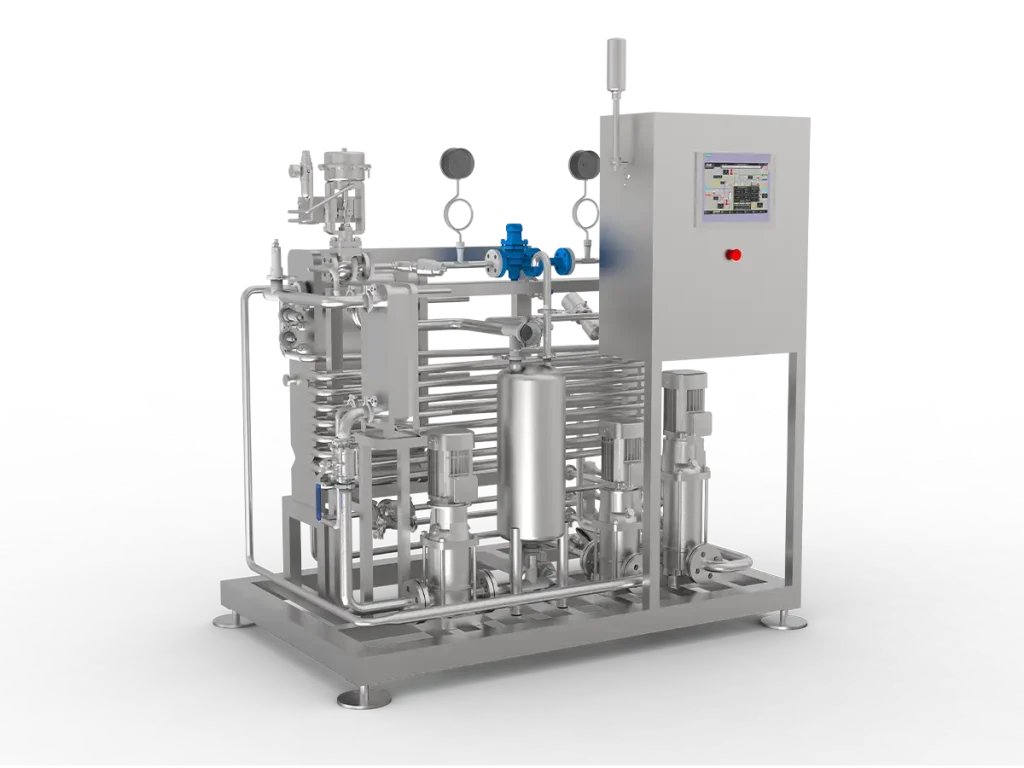
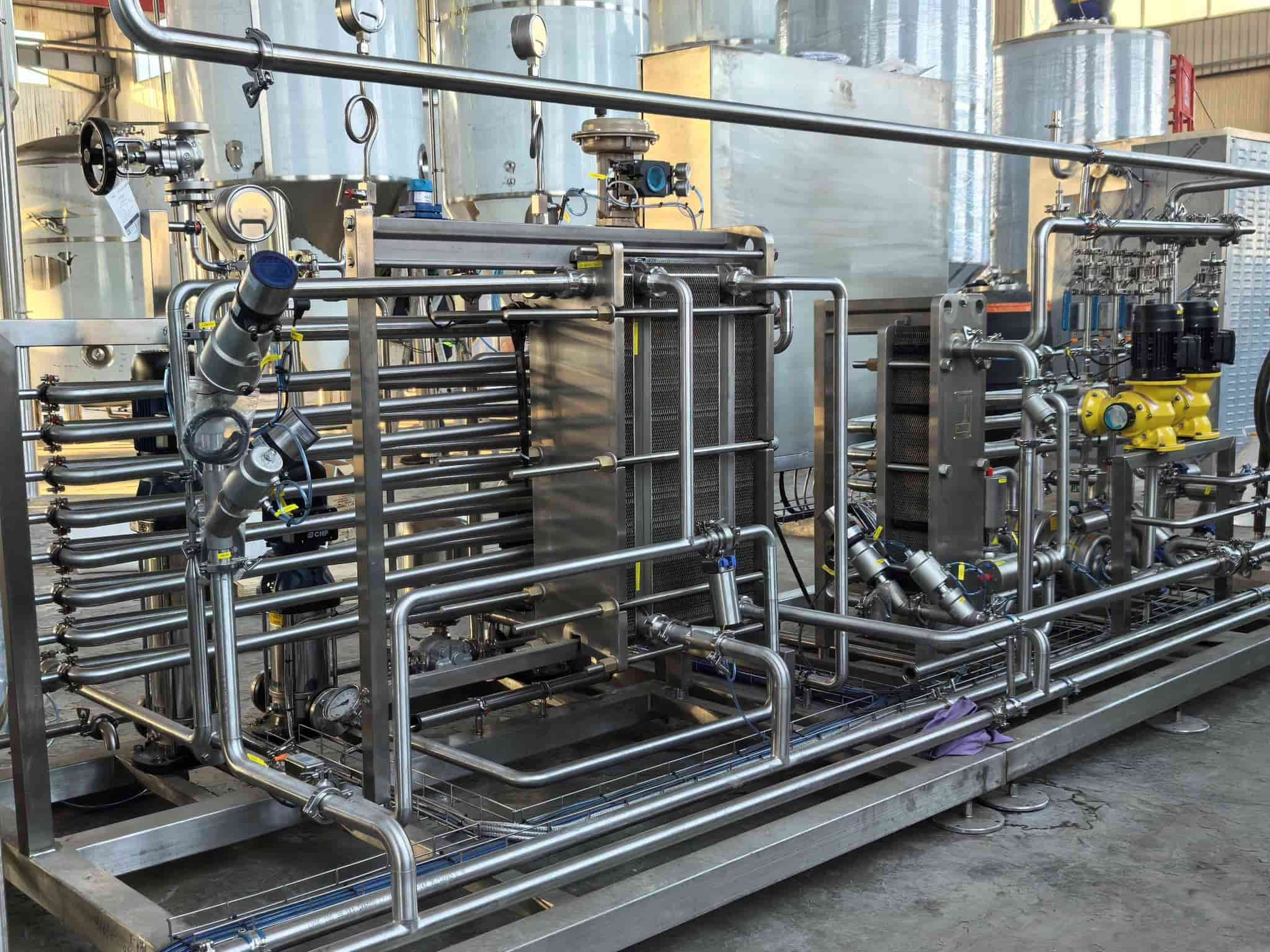
A flash pasteurizer is a continuous-flow system. It treats beer before it goes into bottles, cans, or kegs. Tunnel pasteurization heats sealed packages. Flash pasteurization treats the liquid directly inside a closed line. The main heat-transfer part is a plate heat exchanger.
A typical flash pasteurization process has four main stages.
1. Regeneration and Preheating. Cold beer first enters the regeneration section of the plate heat exchanger. It flows through one set of channels. Hot, already-pasteurized beer flows through another set in the opposite direction. Heat moves between the two liquids without mixing them. This preheats the incoming beer and saves energy. Some systems can recover up to 95% of the heat.
2. Heating to the Target Temperature. After preheating, the beer enters the heating section. Hot water flows through separate channels. It raises the beer to the selected pasteurization temperature. The temperature must be controlled carefully. If it is too low, the treatment may not kill enough microorganisms. If it is too high, the beer gets unnecessary heat.
3. Holding at the Target Temperature. The heated beer then passes through a holding tube. The holding tube keeps the beer at the target temperature for a set time. Its length and diameter are calculated from the required holding time and the flow rate. This stage is essential because the pasteurization process depends on both temperature and time.
4. Cooling Before Filling. After the holding tube, hot beer returns to the regeneration section. It gives much of its heat to the incoming cold beer. The treated beer then passes through a final cooling section. It reaches the right filling temperature. This quick cooling limits heat exposure and helps protect beer quality.
Understanding Pasteurization Units (PU)
Breweries do not measure the pasteurization process only by temperature or time. They also use a measurement called the Pasteurization Unit, or PU. One PU is defined as the effect of holding beer at 60°C for one minute.
A common formula for beer is:
PU = t × 1.393^(T − 60)
Here, t is holding time in minutes, T is product temperature in °C, and 1.393 is the approximate temperature coefficient used in the conventional beer PU model.
The right PU target depends on the beer style, shelf life, packaging, microbial risks, and brewery hygiene. Some beers use a target around 10–20 PU as a starting point. But this is not a universal rule. Breweries should set their targets through product-specific validation.
Precise PU control matters for two reasons. Too little treatment may let spoilage microorganisms survive. Too much treatment may use more energy and harm beer flavor. A reliable pasteurization process should monitor temperature and flow continuously to calculate and control the treatment effect.
Key Components of a Beer Pasteurization System
A complete beer pasteurization system has several connected parts. Each one has a specific role in keeping product quality and process stability.
Plate Heat Exchanger. The plate heat exchanger moves heat between beer and hot water through thin stainless steel plates. It gives a large heat-transfer area in a small space. For breweries, it must also support hygienic operation and effective cleaning.
Holding Tube. The holding tube provides the required treatment time at the target temperature. Its size must match the production flow rate and the required holding conditions. Wrong sizing or unstable flow can change the actual treatment time.
Temperature and Flow Sensors. Temperature sensors monitor beer temperature at important points, especially after the holding tube. Flow meters measure the actual product flow rate. These measurements are essential because the PU value depends on both temperature and time.
Automatic Diversion Valve. The automatic diversion valve is an important safety device. If the beer temperature falls below the required setting, the valve sends the product back to a buffer tank. It does not let the beer continue to filling. This helps prevent insufficiently treated beer from entering the packaging line.
Buffer Tank. A buffer tank helps balance the output of the pasteurizer with the filling line. Filling machines may run at different speeds or stop for a short time. The buffer tank absorbs these changes and supports more stable operation.
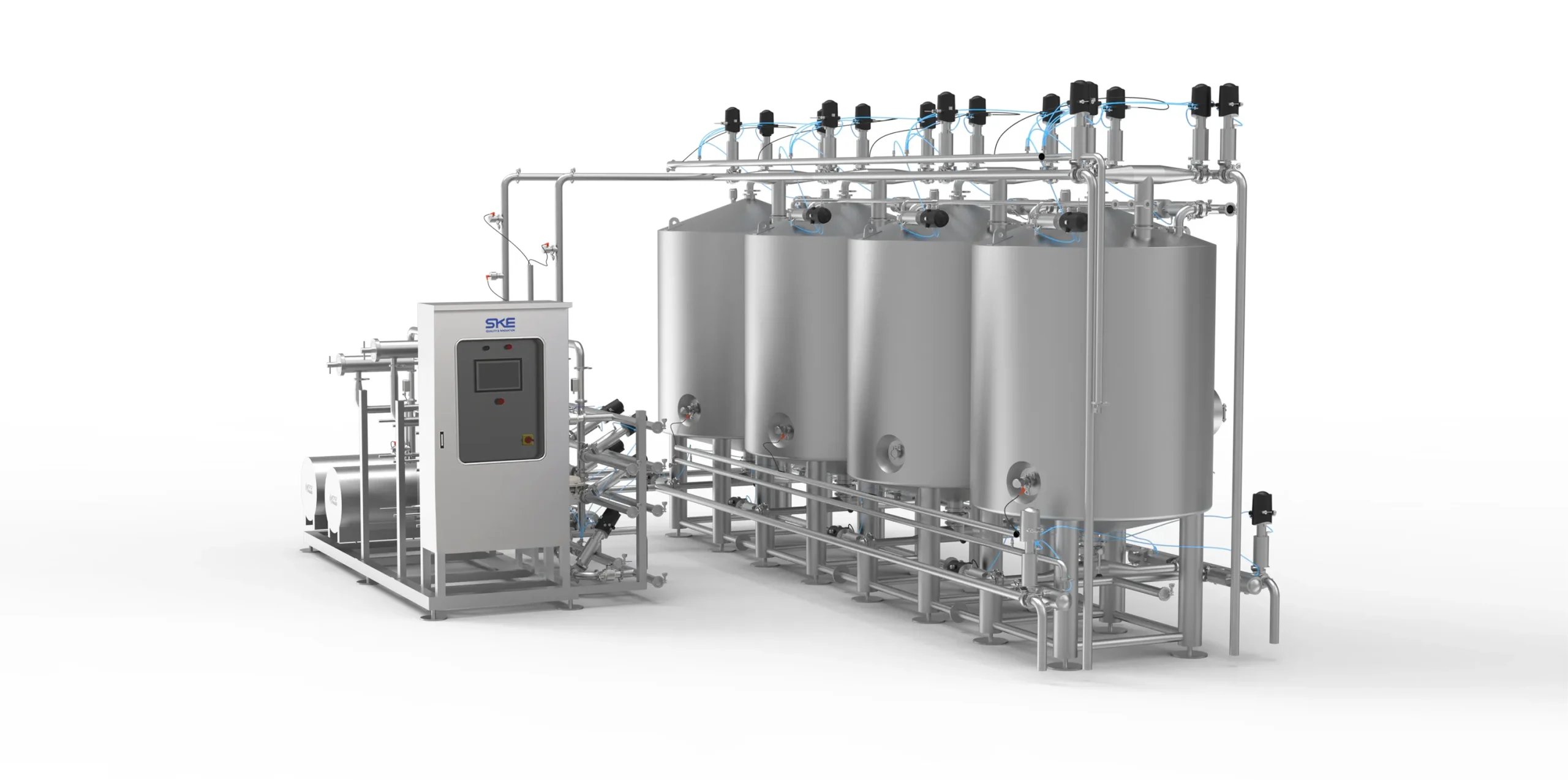
CIP Cleaning System. A beer pasteurization system must be cleaned regularly. This prevents product residues and microbial contamination. A suitable Clean-in-Place (CIP) system circulates cleaning solutions through the product-contact piping and heat exchanger. It does not require complete equipment disassembly.
Automation and Process Control
For medium and large breweries, automation is more than a convenience. It is an important part of process consistency and product quality management.
A modern beer pasteurization system can use a PLC-based control system to monitor and manage several operating parameters. Temperature control keeps the required heating temperature throughout the pasteurization process. Flow control adjusts product flow to maintain the required holding time. Pressure control helps keep liquid flow stable and reduces unwanted carbon dioxide release from beer.
The control system also uses temperature and time data to calculate the pasteurization effect. It helps operators keep the selected target. When critical conditions are not met, automatic valves redirect the product. This prevents insufficiently treated beer from reaching the filler. The system can record key operating data and give alarms when important parameters move outside their permitted limits.
These functions help breweries reduce manual work, improve process repeatability, and find production problems faster. For industrial breweries, the ability to review process records is also useful for quality control, troubleshooting, and production management.
Flash Pasteurization vs. Tunnel Pasteurization
Flash pasteurization and tunnel pasteurization are two common methods in beer production. They have different process designs and suit different packaging and production needs.
| Comparison | Flash Pasteurization | Tunnel Pasteurization |
|---|---|---|
| Treatment stage | Before packaging | After packaging |
| Main equipment | Plate heat exchanger and holding tube | Tunnel pasteurizer |
| Product heating | Direct liquid treatment | Heat applied through package |
| Heat recovery | Can achieve high heat recovery | Depends on tunnel design |
| Main advantage | Fast treatment and integration with filling lines | Treats sealed packages |
| Main consideration | Requires careful flow and filling-line integration | Requires control of package heating and cooling |
Flash pasteurization often suits breweries with continuous production lines and stable filling operations. Tunnel pasteurization can be useful when breweries need to treat sealed bottles or cans after packaging. Neither method is automatically better for every brewery. Equipment choice should consider production capacity, packaging type, available space, energy use, and process requirements.
How Does Pasteurization Protect Beer Flavor?
The main challenge in the beer pasteurization process is achieving microbial stability without damaging the original product. Heat speeds up chemical reactions in beer. Some reactions can cause flavor changes, aroma loss, and stale notes.
The risk depends on several factors. These include treatment temperature, holding time, oxygen exposure, beer composition, and storage conditions. A well-designed pasteurization process can reduce unnecessary heat exposure in several ways. It can use an efficient plate heat exchanger to heat and cool beer quickly. It can keep a stable product flow rate through the holding tube. It can monitor temperature continuously. It can control the PU value according to product requirements. It can minimize oxygen pickup during processing. And it can avoid unnecessary holding time after treatment.
The goal is not simply to reach a high temperature. It is to achieve the required microbial reduction with the lowest practical impact on beer quality. This is why equipment design and process control are closely connected in every successful pasteurization process.
Frequently Asked Questions
1.Does the pasteurization process kill all bacteria in beer?
No. The pasteurization process reduces targeted spoilage microorganisms but does not make beer completely sterile. Some heat-resistant spores may survive. Good production hygiene, suitable packaging, and proper storage are still necessary.
2.What is the difference between flash and tunnel pasteurization?
Flash pasteurization treats beer before packaging using a heat exchanger and holding tube. Tunnel pasteurization treats sealed bottles or cans by passing them through controlled heating and cooling zones.
3.What is a good PU value for beer pasteurization?
There is no single PU target for every beer. A range of 10–20 PU is sometimes used as a general reference. But the correct target depends on the product, target microorganisms, shelf life, packaging, and hygiene conditions.
4.Why is a holding tube important in a flash pasteurizer?
The holding tube ensures that beer remains at the required pasteurization temperature for a set period. Its design must match the product flow rate and treatment conditions to achieve the intended PU value.
5.How can breweries choose the right beer pasteurization system?
Breweries should evaluate production capacity, beer type, packaging method, required PU range, heat recovery, automation, CIP compatibility, and available installation space. The system should also match the operating speed of the filling line.
Contact Us
If you have any further questions, feel free to reach out!
- Facebook: SKE Equipment Facebook
- Email: info@skeequipment.com
Fill out the contact form below for customized solutions. We fully support all your production equipment demands for breweries and beverage plants.