
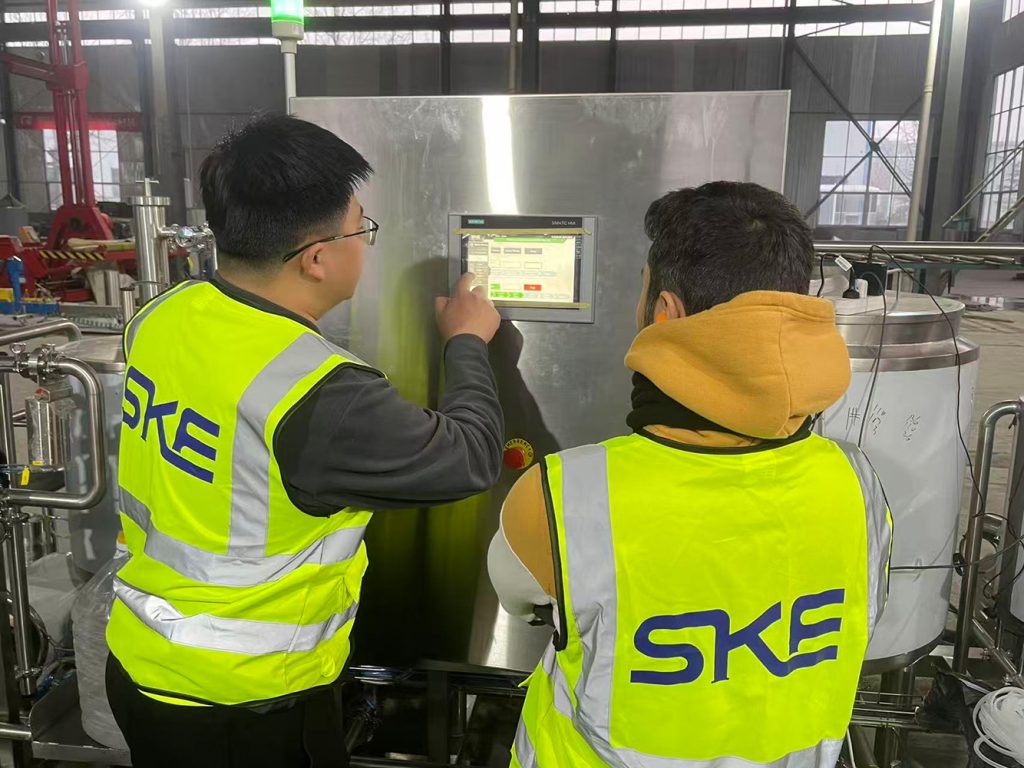
A mobile CIP system (Clean-in-Place) lets a brewery clean tanks without a large fixed installation. You can move the unit from tank to tank as production changes. This saves floor space, reduces piping, and keeps cleaning simple in small and medium breweries.
But a mobile CIP system is more than a cart with a tank. The CIP pump, CIP spray ball and other key parts must work together. They must deliver the right flow, pressure and coverage. A poor match leaves residue in the tank and wastes water and chemicals.
This guide shows how to choose the CIP pump, the CIP spray ball and the other parts of a mobile CIP system.
Why the CIP Pump Is the Heart of a Mobile CIP System
In any mobile CIP system, the CIP pump moves cleaning solution from the tank to the spray ball. It must supply enough flow and pressure to clean the tank. It must also overcome resistance from hoses, valves, fittings and height.
Brewery tanks hold yeast, proteins, hop resin and beer stone. Cleaning must remove all of this from product-contact surfaces. Good cleaning needs four things: the right chemical, the right temperature, enough contact time, and mechanical action.
Choosing the Right CIP Pump Type
Most brewery CIP systems use a centrifugal pump. It gives steady flow, has a simple design, and handles most low-viscosity cleaning solutions well.
When you choose a centrifugal pump, check five points:
-
Flow rate: can it meet the spray ball’s required flow?
-
Discharge pressure: can it overcome system resistance and reach the spray ball?
-
Temperature: do the pump and seal handle hot cleaning solution?
-
Chemical compatibility: do the seals and wetted parts resist your chemicals?
-
Cleanability: is the design hygienic enough for CIP use?

Why Pump Sizing Matters
A pump that is too small cannot drive the spray ball. A pump that is too large can cause excess pressure, wasted energy and operation outside its recommended range.
Read the manufacturer’s pump curve. Confirm the pump delivers the required flow at the total system head. Do not rely on maximum flow or maximum pressure alone.
Never run a centrifugal pump dry. Dry running damages the mechanical seal and causes leaks. Check that liquid reaches the pump before you start the cycle. This simple check protects every mobile CIP system from seal damage.
CIP Spray Ball Selection: Static vs. Rotating
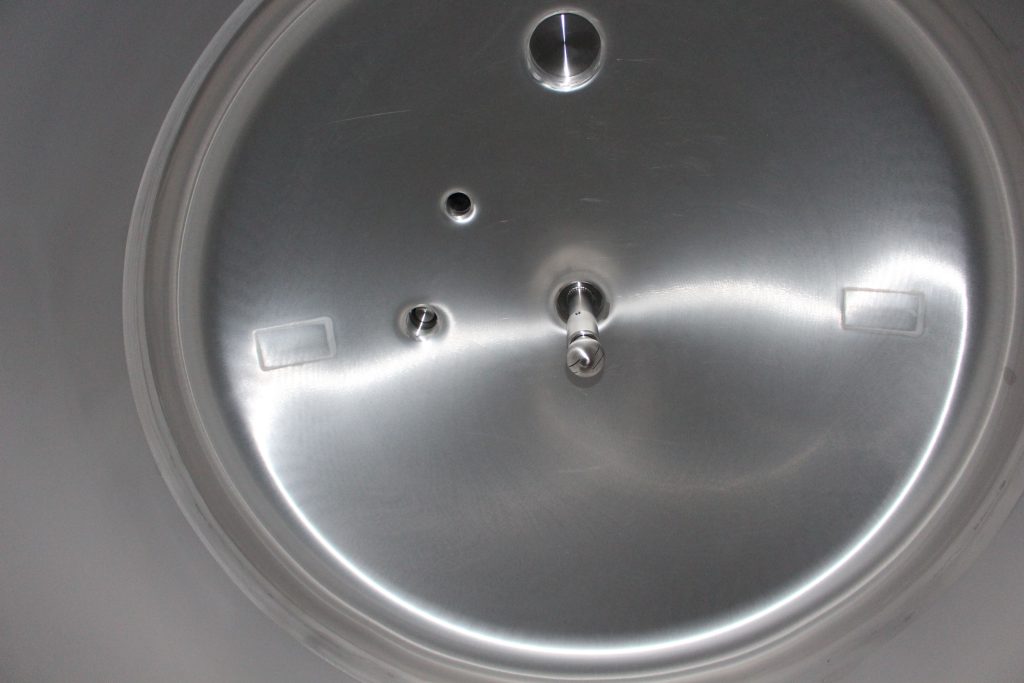
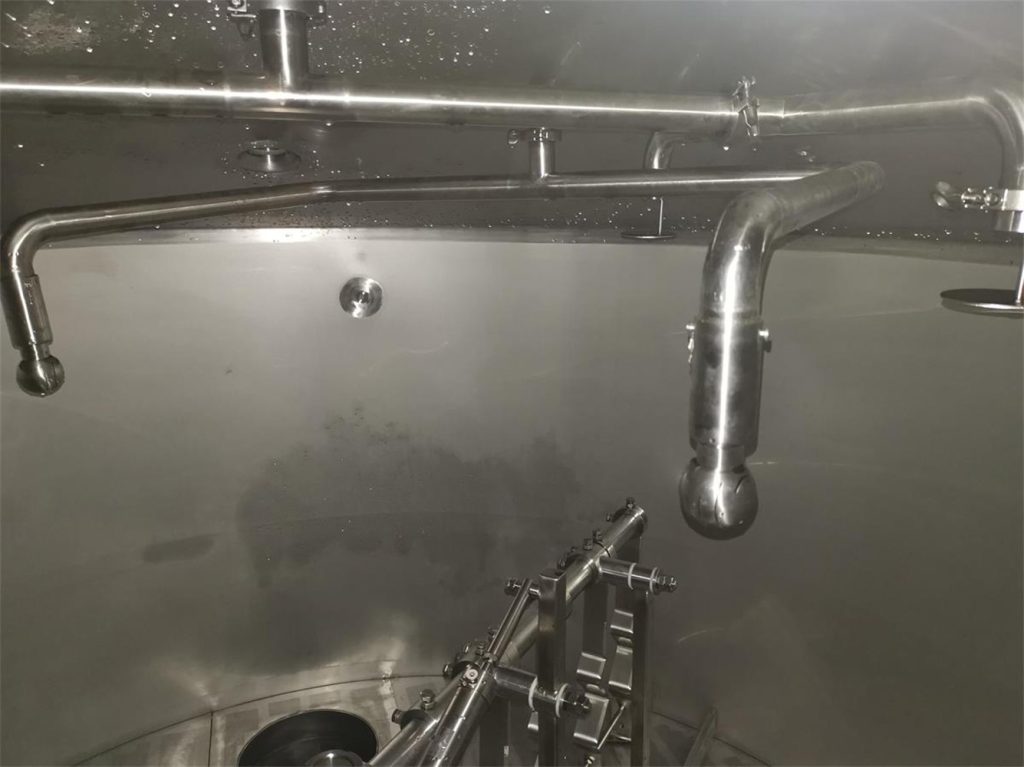
In a mobile CIP system, the CIP spray ball spreads cleaning solution over the inside of the tank. Its design affects coverage, water use and mechanical action.
Static CIP Spray Balls: Simple and Reliable
A static spray ball has fixed holes and no moving parts. It is simple to maintain and cheap to replace.
Static spray balls work well for bright beer tanks with light residue, hot liquor tanks with little organic soil, and small tanks with simple internal geometry.
A static spray ball gives less mechanical impact than a rotating head. It may also need higher flow to cover the tank. Check the spray pattern and mounting position before you buy.
Rotating CIP Spray Balls: More Mechanical Action
A rotating spray ball uses liquid force or a drive mechanism to move the spray across the tank. Some models have many holes. Others use focused jets for stronger impact.
These devices suit fermenters, mash tuns and whirlpools. These tanks hold yeast, hop material and proteins that are hard to remove. Benefits can include stronger mechanical action, good coverage, and less cleaning time or water use in the right tank.
How to Match the CIP Spray Ball to Your Tank
Tank volume is only one factor. Before you choose a spray ball, check:
-
Tank dimensions: height, diameter and internal shape affect coverage.
-
Internal structures: coils, agitators and fittings can create shadowed areas.
-
Soil type: light beer residue needs less impact than dried yeast or mash.
-
Operating conditions: flow and pressure must meet the device’s specs.
-
Cleaning check: the device must clean the tank under real conditions.
Other Key Parts: Valves, Heating, Control and Mobility
The pump and spray ball get most of the attention. But several other parts decide how well a mobile CIP system works every day. These parts are easy to overlook, and each one can reduce cleaning quality.
Valves, Pipes and Hoses
Valves, pipes and hoses control how much pressure reaches the tank. A well-sized pump can still fail if the hose is too long or a valve is too narrow.
Check the inside diameter of every hose and pipe. Small fittings and long routes add pressure loss. Use smooth, cleanable hoses and avoid sharp bends.
Valves must suit hot caustic and acid solutions. Sanitary butterfly valves and diaphragm valves are common in brewery CIP lines. Every connection should drain fully, so no chemical sits inside the line after cleaning.
Heating, Control and Return
Some mobile CIP system units use electric heaters. Others use an external hot-water supply or a plate heat exchanger. The heater must hold the required temperature through the whole cycle, not just at the start. Hot caustic loses heat as it moves through hoses and tanks. Check the heat loss for your longest route.
A basic control panel should show pump status, temperature and cycle time. Some units add flow meters and conductivity sensors. Match the panel to the skill of your team. A simple, clear panel often works better than a complex one that operators avoid.
The tank also needs a level sensor or sight glass, and a return line with a strainer. The strainer catches hop bits before they reach the pump. Clean it after every cycle. Check that return flow matches supply flow, or the pump may cavitate.
Skid, Mobility and Safety
A mobile CIP system must move safely and sit stable when it works. Look for a strong frame with locking casters, and check the wheel load rating against the full tank weight. A unit that is easy to push when empty may be hard to control when full of hot liquid.
Add drip trays under valves and connections. Mark hot surfaces and route hoses away from walkways. Electrical parts need IP-rated enclosures and proper grounding, especially where heaters are fitted.
Mobile CIP System Selection: Quick Reference Table
| Component | Option A | Option B | Selection considerations |
|---|---|---|---|
| CIP pump | Centrifugal pump | Self-priming or positive displacement pump | Match flow, pressure, liquid properties and transfer needs |
| CIP spray ball | Static spray ball | Rotating spray ball | Consider soil type, tank shape, coverage and impact |
| Valves and hoses | Sanitary butterfly valves, standard hose | Diaphragm valves, larger bore hose | Check chemical resistance, drainability and pressure loss |
| Heating | Electric immersion heater | External hot water or heat exchanger | Check heat-up time, heat loss and temperature control |
| Control and return | Basic panel, sight glass | Panel with sensors, return strainer | Match to operator skill and cleaning records |
| Materials | 304 stainless steel where suitable | 316L stainless steel where required | Consider chemical strength, temperature and corrosion risk |
| Mobility | Compact wheeled unit | Larger mobile skid | Consider floor layout, access, hose routing and safety |
This table is general guidance. Final selection depends on your real tank and system specs.
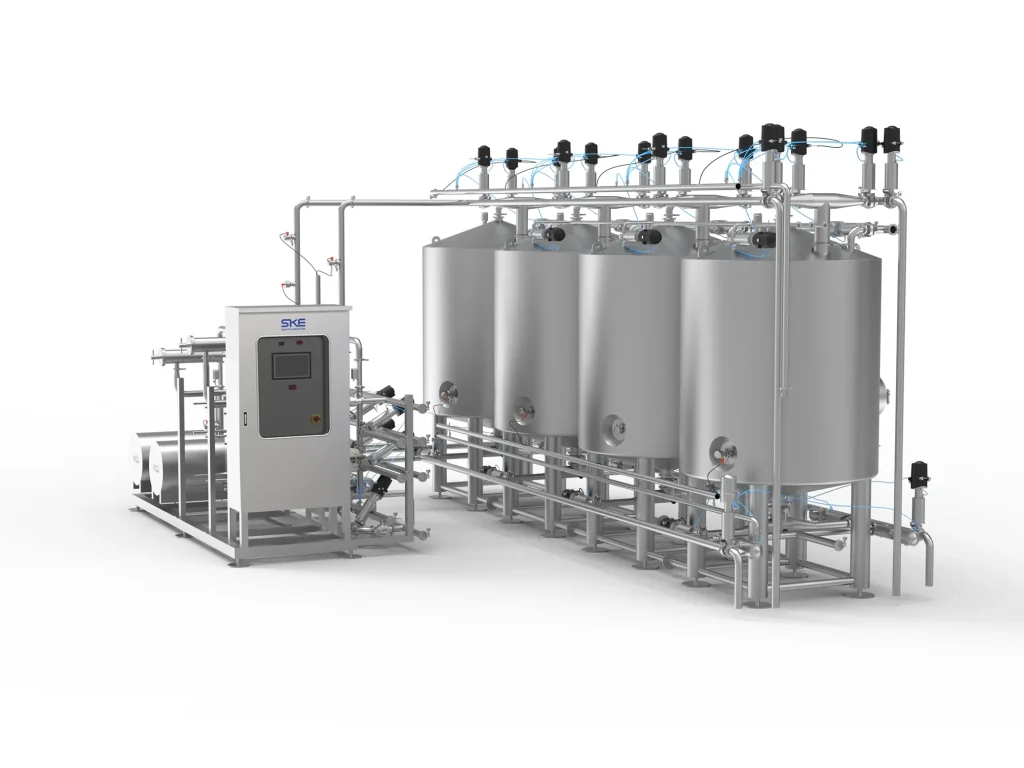
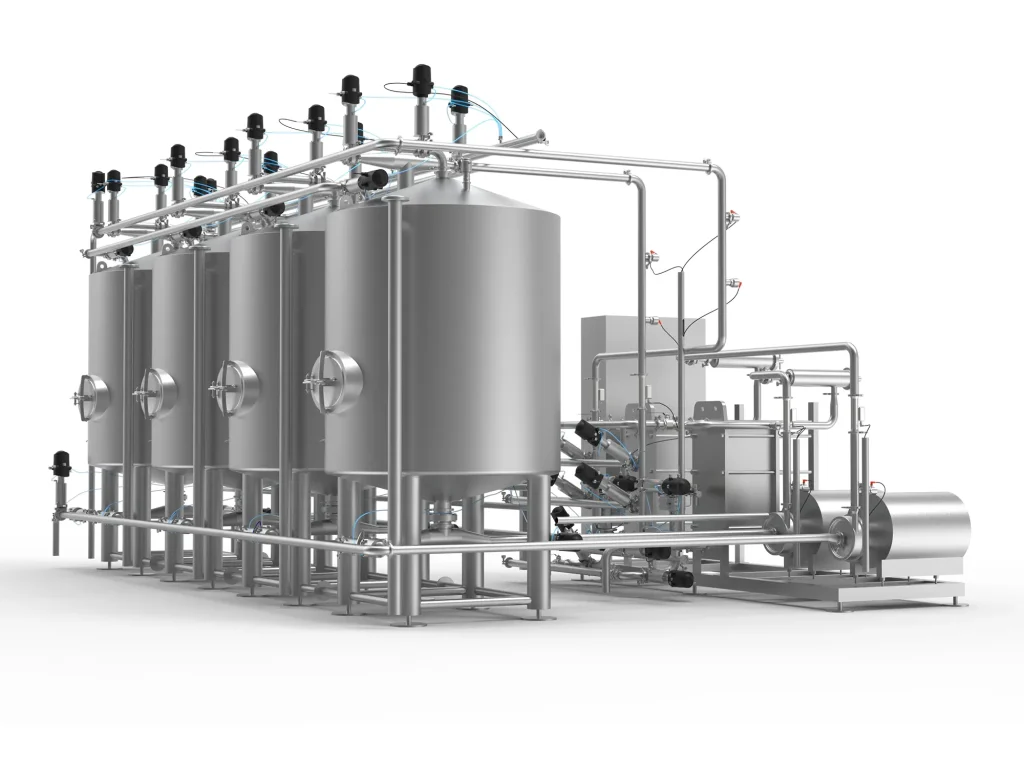
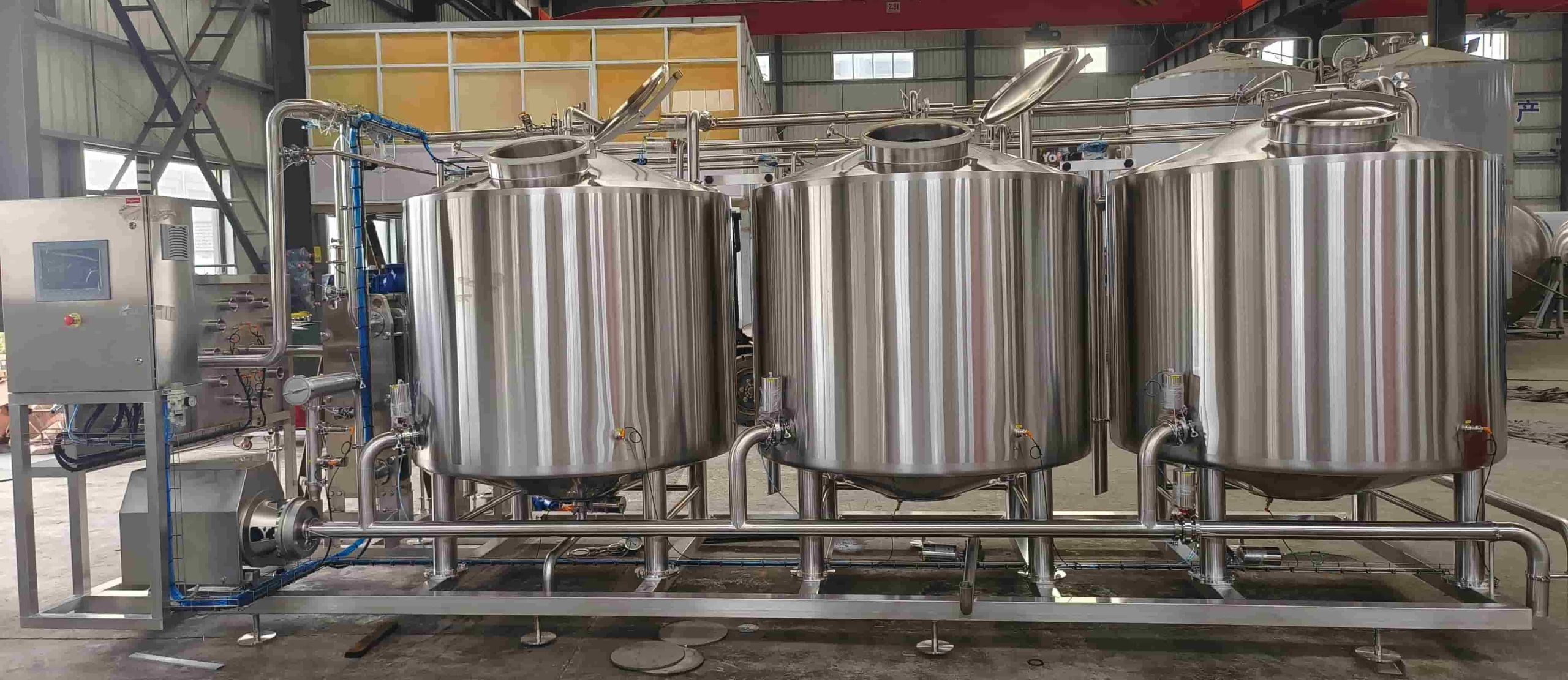
SKE 15 HL Mobile CIP with Two Independent Systems
Theory is useful, but a real example makes the choice clearer. SKE offers a 15 HL mobile CIP unit with two independent cleaning systems in one frame. Each system has its own tank, pump and control.
This means one unit can run two cleaning tasks at the same time, or keep two solutions separate. You can run caustic on one side and acid or sanitizer on the other. You can also clean two tanks at once.
This design suits breweries that clean several tanks on the same day. It cuts waiting time between cycles and reduces the number of units on the floor. Each side is sized as its own system, so the CIP pump and CIP spray ball on each side must still be matched to the tanks it serves. A dual-system mobile CIP system can cut cleaning time on busy days.
Material and Hygiene Considerations
A mobile CIP system touches hot chemicals again and again. Material choice, surface finish, drainage and design all affect long-term reliability and hygiene.
Stainless Steel and Surface Finish
316L stainless steel is common for wetted parts in hygienic brewery equipment. It resists corrosion better than 304. 304 may still be fine for some uses.
Check chemical strength, temperature, chloride level and contact time before you choose. Seals, gaskets and hoses must also resist the cleaning process.
Smooth surfaces hold less soil. But polishing alone does not make a part hygienic. Good welds, easy access, proper drainage and few soil traps matter just as much.
Hygienic Spray Ball and Valve Design
When you choose a CIP spray ball or valve, check that it gives the coverage you need, drains well after use, has no unnecessary crevices, uses materials that resist your chemicals, and allows inspection and maintenance.
Sanitary standards and third-party certificates help you judge a device. Still check the claim for the exact product. A certificate does not prove the device cleans your tank. You must confirm that in the installed system.
Frequently Asked Questions (FAQ)
Q1: Can I use one mobile CIP system for both fermenters and bright beer tanks?
Yes, if the system meets both needs. Bright beer tanks have light soil. Fermenters hold more yeast and other deposits.
You may need different times, chemical strengths, temperatures or spray balls. Check that the pump and CIP spray ball can reach the required conditions for each tank. Test the cleaning routine on the real equipment.
Q2: How do I know if the CIP pump in my mobile CIP system is strong enough?
Start with the spray ball maker’s flow and pressure needs. Then add pressure loss from hoses, fittings, valves and height.
Read the pump curve. Confirm the pump delivers the required flow at the calculated system head. Do not choose a pump by maximum flow or maximum pressure alone. A small safety margin helps, but the pump should still run within its recommended range.
Q3: Is a static CIP spray ball ever better than a rotating one?
Yes. A static spray ball suits tanks with light soil, simple shape and easy cleaning needs. It is simple and needs little maintenance.
A rotating spray ball suits jobs that need stronger mechanical action. The best choice depends on cleaning result, available flow and pressure, maintenance and total cost.
Q4: What maintenance does a rotating CIP spray ball need?
It depends on the design. Check for blocked holes, wear, damage and slow or stopped rotation. If the device has bearings, follow the maker’s inspection and replacement schedule.
If cleaning results change, check liquid supply, pressure, blockages and mechanical condition. Regular checks catch problems before they affect production.
Q5: Why is matching the CIP pump and CIP spray ball important?
The pump and spray ball must work as one system. If they are poorly matched, the spray pattern may miss surfaces, cleaning time may rise, and results may become inconsistent.
At SKE, we have built brewery equipment since 2000. We match every mobile CIP system to the tank size, soil type and plant layout. This gives breweries a cleaning system that works in real daily use, not just on paper.
Conclusion: Choose a Mobile CIP System That Fits Your Brewery
A mobile CIP system gives breweries flexibility without a large fixed installation. But good cleaning depends on the right pump, the right CIP spray ball and the right support parts for each tank.
Start with your tank cleaning needs. Check the spray ball’s flow and pressure specs. Calculate system resistance, including hoses, valves and height. Then choose a pump that meets those needs. After that, review materials, drainage, heating, controls, mobility and maintenance.
The best mobile CIP system is not the one with the largest pump or the most advanced spray ball. It is the one that cleans your tanks under your real operating conditions.
If you are planning a new brewery, upgrading your cleaning process, or choosing a mobile CIP system for existing tanks, contact SKE. Tell us your tank dimensions, cleaning needs and plant layout. We will help you choose a suitable CIP pump, CIP spray ball and full set of mobile cleaning parts.
- Facebook: SKE Equipment Facebook
- Email: info@skeequipment.com
Fill out the contact form below for customized solutions. We fully support all your production equipment demands for breweries and beverage plants.