
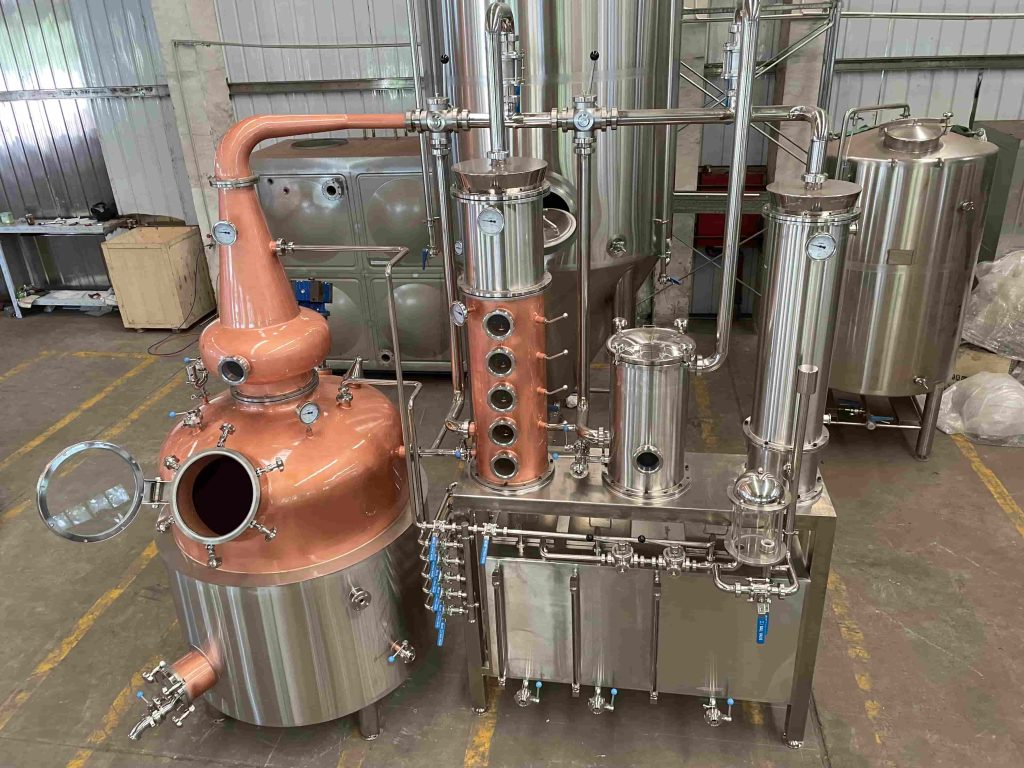
Distillation is one of the most important processes in spirit production. It affects alcohol concentration, aroma, flavor, and product consistency. For this reason, the design and material of the still are important decisions for a distillery.
A stainless steel still is widely used in modern spirit production because it offers good corrosion resistance, strong mechanical performance, easy cleaning, and long service life. It can also be integrated with stainless steel tanks, pumps, piping, condensers, and control systems.
However, stainless steel does not have exactly the same role as copper. Copper can interact with sulfur compounds during distillation and is still important in many traditional whisky processes. Therefore, modern distilleries may use stainless steel as the main construction material while adding copper components where copper contact is useful.
This article explains the main benefits of a stainless steel still, its common applications, and the key differences between stainless steel and copper. It also explains how to select suitable distillation still equipment for commercial spirit production.
What Is a Stainless Steel Still?
A stainless steel still is a distillation vessel used to heat fermented liquid and separate alcohol and other volatile compounds through vaporization and condensation. The still can be designed as a pot still, column still, or part of a larger continuous distillation system.
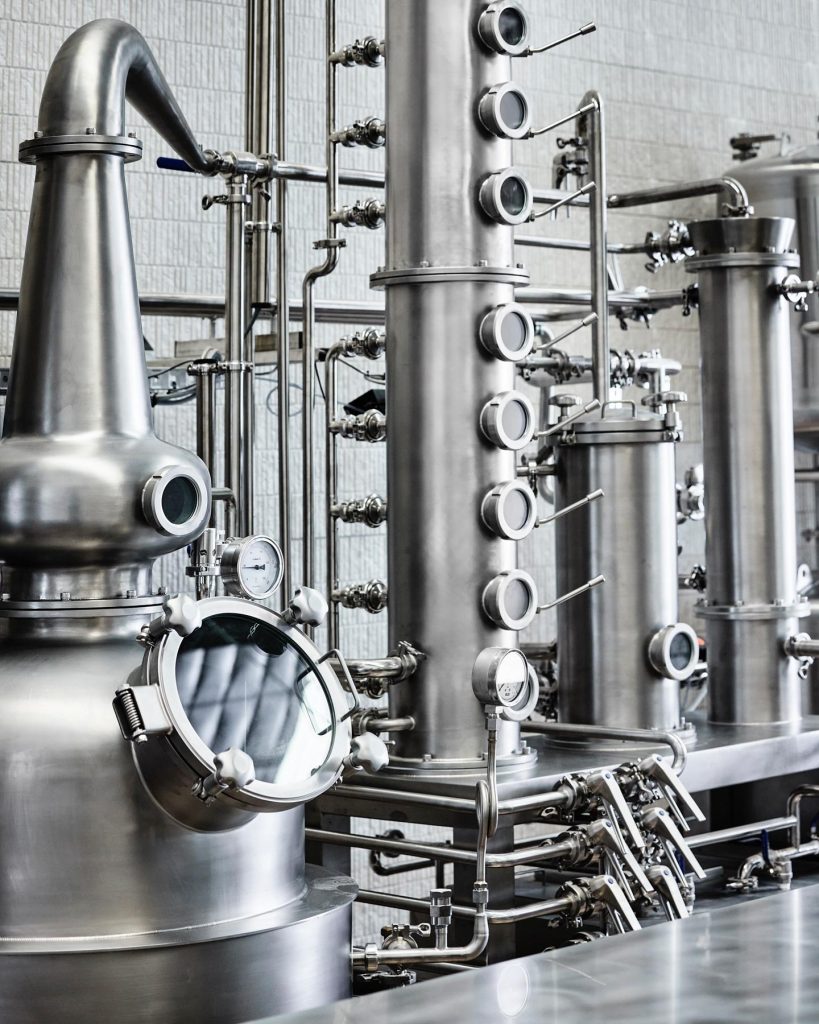
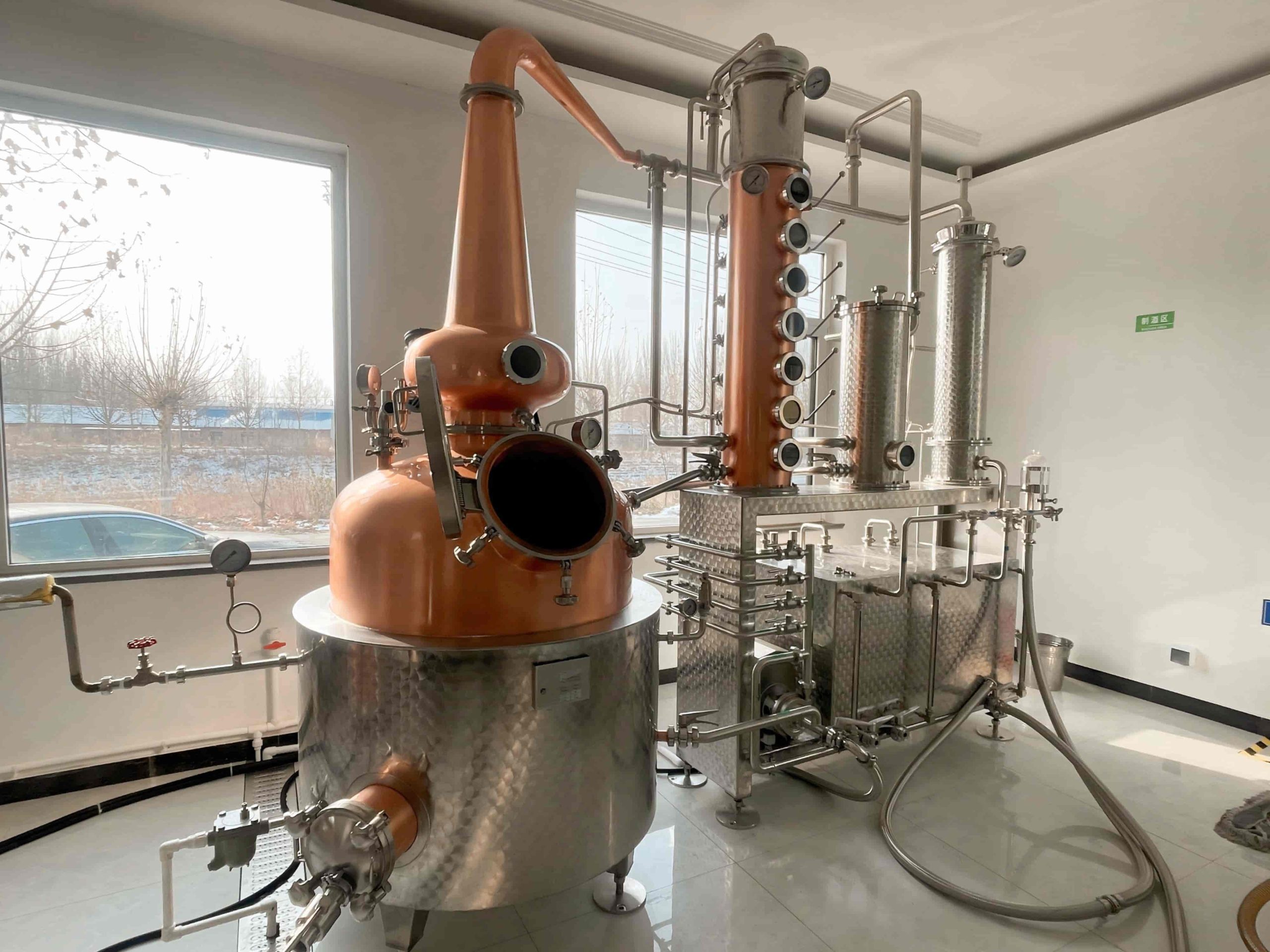
A typical stainless steel distillation system may include a still kettle, heating jacket or coil, vapor outlet, column, condenser, product collection system, valves, piping, instruments, and a control system.
For many applications, 304 or 304L stainless steel is suitable for general equipment construction. 316 or 316L may be selected when the process requires higher corrosion resistance. The correct grade depends on the raw material, alcohol concentration, temperature, cleaning chemicals, and operating conditions.
The equipment design is also important. Good fabrication should include suitable weld quality, smooth internal surfaces, proper drainage, and easy access for cleaning and inspection. For commercial production, the still should also be designed according to the required pressure, heating load, production capacity, and local safety requirements.
Main Benefits of Stainless Steel Distillation Equipment
One of the biggest advantages of a stainless steel still is corrosion resistance. Fermented liquids can contain organic acids, alcohol, salts, and other compounds that may affect metal surfaces. Stainless steel provides good resistance when the correct grade is selected and the equipment is properly designed.
Stainless steel is also easy to clean. A smooth internal surface reduces the amount of product residue that can remain inside the vessel. This is important when a distillery produces different products or runs several batches in one day. Suitable equipment can also be designed for CIP cleaning, which helps reduce manual cleaning work.
Mechanical strength is another advantage. A commercial still may experience repeated heating and cooling cycles, vibration, and pressure changes. Stainless steel provides strong mechanical performance and can be used for kettles, columns, condensers, piping, and storage tanks.
Long service life can also reduce replacement costs. A properly designed and maintained stainless steel system can operate for decades. However, service life depends on material grade, welding quality, operating temperature, pressure, cleaning chemicals, and maintenance procedures.
Stainless Steel Still and Heat Transfer
Heat transfer is an important part of distillation system design. Stainless steel has lower thermal conductivity than copper, so the heating system needs to provide enough heat-transfer area for the required production rate.
However, the thermal efficiency of a distillation system does not depend on vessel material alone. Heating method, insulation, jacket design, heat-transfer area, vapor flow, condenser performance, and heat recovery can all affect energy consumption.
A stainless steel still can be heated by steam, electric heating, hot water, or another suitable heating system. For commercial systems, steam jackets are common because they provide controlled and indirect heating. Electric heating can also be used for smaller systems or plants where electrical power is more practical.
Proper insulation is important because it reduces unnecessary heat loss from the vessel and piping. Larger plants may also consider heat recovery from hot vapor or condensate. These measures can improve overall system efficiency without changing the basic stainless steel construction.
The heating system should always be designed according to the still volume, evaporation rate, production target, and process requirements rather than using a standard heating configuration for every project.
Stainless Steel Still vs. Copper Still
Copper has been used in distillation for hundreds of years, and it remains important in many spirit processes. The main reason is not only tradition. Copper can react with certain sulfur-containing compounds and help reduce some unwanted sulfur notes in distilled spirits.
A stainless steel still has much less chemical interaction with these compounds. This makes stainless steel more chemically neutral, but it also means that it does not provide the same copper contact during distillation.
For traditional whisky production, copper contact can therefore be an important process consideration. For other products, such as gin, rum, neutral spirits, and some grain spirits, stainless steel can provide a practical equipment platform.
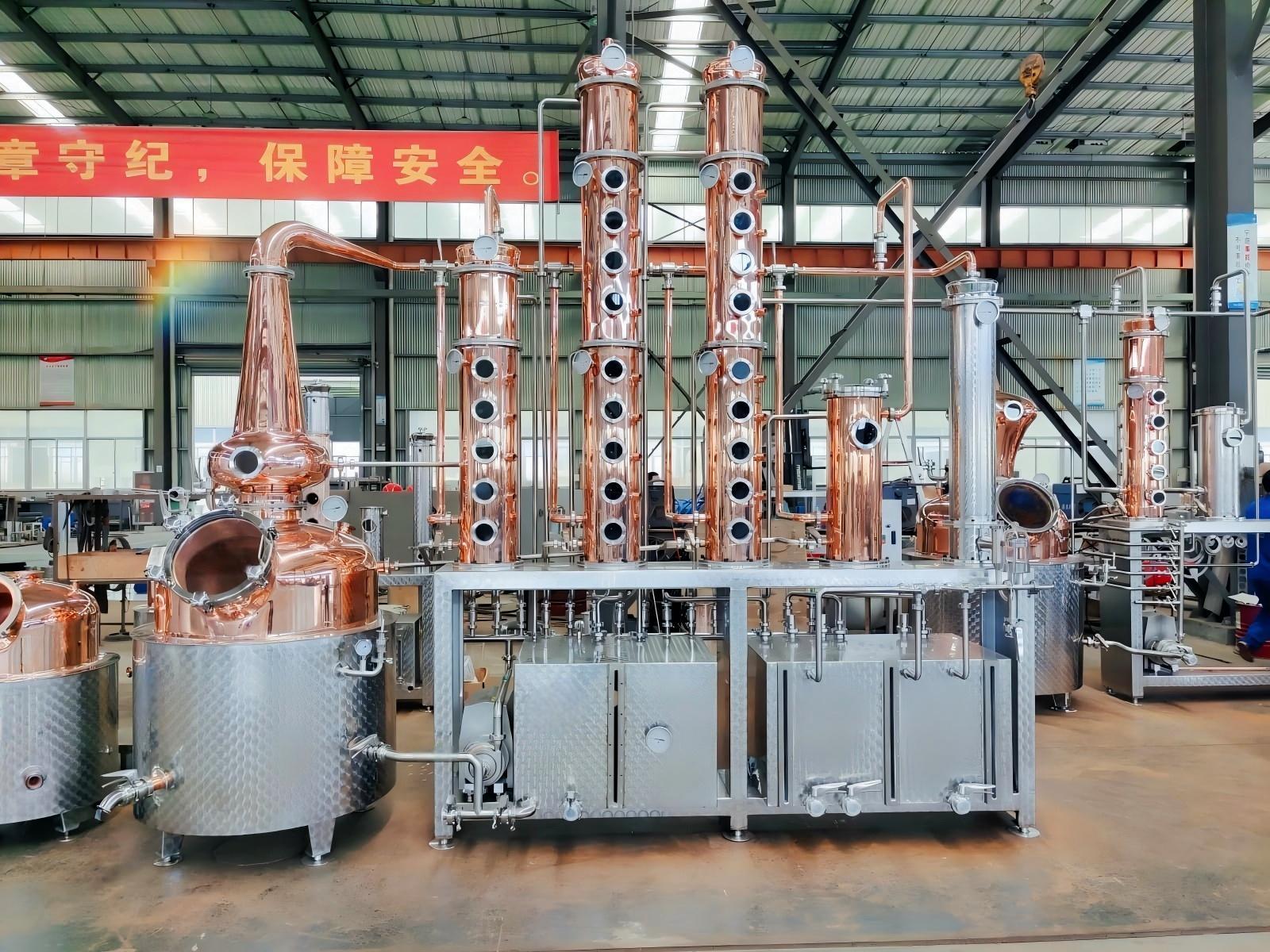
Many modern distilleries use a hybrid system. The main kettle, column, piping, and supporting equipment may be made from stainless steel, while copper components are installed in selected parts of the vapor path.
This approach allows producers to combine the easy maintenance and durability of stainless steel with the process benefits of copper where they are required.
| Factor | Stainless Steel Still | Copper Still |
|---|---|---|
| Corrosion resistance | High with suitable grade | Good, but requires more surface care |
| Cleaning | Easy with suitable design | Requires more regular care |
| Mechanical strength | High | Good with proper design |
| Thermal conductivity | Lower | Much higher |
| Sulfur interaction | Limited | Stronger interaction |
| Maintenance | Generally lower | Generally higher |
| Service life | Can last for decades | Long with regular maintenance |
| Typical use | Gin, rum, neutral spirits, grain spirits | Traditional whisky and copper-contact systems |
| Hybrid systems | Common | Often used for selected components |
Applications of Stainless Steel Still Equipment
A stainless steel still can be used in many types of commercial distillation. One common application is grain spirit production. Grain-based processes may use pot stills, column systems, or continuous distillation equipment depending on the required alcohol strength and production volume.
Stainless steel column systems are especially useful when a producer needs stable operation and high production capacity. Columns can contain trays or packing that increase vapor-liquid contact and improve separation.
Gin production is another important application. A distillery may use a stainless steel pot still, column, botanical basket, or a combination of these systems. Stainless steel provides a clean and durable process surface and can be connected easily with storage tanks and transfer systems.
Rum and other spirits can also be produced with stainless steel equipment. However, the final spirit character depends on many process factors, including raw materials, fermentation, yeast, heating rate, reflux, distillation cuts, and aging.
For whiskey production, stainless steel can be used for some equipment sections, but copper contact may still be required depending on the production style. This is why whiskey distillery equipment should be designed around the complete process rather than the still material alone.
Stainless Steel Still for Whiskey Production
Whiskey production requires careful control of fermentation and distillation. A stainless steel still can provide strong mechanical performance and easy cleaning, but the role of copper must also be considered.
Traditional malt whisky systems normally include significant copper contact during distillation. Copper can interact with sulfur compounds and influence the aroma and character of the new make spirit.
If a distillery wants to use stainless steel as the main equipment material, copper components can be added to selected areas. These may include parts of the vapor path, lyne arm, condenser, or specially designed copper contact sections.
The exact configuration depends on the whiskey style, fermentation process, desired spirit character, and production capacity.
For this reason, choosing whiskey distillery equipment is not simply a question of choosing stainless steel or copper. Engineers should consider the complete system, including fermentation tanks, still design, heating system, condenser, piping, controls, and cleaning method.
A well-designed system can provide stable operation while giving the distiller enough control over the final spirit.
How to Choose a Stainless Steel Still
Before buying a stainless steel still, a distillery should define the production requirements first.
1. Production Capacity
The required batch size or hourly production rate determines the still volume and heating capacity. A small craft distillery may need a batch still, while a larger producer may require column or continuous distillation.
2. Spirit Type
Different spirits require different process designs. Gin, rum, grain spirits, neutral spirits, and whisky may use different still shapes, columns, condensers, and copper-contact configurations.
3. Heating Method
Common heating options include steam, electric heating, and hot water. The selected system should provide stable heating and enough capacity for the required evaporation rate.
4. Material Grade
304/304L and 316/316L are common stainless steel options. Material selection should consider the process liquid, cleaning chemicals, temperature, and operating environment.
5. Cleaning System
Commercial equipment should be designed for efficient cleaning. CIP capability can be valuable for larger plants because it can reduce manual work and improve cleaning consistency.
6. Control System
Temperature, pressure, heating, flow, and condenser conditions should be monitored according to the process. PLC-based controls can improve repeatability and make operating parameters easier to manage.
Stainless Steel Still for Brewery-to-Distillery Projects
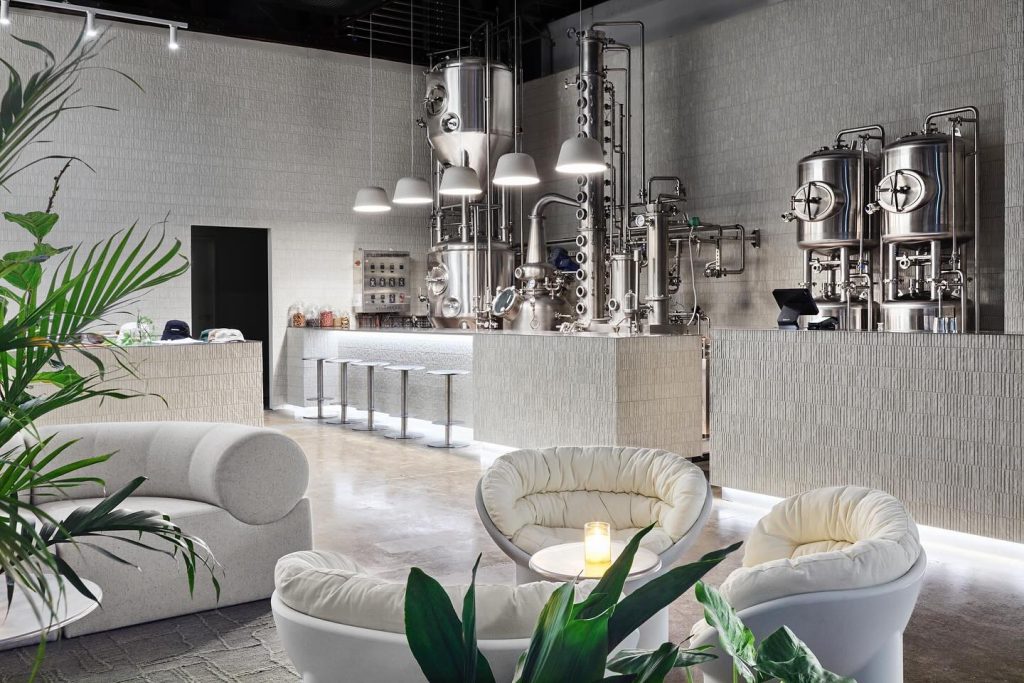
Many breweries already use stainless steel fermenters, bright beer tanks, pumps, piping, and CIP systems. When a brewery adds spirit production, a stainless steel distillation system can integrate well with the existing plant.
A brewery-to-distillery project may include fermentation tanks, feed tanks, a stainless steel still, distillation columns, condensers, spirit collection tanks, storage tanks, CIP equipment, process piping, and control systems.
Using compatible materials across the production line can simplify equipment integration and maintenance. It can also make it easier for operators to understand the new system.
SKE provides brewing, fermentation, and distillation equipment for commercial beverage producers. Our engineering team can design equipment according to production capacity, product type, heating method, cleaning requirements, and plant layout.
For projects that require both stainless steel and copper contact, the system can also be designed as a hybrid solution. This allows the producer to use stainless steel for the main equipment while adding copper where the process requires it.

FAQ
1.Does a stainless steel still change whiskey flavor?
Yes. Still material can influence the chemical environment during distillation. Stainless steel has limited interaction with sulfur compounds compared with copper. As a result, changing the amount of copper contact can change the character of the spirit.
However, flavor is not controlled by still material alone. Fermentation, raw materials, yeast, heating rate, reflux, distillation cuts, and aging all have important effects.
2.Is a stainless steel still suitable for single malt whisky?
It can be used in certain system designs, but traditional malt whisky production normally depends on copper contact during distillation.
A stainless steel main vessel can be combined with copper components in selected parts of the vapor path. The correct design depends on the required spirit character and production process.
3.Is stainless steel better than copper for distillation?
The two materials have different advantages. Stainless steel provides corrosion resistance, easy cleaning, strong mechanical performance, and long service life. Copper provides important chemical interactions during distillation.
For some modern distilleries, a hybrid system using both materials may be suitable.
4.How do you clean a stainless steel still?
Cleaning normally includes draining the vessel, rinsing product residue, washing with a suitable cleaning solution, and thorough rinsing.
Commercial systems can be designed for CIP cleaning. Chloride-rich chemicals and abrasive tools should be avoided unless they are specifically approved for the equipment.
5.How long does a stainless steel still last?
A properly designed and maintained stainless steel still can have a service life measured in decades.
Actual service life depends on material grade, welding quality, operating temperature, pressure, cleaning chemicals, and maintenance.
6.Can a copper still be replaced with stainless steel?
It is technically possible, but the process may need to be adjusted. Reducing copper contact can change the treatment of sulfur compounds during distillation.
Before a complete replacement, producers should evaluate the desired spirit profile and consider pilot testing.
Conclusion
A stainless steel still is a practical solution for many modern distillation applications. Its corrosion resistance, mechanical strength, cleanable surface, long service life, and easy integration make it suitable for commercial spirit production.
For many producers, the best equipment design is based on the complete process rather than one material. Stainless steel can be used for the main still, columns, piping, and supporting equipment, while copper can be added where specific process effects are required.
SKE provides customized distillation still equipment and whiskey distillery equipment for commercial beverage producers. From fermentation and distillation to condensers, piping, controls, and commissioning, SKE can develop equipment solutions based on your production capacity and process requirements.
If you have any further questions, feel free to reach out!
- Facebook: SKE Equipment Facebook
- Email: info@skeequipment.com
Fill out the contact form below for customized solutions. We fully support all your production equipment demands for breweries and beverage plants.