
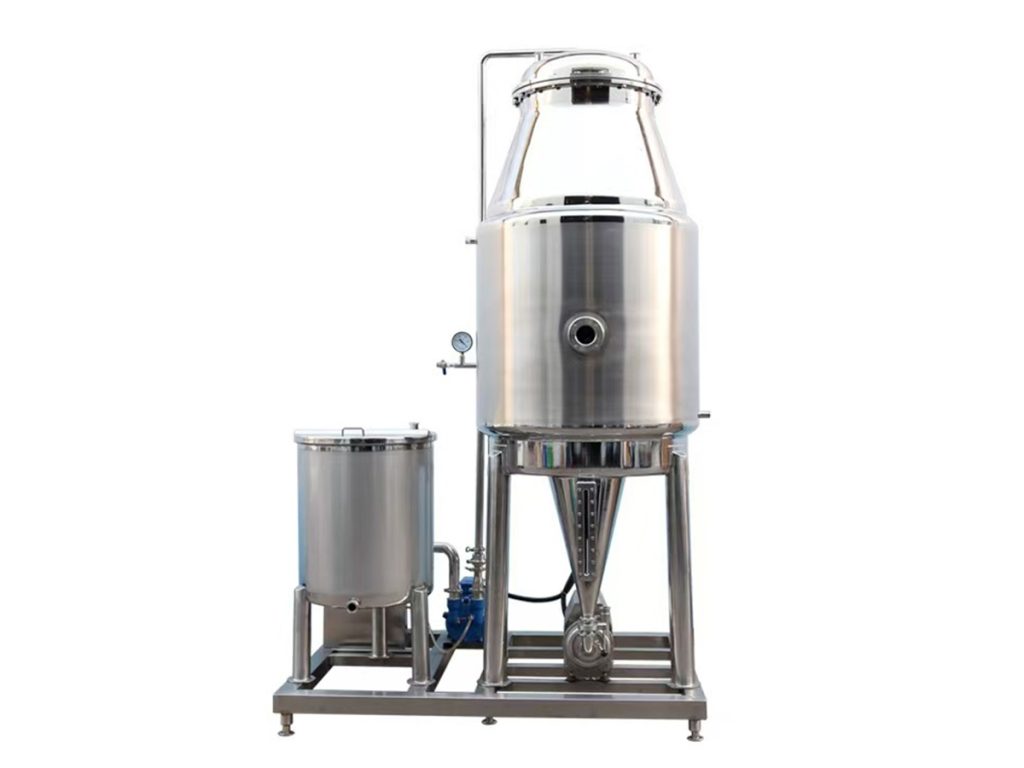
Oxygen is the quiet enemy of fresh beer. It slips in through water, transfer lines, pumps, and tank filling, then sets off oxidation reactions that dull flavor and shorten shelf life. Vacuum degassing is how modern breweries keep it out.
For the broader business case — why large-scale brewers treat this as a non-negotiable standard rather than an optional upgrade — see our companion piece, Why Big Brewers Need Vacuum Degassing Equipment. This article goes deeper on how the technology actually works, and walks through a real installation.
Key Takeaways
- Oxidation degrades beer largely through compounds like trans-2-nonenal, which carries a papery, cardboard-like off-flavor detectable at concentrations as low as roughly 0.08 ppb (ASBC).
- Vacuum degassing performance varies by design: simple single-stage systems typically plateau around 50 ppb residual oxygen, while multi-stage column systems can reach below 10 ppb, and premium designs push under 5 ppb (ProBrewer).
- A real installation at Wittmann Brewery in Germany reached a residual oxygen content below 10 ppb using a high-vacuum process with no stripping gas, eliminating the brewery’s need to purchase CO2 for oxygen removal.
What Is Vacuum Degassing?
Vacuum degassing removes dissolved gases from liquids — in a brewery, mainly dissolved oxygen (DO), which enters beer through water, pipes, and tanks and then drives the oxidation reactions that damage it.
The underlying physics is simple: gases dissolve less readily in liquids under low pressure. A degassing system uses a vacuum pump to create a low-pressure space inside a sealed vessel; as liquid enters, the pressure drop lets dissolved gases bubble out, and the pump carries them away.
Case Study: The Wittmann Brewery Installation
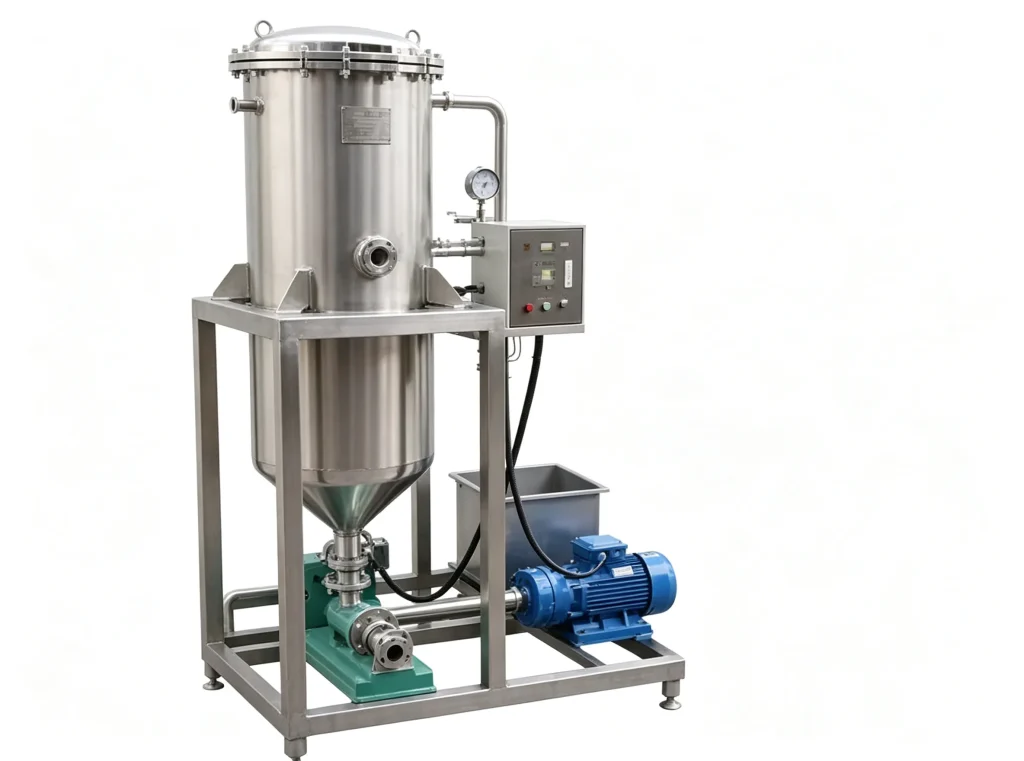
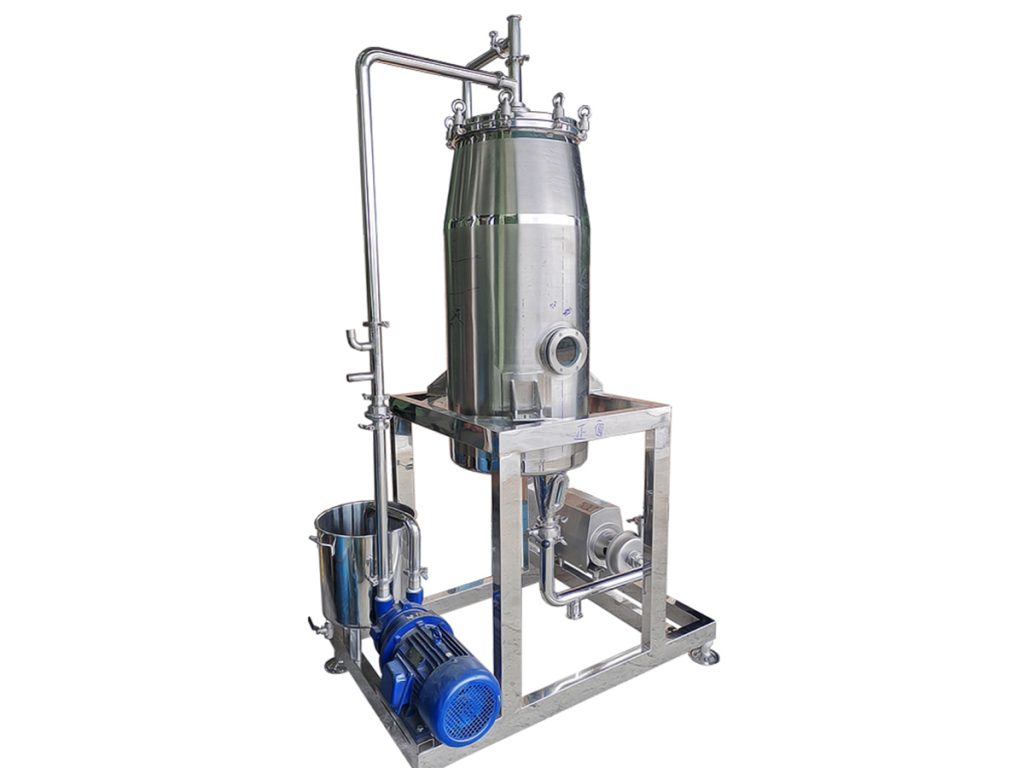
Wittmann Brewery in Germany set out to improve the quality of its brewing water and chose a modern vacuum degassing system to do it. The installation uses a high-vacuum process that removes dissolved oxygen without any stripping gas (no CO2 or N2 injection required) — a meaningful difference from older methods that rely on purchased gas to physically push oxygen out of the water.
The project fit within Wittmann’s existing production space and achieved a residual oxygen content below 10 ppb. Because the system doesn’t consume stripping gas, the brewery no longer needs to purchase CO2 specifically for oxygen removal, which also reduces its ecological footprint — the kind of result that pays for itself twice: once in water quality, once in operating cost.
How Does a Vacuum Degassing System Work?
The system is typically installed in the water treatment area or just ahead of the filling line, running as a continuous process rather than a batch operation.
A feed pump pushes liquid into the vacuum vessel, where a spray nozzle or distributor breaks it into a thin film to maximize surface area. The vacuum pump maintains low pressure across that film, dissolved oxygen transfers from liquid into the gas phase, and the pump removes it. The degassed liquid collects at the bottom of the vessel and moves on to the next stage.
Performance isn’t uniform across designs, which is worth knowing before comparing quotes. Simple single-stage vacuum systems commonly plateau around 50 ppb residual oxygen; well-designed multi-stage column systems can reach below 10 ppb, and premium high-vacuum designs, like the one at Wittmann, can push under 5 ppb (ProBrewer). The number of vacuum stages, not just the presence of a vacuum pump, is what actually separates these tiers.
The system is fully automated: PLC controls monitor vacuum pressure and flow rate to keep performance consistent, with a user-friendly interface for day-to-day operation.
Why Oxygen Control Matters This Much
The papery, cardboard-like character in aged beer is driven largely by trans-2-nonenal, an aldehyde with a sensory detection threshold around 0.08 ppb — low enough that even small amounts are noticeable (ASBC). Oxygen exposure accelerates its formation, which is exactly why dissolved oxygen control at every stage, including the dilution water added before packaging, matters as much as it does.
Many large breweries use high-gravity brewing: brewing a stronger beer, then diluting it with water right before packaging to save energy and space. That dilution water has to be essentially oxygen-free, or it reintroduces the exact problem the rest of the process was designed to avoid. A vacuum degassing system dedicated to dilution water is the standard fix, and it’s often the single highest-leverage point to control DO in the whole line.
Benefits of Using a Vacuum Degassing System
- Extended shelf life: lower dissolved oxygen slows the oxidation reactions behind staling.
- Improved filling efficiency: degassed liquid foams less, so filling lines run faster with fewer stoppages.
- Reduced stripping-gas consumption: multi-stage vacuum designs, like the one at Wittmann, remove the need to buy CO2 or N2 purely for oxygen stripping.
- Consistent flavor across batches and markets: locking in gas levels early keeps the product the same from batch to batch and site to site.
SKE Vacuum Degassing Equipment
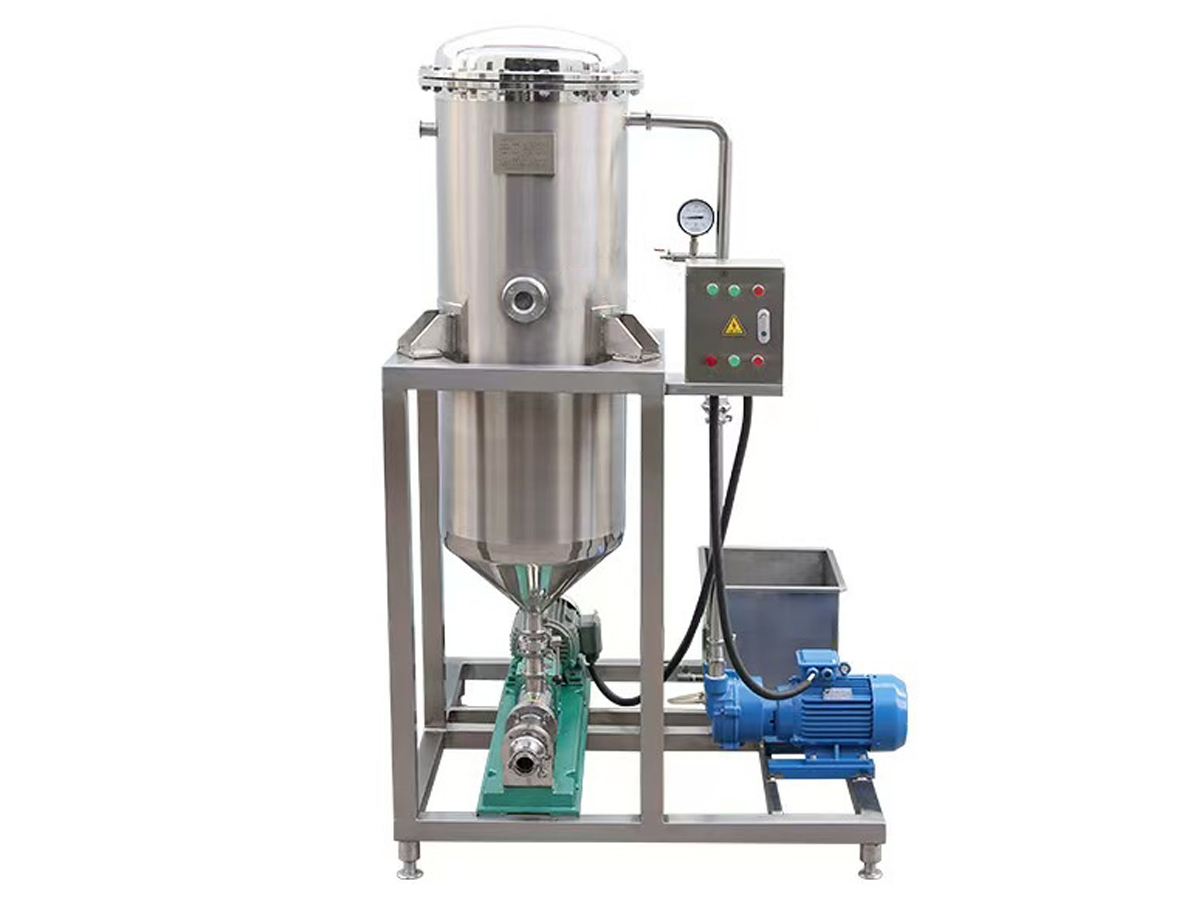
SKE builds vacuum degassing systems for the brewing industry in sanitary 304/316L stainless steel, engineered for long service life and reliability. Systems feature a high-precision atomizing distributor for efficient gas removal and full CIP (Clean-in-Place) capability to meet food-safety cleaning standards, with capacity and footprint customized to each brewery’s production scale.
Integrating a Degassing System into Your Brewery
A degassing system fits into a new brewhouse build or a retrofit onto an existing line. A few things worth settling early: location (near the water source or just ahead of the filling line), capacity (sized to peak production flow rate, not just average), and automation (integrated with existing plant controls rather than run as a standalone island).
Frequently Asked Questions (FAQ)
What is the difference between vacuum degassing and CO2 stripping?
Vacuum degassing lowers pressure to pull dissolved gases out directly; CO2 stripping uses injected gas to physically displace oxygen. Modern multi-stage vacuum systems are often more efficient and, as at Wittmann, can remove the need for stripping gas entirely.
How low can a vacuum degassing system reduce dissolved oxygen?
It depends on the design: single-stage systems commonly plateau around 50 ppb, multi-stage column systems can reach below 10 ppb, and premium high-vacuum designs can push under 5 ppb.
Does a degassifier remove carbonation from beer?
If used on finished beer, yes — it will also pull out CO2. Most brewery installations instead target dilution water specifically, which avoids affecting the beer’s carbonation.
What maintenance does a vacuum degassing system need?
Routine checks on vacuum pump oil and seals, plus regular CIP cleaning of the vessel. SKE designs its systems for easy access and low maintenance.
Can I add a degassing system to my existing brewery?
Yes — these systems are modular and sized to fit available space, whether the goal is a new build or a retrofit onto an existing line.
Questions about a specific installation? Reach out to SKE at info@skeequipment.com or fill out the contact form below.