
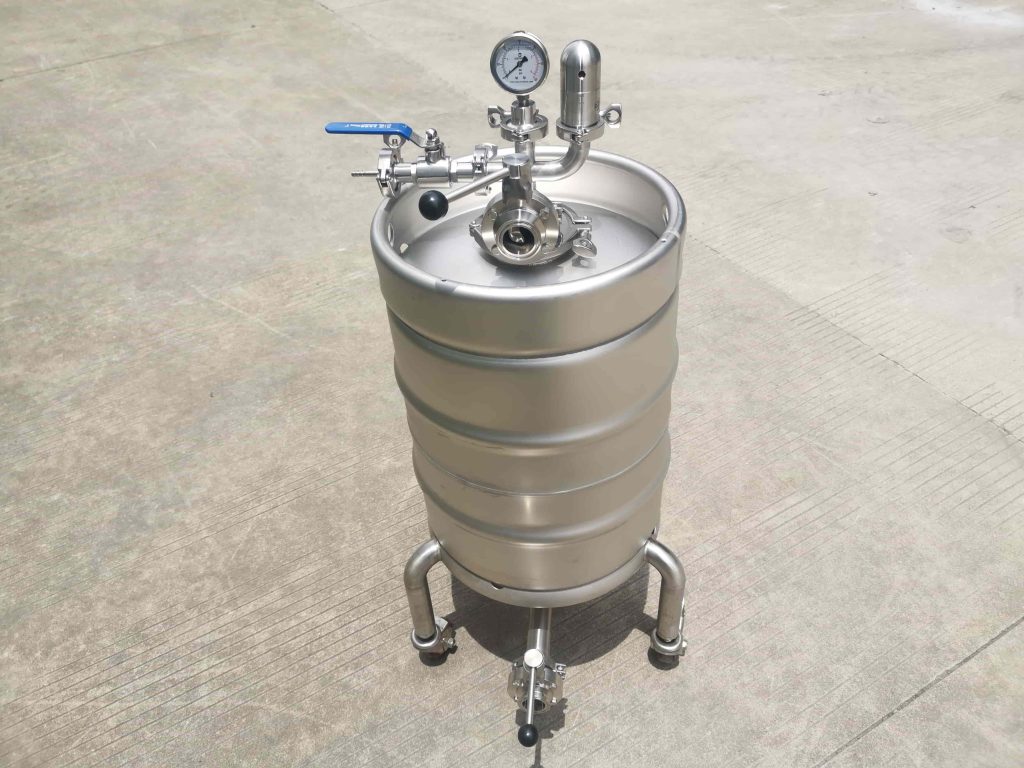

A yeast brink is a vessel for collecting, temporarily holding and transferring yeast slurry. It supports a brewery’s yeast management process, but it cannot establish whether a harvested culture is suitable for reuse. Equipment selection and yeast quality control need to be planned together.
Key takeaways
- Size working volume around the required viable cell count and measured slurry concentration.
- Distinguish a storage or transfer vessel from equipment designed for propagation.
- Keep batch identity, storage conditions and yeast quality checks connected to every repitch.
What a yeast brink does
A brink provides a dedicated product path between a fermenter and the next pitching operation. Designs can include a jacket, sampling connection, bottom outlet or mobile frame. These are specification choices, not features that every brink has.
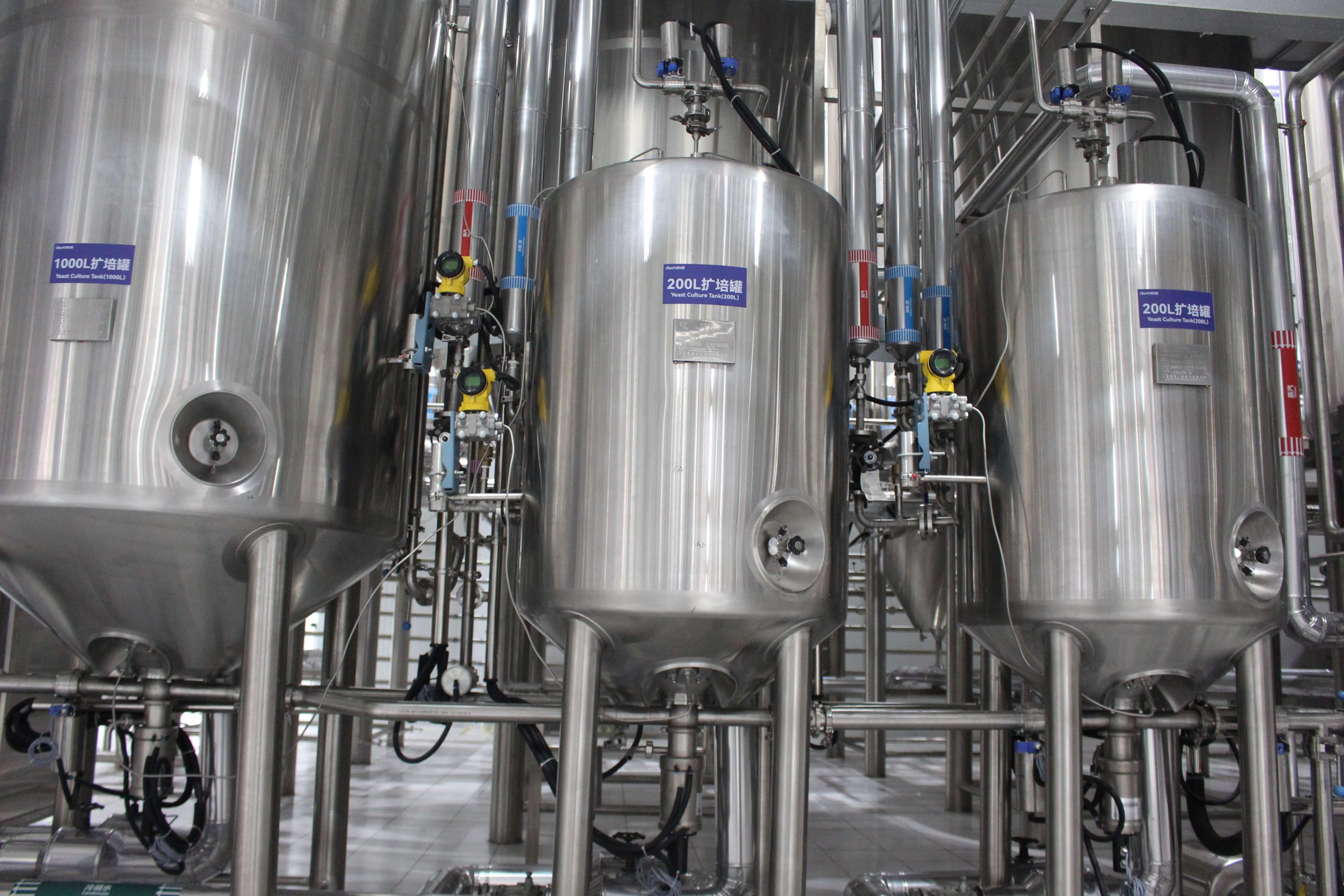
The names yeast tank, brink and yeast keg are used inconsistently. Compare the actual design, working volume, pressure rating and cleaning arrangement rather than buying by the name. A yeast propagation system has a different purpose: growing a culture under controlled conditions.
Follow the yeast through four stages

Harvest a selected crop from an identified batch, hold it under the agreed conditions, release it only after the required quality checks, and transfer the measured quantity to the next batch. Keep the source and receiving batch linked in the record. A decision to reject a crop must take priority over the production schedule.
Calculate the required working volume
Start with the number of viable cells needed for the next fermentation. Divide that requirement by the measured viable-cell concentration in the slurry to estimate the transfer volume. Account for losses and the vessel’s permitted working range in the equipment specification. As a calculation example only, a requirement of 2 × 10¹² viable cells divided by a measured slurry concentration of 1 × 10⁹ viable cells/mL gives 2,000 mL, or 2 L, before allowances. These are hypothetical inputs, not a recommended pitching rate. If the laboratory reports total cells rather than viable cells, account for the viable fraction before using the concentration.
This approach explains why two breweries with the same fermenter volume can need different brinks. Pitching requirements, slurry concentration, scheduling and the number of strains all affect the decision. A fixed percentage of fermenter volume is not a reliable substitute for those inputs.
Establish a release check before repitching
Record the strain, source batch, harvest date, generation and storage history. Review fermentation performance before deciding which crop to retain. Slurry appearance can reveal obvious changes, but it cannot demonstrate purity or adequate viability.
Lallemand’s repitching guidance provides a useful starting point for a yeast management programme. Agree strain-specific sampling, storage and reuse criteria with the yeast supplier and your quality team. Do not adopt one storage duration or generation limit for every strain and beer.
Specify hygiene, cooling and transfer together
Product-contact connections should be accessible for cleaning or included in a verified cleaning circuit. Check the sample valve, outlet, seals and hoses as well as the vessel body. A spray device is only one part of the cleaning arrangement.
If yeast will be held in the brink, describe the required temperature control and how it will be measured. A cooling jacket needs an appropriate utility supply and controls; its presence alone does not establish storage performance.
For pressure-assisted transfer, confirm the allowable operating conditions of every connected component. Follow the equipment’s approved operating procedure. A modified container should not be assumed suitable for pressurised service.
Design around cellar workflow
Map the distance from fermentation vessels to the pitching point. Compare a fixed station with a mobile brink using hose management, cleaning access, strain separation and the filled vessel’s movement restrictions.
Ask who records the yeast transfer and how the next batch is identified. A technically suitable vessel can still create operational problems if the connection sequence and batch records are unclear.
Purchasing checklist
Request a drawing showing working volume, product connections, sampling points, cooling arrangements, drainage and access. Include the required operating conditions and documentation in the quotation. Review yeast handling alongside the wider brewery process plan so that pitching and cleaning do not compete for unavailable tanks or utilities.
About this article: Prepared for the SKE Equipment blog with AI-assisted research and editing. Original byline: Mandy, equipment marketing specialist. The linked references support the technical background; this article does not report an SKE equipment trial or a project-specific engineering review.