
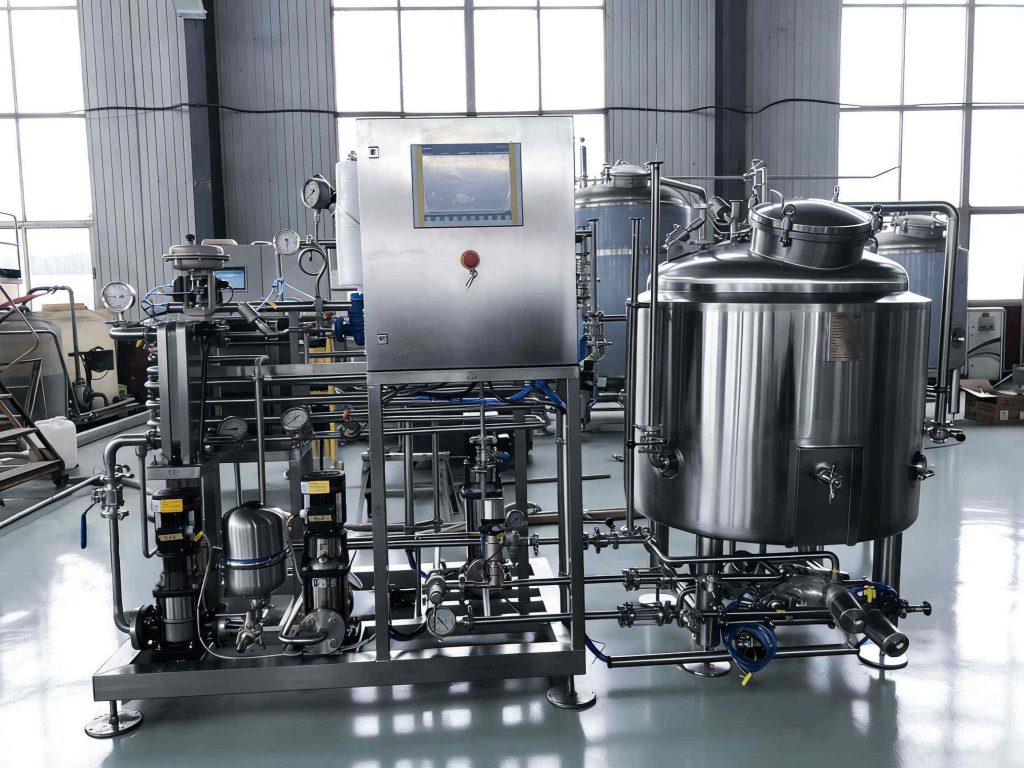
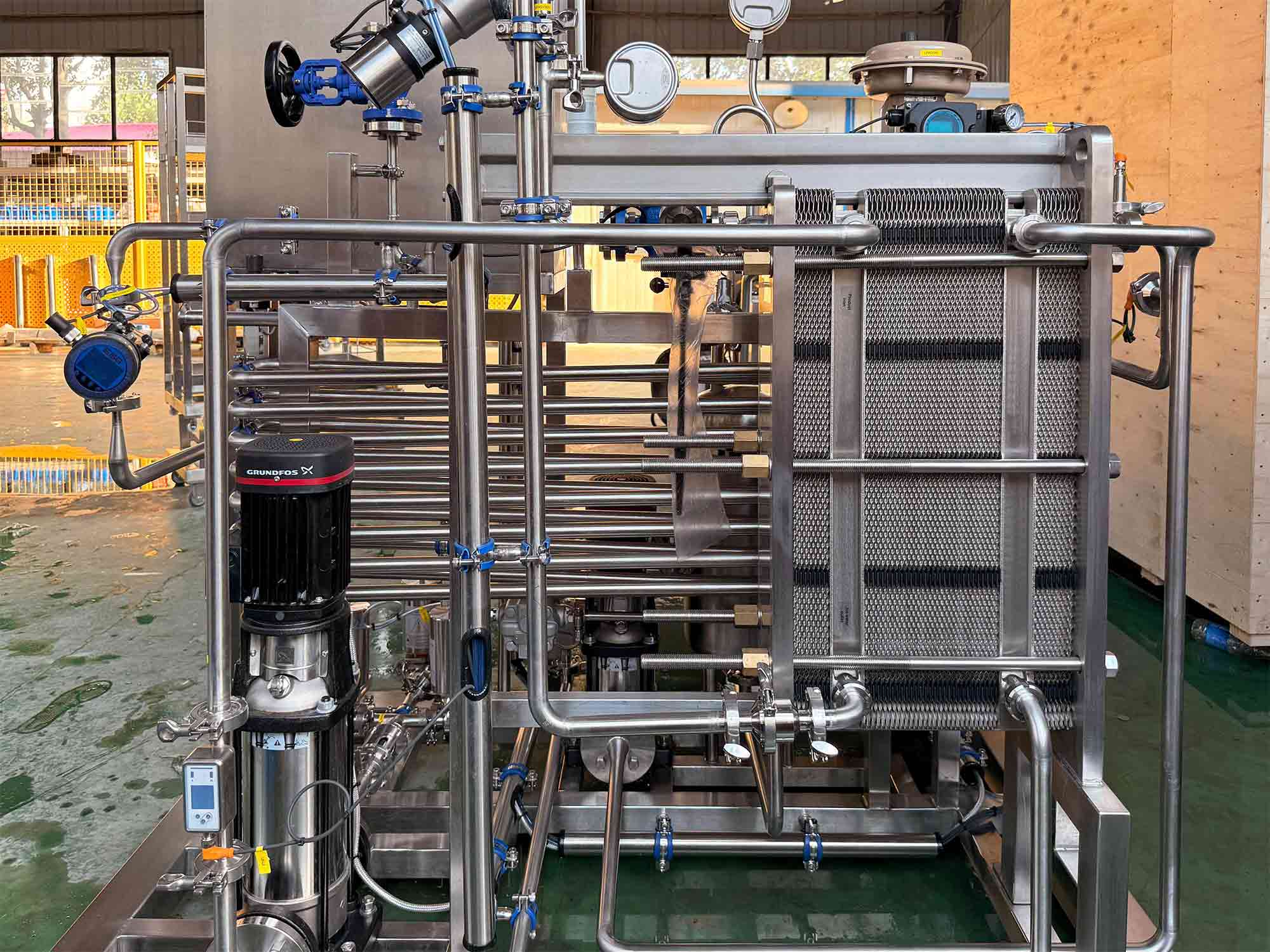
A flash pasteurization machine heats flowing beer, holds it under controlled conditions and cools it before filling. Its job is to deliver a defined treatment consistently. Pasteurization should not be described as complete sterilization; the required microbial reduction and product stability must be established for the beverage. The heater, holding section, instruments, diversion logic and downstream filling route must be evaluated together.
Key takeaways
- Pasteurization units describe a thermal treatment; they do not replace product validation.
- Holding time depends on the actual process and flow conditions.
- Plan how the system handles startup, filler stops and treatment deviations.
Follow the product through the machine
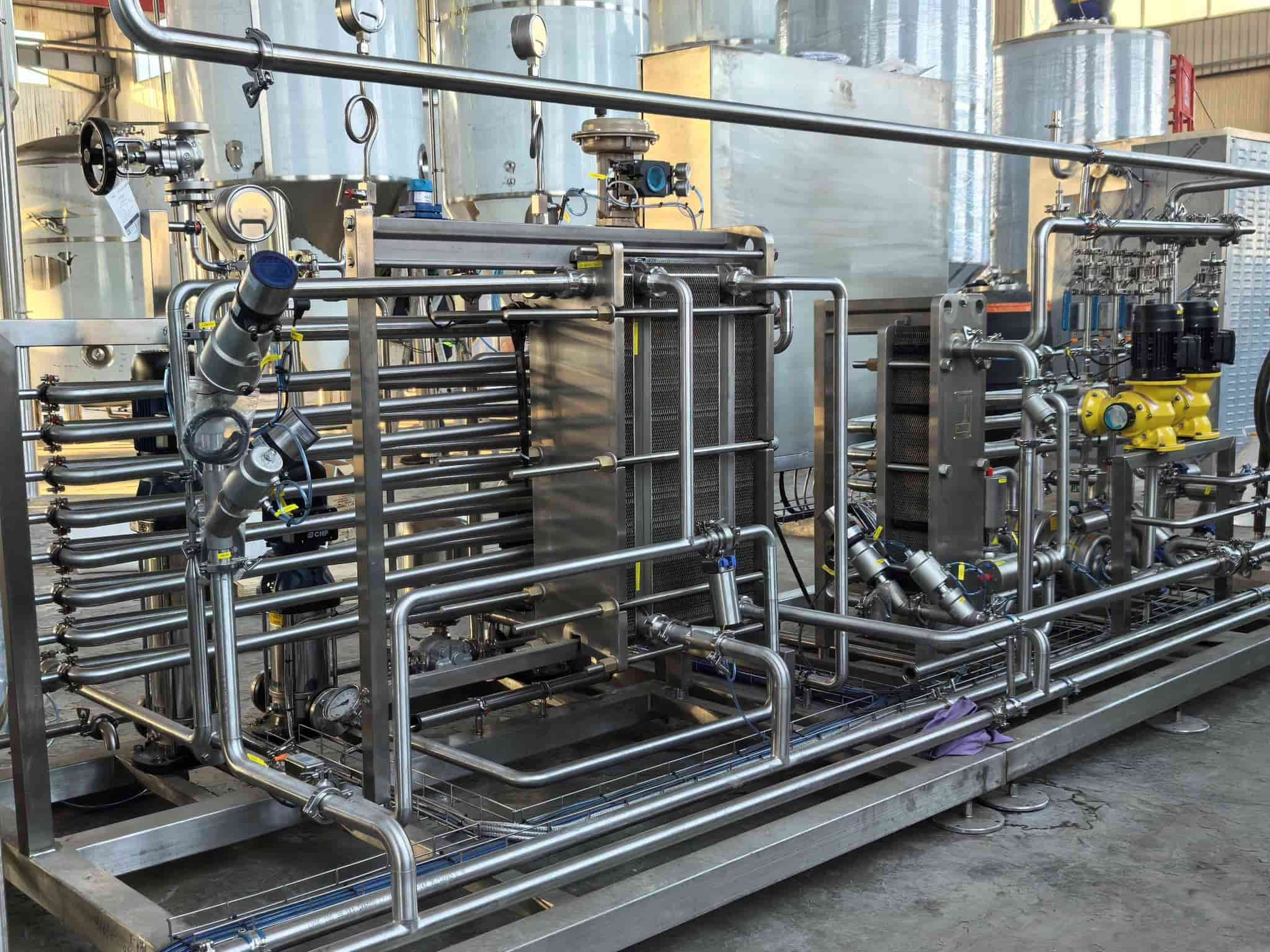
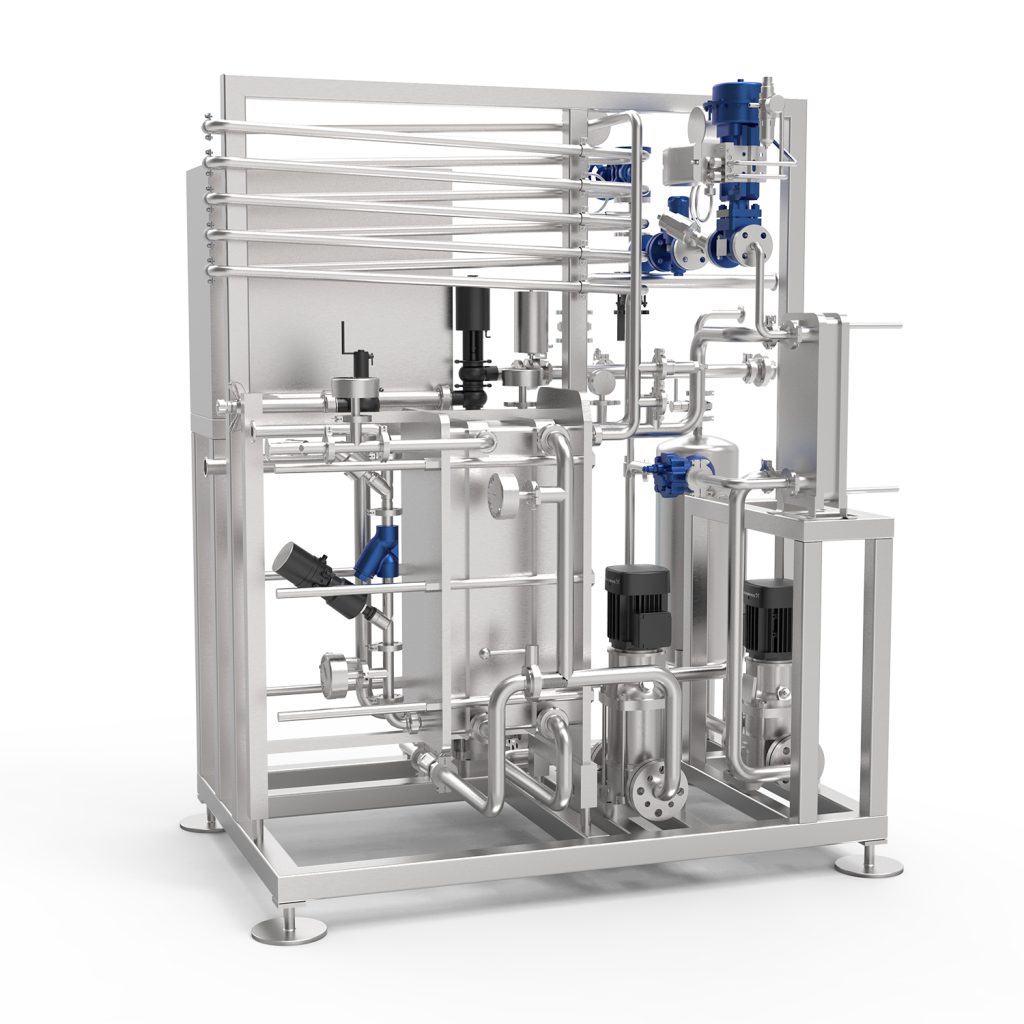
A typical route includes preheating, final heating, a holding section and cooling. Regeneration transfers heat between treated and incoming product to reduce external utility demand. The achievable recovery depends on the proposed operating conditions.
Review the flash pasteurization system as part of the filling process. Treatment before filling does not protect beer from subsequent contamination in an unsuitable downstream route.
Understand the PU calculation and its limits
For the conventional beer reference model, the simplified constant-temperature calculation is:
PU = t × 1.393^(T − 60)
Here, t is time in minutes and T is product temperature in degrees Celsius. Alfa Laval’s FLEXITHERM documentation expresses the same relationship using time in seconds divided by 60.
At a constant 72°C for 30 seconds, the calculation is 0.5 × 1.393^12, approximately 26.7 PU. It is a mathematical illustration, not a recommended treatment for a particular beer.
A changing temperature history requires the corresponding thermal contribution to be accumulated over time. Actual process design also needs an appropriate residence-time basis and product-specific validation. Do not use this beer reference model as a universal treatment formula for other beverages.
Connect flow, holding time and measurement
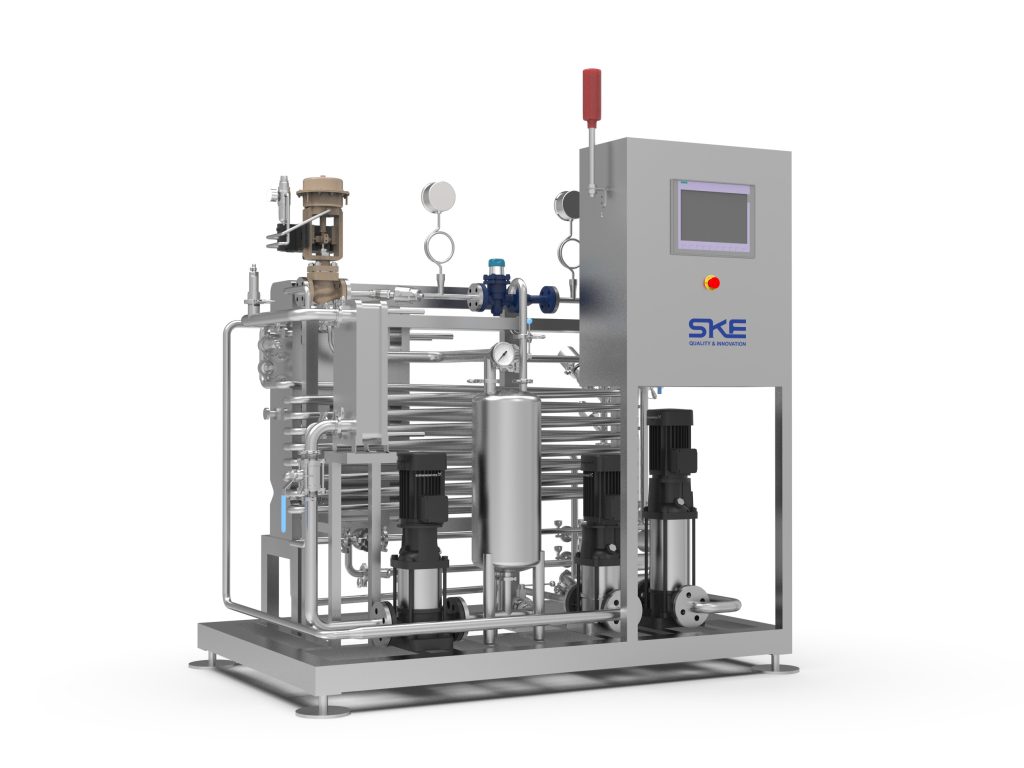
The holding section must deliver the required treatment under the defined operating conditions. Ask where temperature is measured, how flow is controlled and how the process records establish that the required conditions were achieved.
A calculated display value is only as dependable as the measurements and assumptions behind it. Include sensor calibration, flow range and instrument placement in the review. Avoid specifying only a target temperature without explaining the time and flow basis.
Define what happens outside the accepted range
| Operating condition | Question to resolve |
|---|---|
| Startup | When is product allowed to proceed toward filling? |
| Insufficient treatment | How is affected product diverted or otherwise controlled? |
| Filler interruption | What happens to flow and product in the system? |
| Instrument fault | Which alarms and interlocks prevent uncontrolled operation? |
| Restart | What conditions must be re-established and recorded? |
These behaviours should appear in the control description and acceptance test. Operators should not have to invent a response during a production stop.
Match the treatment to the product
The required microbial control depends on the beverage, relevant organisms, packaging and intended storage conditions. Reduced-alcohol and other reformulated beers need a separate assessment rather than inheriting the treatment of a conventional recipe. The dealcoholized beer guide explains why finishing and stability belong in the development plan.
For carbonated product, pressure control must suit the operating conditions and connected equipment. Specify it with the process designer rather than copying a generic pressure value.
Compare equipment on the full duty
Request the product range, throughput range, utility requirements, cleaning arrangement and process records in the quotation. Use the commercial pasteurizer comparison when deciding between pre-fill and in-package treatment. Keep technology selection separate from the detailed control and validation questions covered here.
About this article: Prepared for the SKE Equipment blog with AI-assisted research and editing. Original byline: Mandy, equipment marketing specialist. The linked references support the technical background; this article does not report an SKE equipment trial or a project-specific engineering review.