
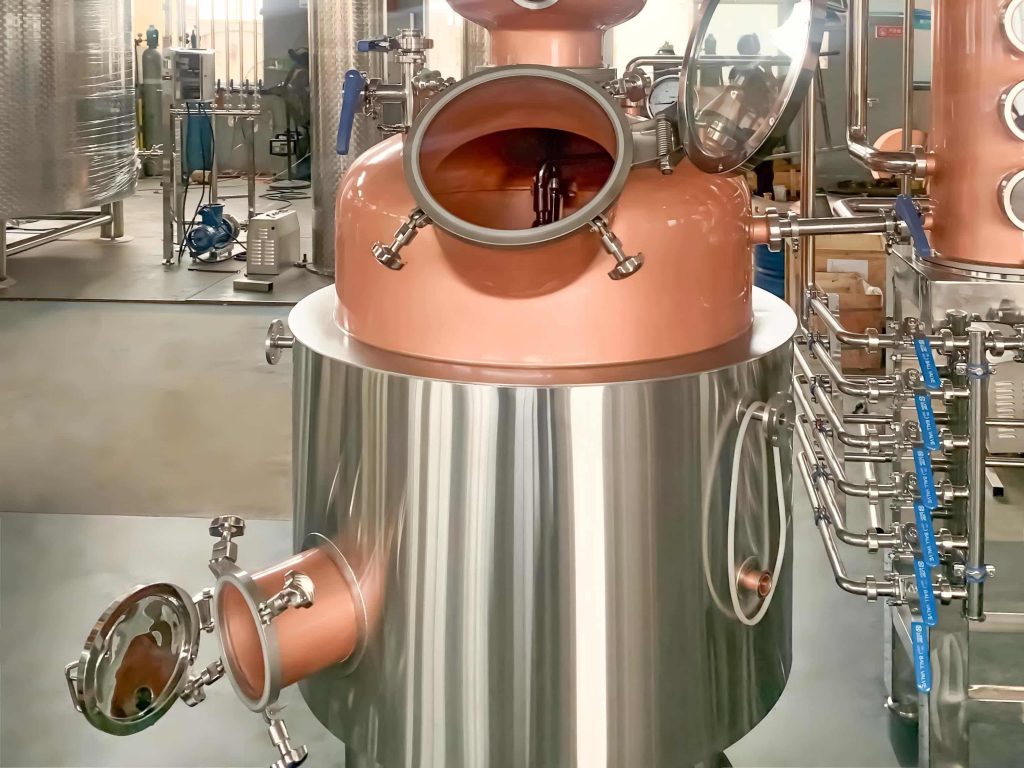
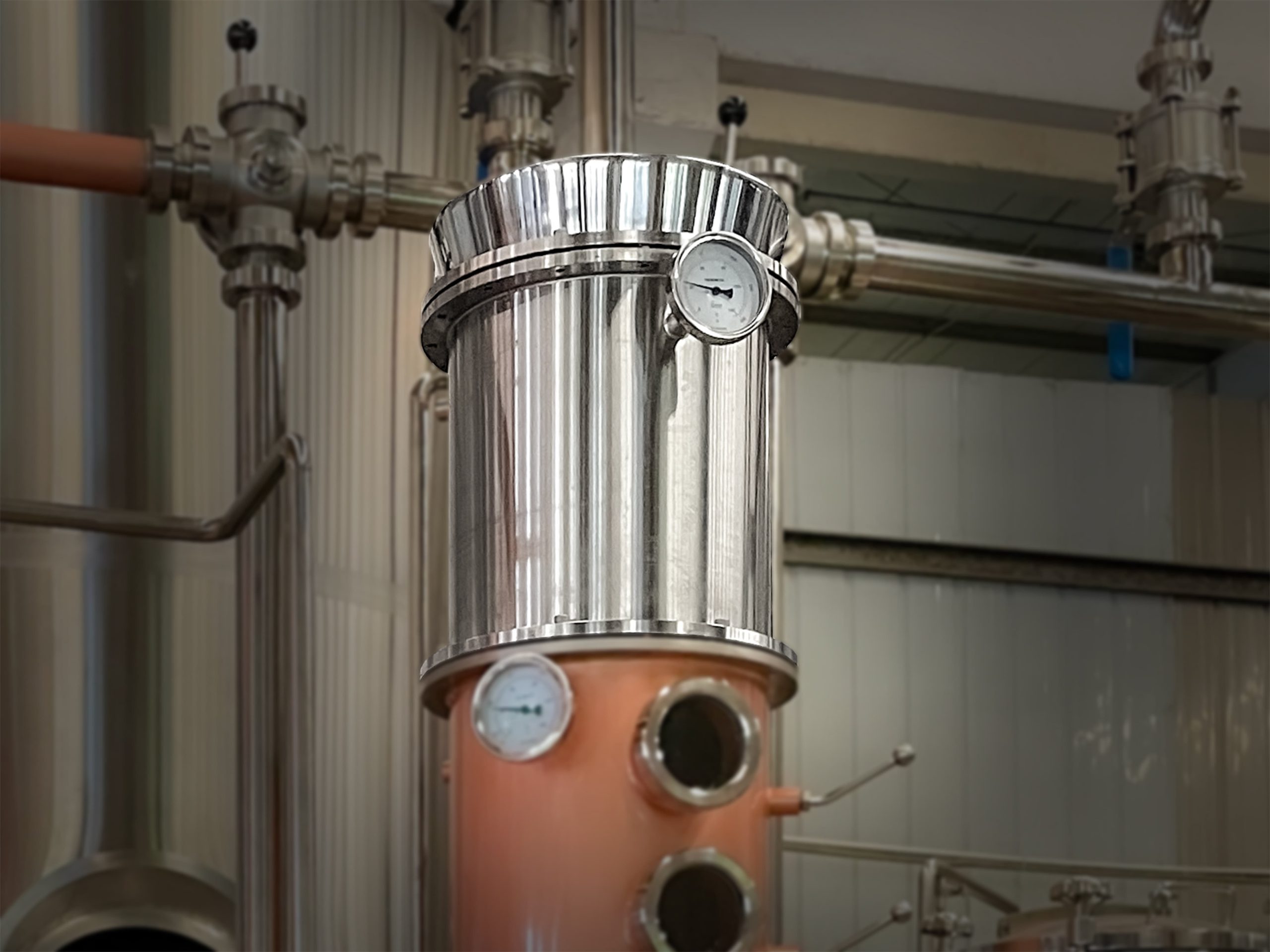
A distilling kettle is the heated vessel in a batch distillation system. Choosing its capacity requires more than matching a fermenter volume: heating, distillation, emptying and cleaning must all fit the production schedule. The condenser, utilities and collection system must support that same duty.
Key takeaways
- Define the product and production schedule before choosing kettle size.
- Compare the complete system, including cooling and cleaning, rather than the vessel alone.
- Treat fermentation equipment reuse as an engineering review, not an automatic saving.
Define what the system must produce

State the intended spirit style, feed characteristics, batch range and required output. Separate feed volume from collected product volume when comparing quotations. Two systems described with the same litre capacity can have different working volumes and operating cycles.
Alcohol and water enter the vapour phase together during distillation. The boiling point of pure ethanol is not a kettle setpoint that selectively removes alcohol from a fermented mixture. Separation depends on composition, pressure and the equipment’s contacting and reflux arrangements. Reflux returns part of the condensed overhead liquid to the column, allowing further contact between descending liquid and rising vapour. The University of Michigan’s distillation equipment reference explains this arrangement and the role of trays or packing. A column therefore needs a defined separation duty, not simply more plates by default.
Connect the main equipment duties

| Equipment | Requirement to clarify |
|---|---|
| Kettle and heating system | Working volume, feed behaviour and required heating duty |
| Column, where included | Separation task and operating flexibility |
| Condenser | Cooling duty under the site’s available utility conditions |
| Collection system | Product routing, identification and measurement |
| Controls | Operating limits, alarms, interlocks and records |
| Cleaning system | Coverage, drainage, access and changeover procedure |
Review the supplier’s distillation system scope against this list. Equipment omitted from a quotation still needs an owner in the project plan.
Compare operating configurations without oversimplifying
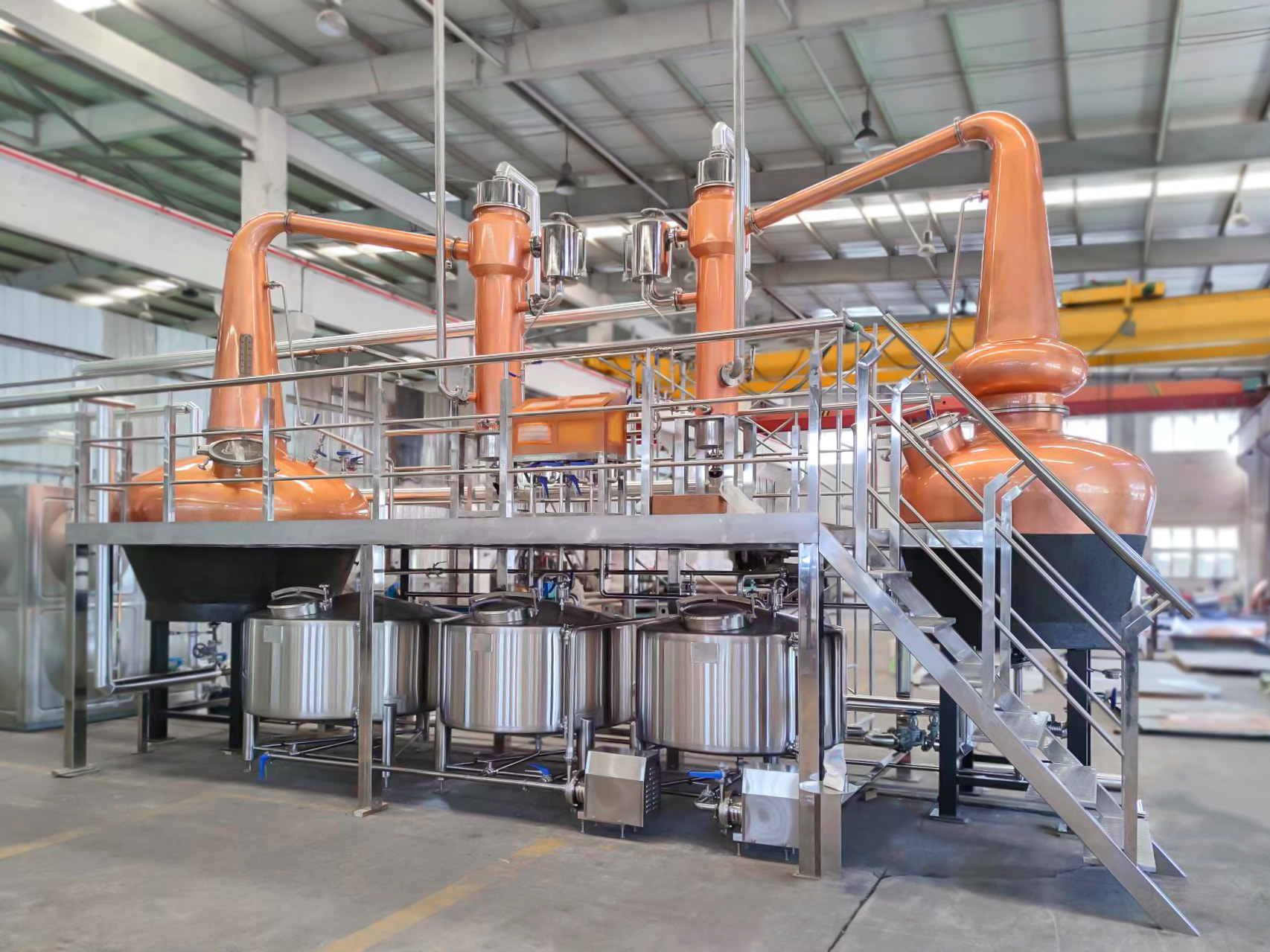
Pot stills commonly support batch production. Columns can be used in batch or continuous arrangements, so the presence of a column does not establish that the entire process runs continuously. Compare the actual flowsheet and operating sequence.
Material selection is another separate decision. Single Malt Scotch Whisky has specific production requirements, including batch distillation in copper pot stills. Do not extend a general statement about stainless steel equipment to every regulated spirit category. See the stainless steel still material guide for the procurement questions to resolve.
Size around a complete batch cycle
Build a schedule that includes charging, heating, the production run, discharge, cleaning and preparation for the next batch. Identify which activities can overlap and which require the same operator or utility. Use supplier-supported cycle estimates for the proposed feed rather than generic throughput claims.
Request cooling requirements at the warmest expected cooling-water condition. A condenser quotation without stated utility conditions is difficult to compare with another supplier’s offer. Likewise, describe the available steam or electrical supply before selecting a heating arrangement.
Review a brewery-to-distillery conversion as a new process
Existing tanks and services can be useful, but suitability depends on the new duty. Check materials, cleaning, operating limits and local installation requirements with qualified project specialists. Existing brewery equipment should not be assumed appropriate for alcohol-vapour service. The project assessment must address vapour containment, ventilation, ignition sources, electrical suitability and applicable local installation requirements; these cannot be inferred from a vessel being stainless steel.
The turnkey brewery planning framework is useful for assigning installation responsibilities. For distillation, add the process-specific assessments and documentation to that responsibility matrix before ordering equipment.
Make the acceptance test explicit
Agree which feed will be used, what measurements will be recorded and how the system will demonstrate the contracted duty. Include operator training, cleaning procedures, drawings and spare-parts information in the handover. A successful acceptance test should establish how the whole installation operates, not simply that the kettle heats up.
About this article: Prepared for the SKE Equipment blog with AI-assisted research and editing. Original byline: Mandy, equipment marketing specialist. The linked references support the technical background; this article does not report an SKE equipment trial or a project-specific engineering review.