

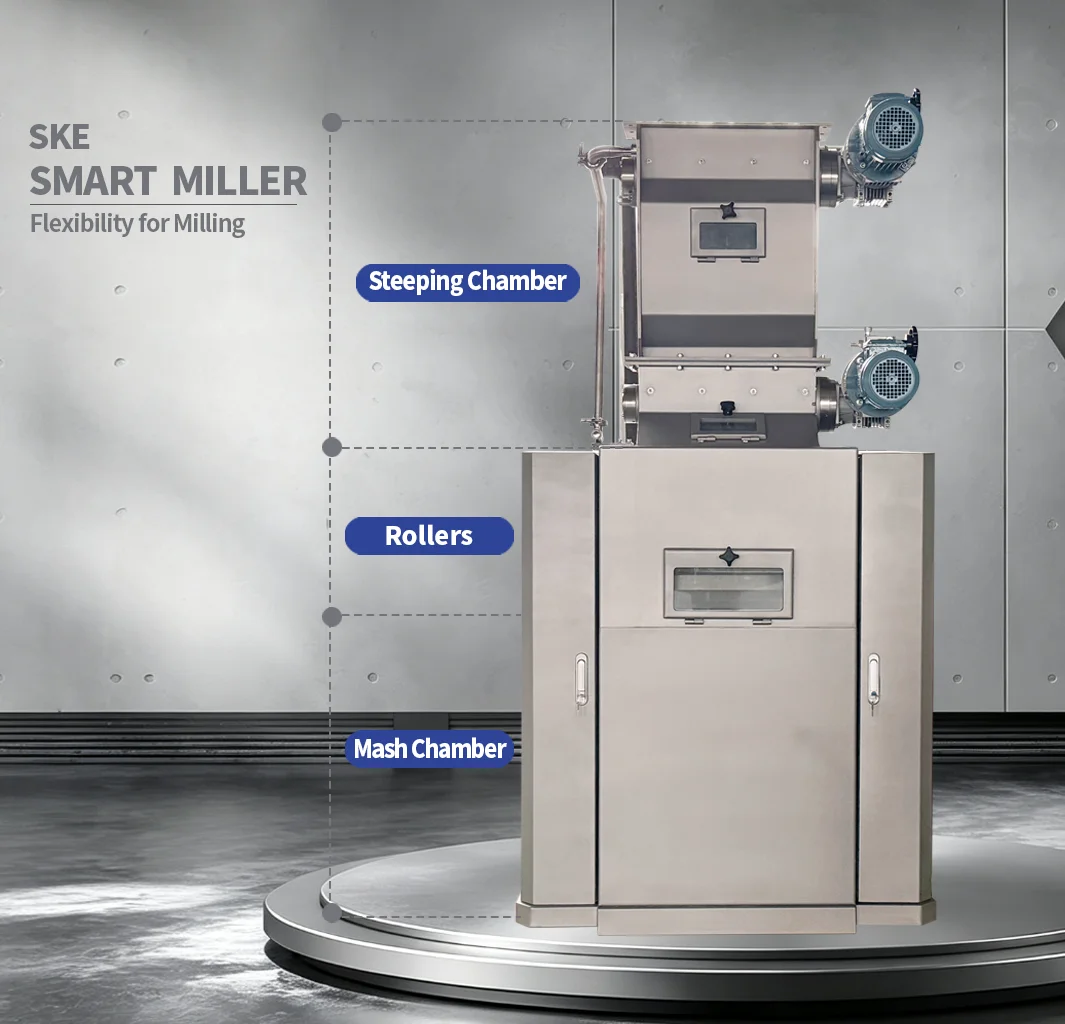
A malt milling system should prepare grist for the brewery’s mash separation equipment. For a lauter tun, the objective is to expose the endosperm while retaining enough husk structure for wort separation. Choosing a mill by roller count or rated capacity alone misses that process requirement.
Key takeaways
- Specify the grist your brewhouse needs before selecting the mill.
- Check the particle-size distribution and brewing results together; a gap measurement alone does not describe the crush.
- Include receiving, conveying, dust management and maintenance access in the equipment scope.
Start with the mash separation method
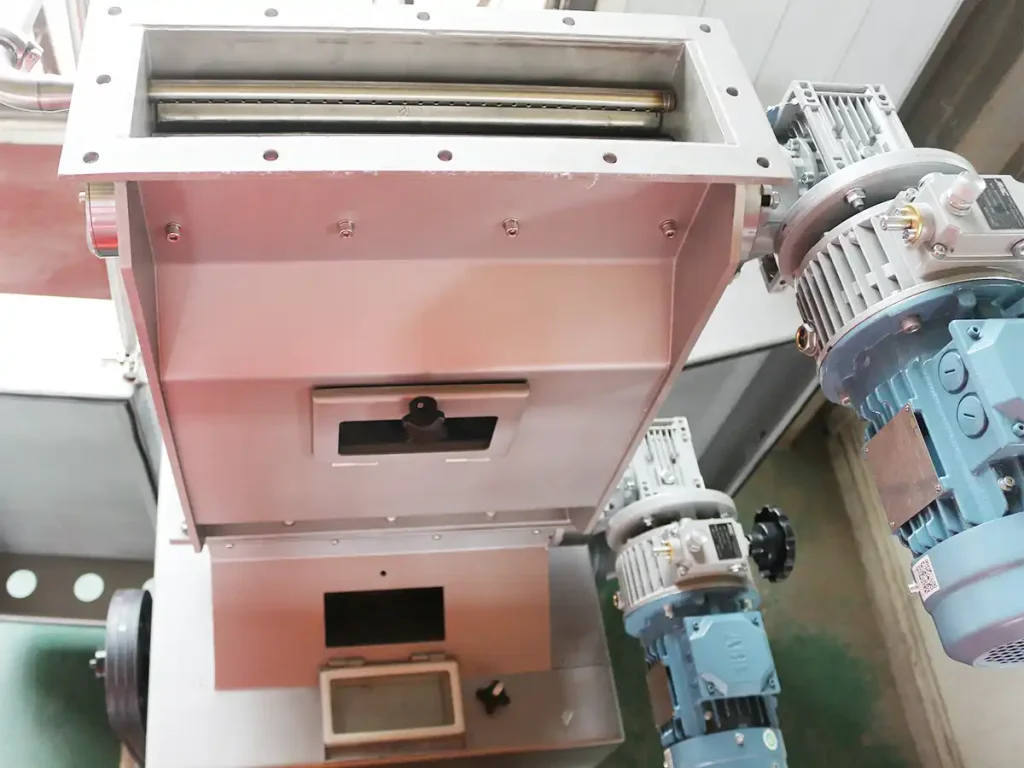
A lauter tun relies on the grain bed for separation, so husk structure matters. A mash filter can use much finer grist: Briess describes flour-like milling for mash filtration. Fines that obstruct a lauter bed are therefore not automatically a defect in a mash-filter process. Ask the brewhouse supplier for the acceptable particle-size distribution and use it as the starting point for mill trials. Do not apply a generic gap recommendation to a different roller design or grain blend.
Briess’s discussion of grain milling identifies sieve analysis as a repeatable way to evaluate grist. In practice, keep a sample from a successful brew and compare subsequent samples using the same method. Record the malt lot and mill setting alongside the results.
Select capacity around the brewing schedule

The required milling rate depends on how much grain must be prepared within the available milling window. For example, a hypothetical 1,000 kg grist bill prepared in one hour needs an average delivery rate of 1,000 kg/h before allowing for interruptions. That calculation is a scheduling example, not a mill specification.
Check whether the conveyor and receiving hopper can sustain the same rate. A large mill cannot compensate for inconsistent feeding or a full grist case. An integrated malt handling system should define the handoff between storage, weighing, milling and mash-in.
Compare mill designs using a material trial

Two-, four- and six-roller arrangements offer different processing stages, adjustment options and maintenance requirements. More rollers do not automatically produce better results for every brewery. Ask suppliers to demonstrate the proposed arrangement with representative base malt and the specialty grains in your recipes.
Assess grist distribution, intact kernels, husk condition, throughput and cleaning access. If a different mash separation process requires a different milling technology, evaluate it against that process rather than treating a roller mill as a universal choice.
Adjust the mill without chasing a single symptom
Change one setting at a time and compare both the grist and the resulting brew. Slow runoff can involve fine grist, but it can also involve recipe composition, bed handling or lauter operation. Low extract can involve milling, mash conditions or measurement errors.
| Observation | Check before changing the gap |
|---|---|
| Unbroken kernels | Feed consistency, roller condition and grain size |
| More flour than the accepted sample | Gap, roller alignment and changes in malt |
| Slow wort separation | Grist distribution, recipe and lauter operation |
| Unstable throughput | Hopper discharge, conveying rate and interlocks |
Log the setting, sieve result, extract measurement and runoff time. The useful setting is the one that gives repeatable results on your equipment, not the smallest possible gap.
Plan the complete grain route
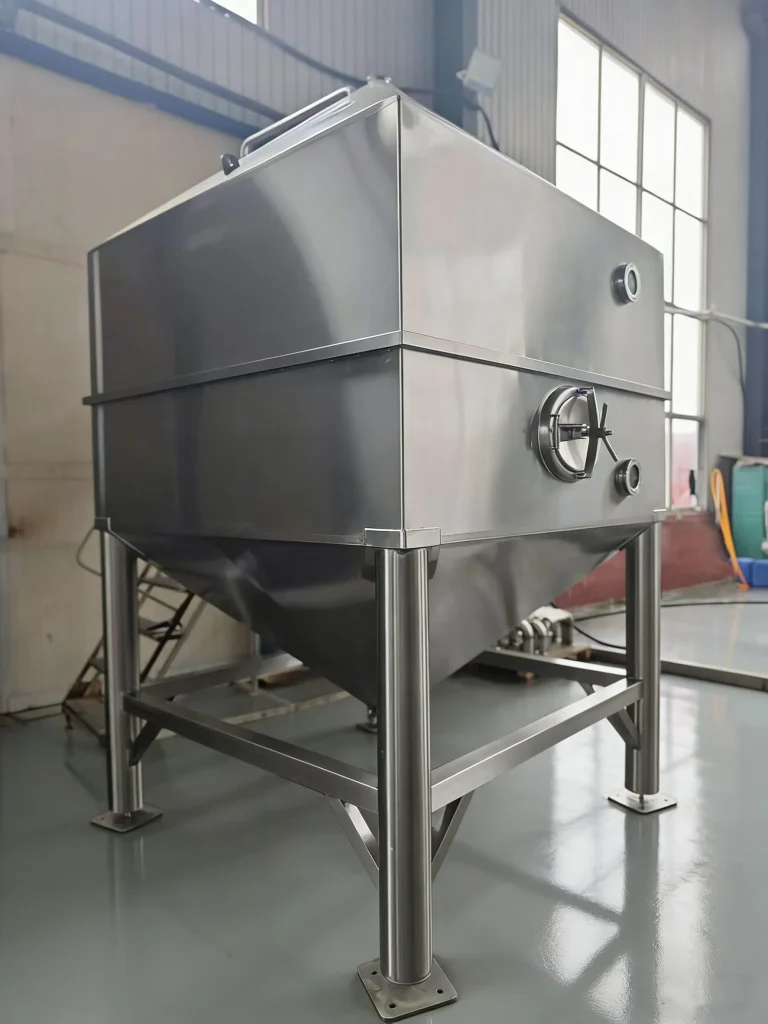
Keep stored malt dry and manage intake contamination before it reaches the mill. Include access for inspection, cleaning and roller replacement in the layout. Dust containment is part of the design, but an enclosed conveyor alone does not establish that a grain handling installation is safe.
For routing constraints, see the flexible auger selection guide. For the relationship between grain preparation and overall plant capacity, review the turnkey brewery planning guide.
Information to include in an enquiry
Provide the grist bill range, malt types, separation method, required milling window, route drawing and automation requirements. Request a defined acceptance test covering throughput and grist quality together. This makes quotations comparable and helps prevent the mill from becoming a bottleneck after installation.
About this article: Prepared for the SKE Equipment blog with AI-assisted research and editing. Original byline: Mandy, equipment marketing specialist. The linked references support the technical background; this article does not report an SKE equipment trial or a project-specific engineering review.